

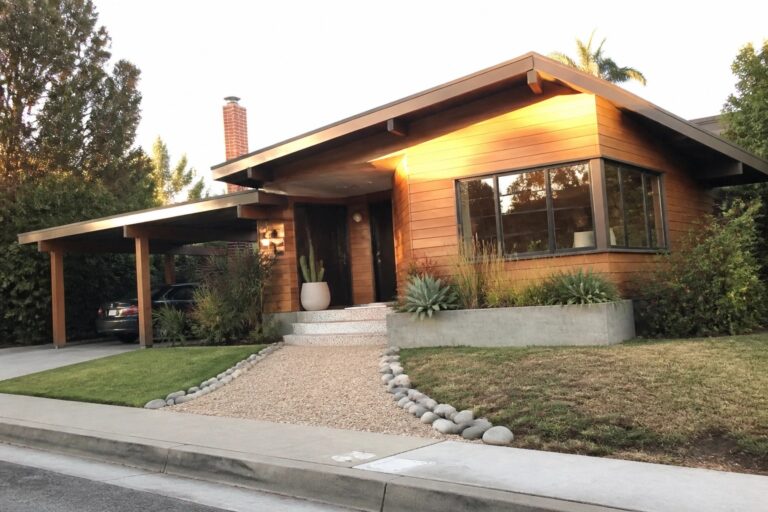
I often find that a bungalow’s low roofline is what first makes the house feel anchored to the ground when driving by.
That single line influences everything from window placement to how the front porch sits under the overhang.
Choosing materials that echo the era then keeps the proportions honest rather than adding visual weight.
It rarely translates the same in drawings.
Looking at how these homes handle the roof edge can point to small adjustments worth trying on a place like mine.
Low-Slung Rooflines on Bungalow Exteriors

A low roofline with wide overhangs is one of the quickest ways to give a bungalow that mid-century look without adding much else. It stretches the house out horizontally and makes the whole front feel settled and wide rather than tall.
This works best on single-story homes with simple siding and larger windows. Keep the eaves deep enough to cover a carport or entry, and the roof will do most of the work on its own.
Low Rooflines That Keep the Scale Welcoming
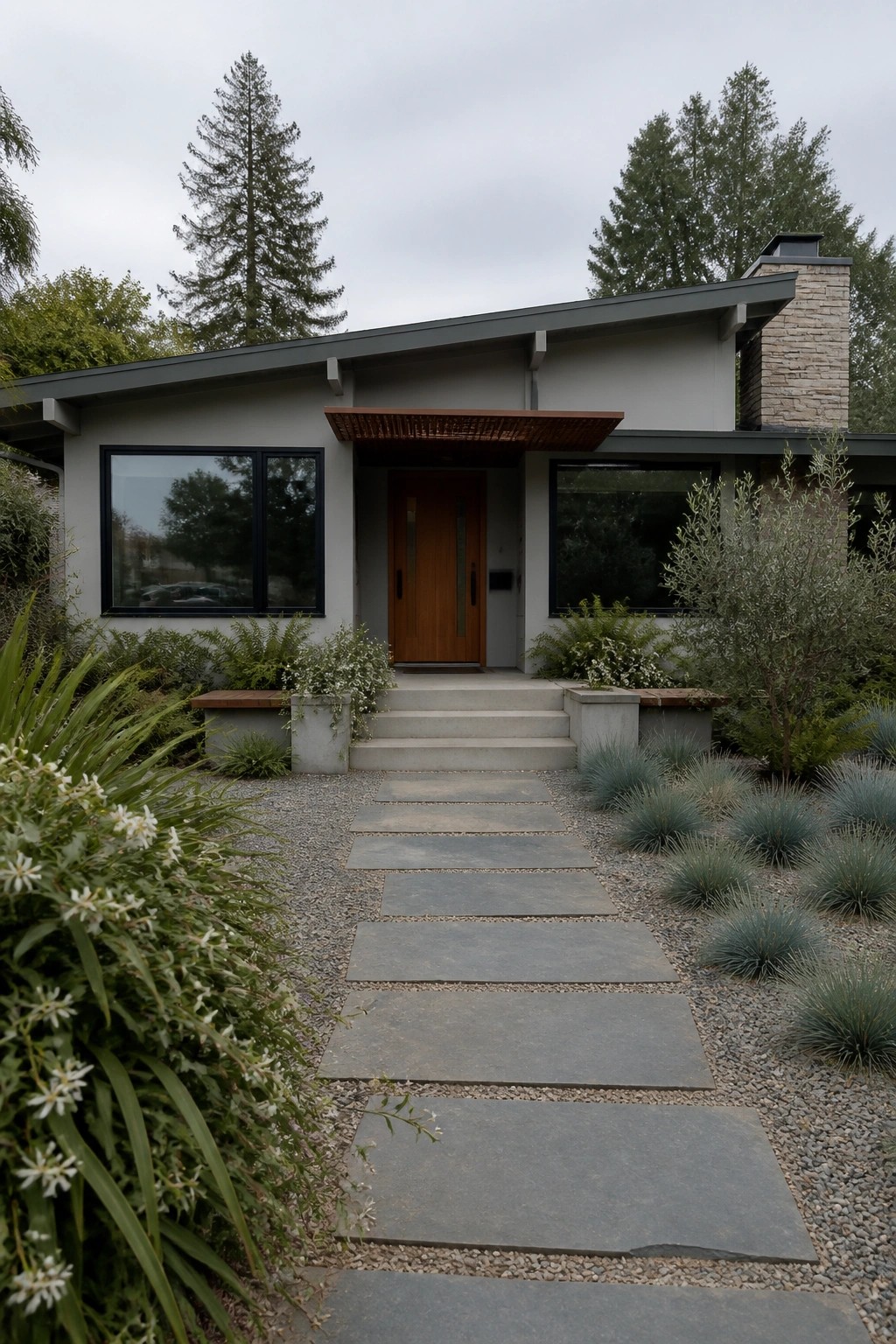
A low roofline does a lot for a bungalow without any extra effort. It holds the house close to the ground, keeps the proportions modest, and gives the whole front a settled look that feels right for this style.
It works best on single-story homes where you want to avoid anything tall or stretched. Add wide overhangs and keep the materials simple so the roof stays the main idea rather than competing with other details.
Low Rooflines That Keep the House Grounded

A low roof with a deep overhang does a lot for a bungalow. It pulls the whole shape down and gives it that settled, horizontal look that feels right for this style. The wide eave also creates a bit of shelter without adding any extra height.
This approach works best on single-story homes where you want the house to sit quietly in its setting. Keep the materials simple underneath it so the roof stays the main feature, and let the overhang reach just far enough to cover a bench or entry area.
Low Rooflines With Deep Overhangs for Shade

A low roof with a deep overhang is one of the simplest ways to give a bungalow that settled, horizontal look. It stops the front from feeling tall or stretched and lets the house sit closer to the ground without extra trim or details.
This works best on single-story homes where you want the roof to do the main job of shaping the facade. Keep the overhang wide enough to cast shadow on the walls and pair it with straightforward materials so the roofline stays the focus instead of competing with too many other features.
Low Rooflines That Keep Things Grounded
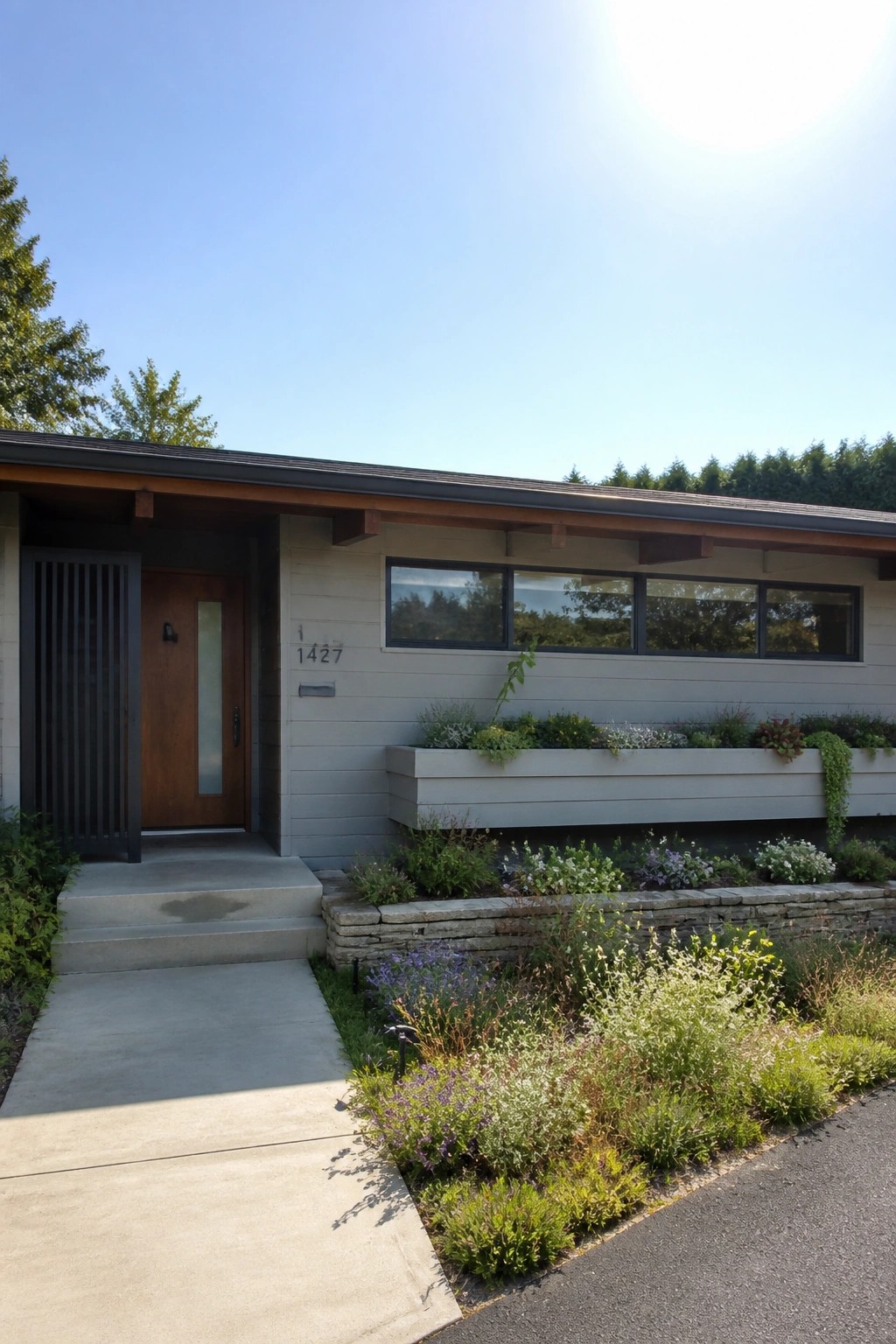
A low roofline that runs long and flat across the front gives a house that settled, easy look many people like in older bungalows. It keeps the whole exterior from feeling tall or stretched upward, and it works especially well when the house sits on a smaller lot or near the street. The wide overhangs also help with shade and rain protection without adding extra bulk.
This approach suits homes that already have a simple rectangular shape and mostly one story. It pairs best with horizontal siding and windows that follow the same line, so the whole front reads as one calm shape rather than a collection of separate parts. Just watch the pitch so it does not end up looking too flat or heavy on top.
Low Rooflines That Shelter Outdoor Seating
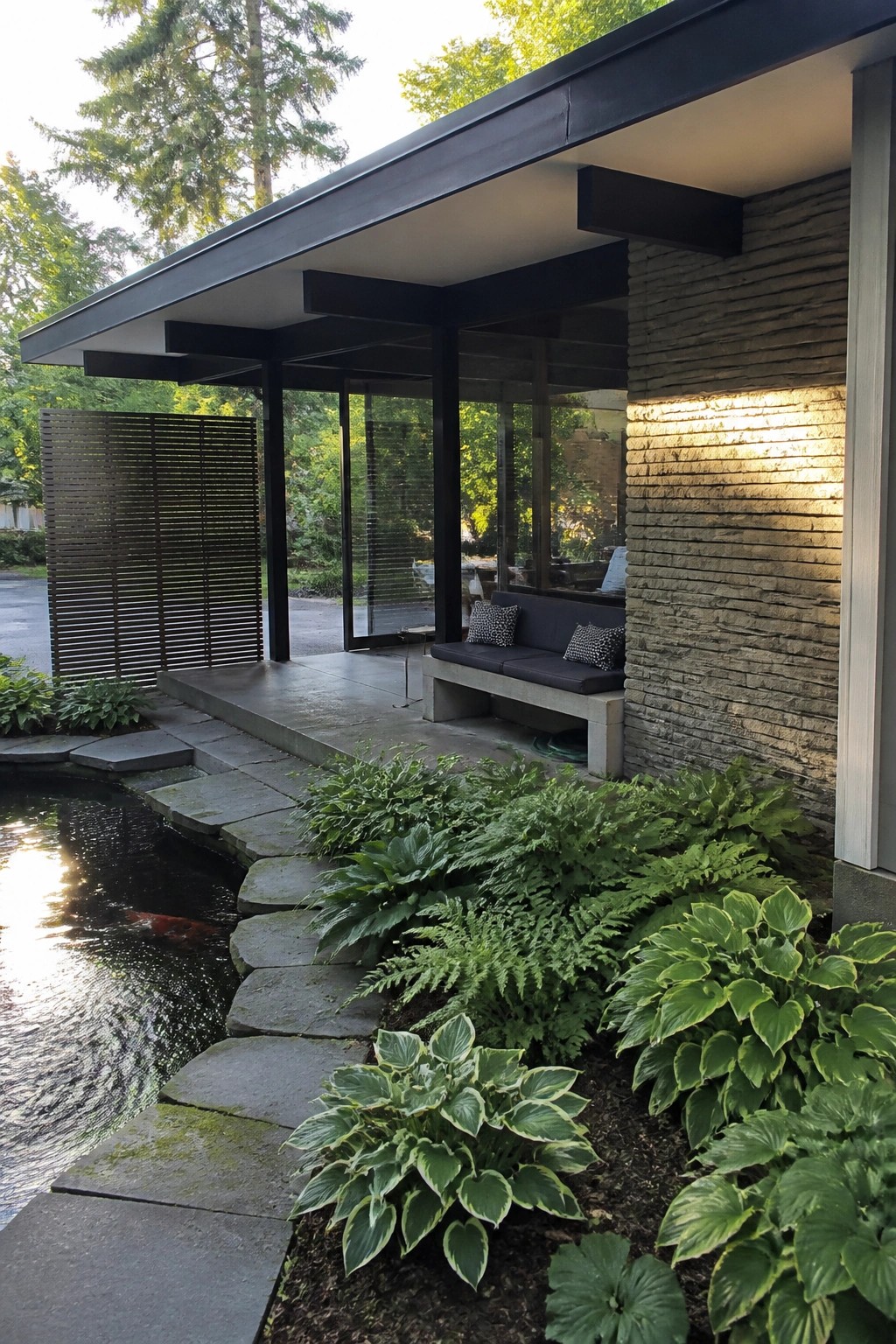
A low flat roof that reaches out past the walls gives you covered space without any extra structure. In this case it creates a simple spot for a bench right against the house wall while keeping the whole look grounded and single story.
This works best on bungalows that sit near the garden. The deep overhang blocks rain and sun from the seating area and helps the house feel connected to the planting and paths around it. Keep the roof edge clean and the pitch minimal so the extension does not feel added on later.
Low-Slung Rooflines With Wide Overhangs

A low-slung roofline gives this bungalow its settled mid-century modern look. The roof sits close to the ground and extends outward, which keeps the house feeling wide and calm rather than tall or formal.
This works well on single-story homes where the goal is to emphasize horizontal lines. Use wide overhangs and simple supports so the roof itself becomes the main feature without extra trim or decoration.
Low Rooflines With Continuous Window Lines

A low roofline is one of the simplest ways to give a bungalow that settled mid-century look. It keeps the house from feeling tall or boxy and instead spreads the mass out so the whole front reads wide and calm.
This works best on single-story homes with a straightforward rectangular shape. Pair the roof with a long run of windows at the same height and add a built-in bench beneath them if you want the line to feel even more continuous.
Low-Slung Rooflines Over Brick and Wood

A low-slung roof with deep overhangs gives this house a settled, horizontal feel that matches the mid-century style. The roof sits heavy over the brick and wood sections, pulling the whole facade closer to the ground instead of letting it stretch upward.
This works best on bungalows where the lot is fairly flat and the goal is a modest street presence. Keep the eaves wide enough to cast real shade, and pair the roof with simple materials so the shape stays the main feature.
Low Roof Overhangs That Keep the House Grounded

A wide overhang on a low roofline does a lot to shape how a bungalow sits on its lot. It stretches the house horizontally and prevents it from feeling tall or boxy even when the siding runs dark and vertical.
This move works best on homes that already sit close to the ground and need some shade along the front. It also helps the entry steps and plantings feel connected rather than tacked on.
Keeping the Roofline Low and Extended
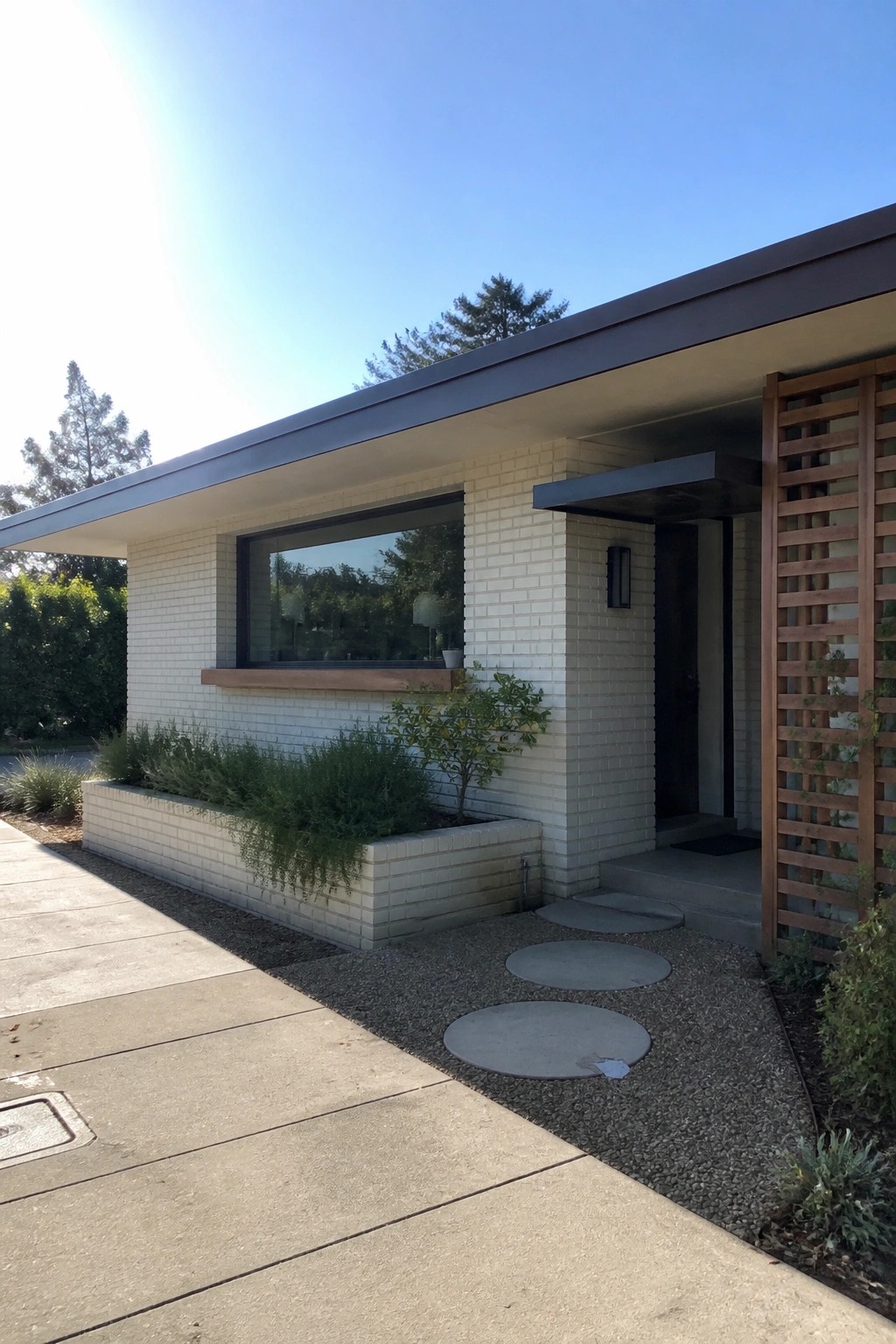
A low roofline with a deep overhang gives a bungalow that settled, grounded look without much extra effort. It stretches across the front, covers the main window and entry, and keeps the whole facade feeling horizontal and calm rather than tall or busy.
This approach works especially well on single-story homes with simple materials like brick. The overhang adds shade where it is needed most and helps the house sit lower to the ground, which suits smaller lots and neighborhoods that already favor mid-century styles. Just make sure the roof depth stays consistent so the line does not break up.
Low Rooflines That Stretch the Front
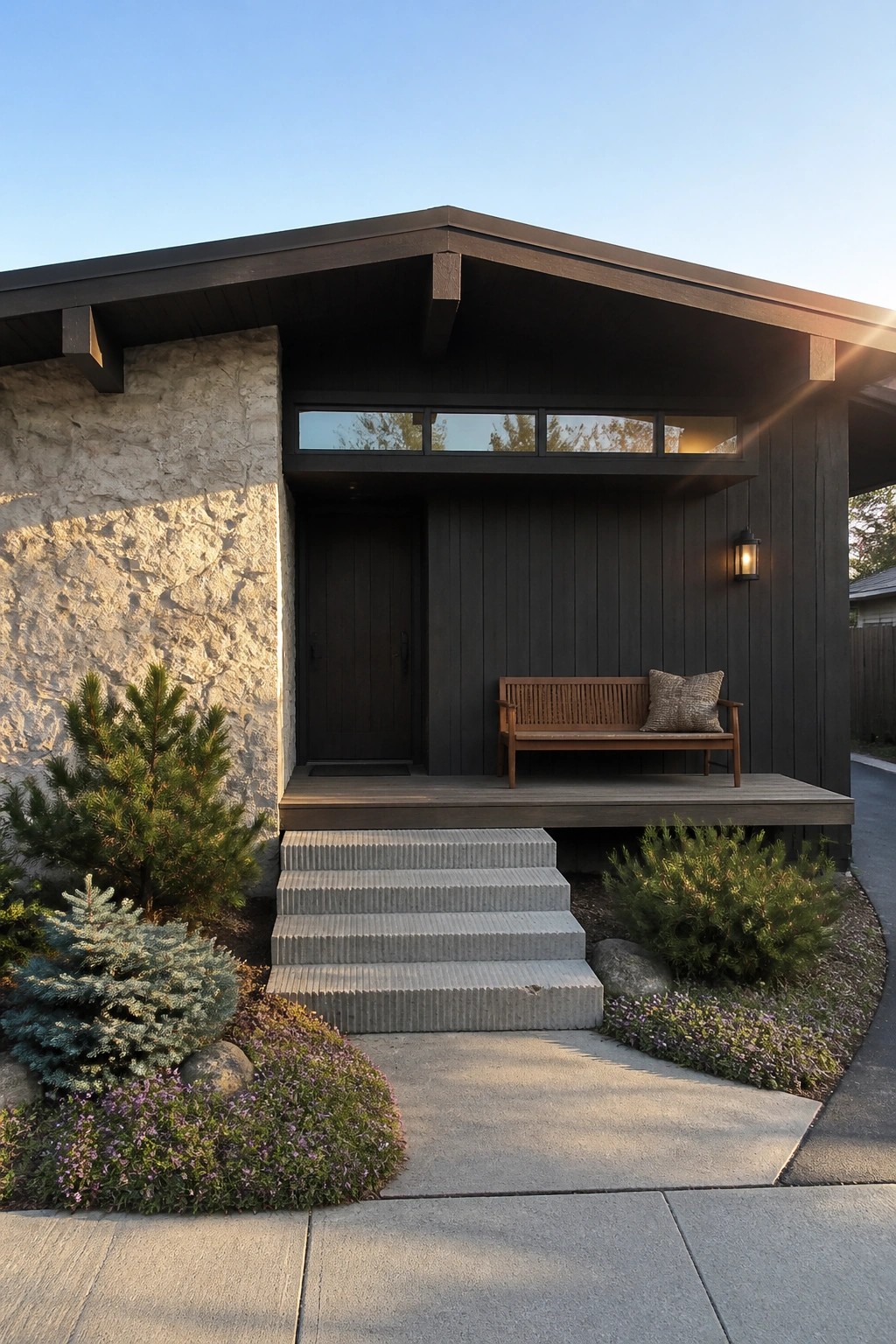
A low roofline with wide overhangs gives a bungalow that settled, mid-century look without much extra work. The roof sits close to the windows and extends far enough to shade the entry, which keeps the whole front feeling wider and lower to the ground.
This approach suits modest homes that already have a simple rectangular shape. Keep the siding and trim quiet so the roof does the main job, and let the overhang create the covered porch space instead of adding separate posts or beams.
Low Rooflines That Shape the Bungalow
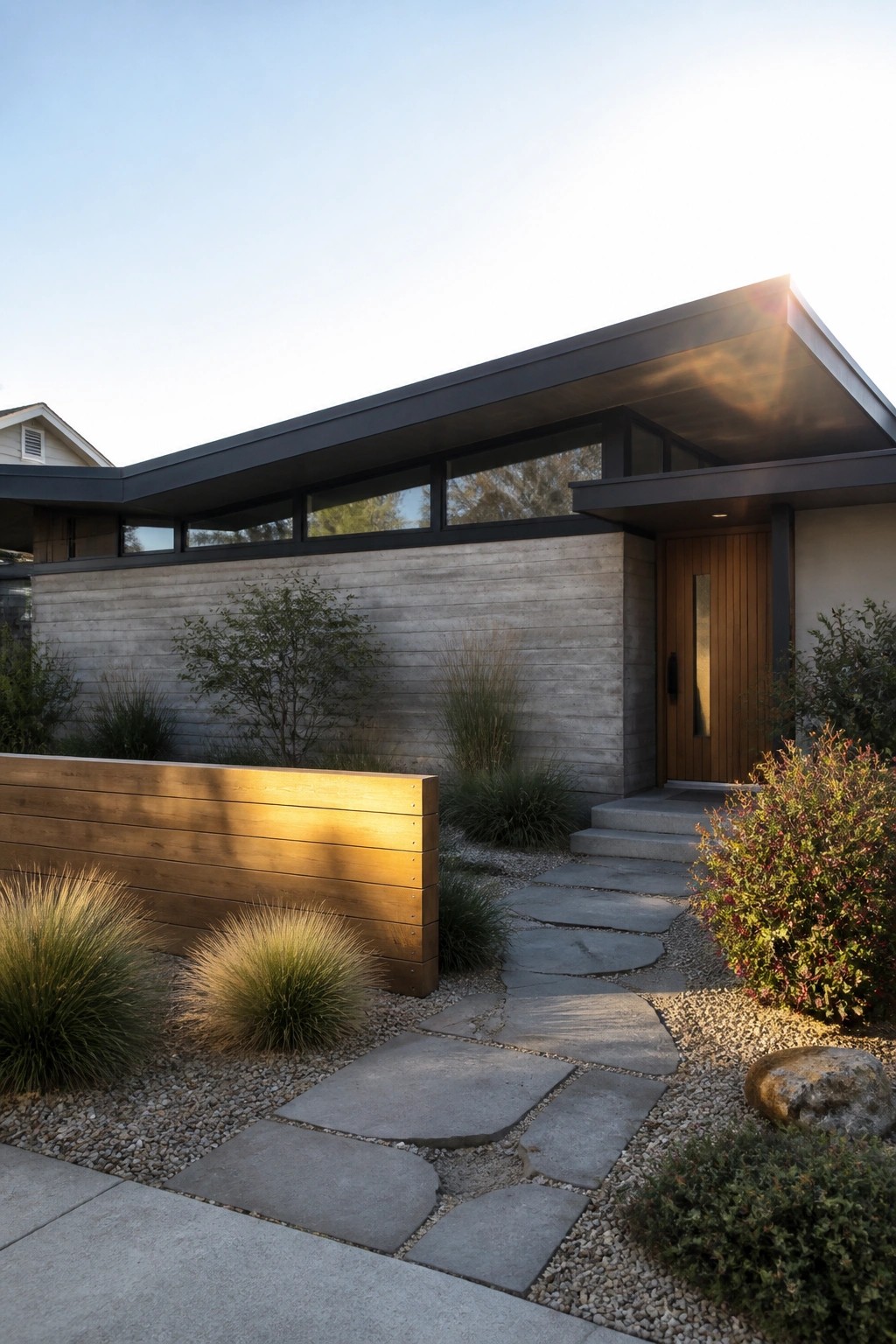
A low roofline keeps the whole house feeling grounded and wide rather than tall. It stretches across the front and creates that calm horizontal look many people like in mid-century bungalows.
This works best when the roof overhangs enough to cast shade and the siding stays simple and flat. Avoid adding too many breaks or tall elements above it, or the low effect gets lost.
Extending the Roofline for Shelter

A low roofline that keeps running across the front gives the whole house a grounded look while adding real function. In this case the roof stretches far enough to cover both the entry and a full carport space, which cuts down on the need for a separate garage structure.
This move works best on single-story homes where you want to emphasize width instead of height. Keep the overhang deep enough to shade windows and protect the doors from rain, and match the ceiling material under the roof to the siding so the line feels continuous rather than added on later.
Low Rooflines With Deep Overhangs

A deep overhang on a low roofline gives the front of the house a settled look without extra trim or decoration. It stretches out far enough to cover the entry steps and ties the different wall materials together in a simple way.
This approach suits bungalows that already sit close to the ground. Keep the overhang wide enough to protect the door area from rain and sun, and let the roof edge stay clean so the horizontal lines stay strong.
Low Rooflines With Warm Wood Accents
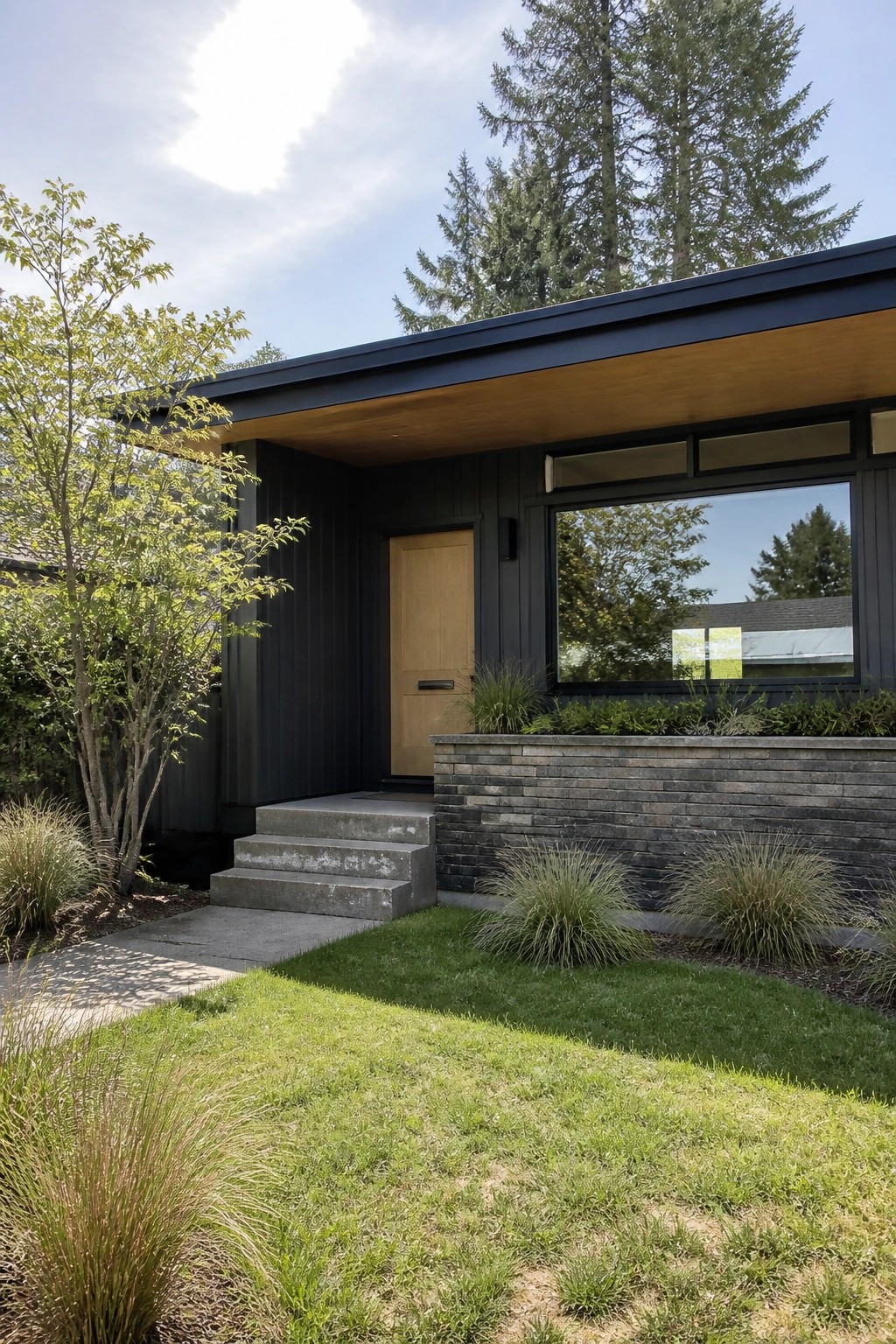
A low roofline with a deep overhang gives a bungalow a settled, grounded look that fits the mid century style well. The wood ceiling under the eaves adds just enough warmth to balance the dark siding without breaking the clean lines.
This works best on one story homes where you want the roof to feel like part of the landscape rather than an afterthought. Keep the overhang generous so it shades the entry and softens the overall height.
Low-Slung Rooflines With Protected Entries
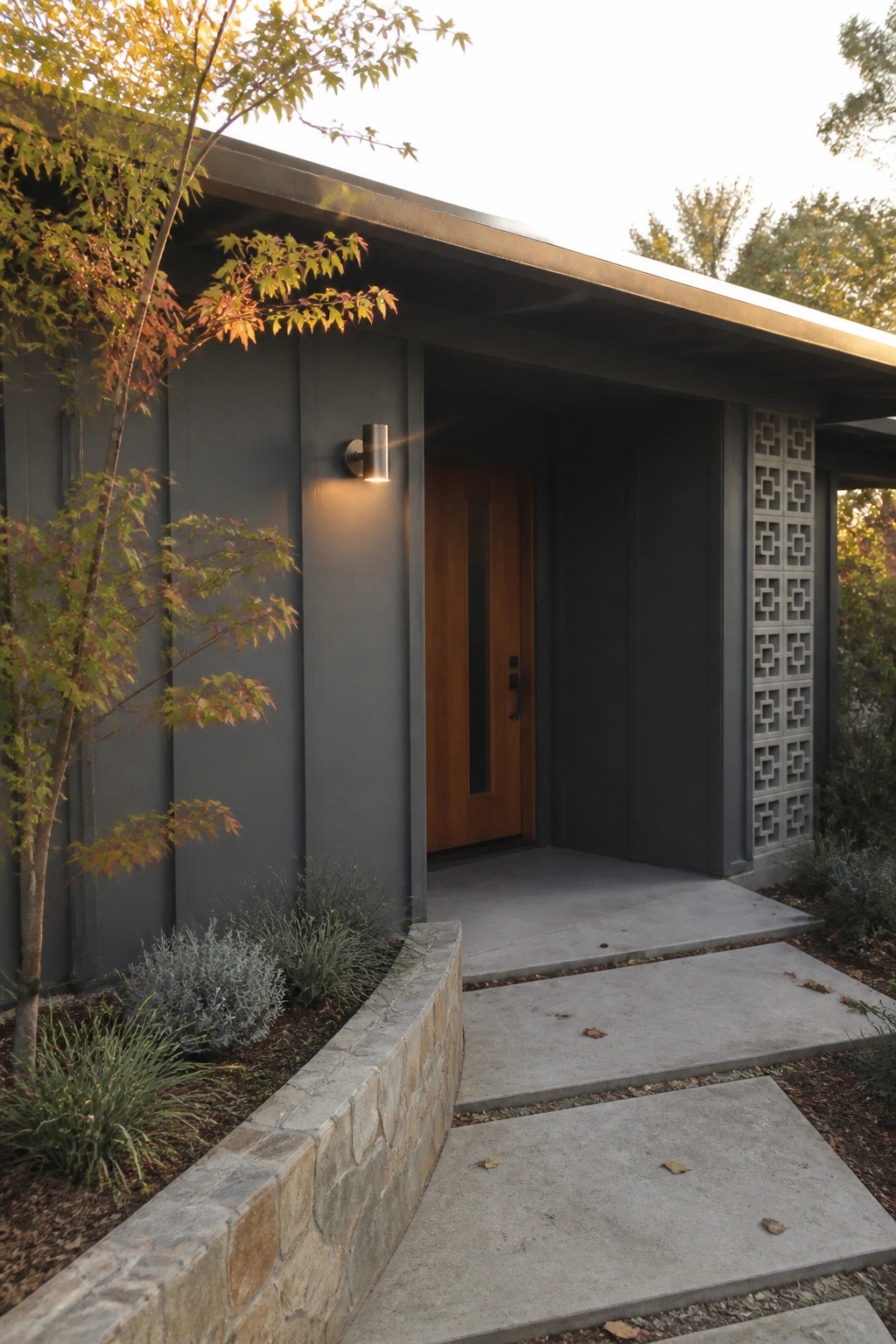
A low-slung roof with a deep overhang gives a mid-century bungalow its settled look. It pulls the whole house closer to the ground and makes the entry feel protected without any extra structure.
This works best on homes that sit on flat lots where you want the roof to do most of the visual work. Keep the siding simple and let the overhang create the main shadow line so the facade stays calm and balanced.
Frequently Asked Questions
Q: How do I pick siding that works with a low roofline on my bungalow? A: Go for horizontal boards or simple stucco in warm tones. These keep the focus on the roof shape and give that relaxed mid-century feel. Avoid anything too textured or busy.
Q: Do low-slung roofs need extra maintenance in rainy areas? A: They shed water well if the overhangs are done right. Check the gutters often and make sure the flashing stays tight around the edges. That prevents most issues.
Q: What windows fit best with these bungalow exteriors? A: Tall narrow ones or those with simple frames work great. Place them to balance the wide roof above. This draws the eye along the low lines naturally.
