

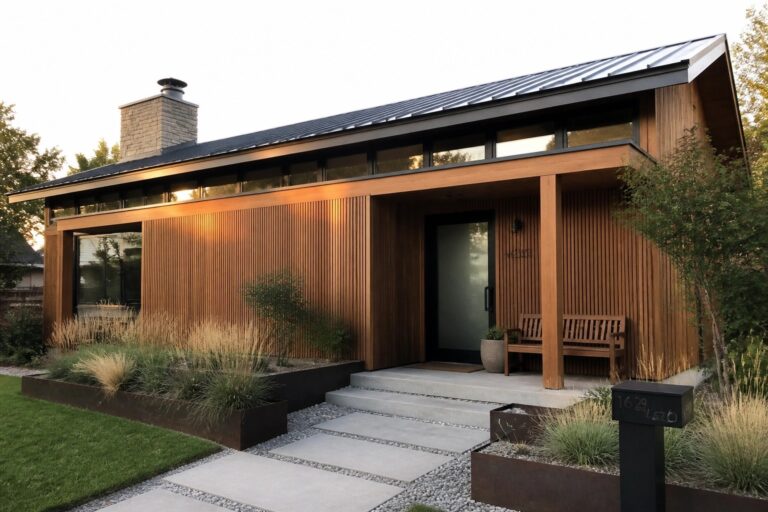
I have always found that clerestory windows can lift the whole look of a bungalow when they sit cleanly along the roof edge without breaking the low horizontal lines.
The trick is keeping the facade balanced so the house still reads as grounded rather than stretched upward from the street.
Some designs handle this by pairing the windows with deeper overhangs and simple siding that lets the form stay calm.
I would check how the light actually moves across my own front rooms at different times of day before trying anything similar.
Material choices like wood trim or brick bases often decide whether the exterior ages well or starts to feel patched together.
Clerestory Windows Along the Roofline
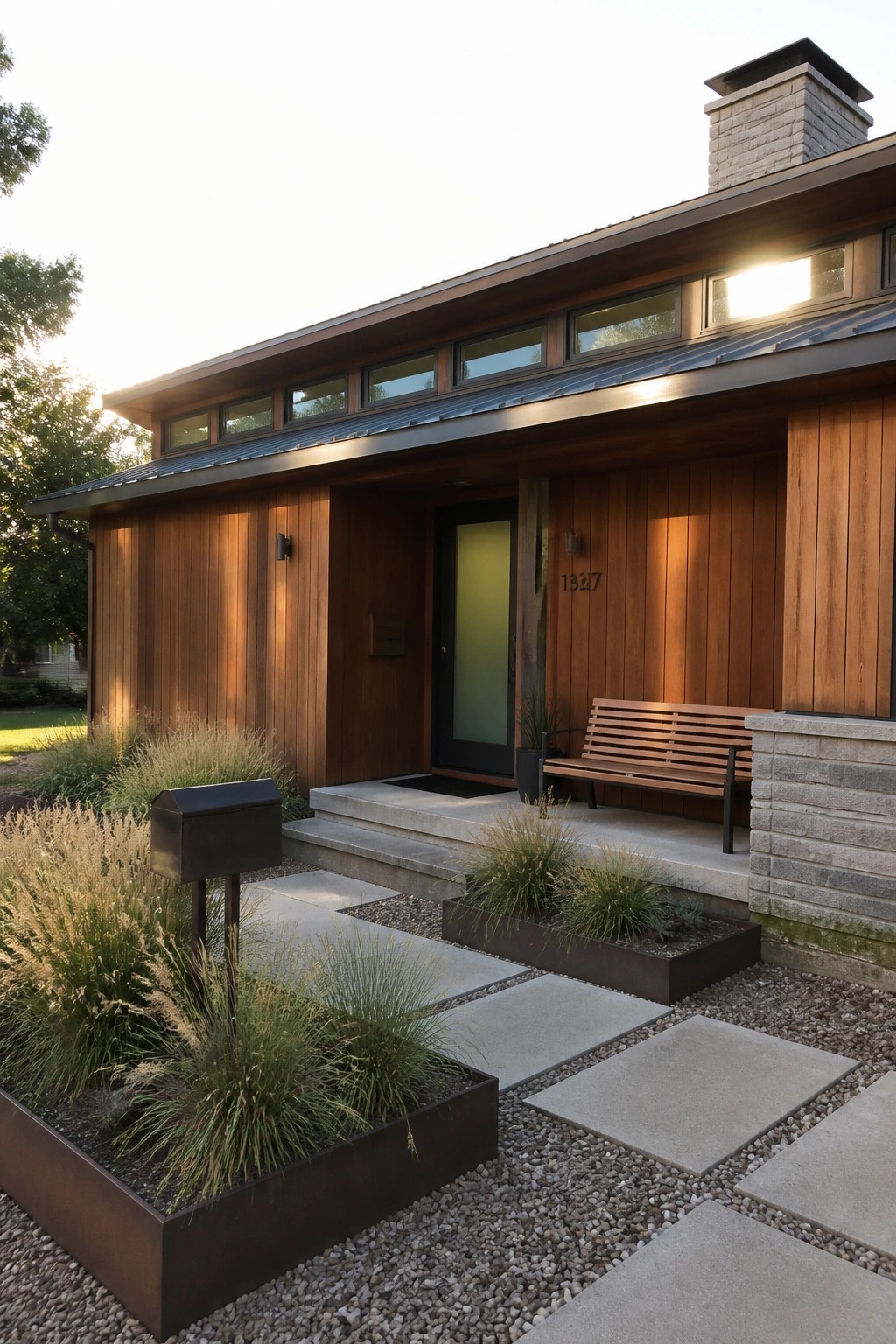
Clerestory windows work well on bungalows because they bring daylight deep into the house without opening up the lower walls. Placed high under the eaves, they keep the interior brighter during the day while leaving the main living areas more private from the street.
This setup suits low, horizontal homes where you want extra light but still need a solid wall facing the front. It pairs easily with wood siding and a simple roof overhang, and it avoids the need for tall windows that might feel too open in a neighborhood setting.
Clerestory Windows Along the Front
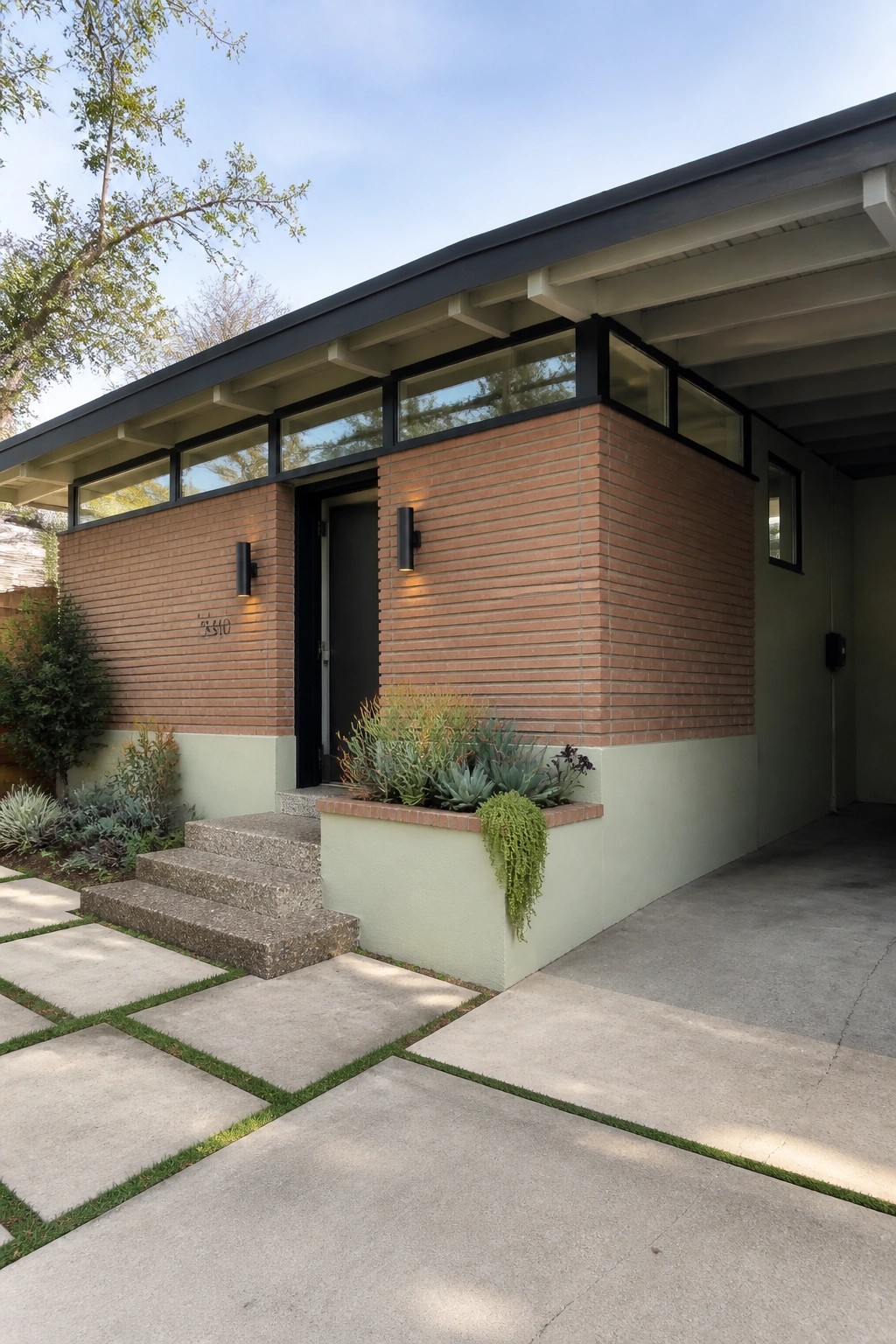
Clerestory windows work well on this kind of bungalow because they sit high on the wall and pull light deep into the house. The row here runs right under the deep overhang, so the front stays low and simple while the inside gets more daylight than side windows alone could give.
They suit homes with wide rooflines and solid walls below. Keep the band narrow and continuous, and match the frame color to the trim so it reads as part of the roof rather than a separate feature.
Clerestory Windows Under a Deep Roof Overhang

Clerestory windows give a bungalow extra daylight without opening up the whole front wall. They sit high under the overhang, so the house keeps its low, solid look while the rooms inside get a steady wash of light.
This works best on homes with a simple roof edge and a fairly flat facade. Line the windows up evenly and keep the frame color close to the roof so the band reads as part of the architecture rather than an add-on.
Clerestory Windows Over the Front Door
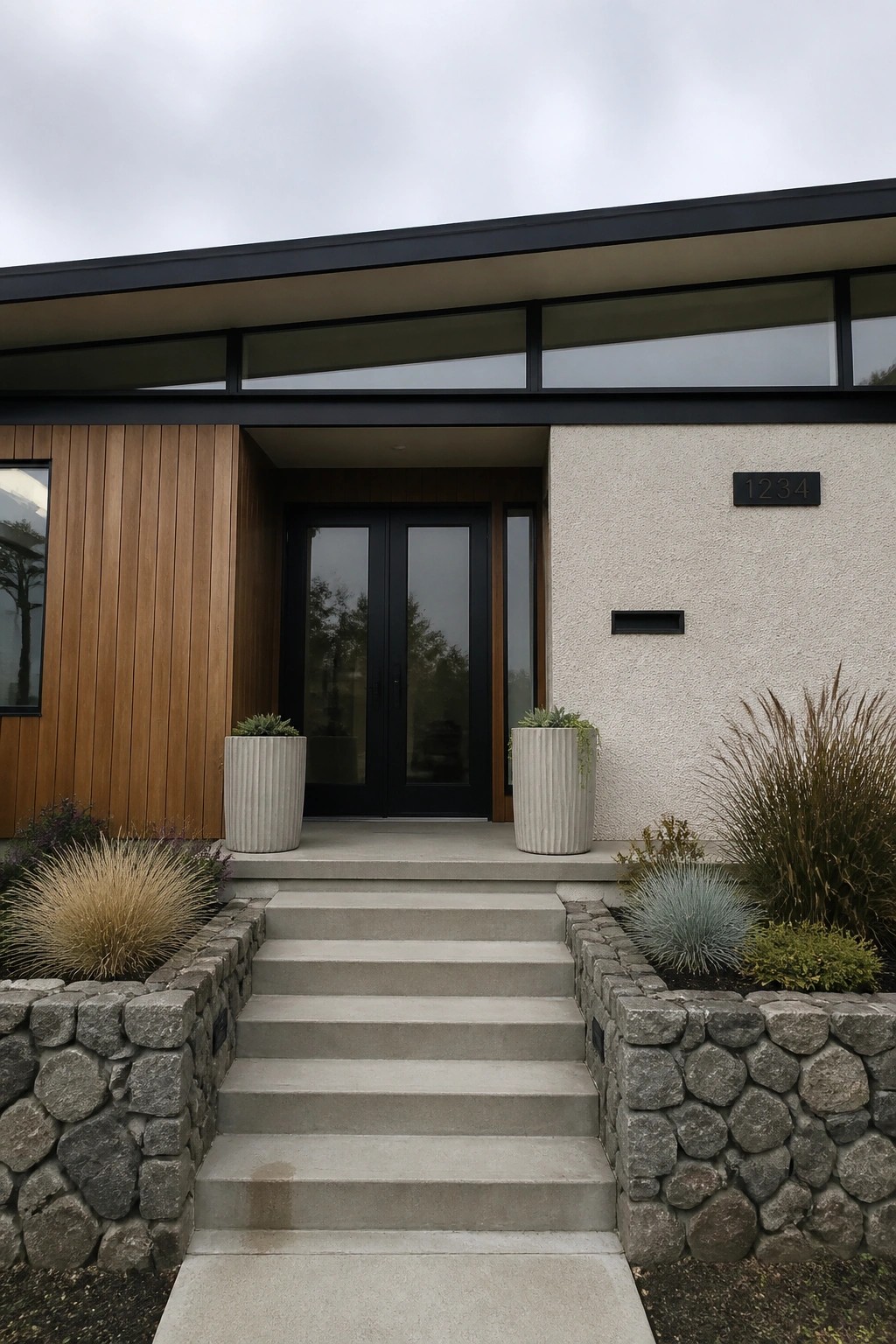
Clerestory windows placed right above the entry door bring in daylight without making the front of the house feel too exposed. They sit high enough to keep the view private while adding a clean horizontal line that fits the low profile of many mid-century bungalows.
This approach works best on homes with flat or low-sloping roofs. It pairs well with dark window frames and simple siding, and it reduces the need for large side windows that can sometimes look too busy on a small facade.
Adding A Fire Pit Next To The Deck
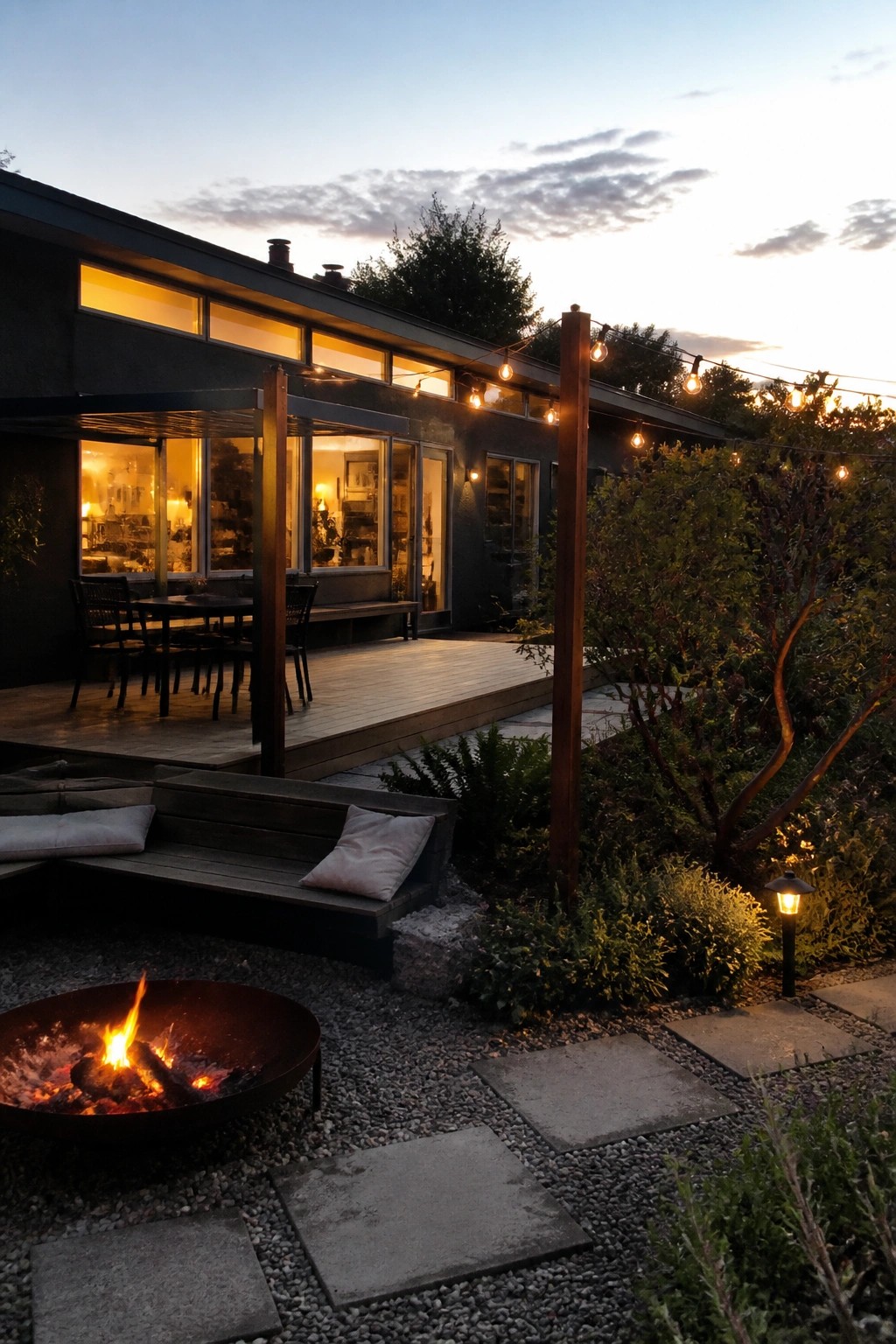
A fire pit set in gravel just off the main deck gives the backyard a second place to gather once the sun goes down. The round metal pit sits low and simple, which keeps the focus on the seating rather than on any built structure.
This setup works best on homes where the deck is used for dining and the lower area can handle a more casual circle of benches or chairs. Make sure the path between the two zones stays clear and use low plantings so the connection to the house does not feel blocked.
Clerestory Windows Beneath Wide Eaves
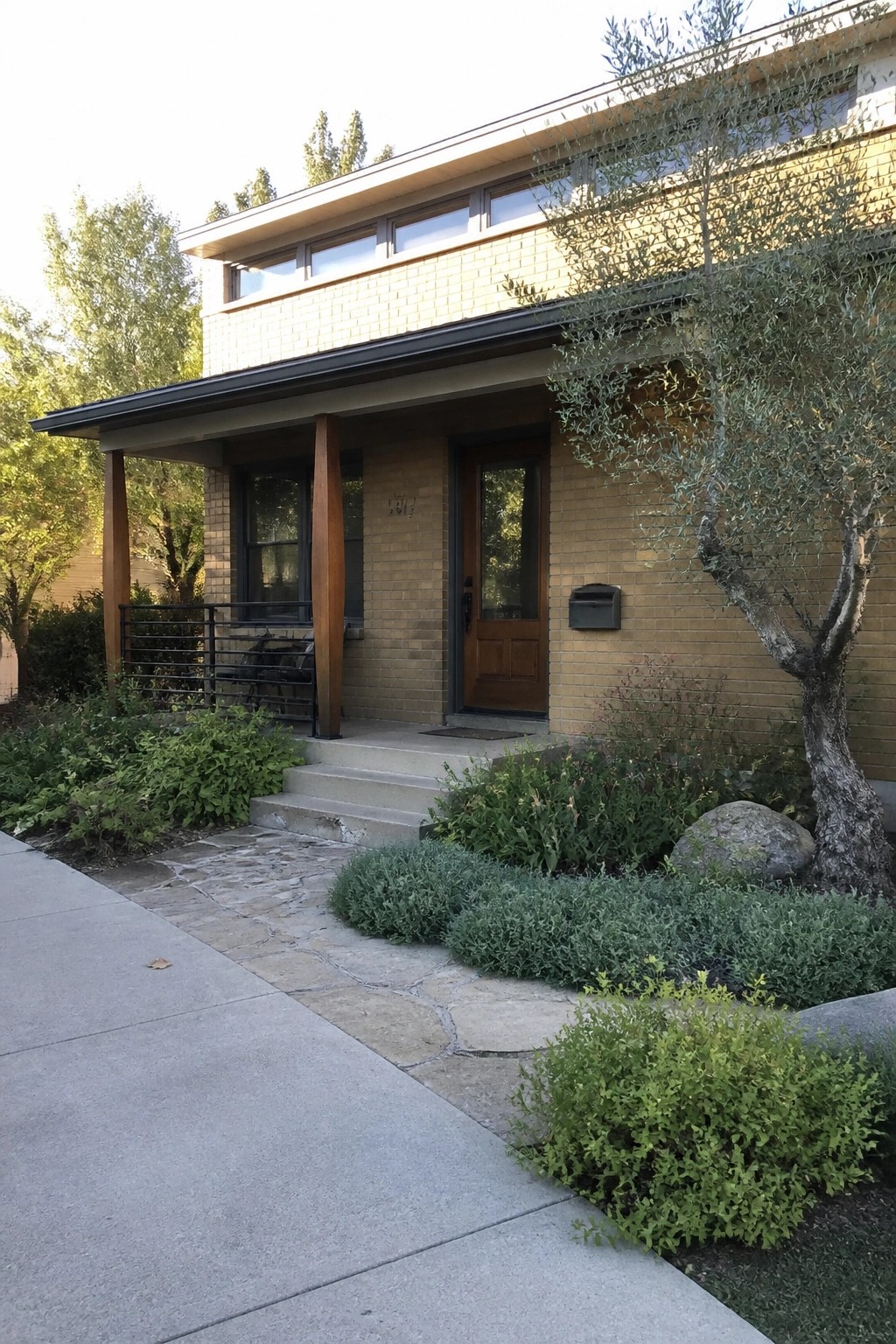
Clerestory windows work well on bungalows when you want more daylight without adding height or breaking up the low roofline. In this case they sit in a clean horizontal band right under the eaves, letting light reach deeper into the rooms while the front stays simple and private.
They suit homes with wide overhangs or deep porches, since the windows stay out of the main sight lines from the street. Just make sure the interior ceiling is high enough for the light to spread across the space instead of hitting a wall right away.
Clerestory Windows Add Light High Up
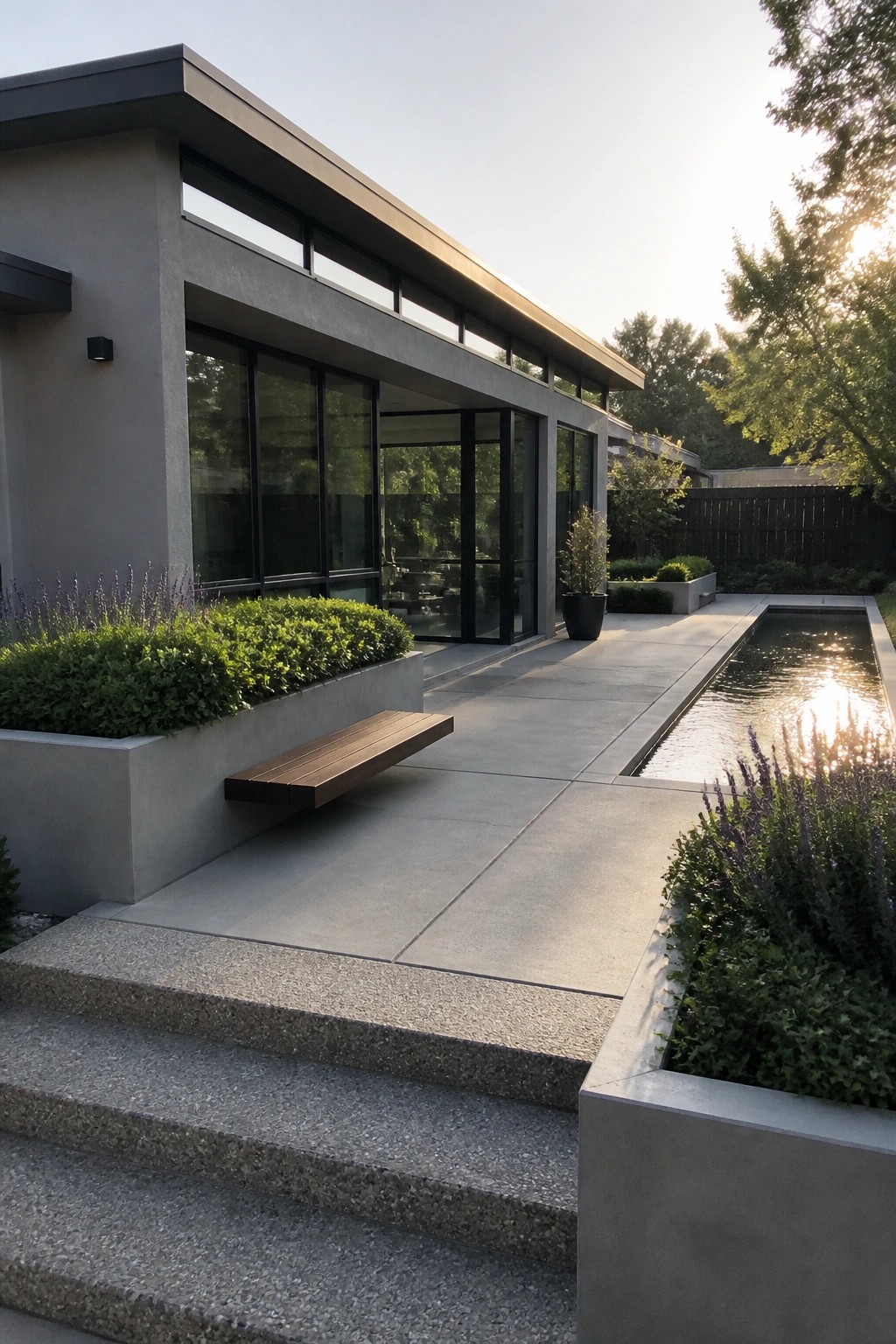
Clerestory windows work well on single story homes because they bring in daylight without needing tall walls or big side windows. In this setup the narrow band sits right under the roof overhang and lets light reach deeper into the rooms while the main glass stays at eye level.
They suit flat roof bungalows that want a clean outside line and still feel open inside. Place them on the side that gets the best sun and keep the frame color dark so the strip reads as part of the roof rather than an extra feature.
Clerestory Windows Across The Front
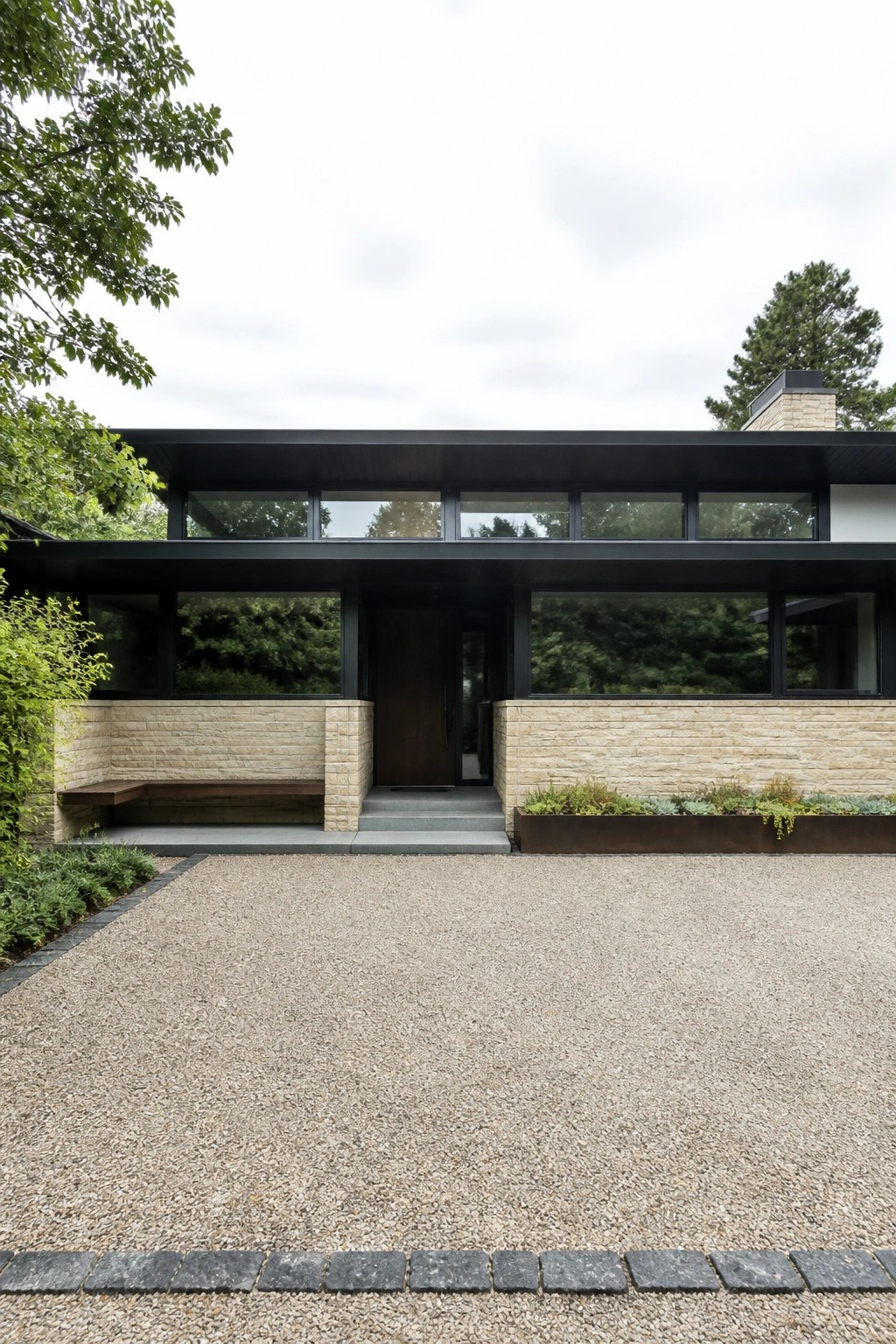
Clerestory windows sit high on the facade and bring light deep into the house without opening up the lower walls. This works especially well on bungalows where you want a solid base but still need more daylight inside.
They pair best with a low roofline and simple trim. Keep the band narrow and run it straight across so the windows read as part of the roof edge rather than scattered openings.
Clerestory Windows for Steady Natural Light
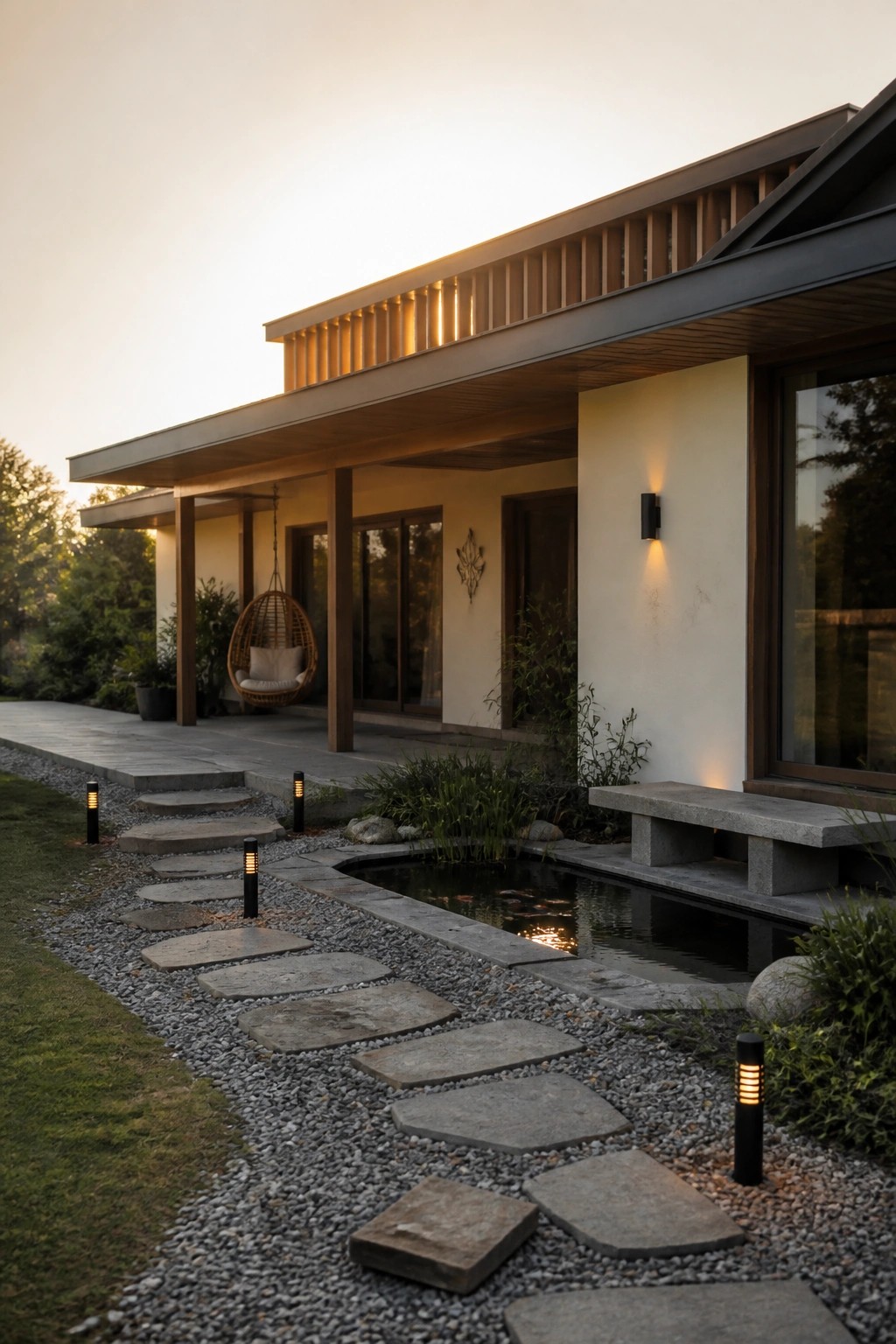
Clerestory windows placed high along the roof edge give a bungalow steady daylight even under a deep overhang. They cut the need for large side windows while still keeping the interior and porch areas from feeling dark during the day.
Set them in a continuous band so the light spreads evenly. This works best on homes with simple rooflines and solid walls below, where you want light without losing privacy or adding visual clutter.
Clerestory Windows High on the Wall
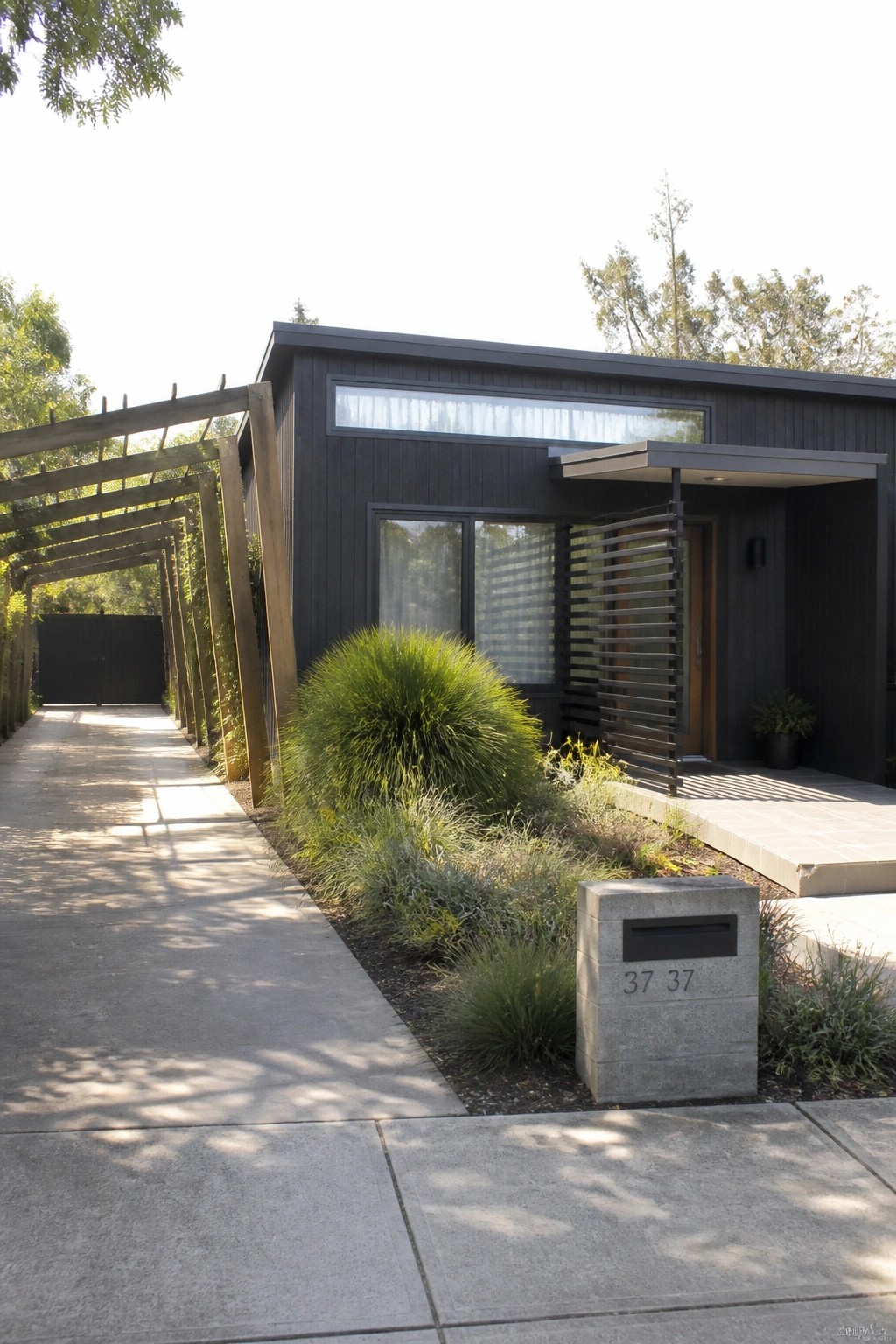
Clerestory windows sit right under the roof edge and bring light deep into the house without opening up the main walls. On this bungalow the long horizontal strip keeps the front looking solid and private while still making the rooms feel brighter during the day.
They suit smaller homes that face the street or have limited side windows. Keep the glass simple and run it straight across so the exterior stays clean and the light stays even inside.
Adding A Pergola For Outdoor Shade

A pergola makes a patio feel more like a finished room instead of just an open slab. The structure gives the space a clear overhead boundary, which helps the seating area feel settled and usable even on bright days.
This approach suits mid-century homes that already have strong horizontal lines. Place the pergola right off the main living area so the indoor and outdoor zones read as one. Keep the planting simple if you want coverage without constant trimming.
Clerestory Windows Above the Entry
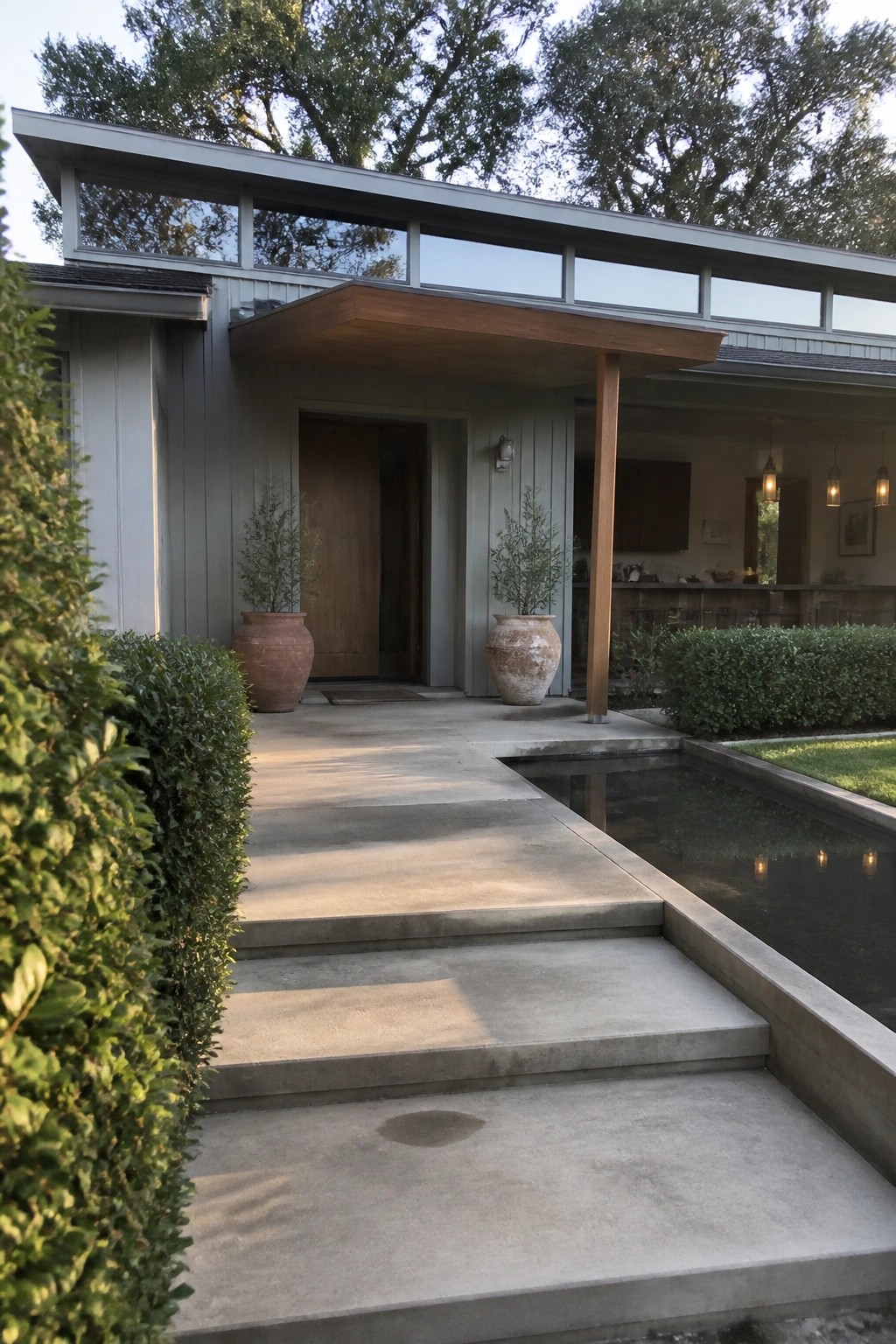
Running a band of clerestory windows right under the roof edge is a simple way to pull daylight into the front of the house. It keeps the facade low and quiet while still brightening the entry area inside without needing large windows at eye level.
This approach suits mid-century bungalows that already lean horizontal. Keep the windows narrow and continuous so they read as part of the roofline rather than breaking it up.
Clerestory Windows Keep The Facade Low And Bright
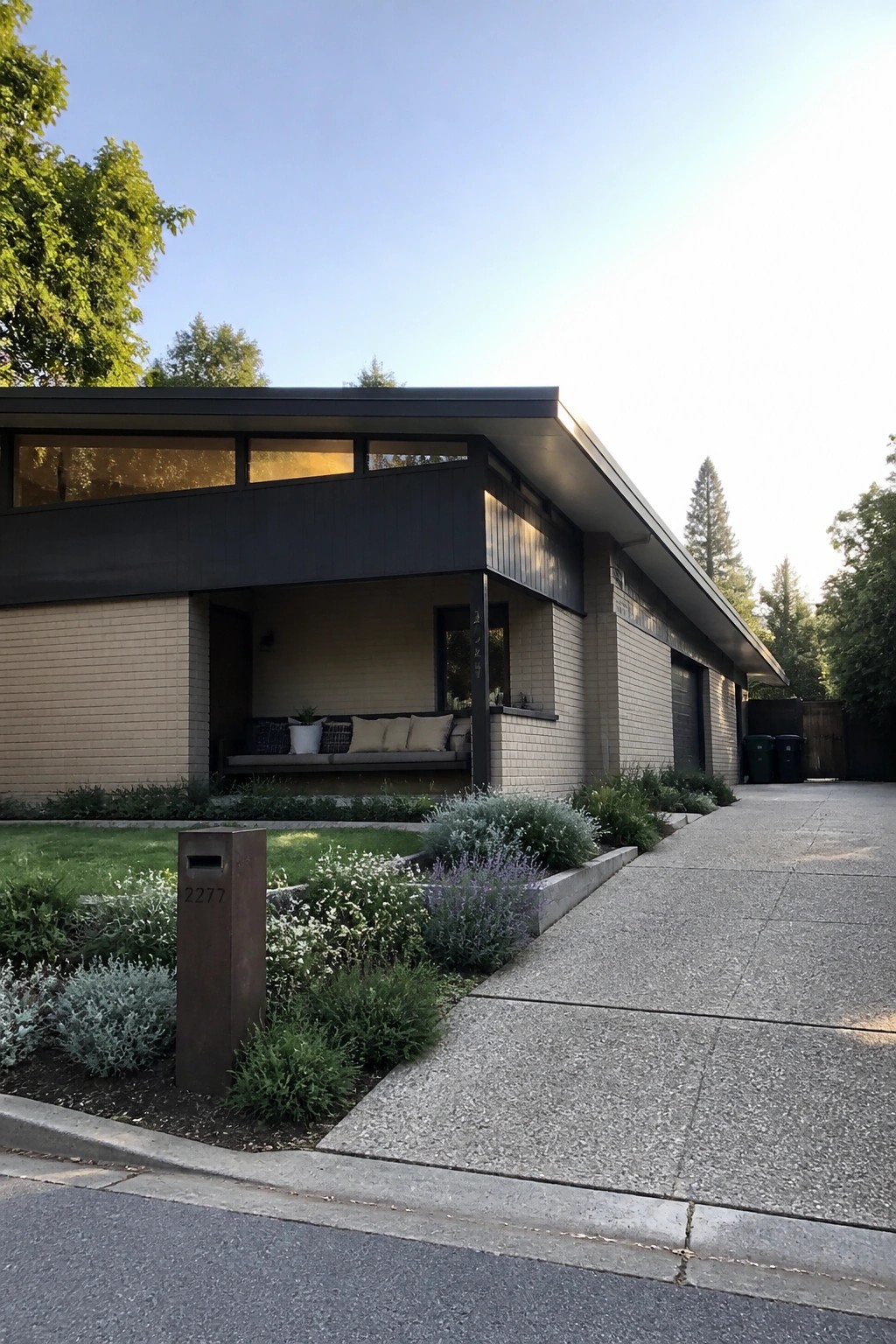
Clerestory windows work well on mid century bungalows because they bring light into the main living areas without raising the overall height or adding large glass on the front. The narrow horizontal band sits right under the roof edge, so the house still reads as low and grounded while the inside gets even daylight.
This approach suits homes with simple rooflines and mixed materials like brick below dark siding. It keeps the street view private and clean, but you need to make sure the windows are sized right so the interior does not feel too dark once the sun moves.
Clerestory Windows Over Covered Patios
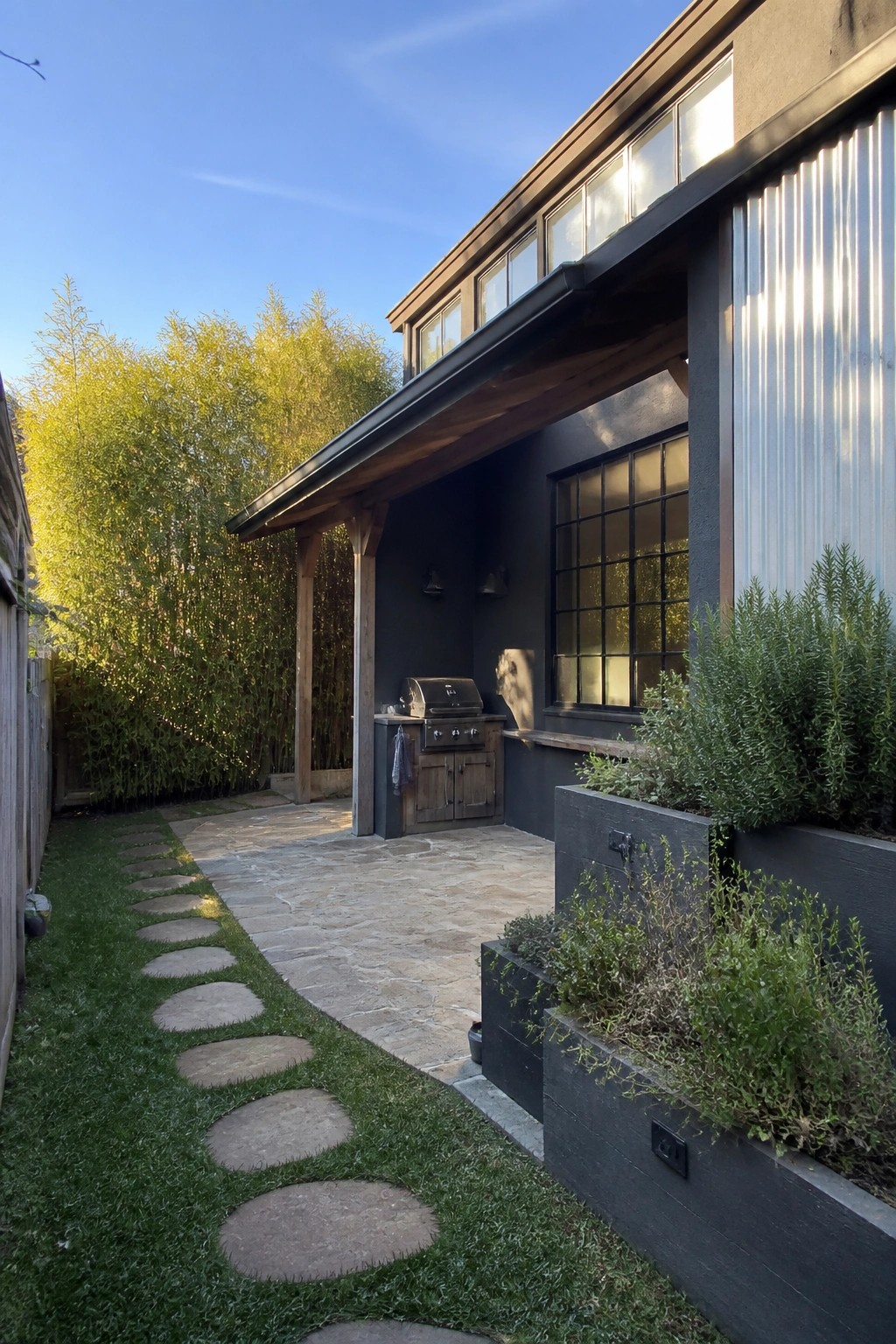
One simple way to improve a covered outdoor space is to add clerestory windows along the upper wall. They bring in extra daylight without opening the whole area to direct sun or losing privacy from nearby homes.
This approach suits mid century bungalows that already use the same windows indoors. Keep the roof overhang fairly deep so the space stays comfortable in warm weather, and match the window frames to the rest of the exterior for a clean look.
Clerestory Windows Above Main Living Spaces
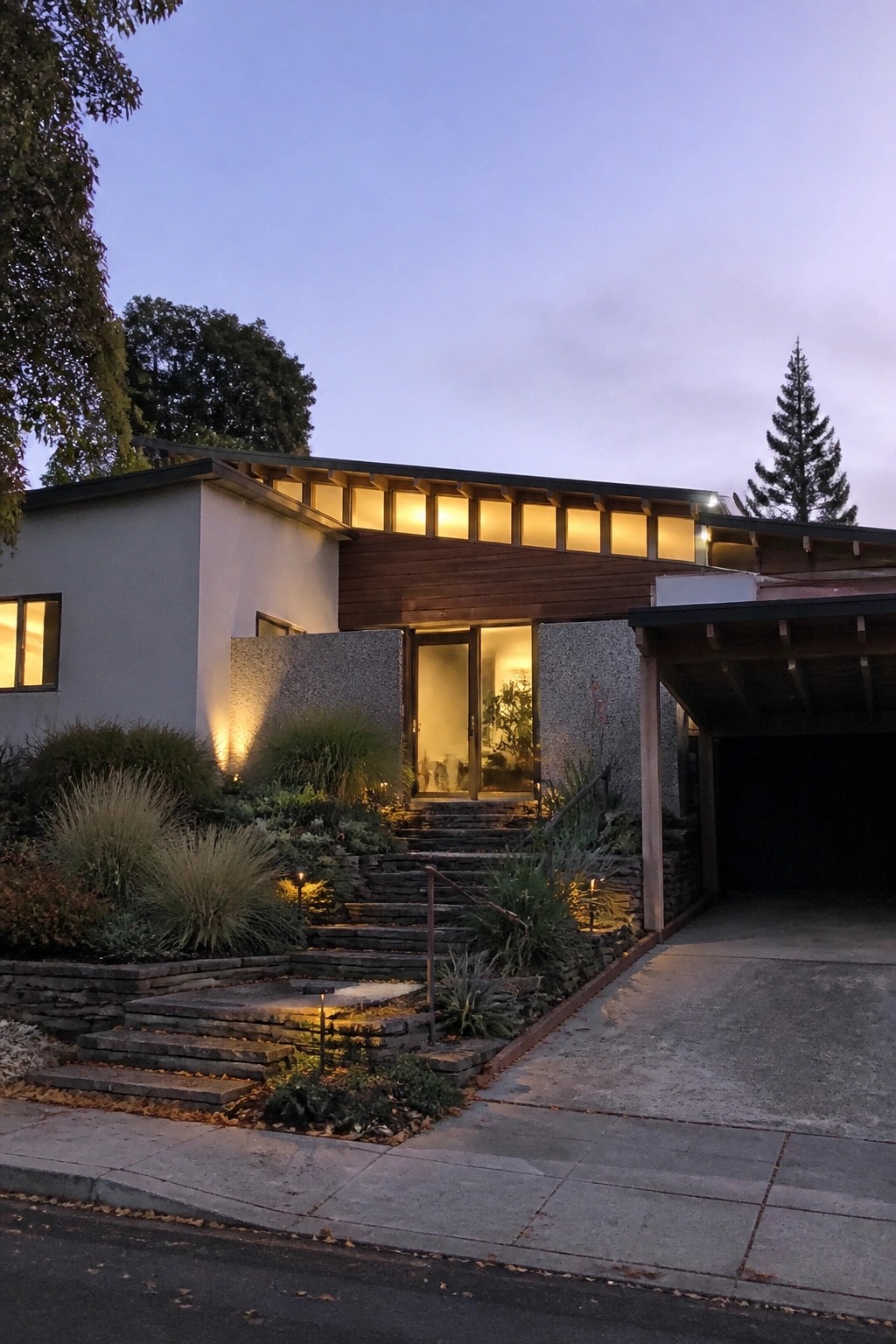
Clerestory windows give mid century bungalows a simple way to pull daylight deeper into the house. They sit high on the wall so the main living areas stay private while still getting that extra band of light, especially useful on compact lots where side windows are limited.
Place them above the entry or main living spaces where the roof overhang can shade them during the day. They work best when the frame and trim match the rest of the exterior materials so the addition feels built in rather than added on later.
Decks That Sit Low Beside A Pond
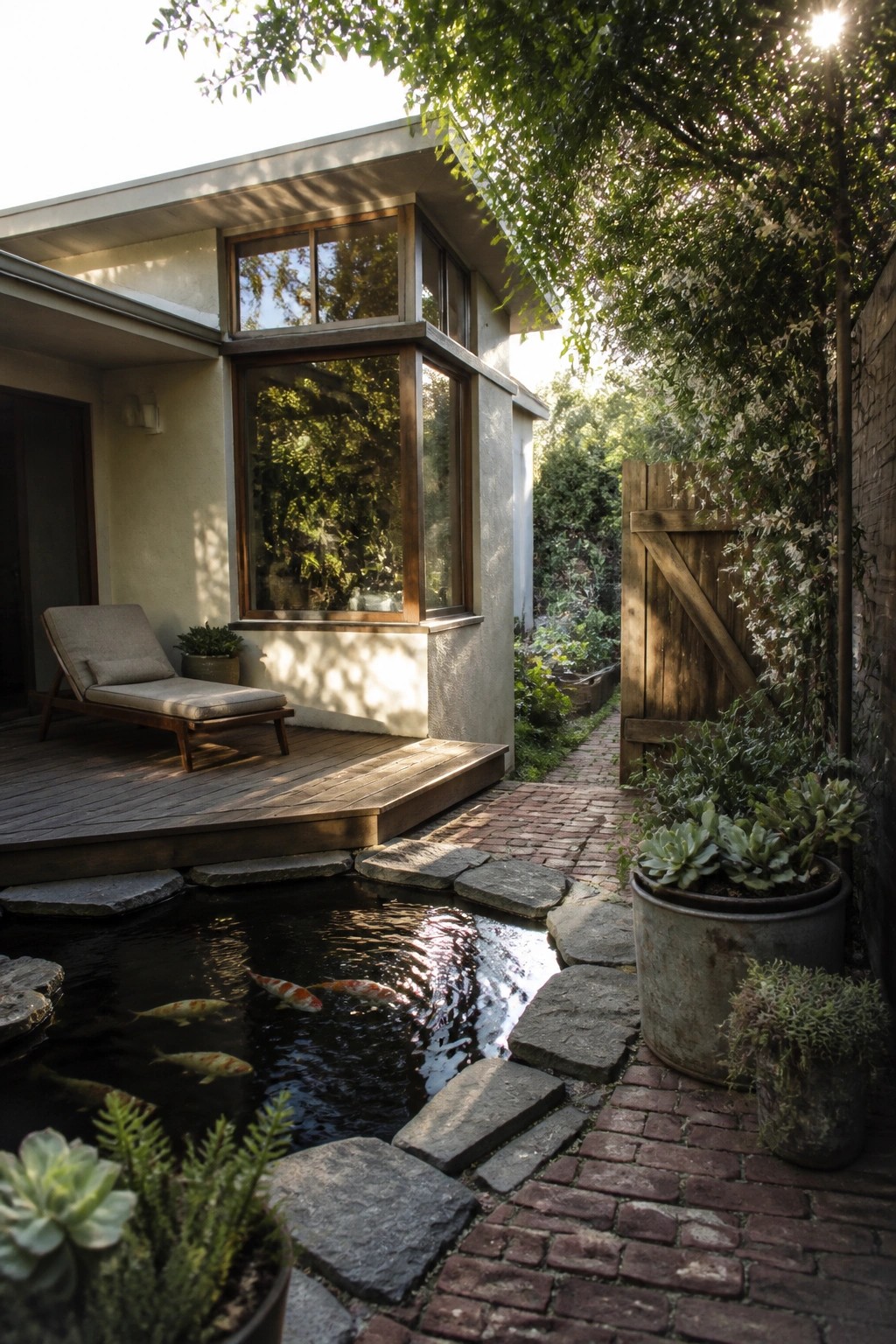
A low wooden deck placed right next to a pond gives the outdoor space a calm, settled feel without needing much height or structure. The water adds movement and sound, and the deck keeps everything easy to walk on while staying close to the ground.
This setup works best on smaller lots or bungalows where you want the garden to feel like part of the living area. Keep the deck simple, let the pond edge come close, and use stepping stones to connect it to the rest of the yard so the whole thing stays relaxed and natural.
Clerestory Windows in a Continuous Entry Band
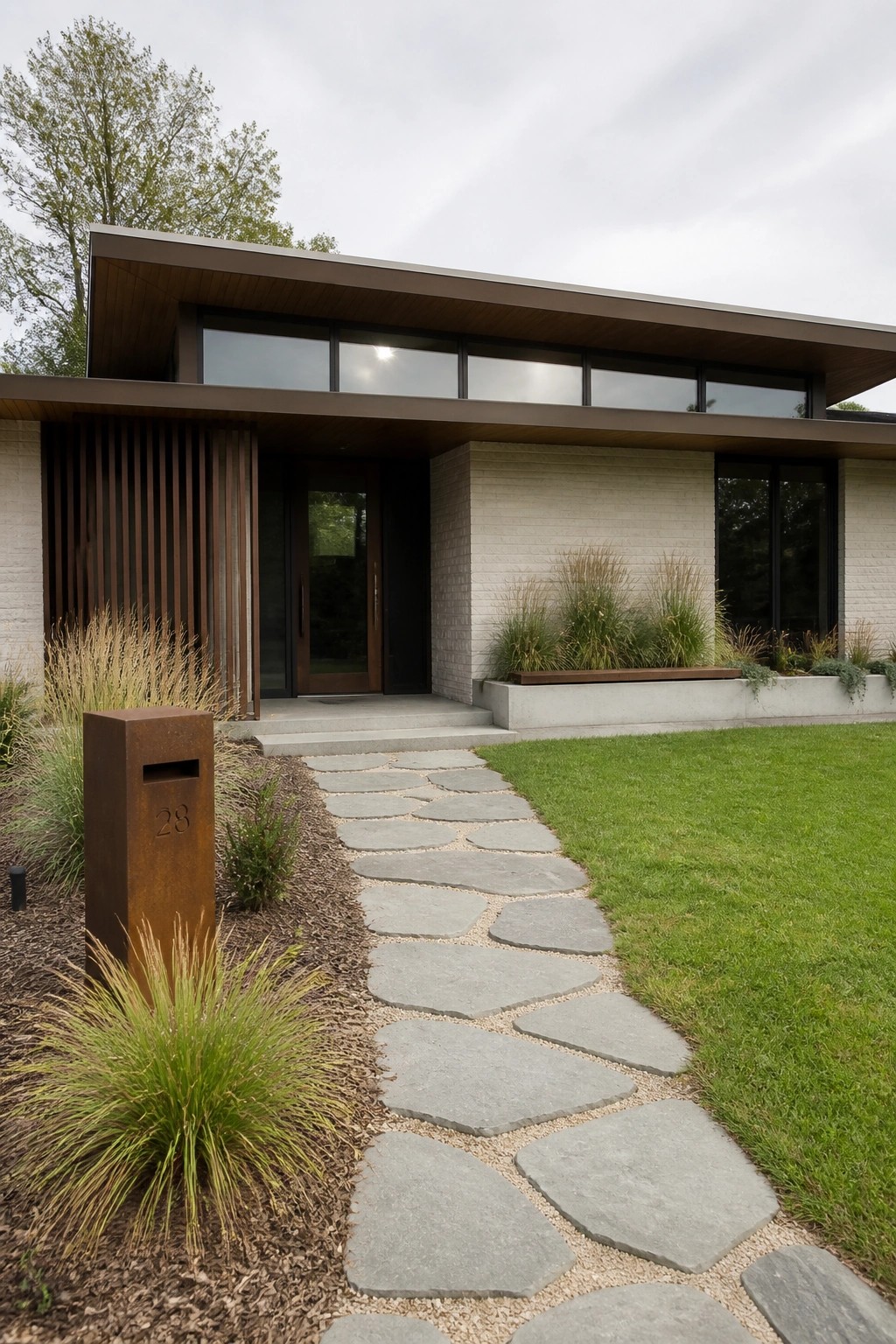
Many bungalows add clerestory windows high on the front wall so light reaches the entry area without relying on tall glass that could feel too open. The horizontal band sits neatly under the roof overhang and keeps the low profile that defines this style.
This approach works best on homes with a deep eave and a simple facade. Place the windows in a continuous run rather than scattering them so the lines stay clean and the interior stays private from the street.
Frequently Asked Questions
Q: Can I add clerestory windows to an older bungalow without a full remodel?
A: You can often cut them into the upper wall or roof edge with minimal framing changes. Focus on one or two walls that face open sky to pull light deep into the rooms. A local carpenter can match the trim to keep the mid-century lines intact.
Q: Do clerestory windows let in too much heat during summer?
A: They do pull warmth when the sun sits high, so angle the openings toward the north or east side of the house. Pair them with a deep roof overhang and the heat stays manageable without extra gear. Many of the designs shown work fine this way in warm climates.
Q: How do I keep furniture from blocking the light these windows give?
A: Keep tall pieces along the lower walls and leave the space right under the clerestory clear. Low sofas and tables work best since the light comes from above anyway. This keeps the glow even across the floor.
Q: What if my lot sits too close to neighbors for high windows?
A: (Check the view angle first before you cut any openings.) Most bungalows still gain privacy because the glass sits above eye level from the street or yard. Frosted film adds extra screening if you need it.
