

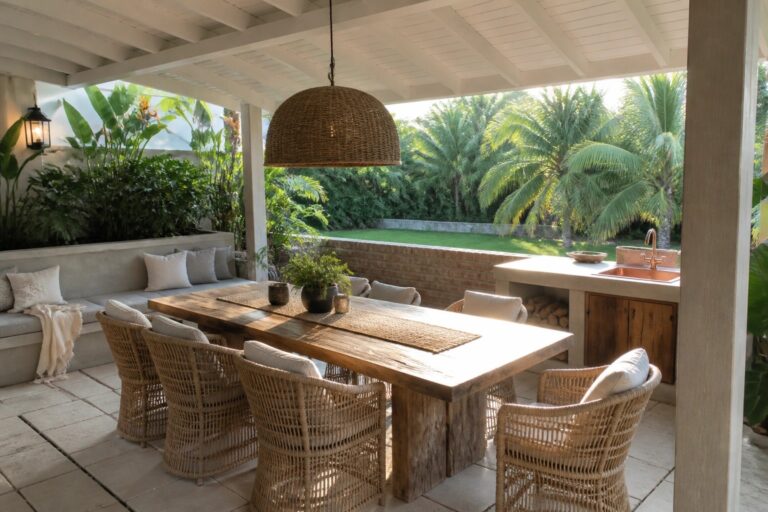
I have noticed that the best outdoor dining spots tend to balance shade and airflow in a way that keeps people comfortable even when the sun is high.
In my own yard I learned the hard way that a terrace needs solid coverage overhead before the furniture arrangement can really work.
Shade alone is not enough.
Tropical planting helps soften the edges but only if it does not block the natural breeze that makes covered spaces feel open.
I would probably try adding a simple ceiling fan next time to see how much difference it makes on still days.
Covered Terraces With An Outdoor Kitchen Nearby
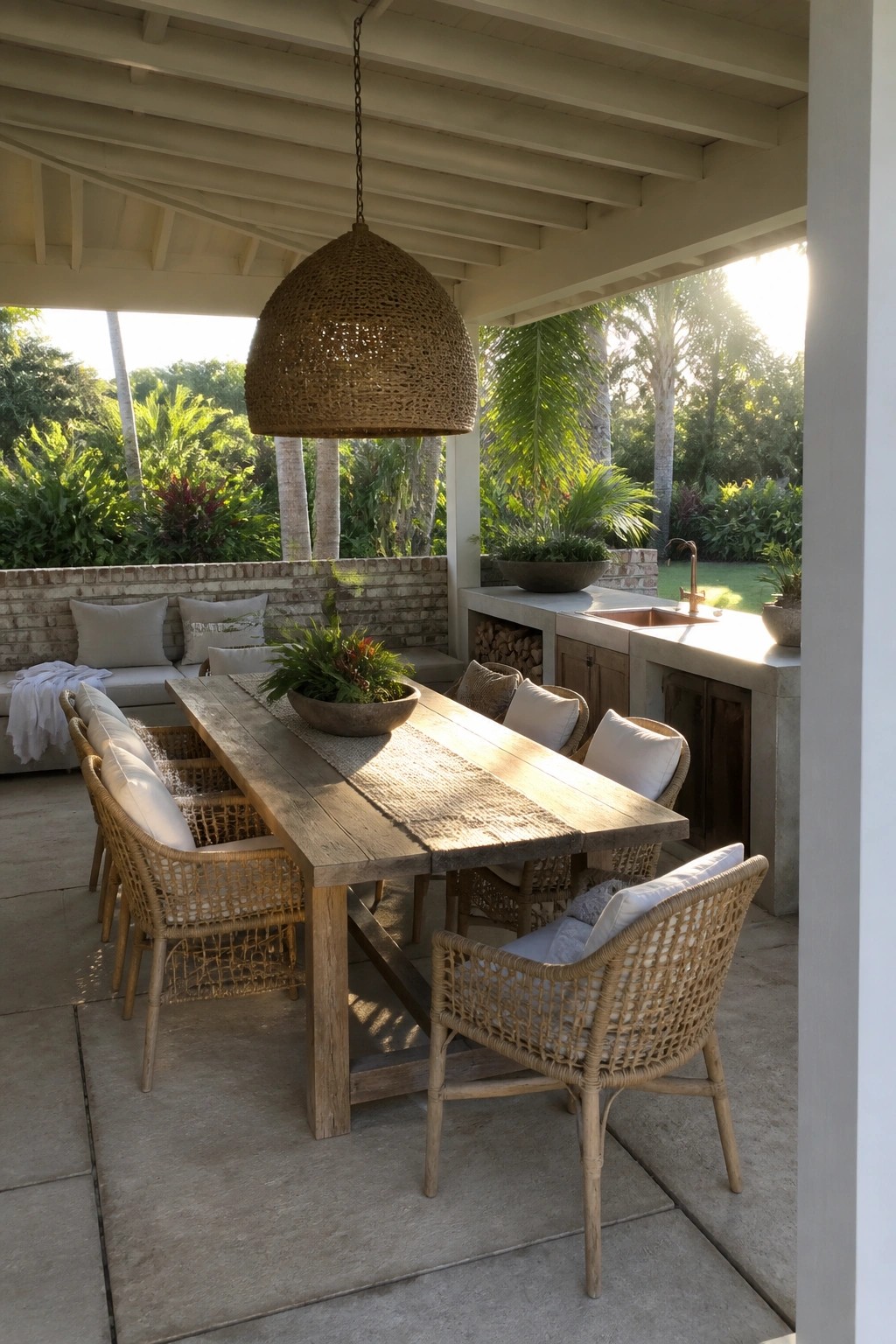
A covered terrace works well when the dining table sits close to an outdoor kitchen. It keeps meals simple since everything stays in one spot and you do not have to carry food far.
This setup suits warm climates and homes that already have a solid roof overhang. Keep the table long enough for everyday use and choose seating that holds up outside without much fuss.
Thatched Roofs Over Outdoor Dining Tables
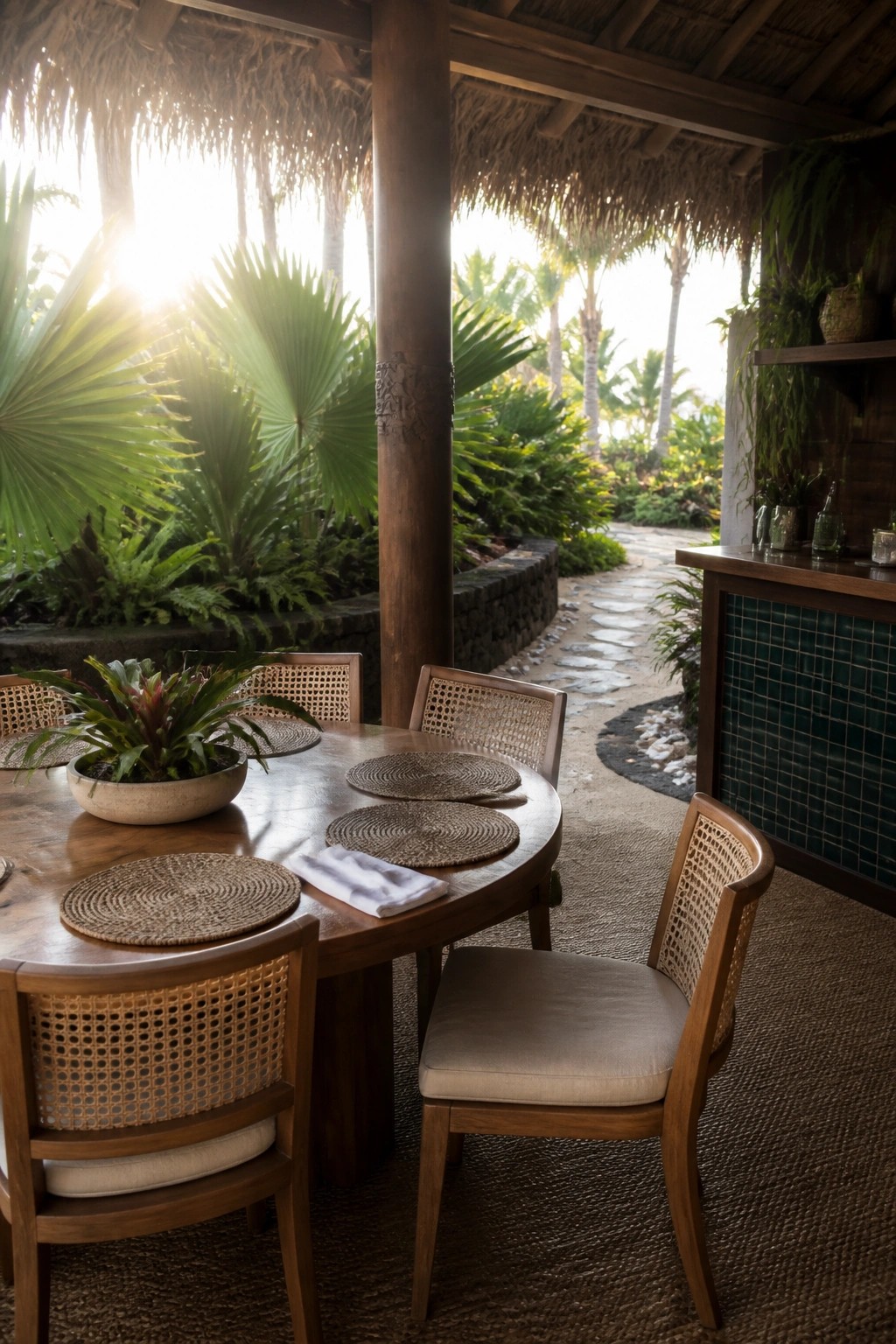
A thatched roof over an outdoor dining table gives solid shade while keeping the space open to the garden around it. The natural material blends with the plants and path nearby, so the terrace feels like part of the landscape instead of something added on later.
This setup works well on homes in warm climates where you want to eat outside without direct sun. Keep the furniture simple with wood and woven pieces so the area stays easy to maintain and comfortable through the seasons.
Long Tables With Benches For Outdoor Dining
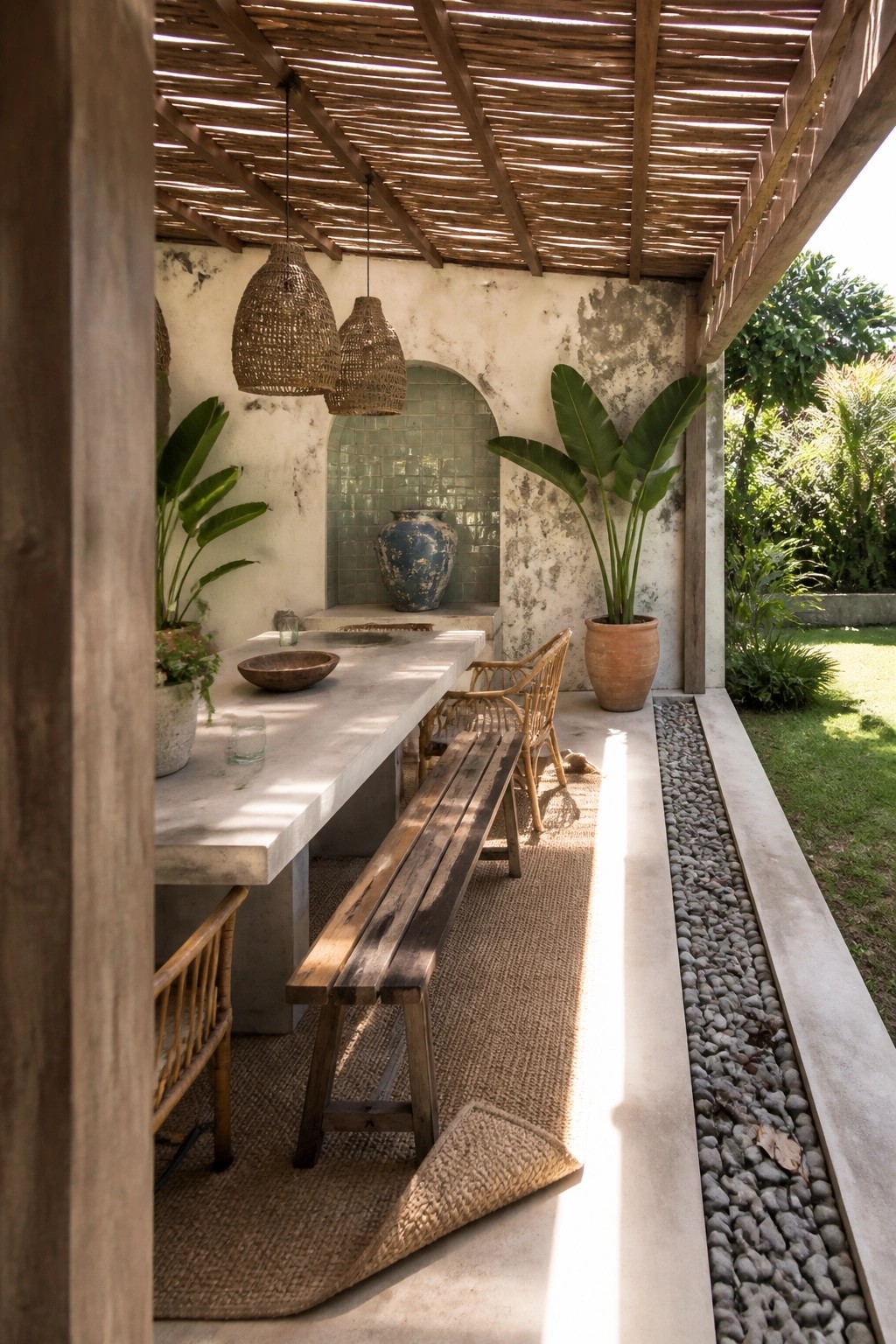
A long table paired with a simple bench creates an easy, communal feel for meals outside. The bench lets people slide in and out without fuss, and it keeps the setup from looking too formal or crowded. In a covered spot like this, the arrangement works especially well because it fits more guests without needing extra chairs on every side.
This approach suits homes with decent outdoor space and some kind of overhead cover, whether a pergola or roof extension. It works best when the table is sturdy enough to stay in place year-round and the bench is kept shorter than the table so it does not block movement at the ends. Avoid placing the bench right against a wall or plant bed, since that limits access from one side.
Covered Terraces That Keep Dining Comfortable
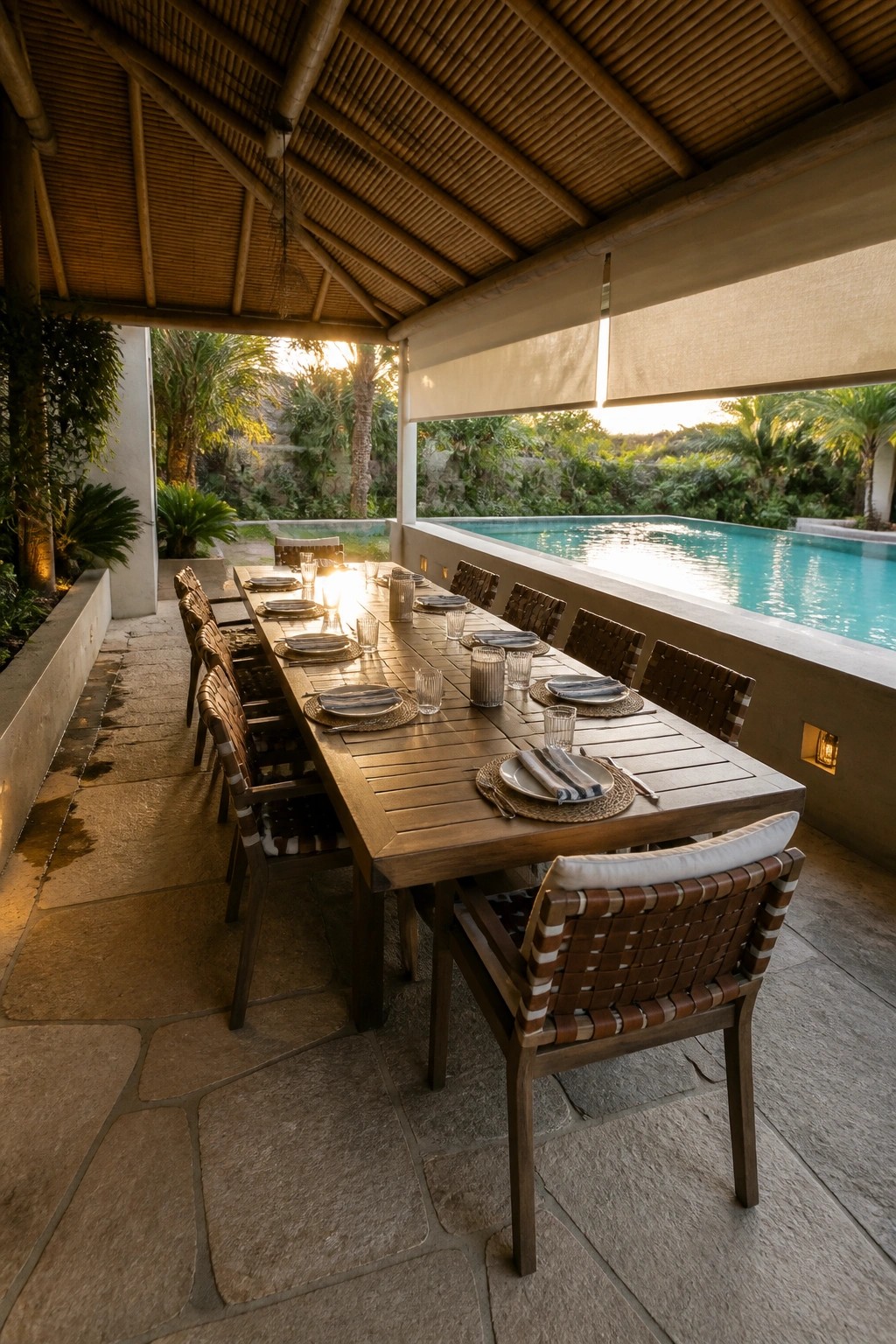
A roof over the dining table makes outdoor meals possible even in strong sun or light rain. The long table and woven chairs sit under a simple thatched cover right beside the pool, which keeps the space usable through most of the day without needing extra shade structures.
This setup works best on homes with existing pools or garden views where you want dining to feel connected to the water. Keep the cover low and open on the sides so the terrace still feels like part of the yard rather than a separate room.
Woven Pendant Lights Over Outdoor Tables
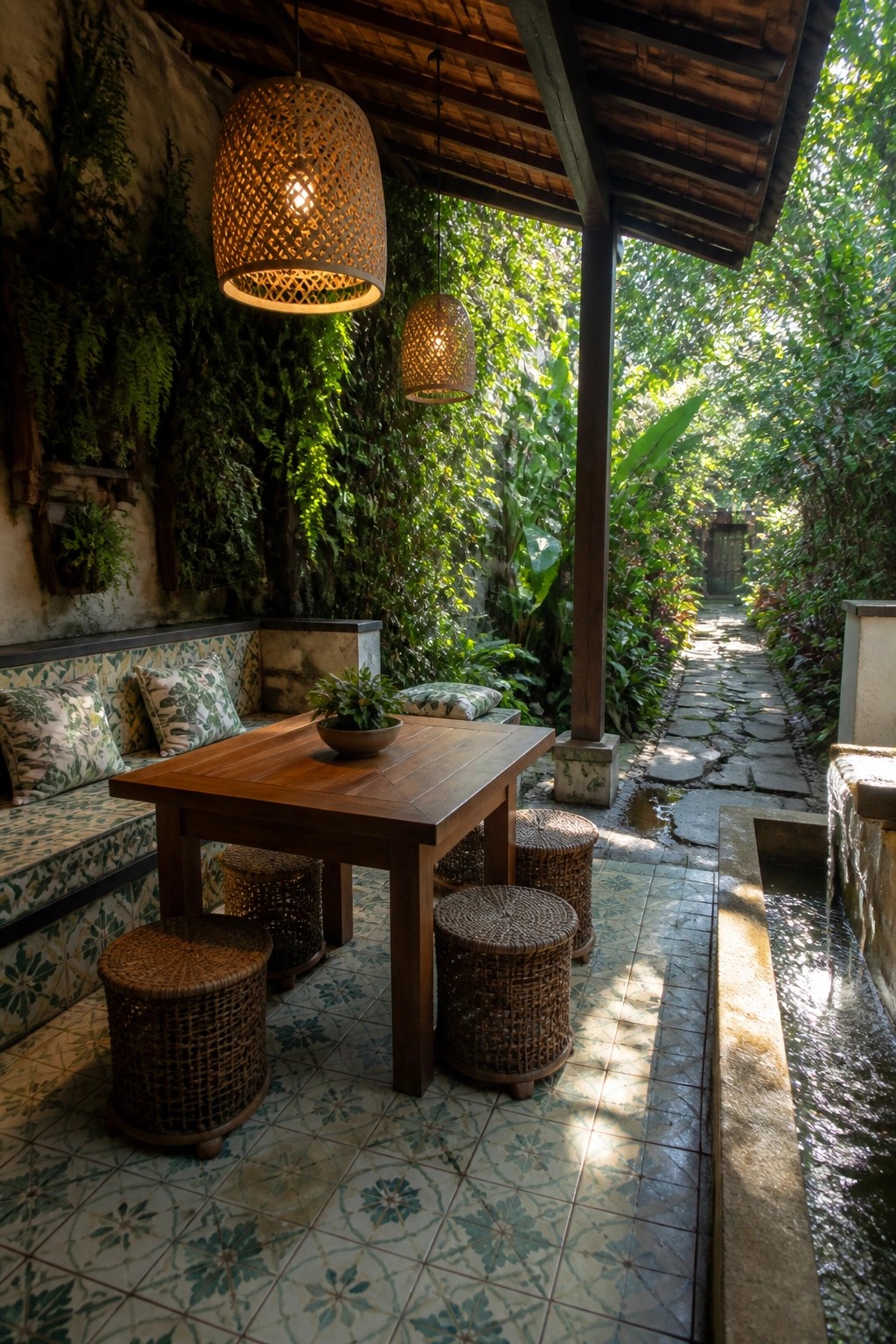
Woven pendant lights add a soft texture that fits naturally with tropical planting around a covered dining terrace. They cast a warm glow in the evening while keeping the space open to the garden views during the day.
Hang two or three at staggered heights above a simple wood table. This works best on patios that already have solid roofing and plenty of surrounding greenery. Choose weatherproof versions so they hold up in humid conditions.
Covering The Dining Terrace With A Pergola
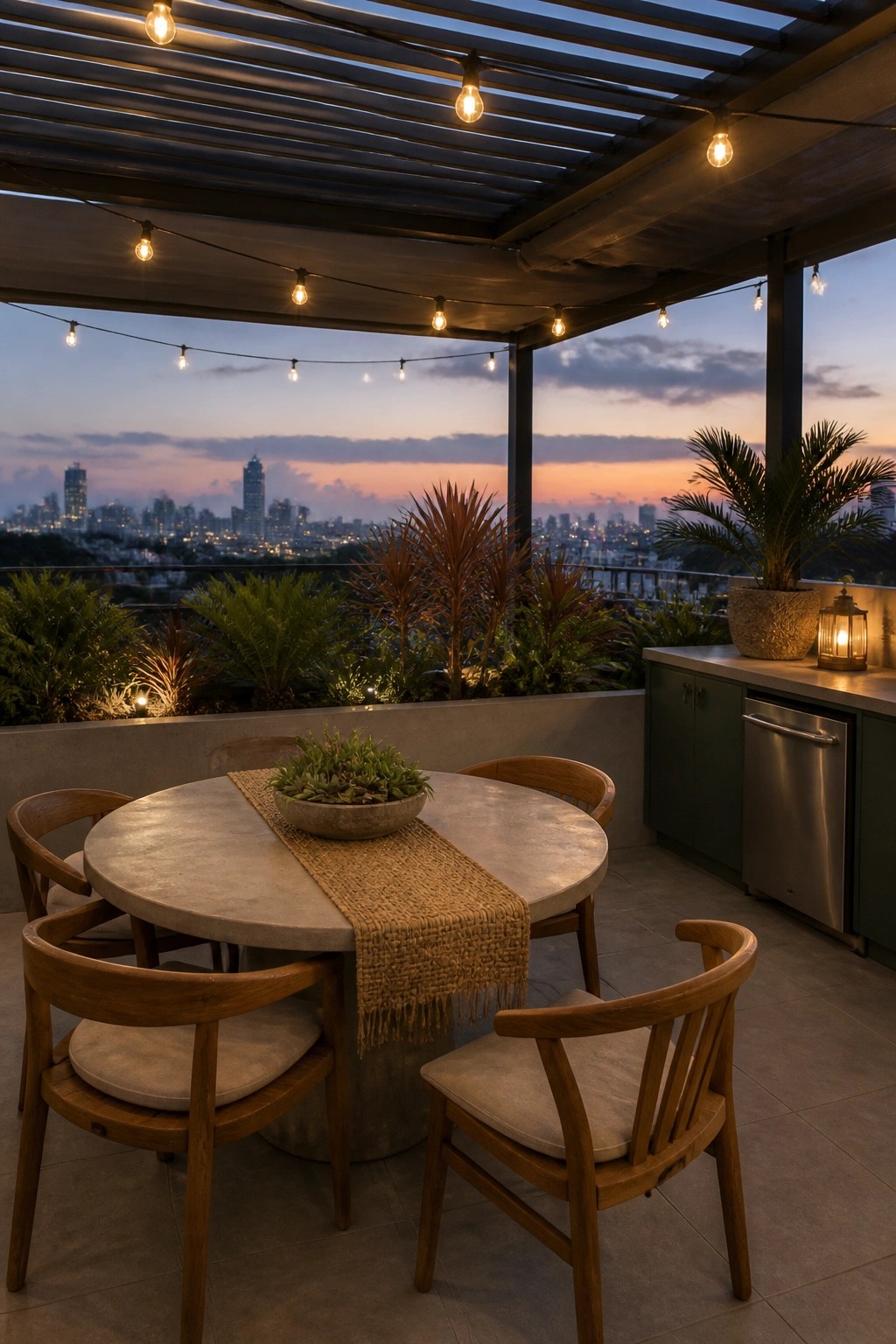
A basic overhead structure like a pergola makes an outdoor dining area feel more settled and usable. It creates a clear spot for the table without closing off the space or blocking the view.
String lights across the beams and the area stays comfortable after dark. This works well on rooftops or open terraces where you want some protection from weather while still enjoying the surroundings.
A Long Bar Counter Along The Covered Terrace
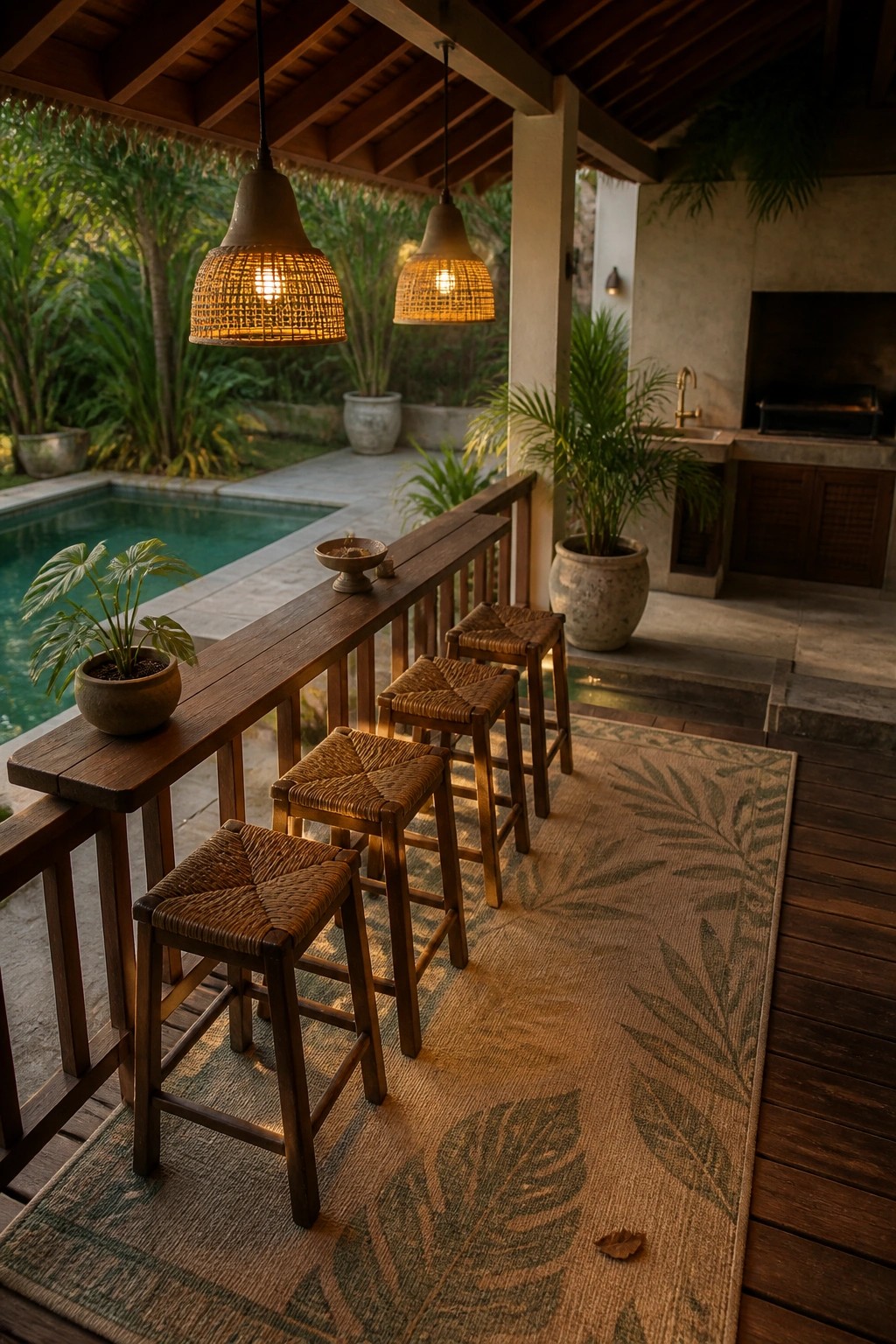
A long bar counter under the roof gives the terrace a simple way to handle meals and drinks without setting up a full table every time. The stools slide underneath when not needed, which keeps the space open and easy to move around in.
This works best on homes where the terrace sits next to a pool or garden, since the counter creates a natural edge between the covered area and the open yard. Keep the counter height comfortable for sitting and choose stools that can handle some weather if the space stays mostly open.
Covered Terraces Benefit From Hanging Lights
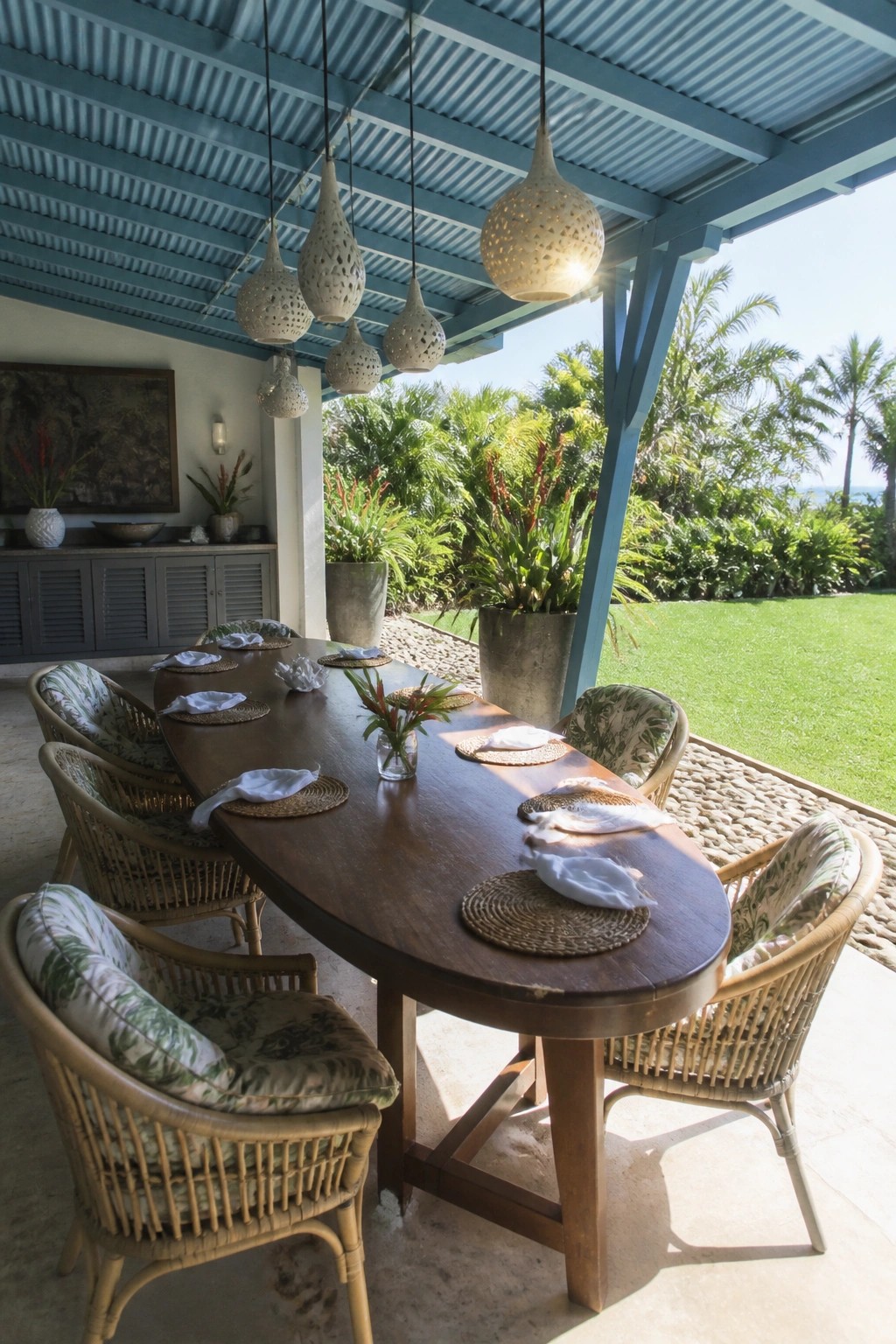
A covered roof over a dining table gives you shade and protection while still keeping the space open to the garden. Adding a few hanging lights underneath makes the area feel ready for meals at any time of day instead of just when the sun is out.
This setup works best on homes that already have some outdoor structure to work with. Keep the lights simple and the table long enough for regular use so the terrace becomes part of daily living rather than something saved for special occasions.
Long Wood Tables For Covered Terraces
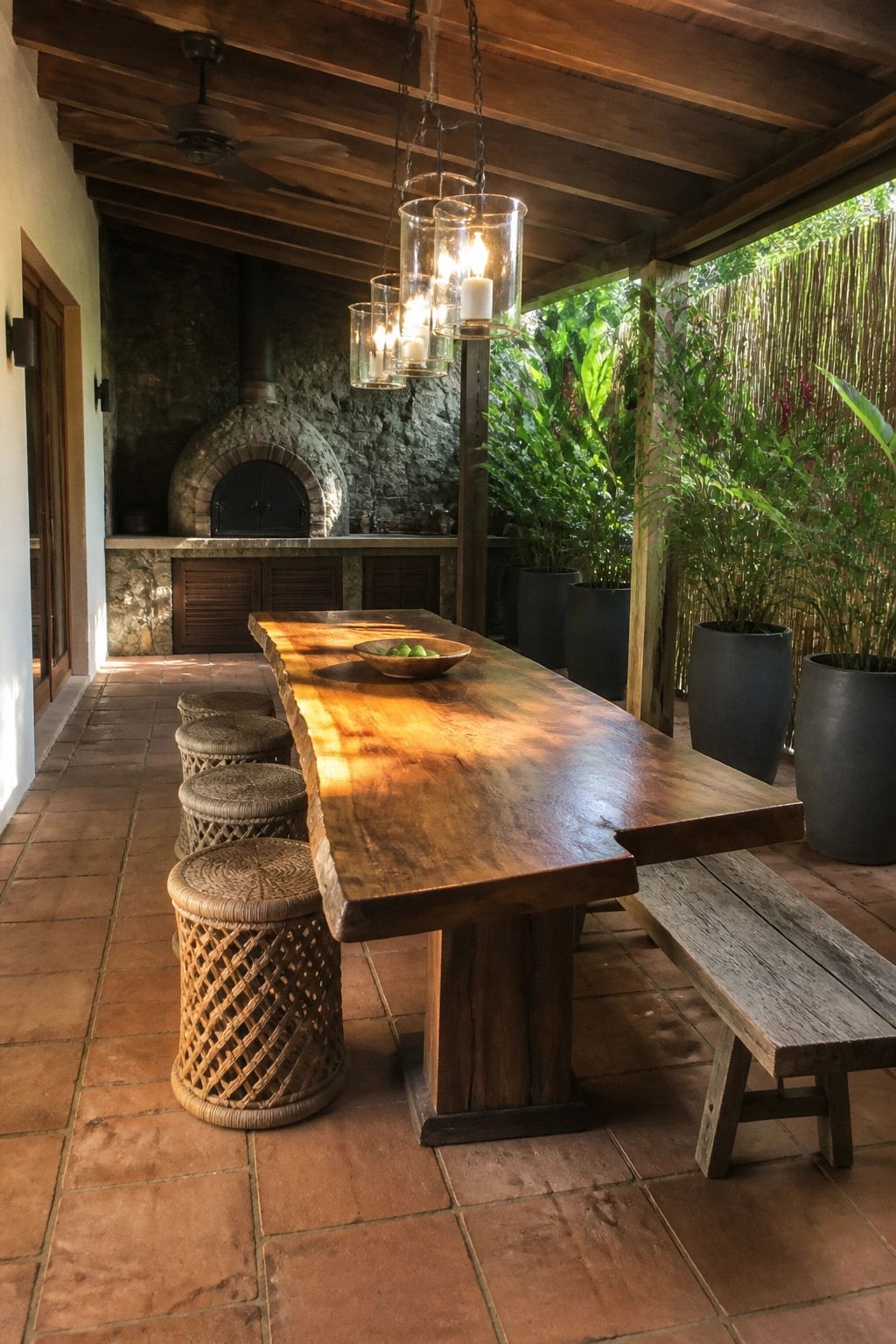
A long wood table gives a covered terrace a solid center without feeling too formal. It stands up to weather and daily use while keeping the space feeling natural and simple.
Pair it with basic woven stools or a bench and keep the rest of the setup light. This layout works best when the terrace sits right next to an outdoor kitchen so cooking and eating stay in the same easy zone.
Covered Terraces That Open Straight To The Garden
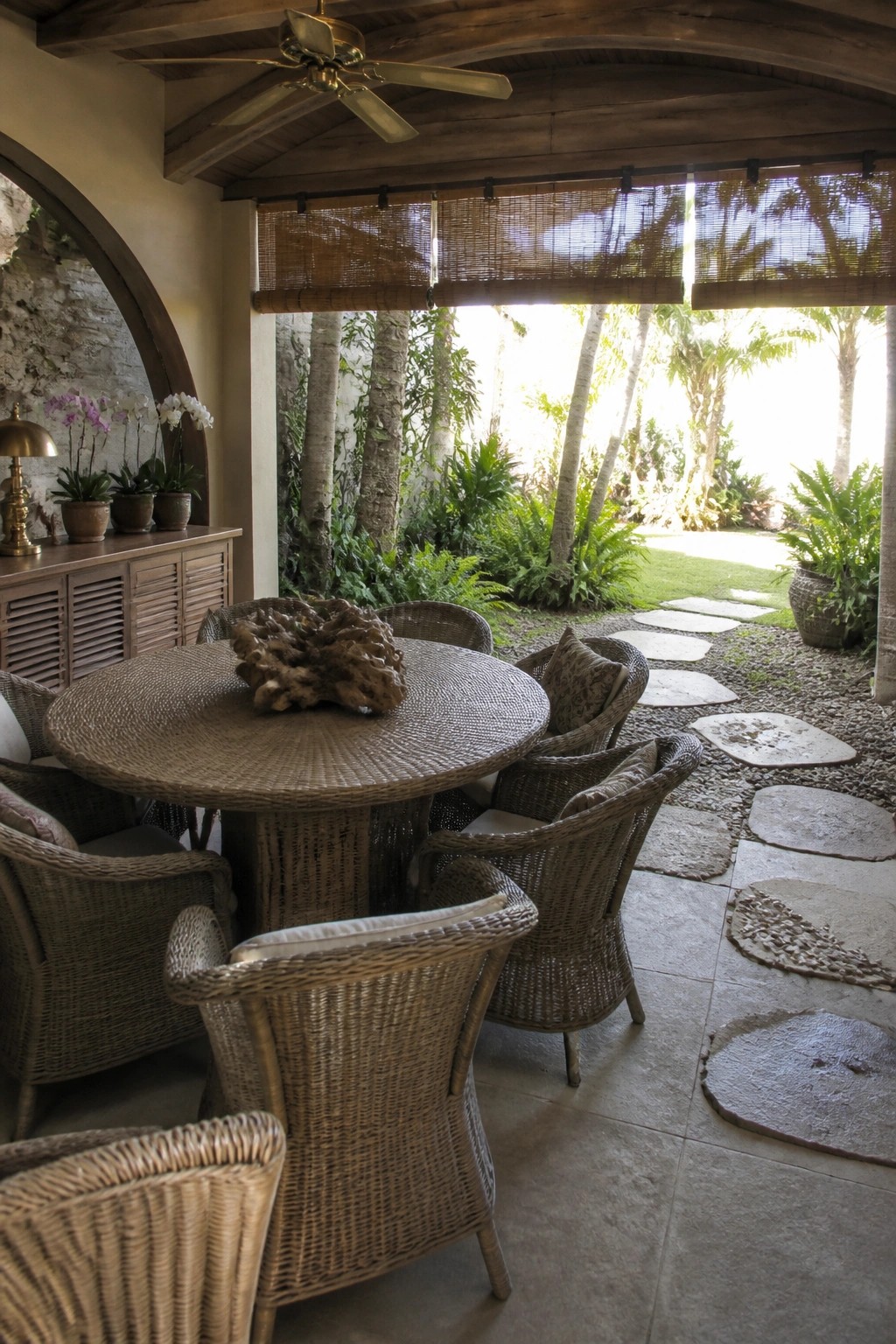
A covered terrace works best when it does not feel closed off from the rest of the yard. Leaving the sides open and using simple woven furniture lets the dining area borrow views and air from the garden without losing shade or shelter from the roof.
This setup suits homes in warm regions where meals can move outside for most of the year. Lay a few stepping stones from the edge of the terrace into the lawn or planting beds so the space feels like one continuous area rather than a separate room.
Thatched Roofing Over Outdoor Dining Areas
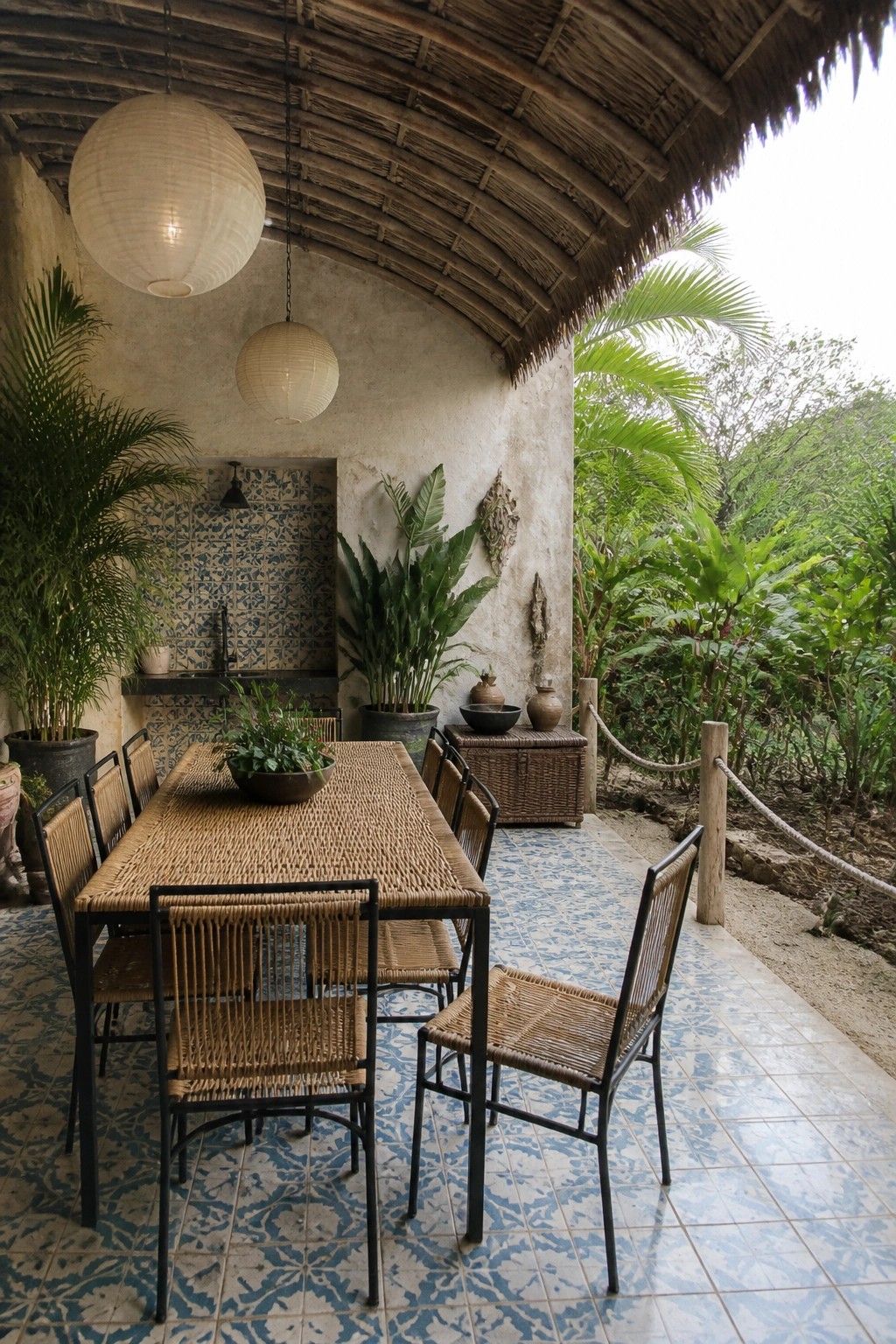
A thatched roof gives an outdoor dining terrace real shade and a bit of shelter without making it feel closed in. It keeps the space cooler during the day and still lets in plenty of fresh air, which works especially well in warm climates where people want to eat outside most of the year.
This approach suits homes with simple outdoor rooms or patios that open straight into a garden. The key is keeping the structure light so the view stays open and the space does not feel too heavy or enclosed.
Covered Terraces With the Kitchen Nearby
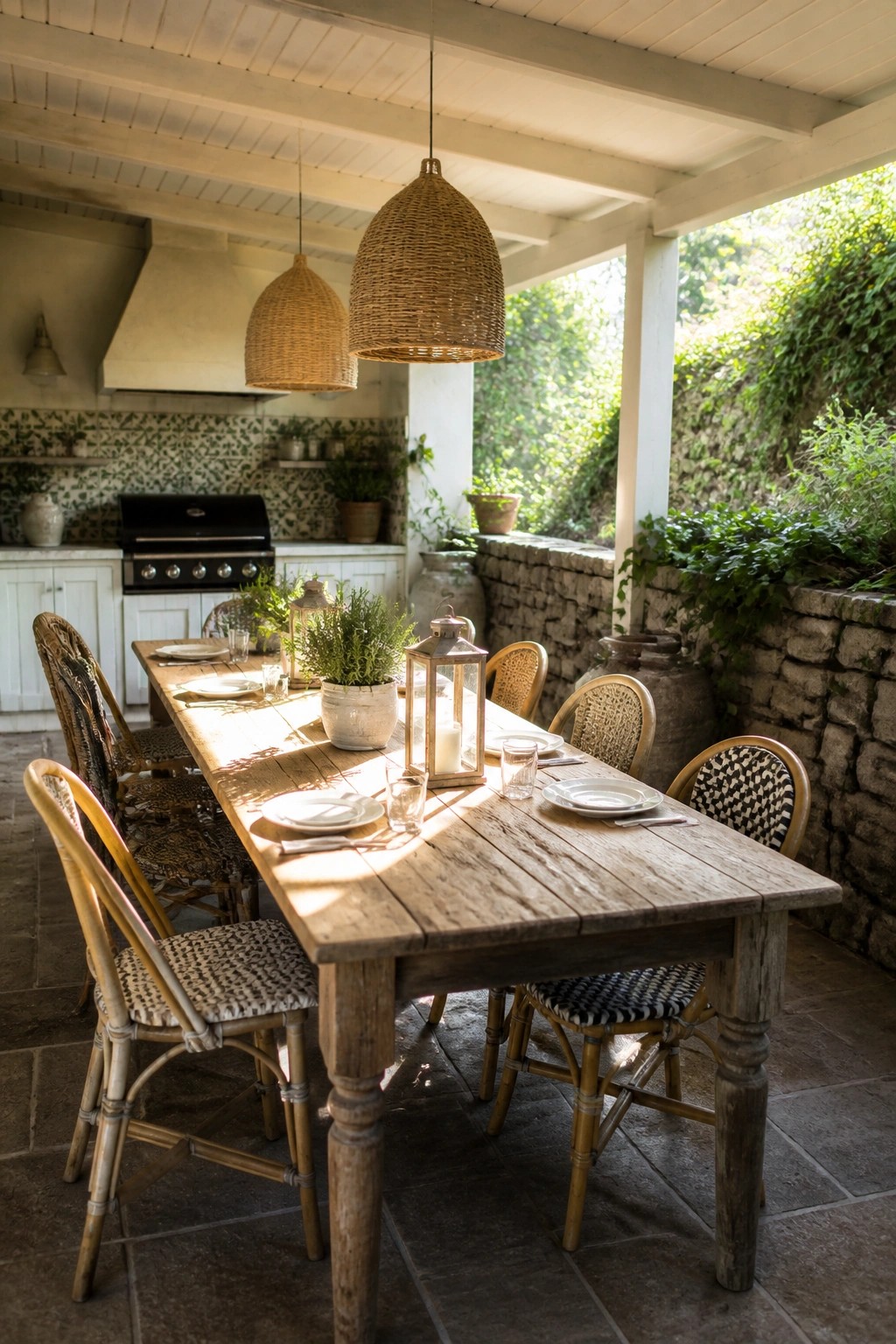
One useful way to make an outdoor dining space feel practical is to place the table close to the cooking area. This keeps serving simple and lets the cook stay part of the conversation without running back and forth. A covered roof helps the space stay usable even on warmer days or when light rain starts.
This layout works best on homes that already have a patio or terrace attached to the main living area. A long wooden table and simple chairs keep the look relaxed, while leaving enough room around the table makes it easy to pull out seats and move serving dishes.
Long Tables with Bench Seating on Covered Terraces
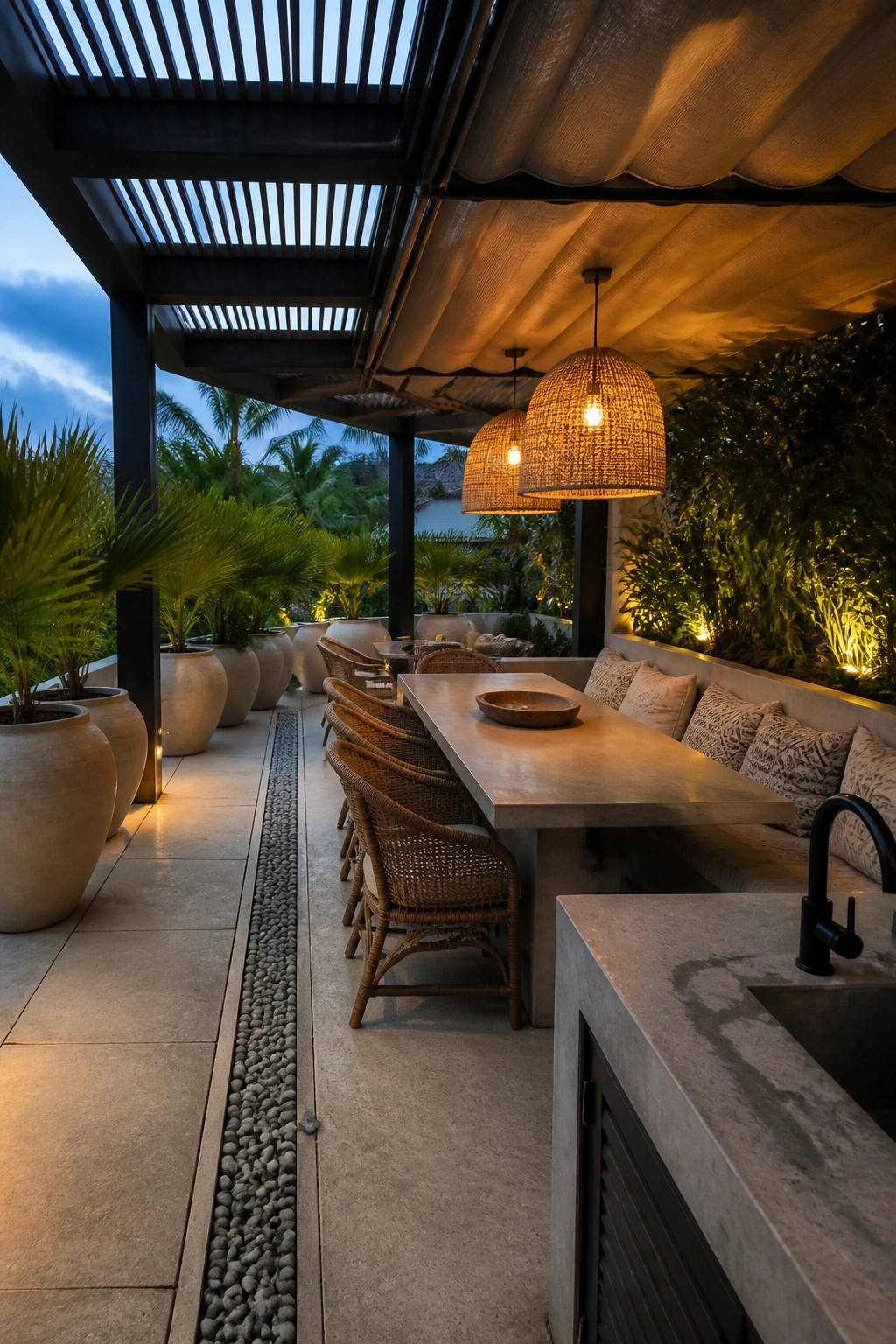
A long dining table with seating on both sides makes good use of a covered outdoor space. One side gets a built-in bench while the other uses individual chairs. This setup fits more people without crowding the area and keeps the flow open along the length of the terrace.
It works best in tropical climates where rain or sun can interrupt meals. The cover protects the table and seating, and the bench adds storage or extra cushion space if needed. Try this on homes with deep overhangs or pergolas where you want a simple, durable dining zone that stays usable year round.
Create A Covered Dining Terrace Next To The Pool
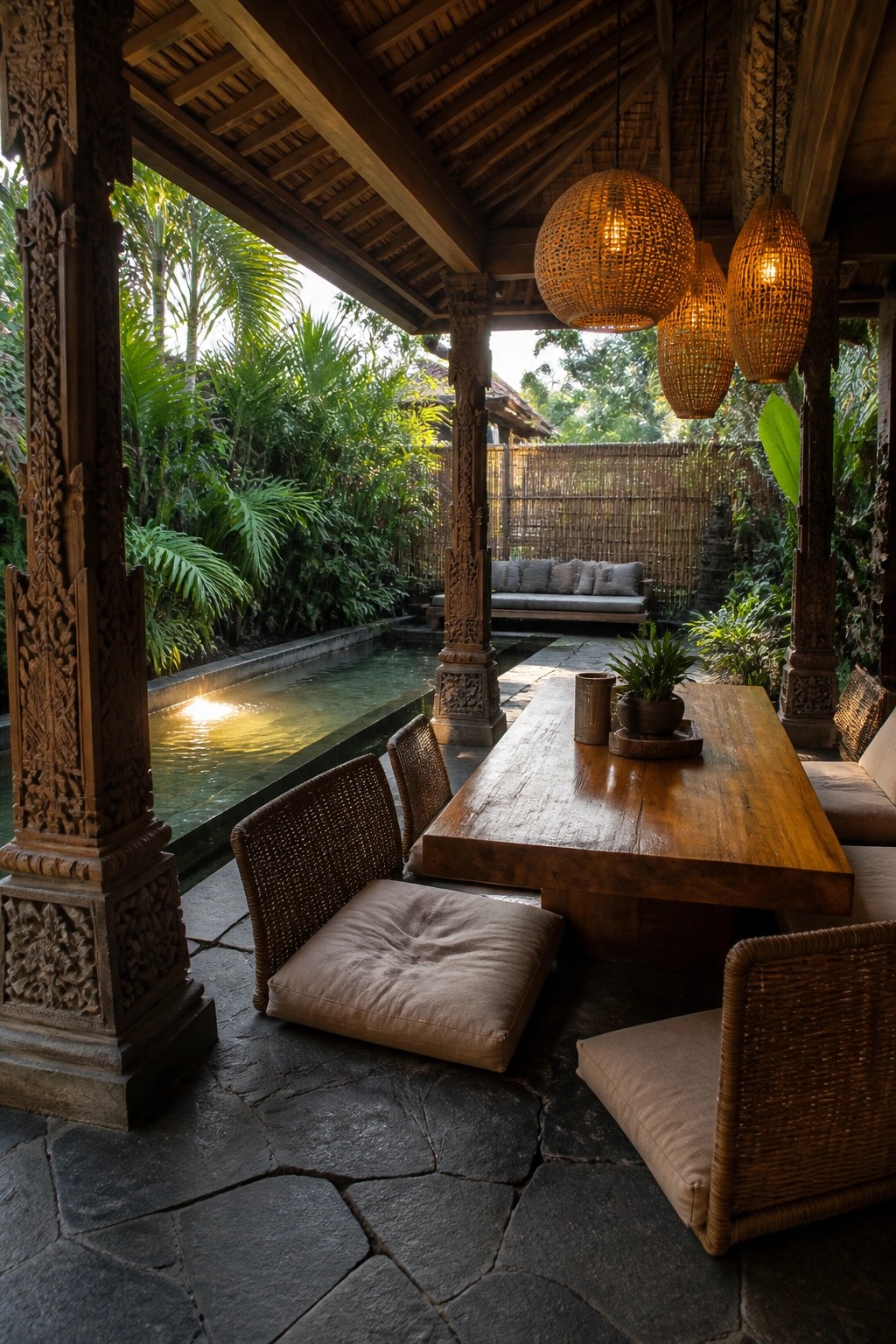
Placing the dining table under a roof right beside the pool makes the space feel more usable throughout the day. The cover gives shade and some rain protection while the open sides keep the view of the water and plants open.
This setup works best on homes with a decent amount of outdoor room and a warm climate. Use stone paving to connect the terrace to the pool edge and keep the furniture simple so the focus stays on the setting rather than the pieces.
Making Room for a Long Table on Your Covered Terrace
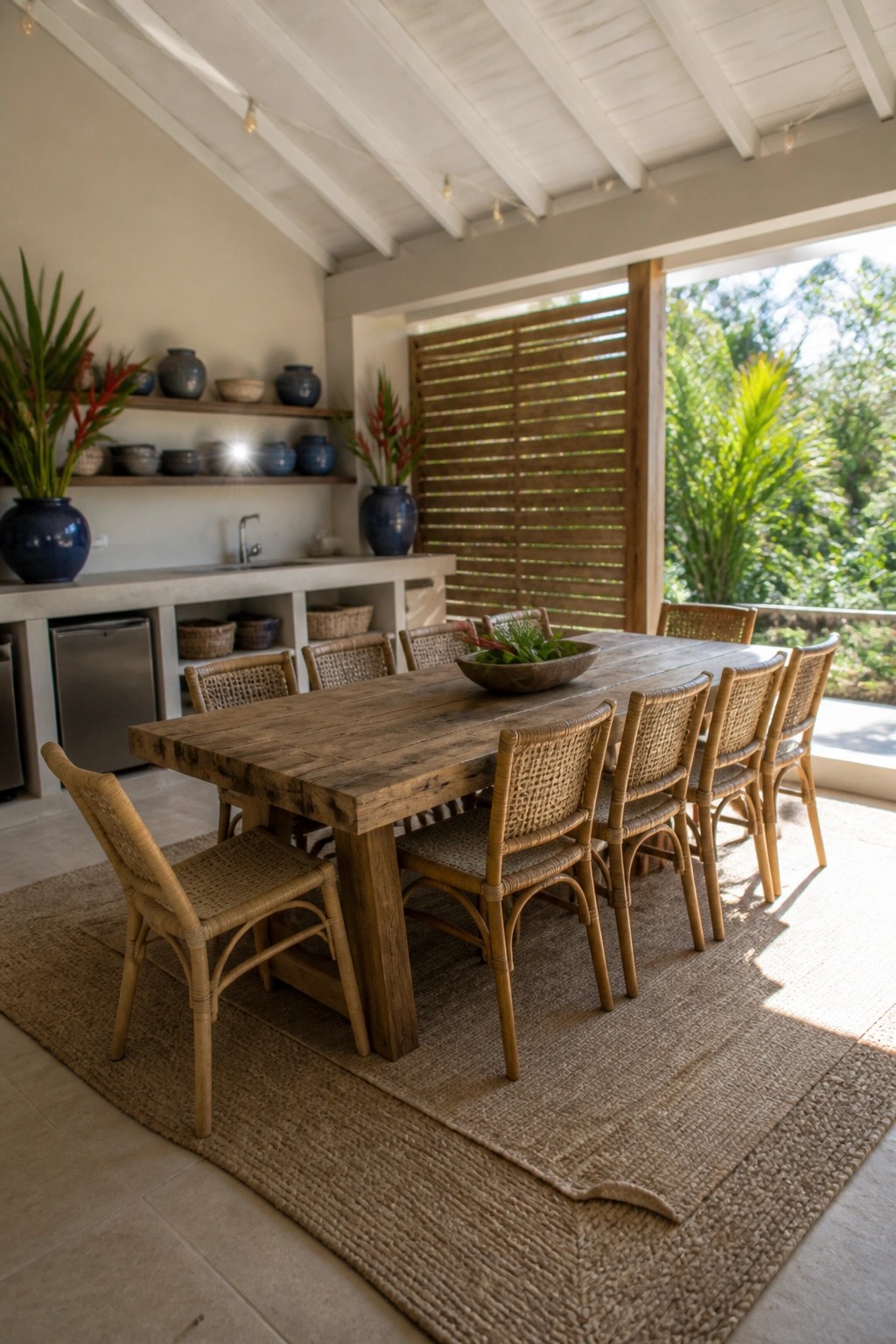
A long dining table works especially well on a covered terrace because it gives the space a clear purpose without needing walls or extra structures. The natural wood and woven chairs keep things simple and comfortable, so the area feels ready for meals at any time of day.
This layout suits homes where the kitchen sits close to the outdoors. Leave at least one full side open so air and light move through easily, and choose seating that can handle some weather without looking too formal.
Covered Terraces Built For Everyday Outdoor Meals
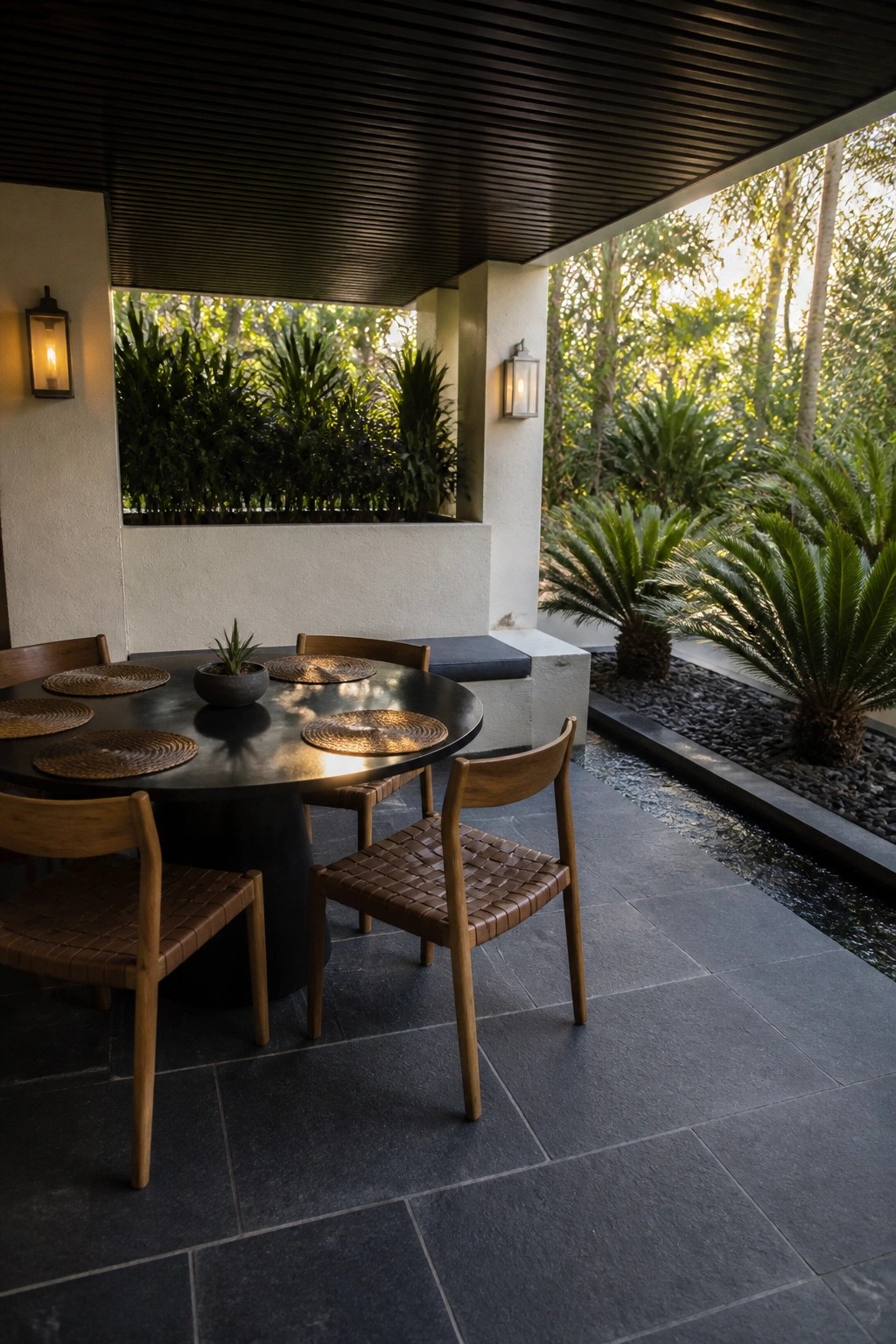
A covered dining terrace gives you a reliable place to eat outside without fighting the sun or sudden rain. The solid ceiling and open sides keep the space comfortable while still letting in garden views and breezes, which makes it easy to use the area most days of the year.
This setup works especially well on homes with tropical landscaping. Place a simple round table and wood chairs on the terrace so the plants and water features right outside become the main decoration. Keep the furniture low-key and let the surrounding greenery handle the rest.
Covered Terraces With A Long Wooden Table
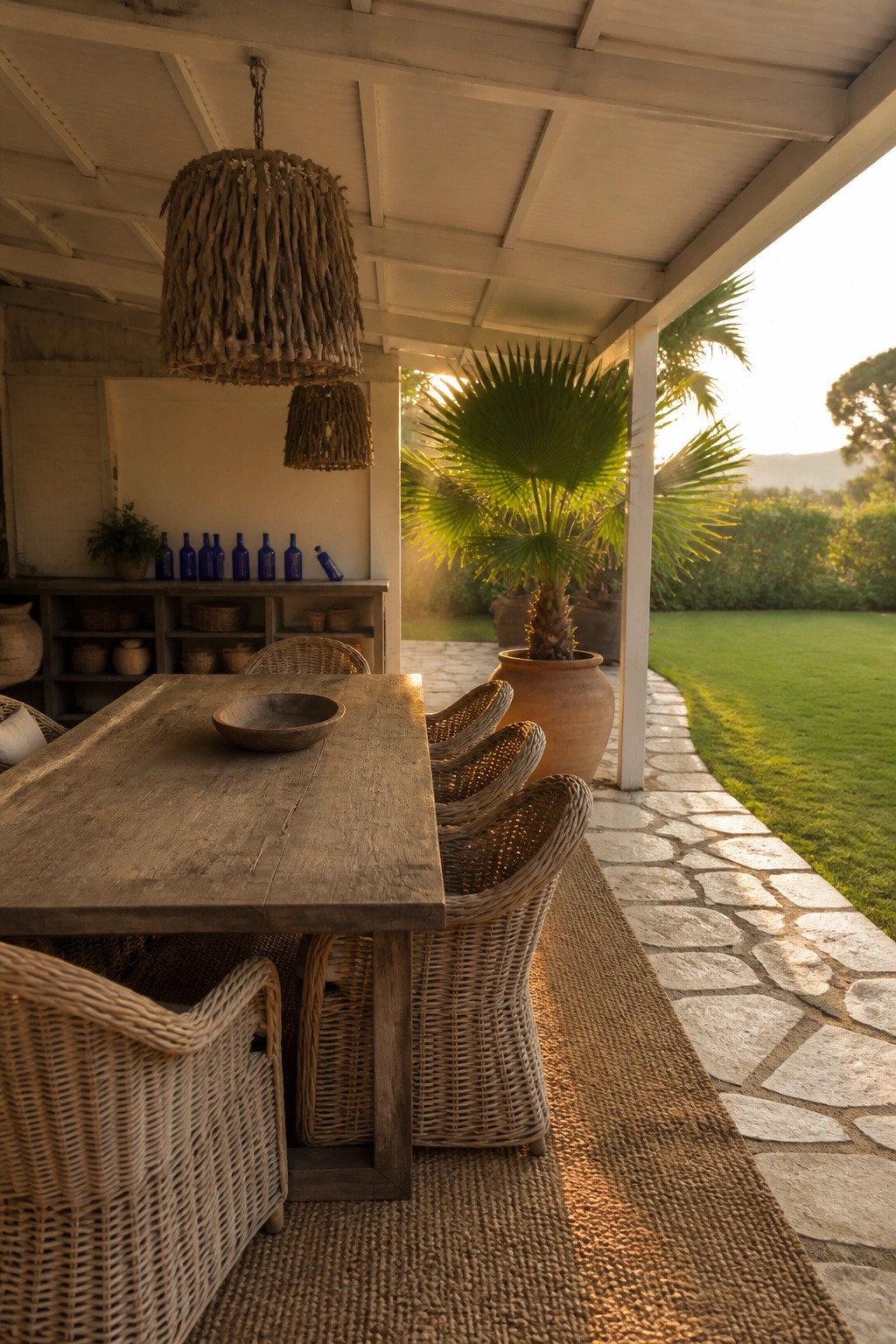
A covered terrace with a long wooden table gives you a place to eat outside without worrying about sudden sun or light rain. The open sides keep the space connected to the garden, so it feels like an extension of the yard rather than a separate room.
This works best on homes that already have some lawn or planting right outside. Use simple woven chairs and keep the table finish natural so the terrace blends with the surroundings instead of standing out as a separate structure.
Bench Seating Around A Large Outdoor Table
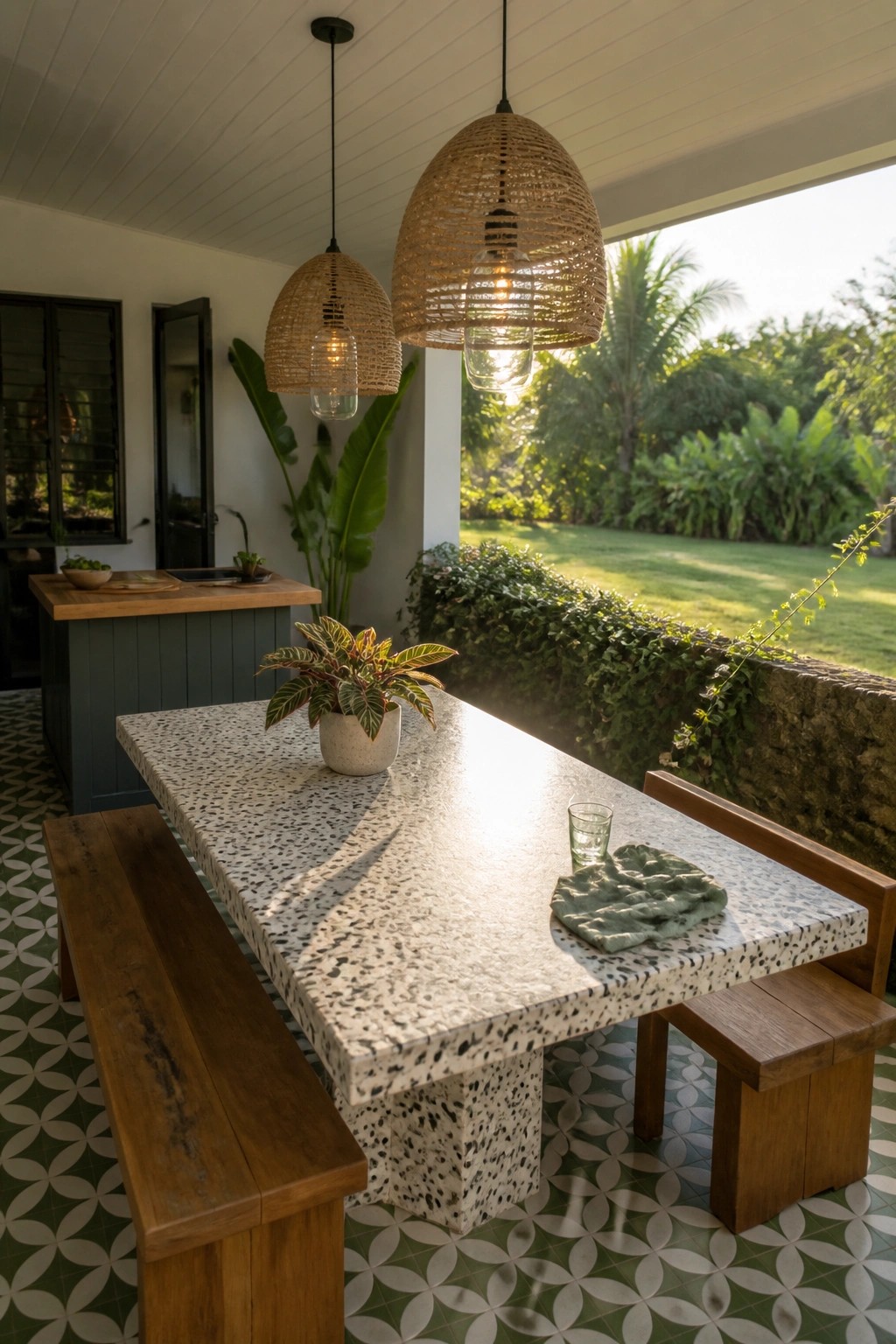
A long table with benches on either side works well for outdoor dining because it keeps the setup simple and flexible. People can slide in easily, and it fits more guests without needing extra chairs. The terrazzo top and wood benches hold up fine in a covered spot while still feeling casual.
This layout suits homes with a decent sized terrace or porch that gets regular use. It works best when the table stays in place rather than being moved around, and the benches match the scale so the whole thing does not feel crowded. Just make sure there is enough room to walk around the ends.
Covered Terraces Built Around Long Dining Tables
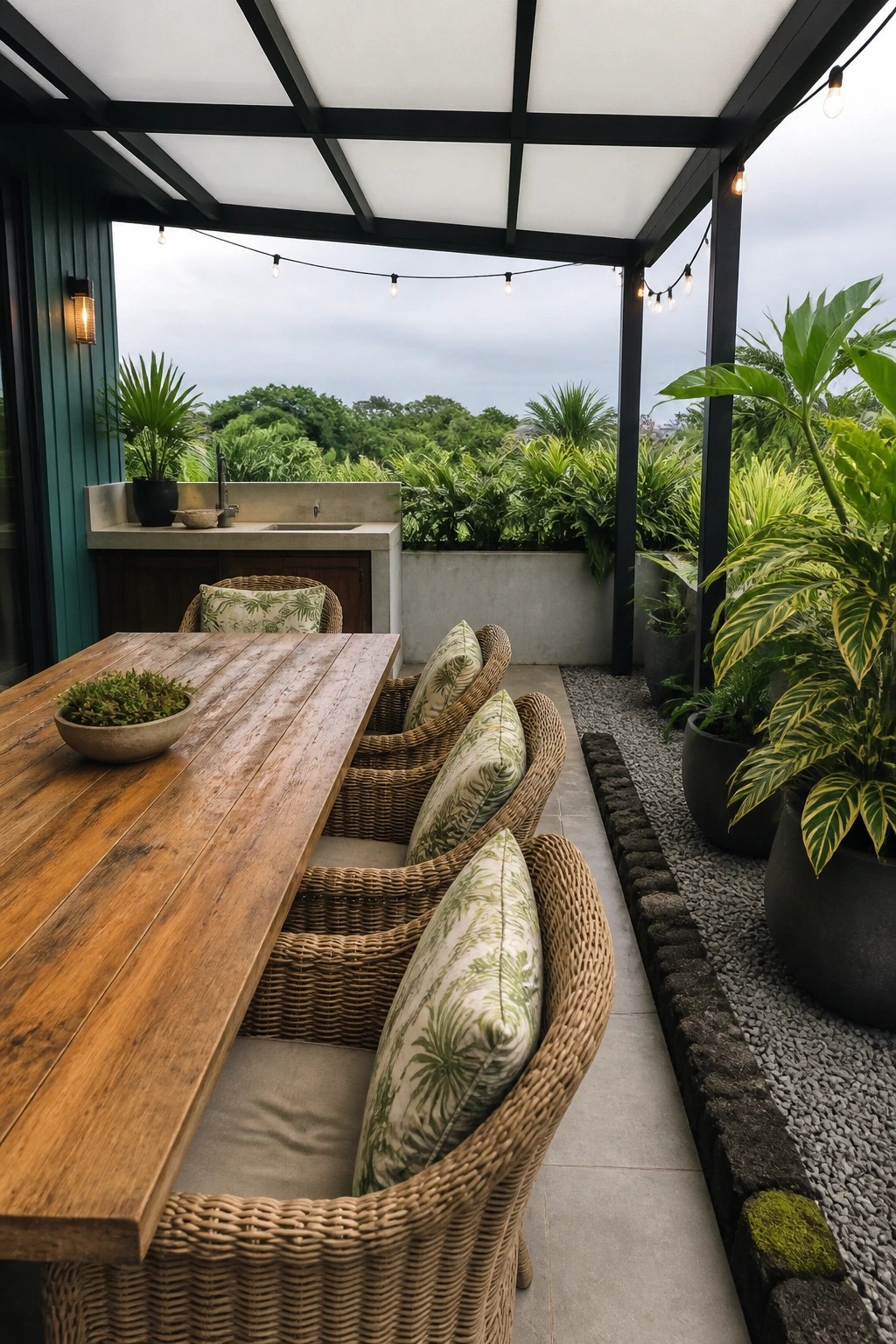
A covered terrace with a long table gives you a place to eat outside without watching the weather every hour. The solid roof overhead keeps rain and harsh sun off the table while the open sides still let in the breeze and the view. Woven chairs along one side keep the setup simple and easy to move around.
This works best on homes that already have a bit of outdoor space next to the kitchen or living area. It suits places with mild winters or frequent afternoon showers since the cover turns the terrace into an everyday room instead of a fair-weather spot only. Keep the table material sturdy and the chairs lightweight so the space stays practical.
Add a Fireplace Next to the Outdoor Table
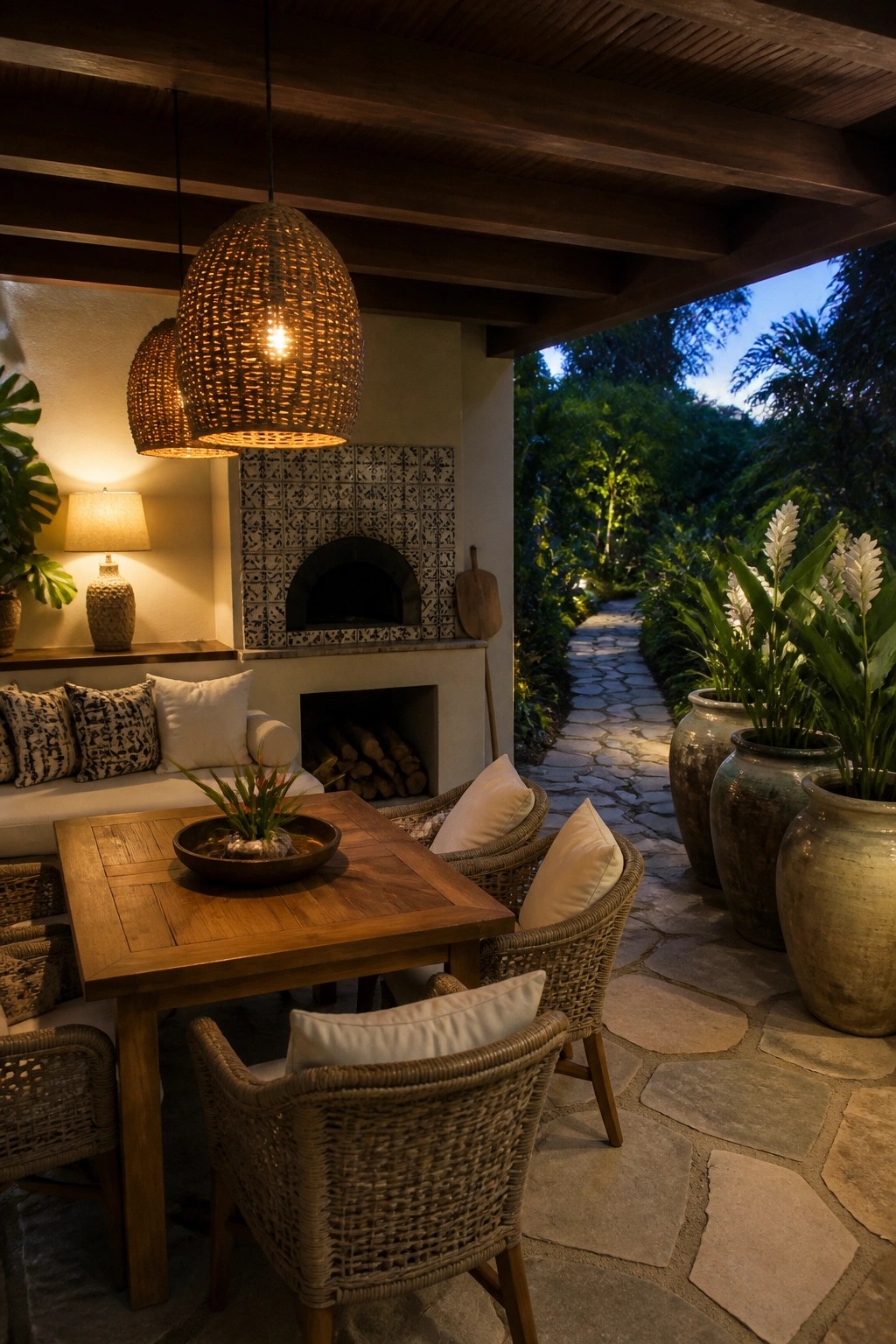
A fireplace built into the back wall turns a simple covered terrace into a space people actually use after dark. The fire gives off just enough warmth and light to keep everyone comfortable without needing extra heaters or lamps everywhere.
This works best on homes where evenings stay mild but can feel a little cool once the sun drops. Keep the table close enough to the fire for conversation but leave walking room so the area does not feel cramped.
Include an Outdoor Kitchen on Your Covered Terrace
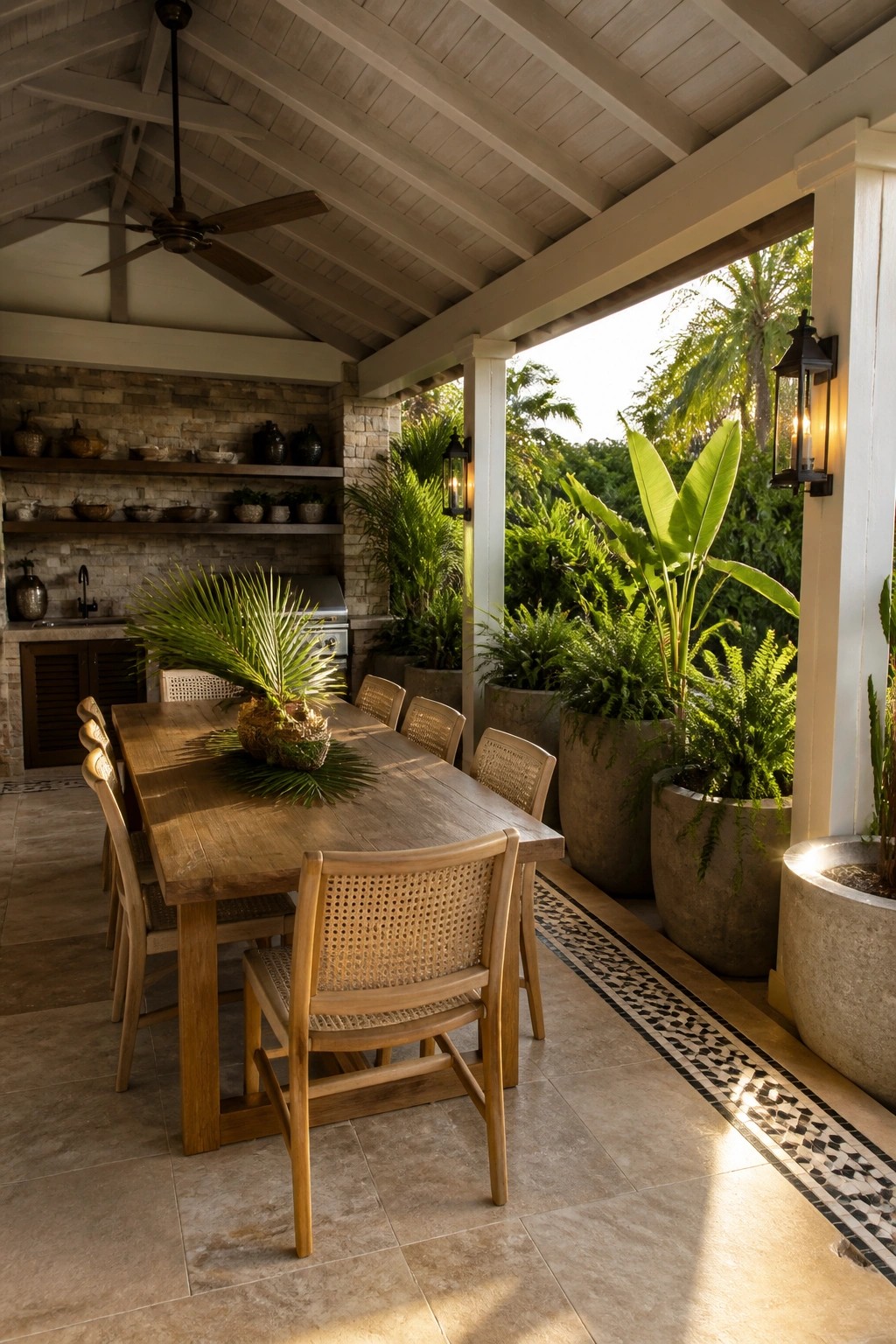
A covered terrace feels more useful when the cooking area sits right beside the dining table. This keeps everything in one spot so meals move easily from grill to plate without extra trips inside.
This layout suits homes in warm regions where people eat outside often. Keep the kitchen basic with a sink and grill, then use large pots along the edges to soften the space and add a bit of privacy.
Frequently Asked Questions
Q: How much shade does the roof really provide during peak sun hours?
A: The covered structure cuts direct light nicely so meals stay comfortable. Position the terrace to catch morning sun if you like it bright. That way evenings feel cooler without extra fans.
Q: What if heavy rains splash water onto the dining table?
A: Angle the roof edges to direct runoff away from seating. Add simple gutters if your spot gets frequent downpours. This keeps the space usable year round.
Q: Can I add string lights without making it look cluttered?
A: Hang them along the beams in loose loops. They give soft glow for nighttime without wires everywhere.
