

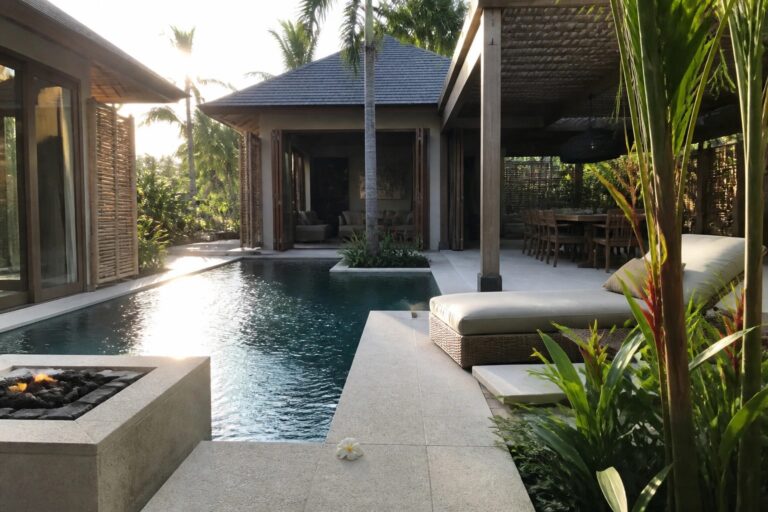
I’ve noticed that pavilion layouts in tropical villas tend to work best when the roof structure actually ties the main house to the open areas instead of leaving them feeling separate.
The placement of columns and the overhang depth often decide whether those central spaces stay comfortable through long afternoons or turn into spots people avoid.
Some designs end up looking balanced from the road but still leave the outdoor zones exposed to wind or lacking enough enclosure for everyday use.
I usually check first how the pavilion sits relative to the entry and main living zones because that single choice shapes how the whole property feels when you walk through it.
A couple of the layout choices here are ones I would test on paper before committing to any build.
Pavilions That Anchor Poolside Living
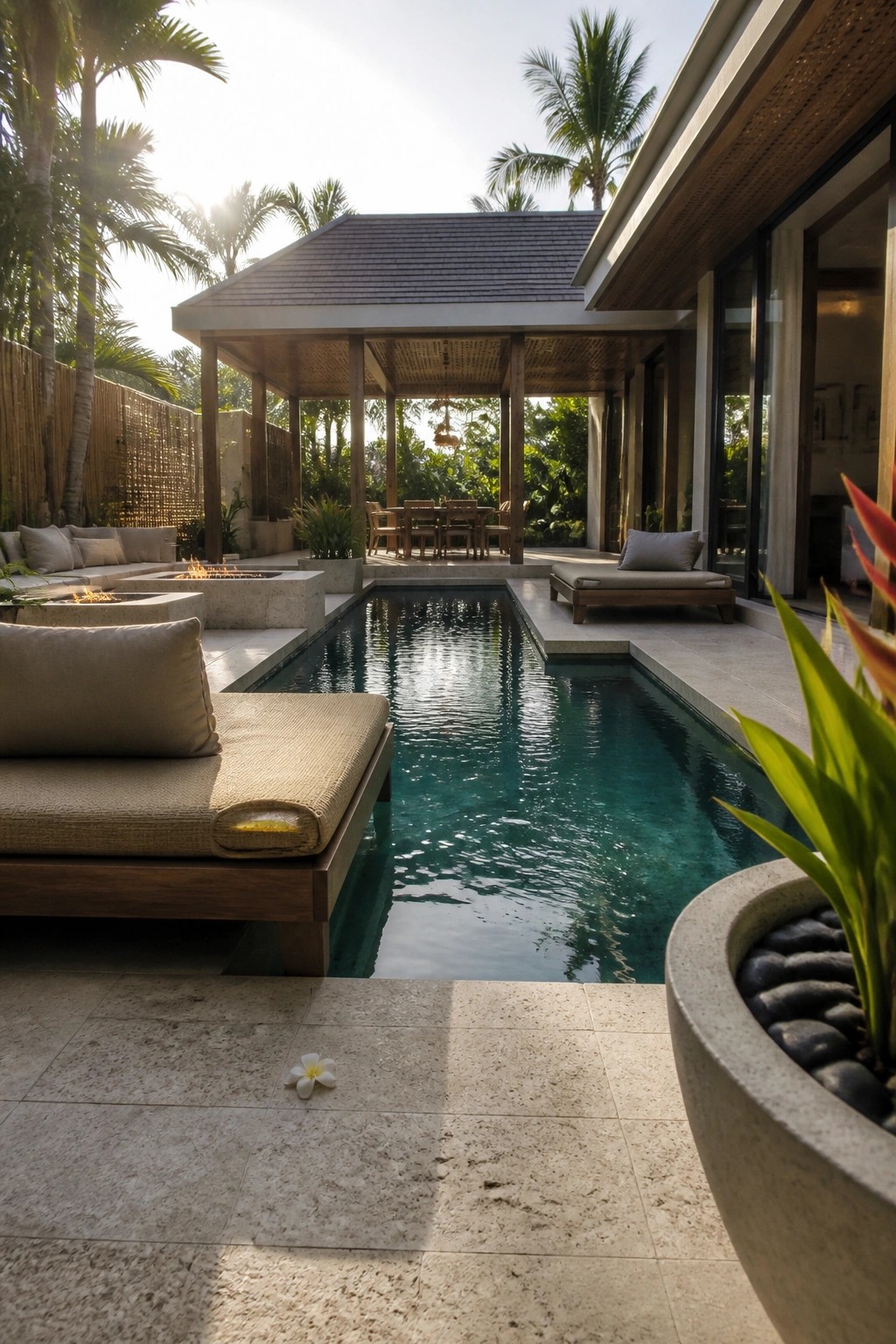
A covered pavilion gives the whole pool area a clear center without closing it in. It creates shade for dining and lounging while still letting the water stay the main focus. The open sides keep air moving and the view open to the garden.
This setup works best on lots where you want one main outdoor room rather than scattered furniture. Place the pavilion at one end of the pool so seating and dining stay together but do not crowd the water. Keep the structure simple so it feels like part of the landscape instead of a separate building.
Line Entry Paths with a Narrow Water Rill
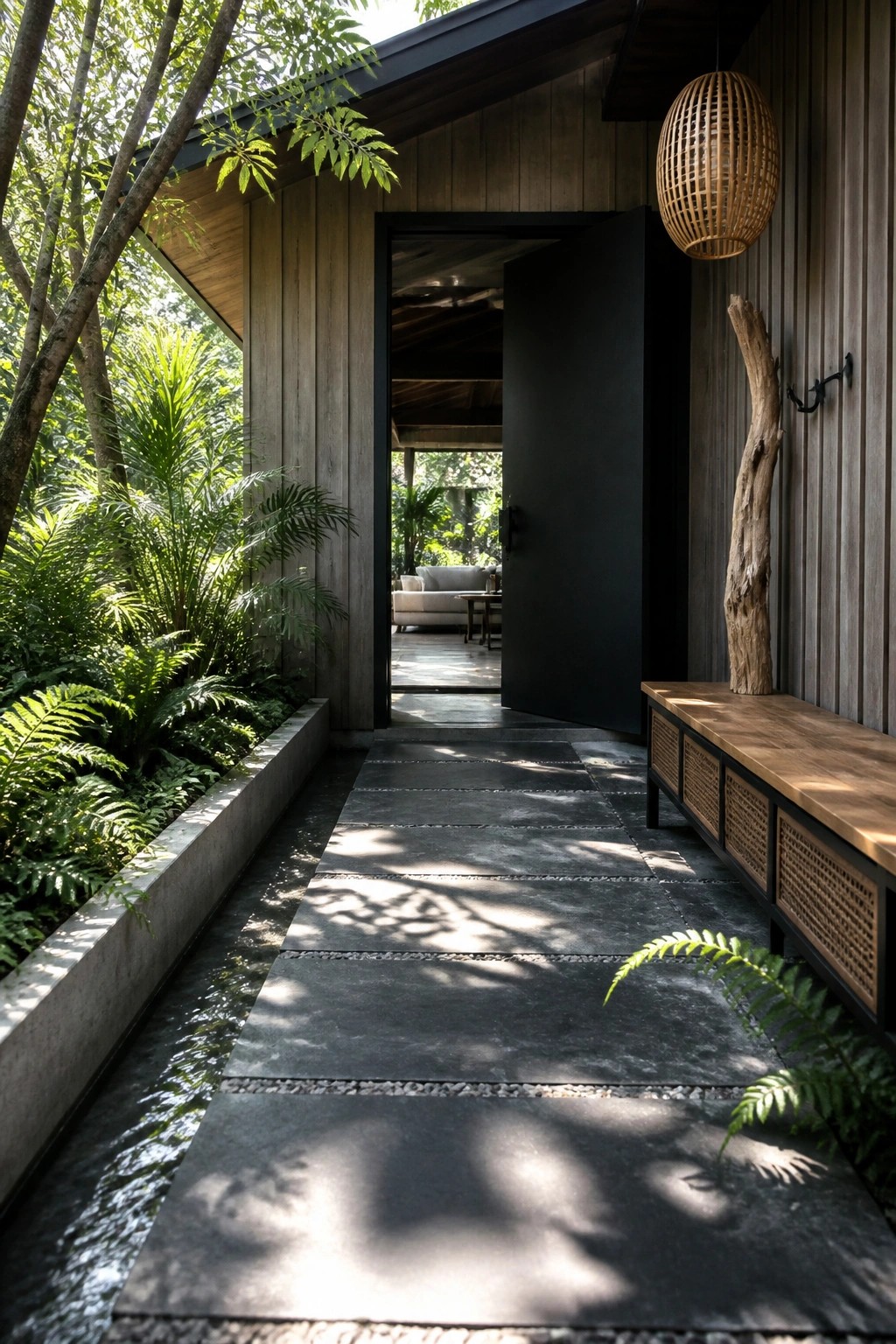
A slim water channel running right beside the entry path gives the approach a calm, steady feel. The sound stays soft, and the water helps cut the heat in tropical settings without needing much width.
This setup works well in pavilion-style homes where the path stays partly covered. Use simple stone edges and let the planting grow close to the water so it feels natural rather than built up. Keep the channel narrow so it reads as a detail instead of a separate water feature.
Kitchen Islands With Bar Stool Seating
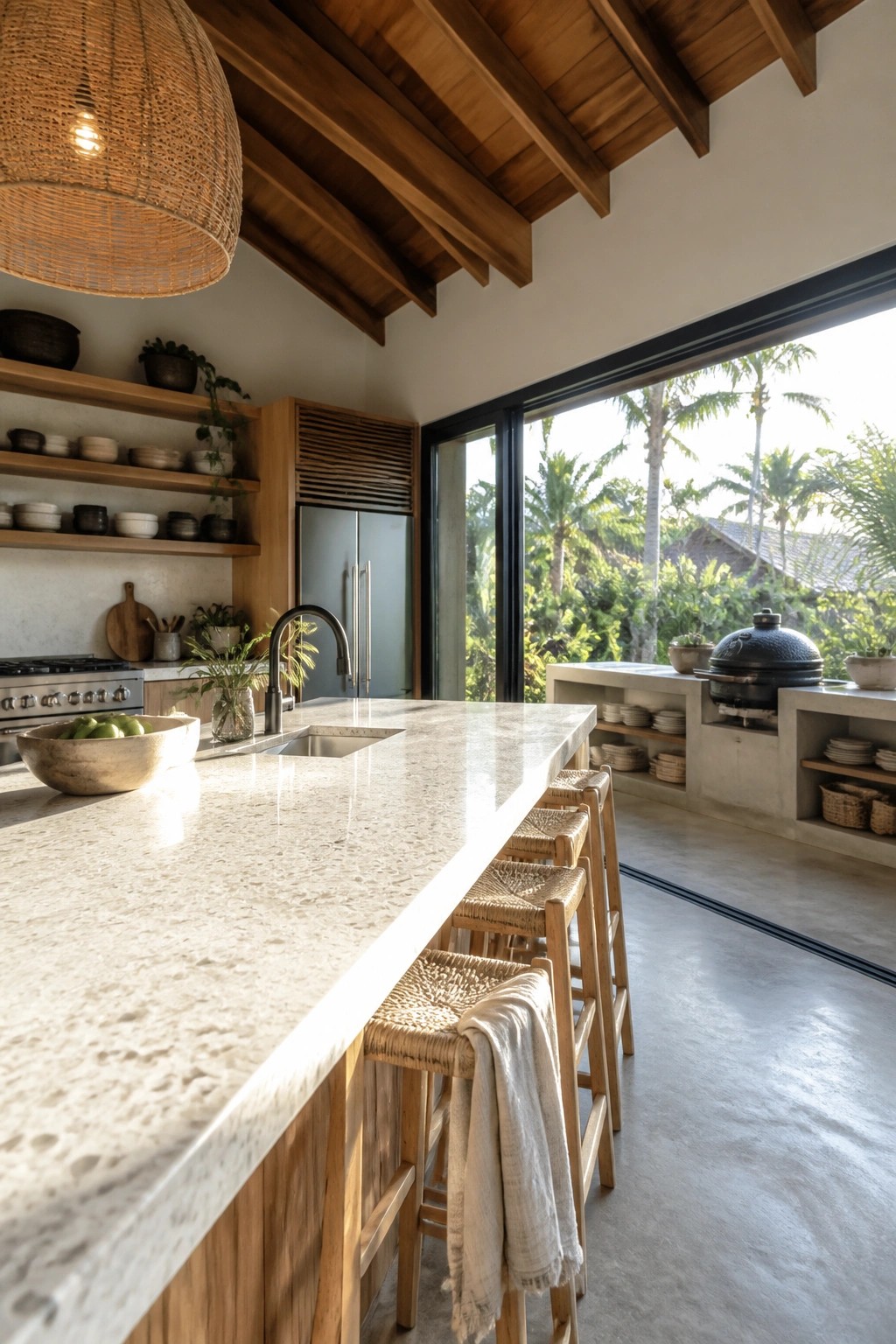
A long island with seating on one side turns the kitchen into a place where people actually gather instead of just passing through. In this layout the island runs toward the view, so anyone sitting there stays part of the room and the scenery outside at the same time. The woven stools keep things light and casual while the stone top handles daily use without fuss.
This works best in open-plan homes where the kitchen sits near large doors or windows. Keep the stools simple and natural so they do not block the sight lines. Avoid crowding the island with too many stools or tall backs that cut off the flow to the rest of the space.
Low Platform Beds For Open Tropical Bedrooms
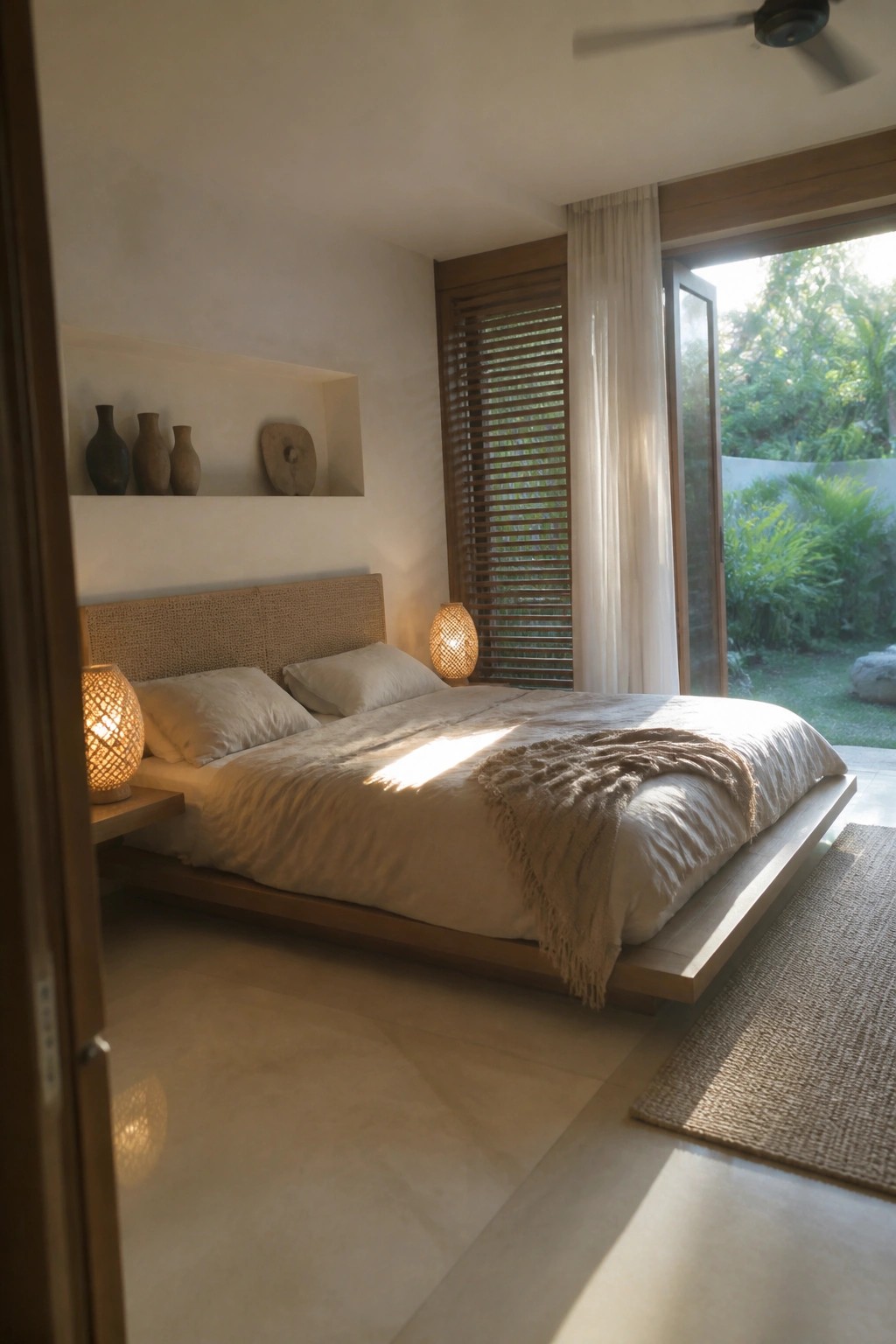
A low platform bed helps the whole room feel more open and grounded. It sits close to the floor so the space does not feel cut off or boxed in, and the simple wooden frame lets air and light move around it easily.
This style works well in homes that open to gardens or patios. Keep the rest of the room light with woven accents on the headboard and lamps so the bed stays the main quiet feature without adding visual weight.
Organizing Pavilions Around a Central Pool
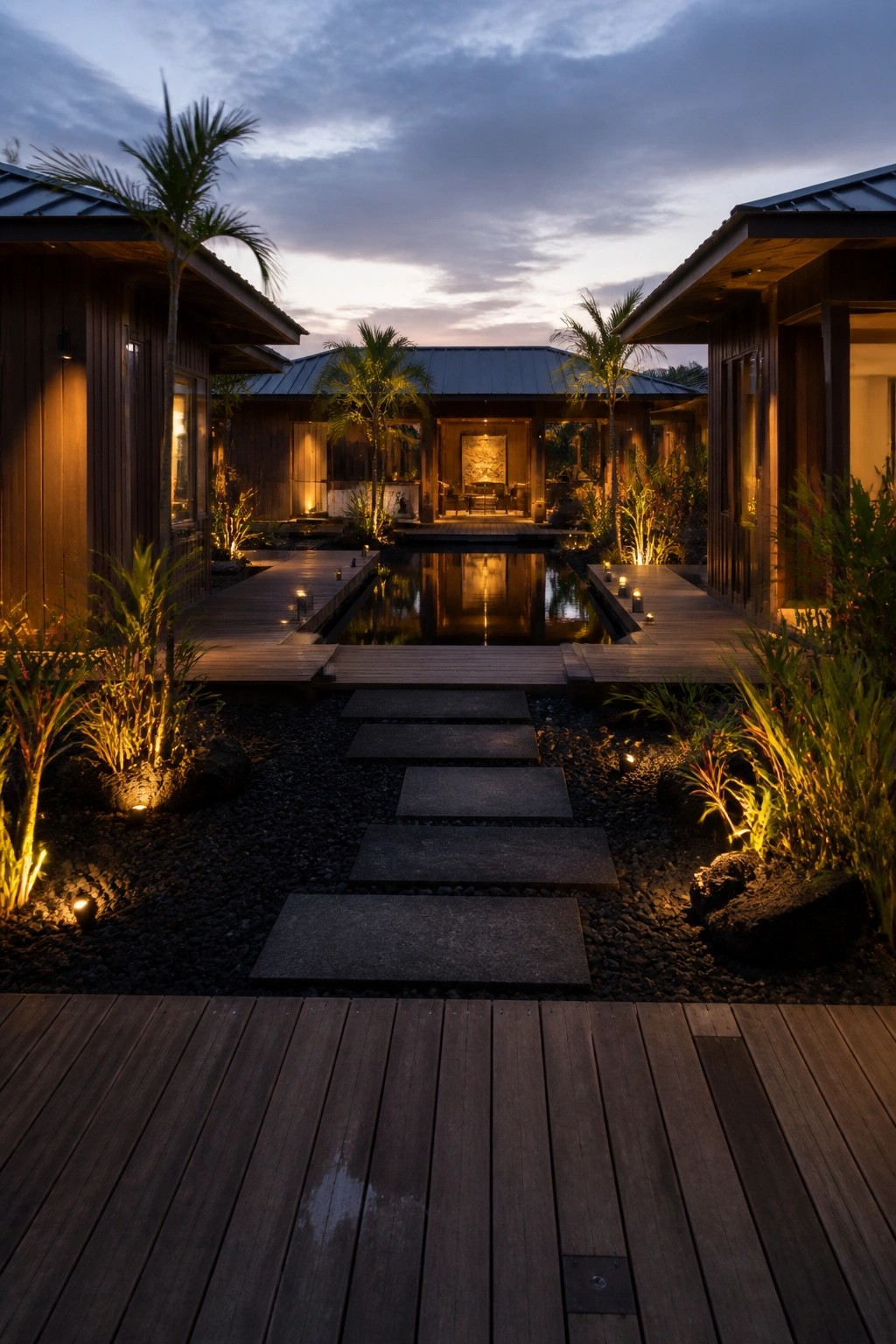
Placing separate pavilion buildings around a shared water feature helps tie the whole outdoor space together without making it feel crowded. The decks and paths create easy movement between the structures while the water adds a calm focal point that reflects light at night.
This approach works especially well in warm climates where you want to spend most of your time outside. Keep the buildings modest in size and let the pool and surrounding paths do the work of connecting them. Avoid filling every gap with extra furniture so the layout stays open and easy to walk through.
Swivel Chairs Add Flexibility to Pavilion Seating
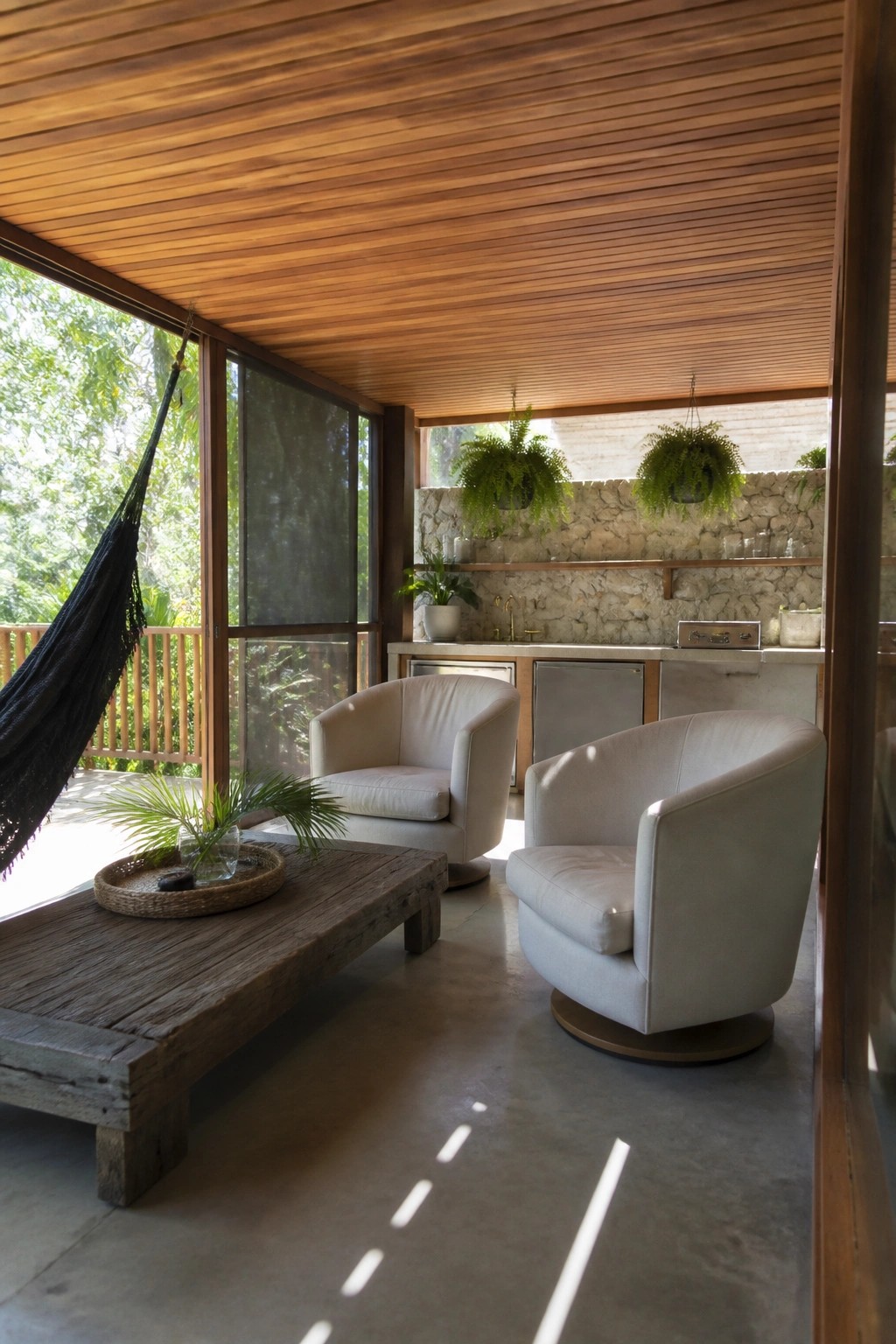
Many people like putting swivel chairs in a covered outdoor space because they make it easy to shift toward the view, a conversation, or the breeze without rearranging furniture. The style keeps the area open and relaxed while still giving it a comfortable, finished feel.
This approach works best in pavilion layouts that stay in regular use, especially in warm climates where shade and airflow matter most. Choose weather-resistant fabric and a sturdy base so the chairs hold up without constant maintenance.
Extending The Roof Over The Entry
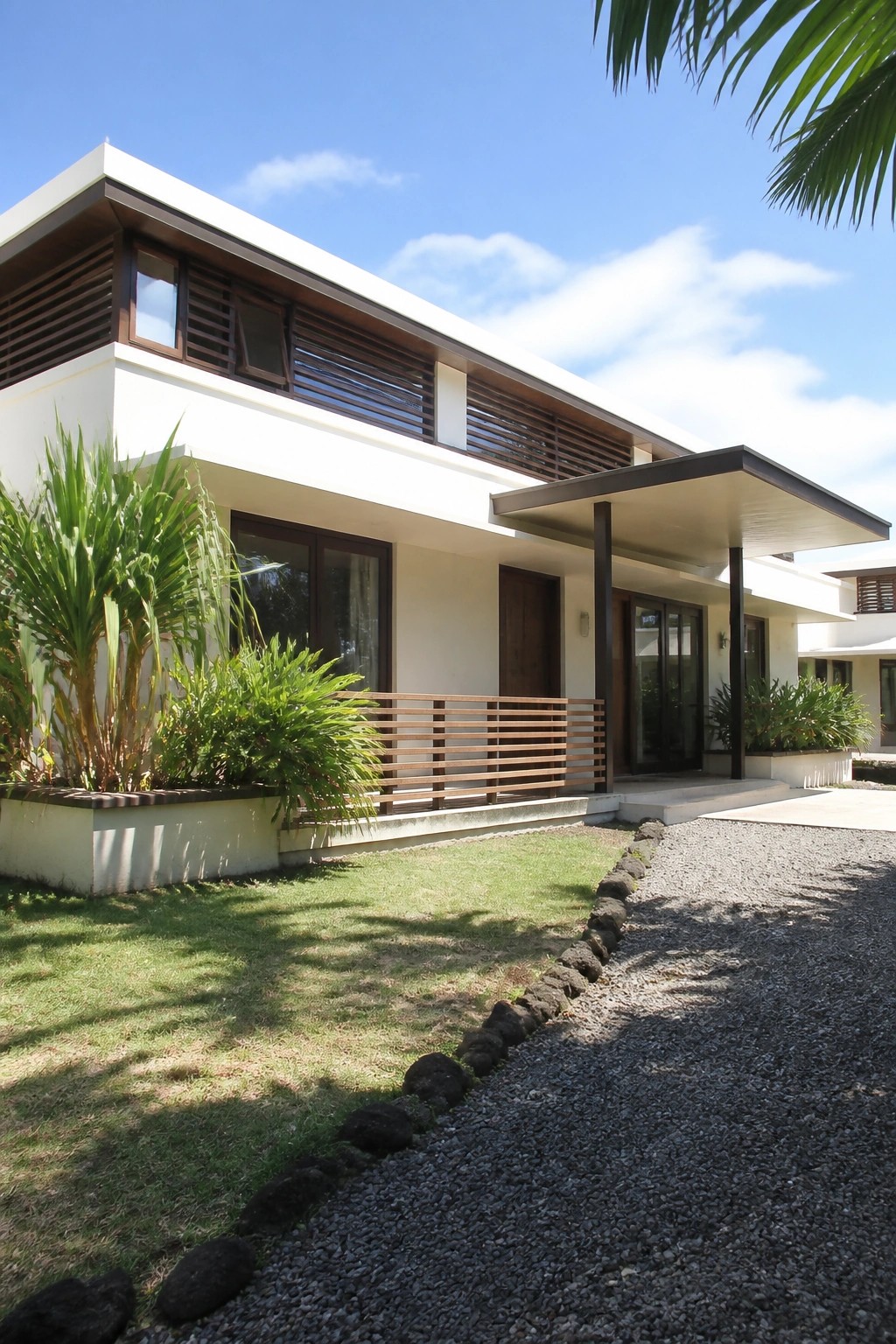
A covered entry that extends from the main roofline gives the front of the house a clear focal point and creates usable shade right where you need it. In tropical settings this simple move turns the approach into a sheltered transition instead of a bare doorstep.
It works best on homes with clean horizontal lines where the added canopy can sit on a few matching posts. Keep the supports slender and the underside light so the space feels open rather than enclosed.
Covered Patios That Make Outdoor Meals Easy
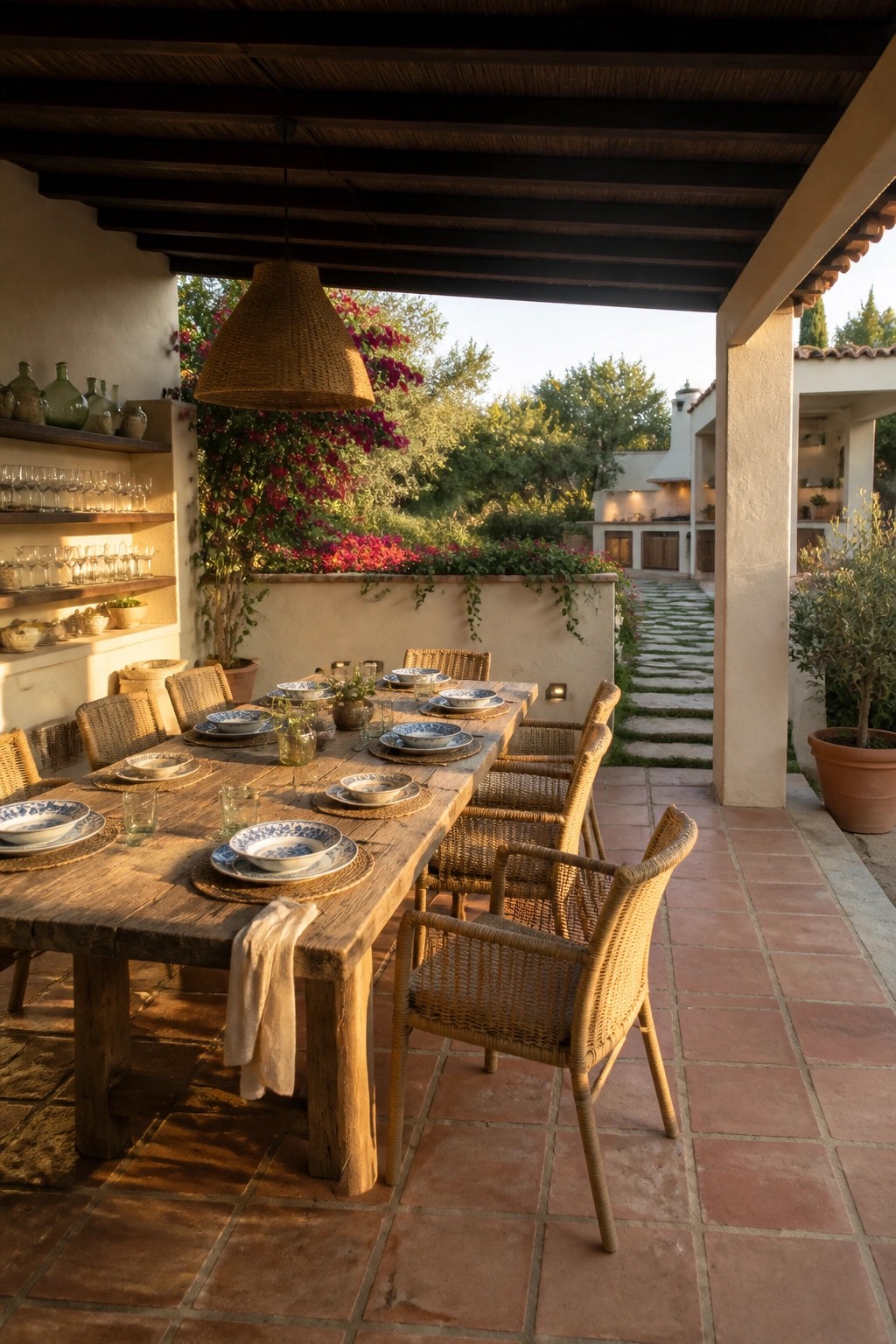
A covered patio with a long central table gives you a place to eat outside without worrying about sun or sudden rain. The open sides keep the space connected to the garden while the roof overhead makes it feel like a real room. This setup works especially well in warm climates where people want to spend more time outdoors.
It suits homes with a bit of garden space and a relaxed daily routine. Place the table so it faces the best view and keep the chairs simple and sturdy. Avoid crowding the area with too many extra pieces so the space stays open and easy to move around in.
Open Layouts That Connect The Living Room To The Outdoors
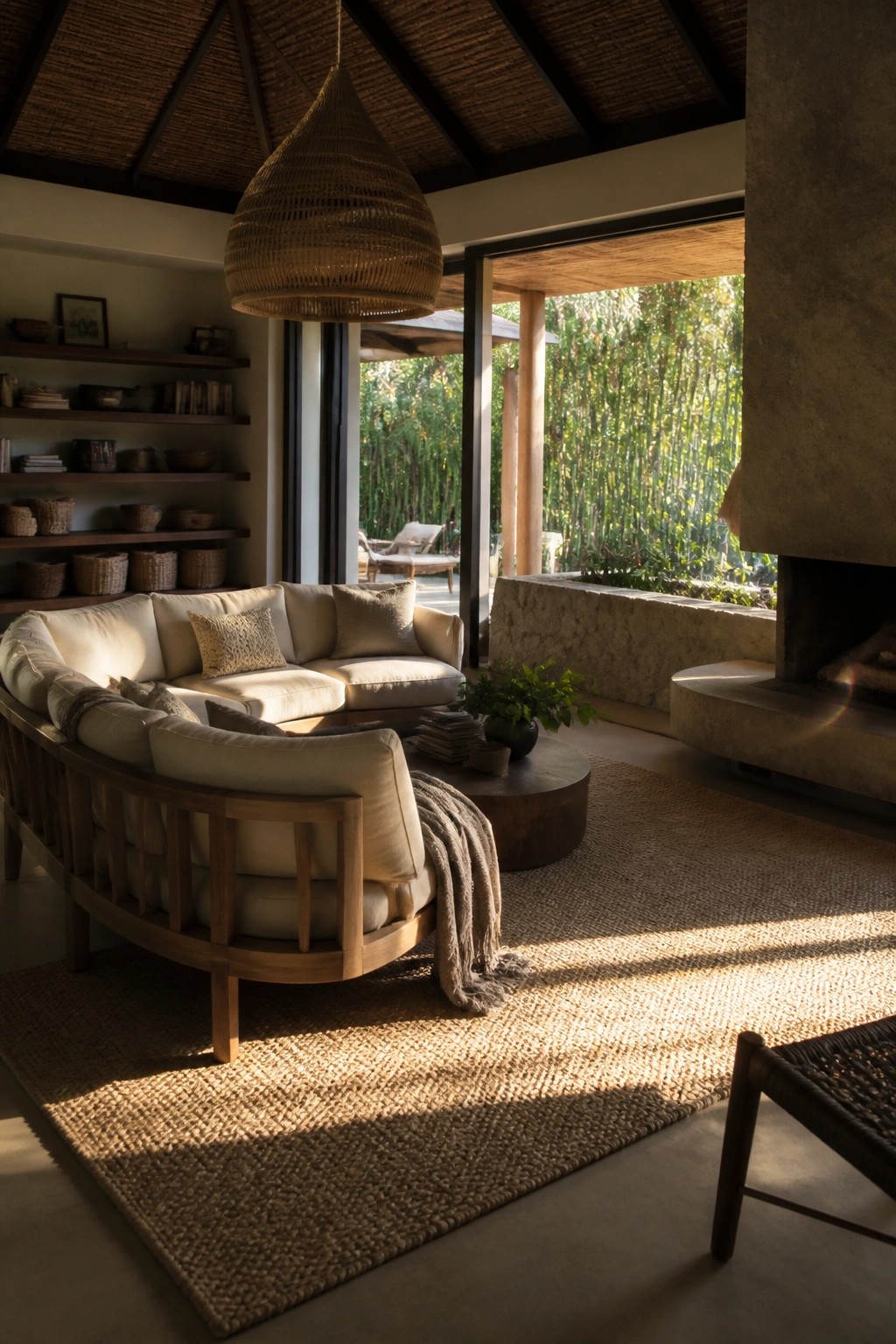
A pavilion-style interior works best when the room does not feel closed off. Large sliding doors and minimal walls let the space breathe and keep the focus on simple seating and natural light rather than heavy partitions.
This approach suits homes in warm climates where the garden can become part of daily living. Keep the doors wide and the furniture low so the eye travels easily from the sofa to the view outside. Avoid filling every wall with storage or art if the goal is that open, connected feel.
Bathrooms That Open Straight Outdoors
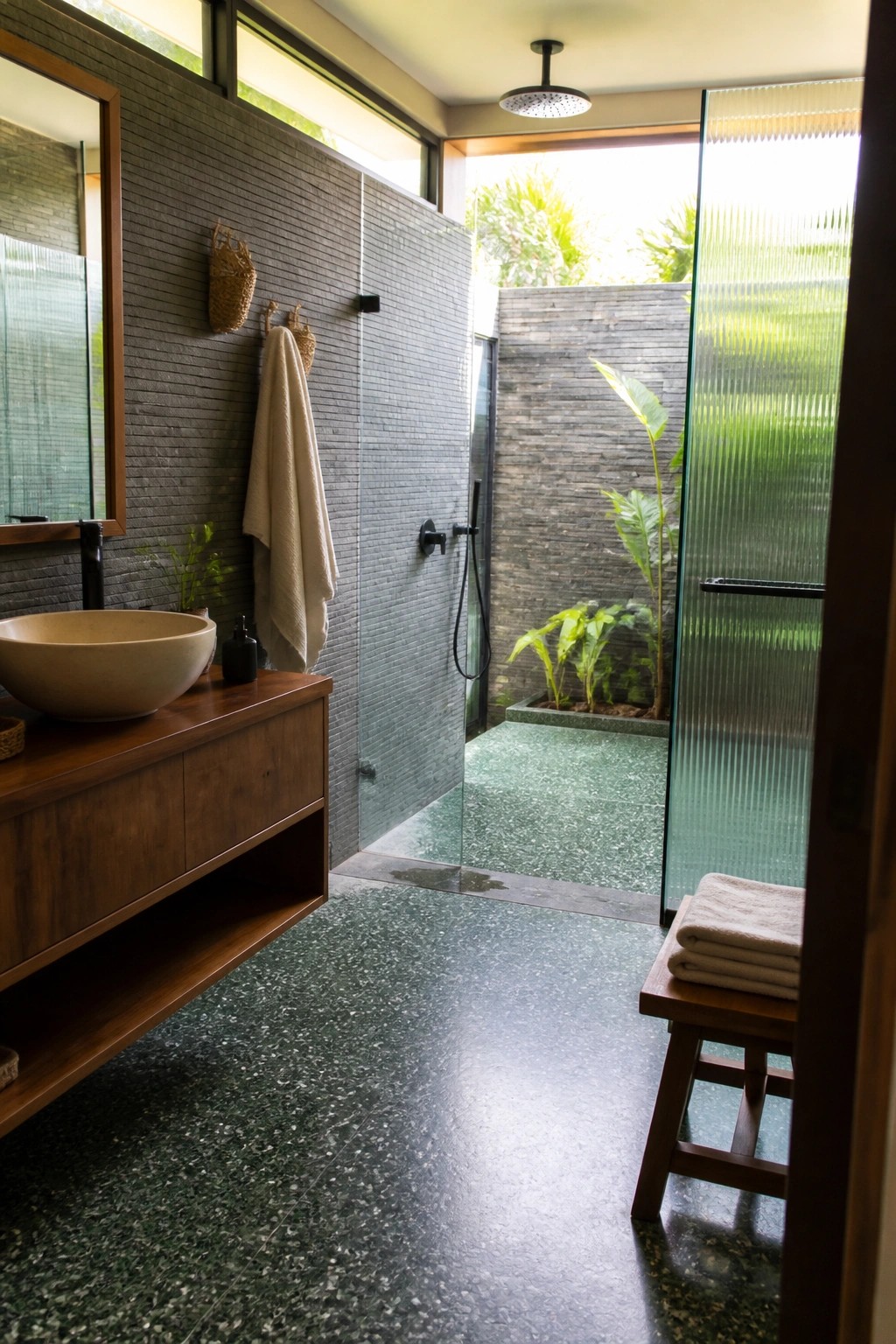
One of the simplest ways to give a bathroom that light, open feel is to let the shower area connect directly to the outside. A glass partition keeps water contained while still letting the room borrow light and greenery from the garden just beyond. This layout works especially well when the floor material continues outside, so the space reads as one continuous area rather than two separate rooms.
It suits homes in warm climates where privacy can be managed with walls or planting rather than solid doors. The key is keeping the transition simple so the view stays clear and the room does not feel closed in. Avoid heavy window treatments or busy tile patterns that would break the flow.
Pergolas for Creating Outdoor Rooms
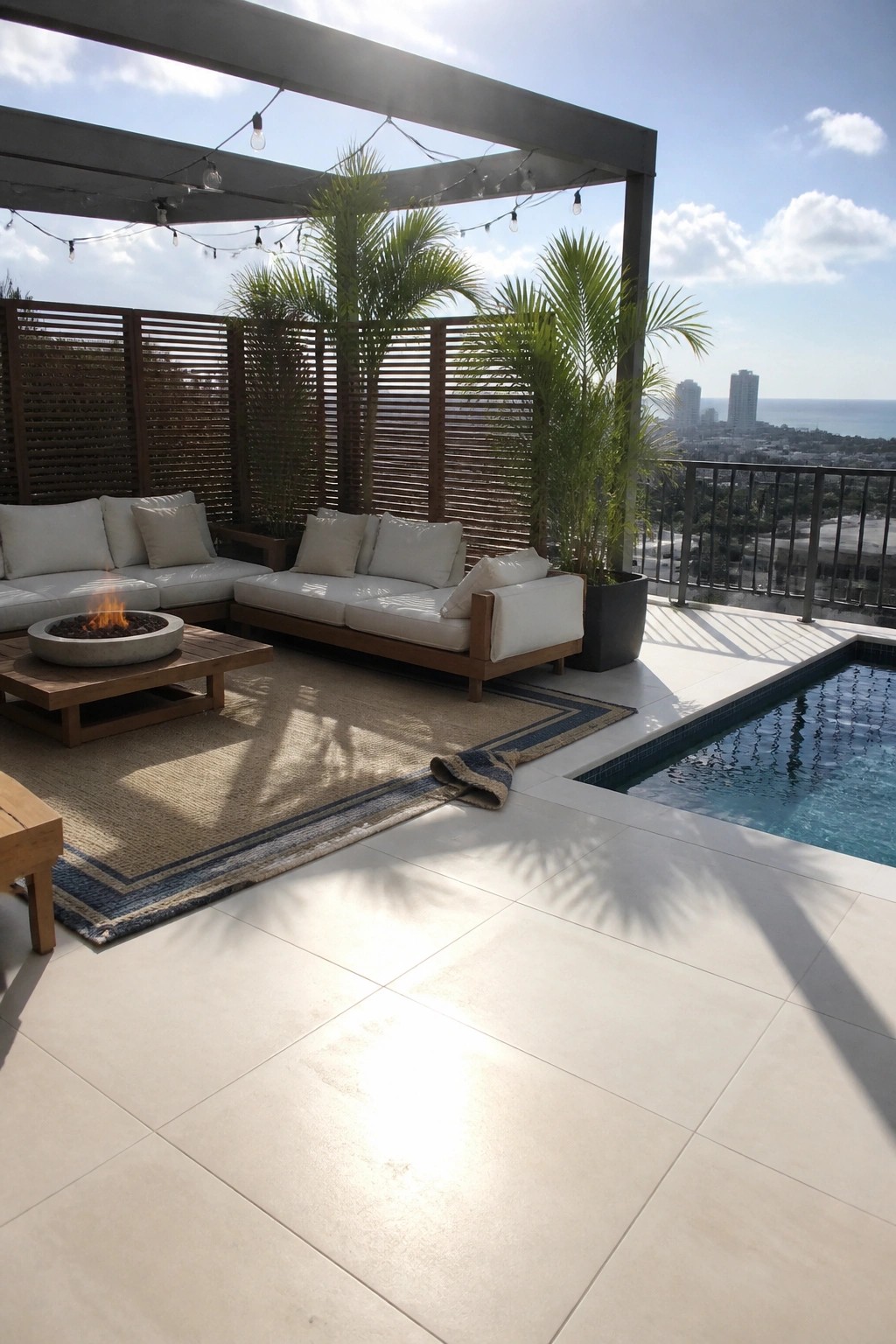
A pergola overhead can turn a plain terrace into something that feels like a real room outside. It adds shade and a clear boundary while still letting in air and views, which works especially well in warm tropical spots where you want to stay outdoors longer.
This approach suits modern villas that need a middle ground between full sun and total enclosure. Keep the structure simple with wood beams, add basic seating below, and place a fire feature in the middle so the space stays comfortable from day into evening.
Stepping Stone Paths in Tropical Gardens
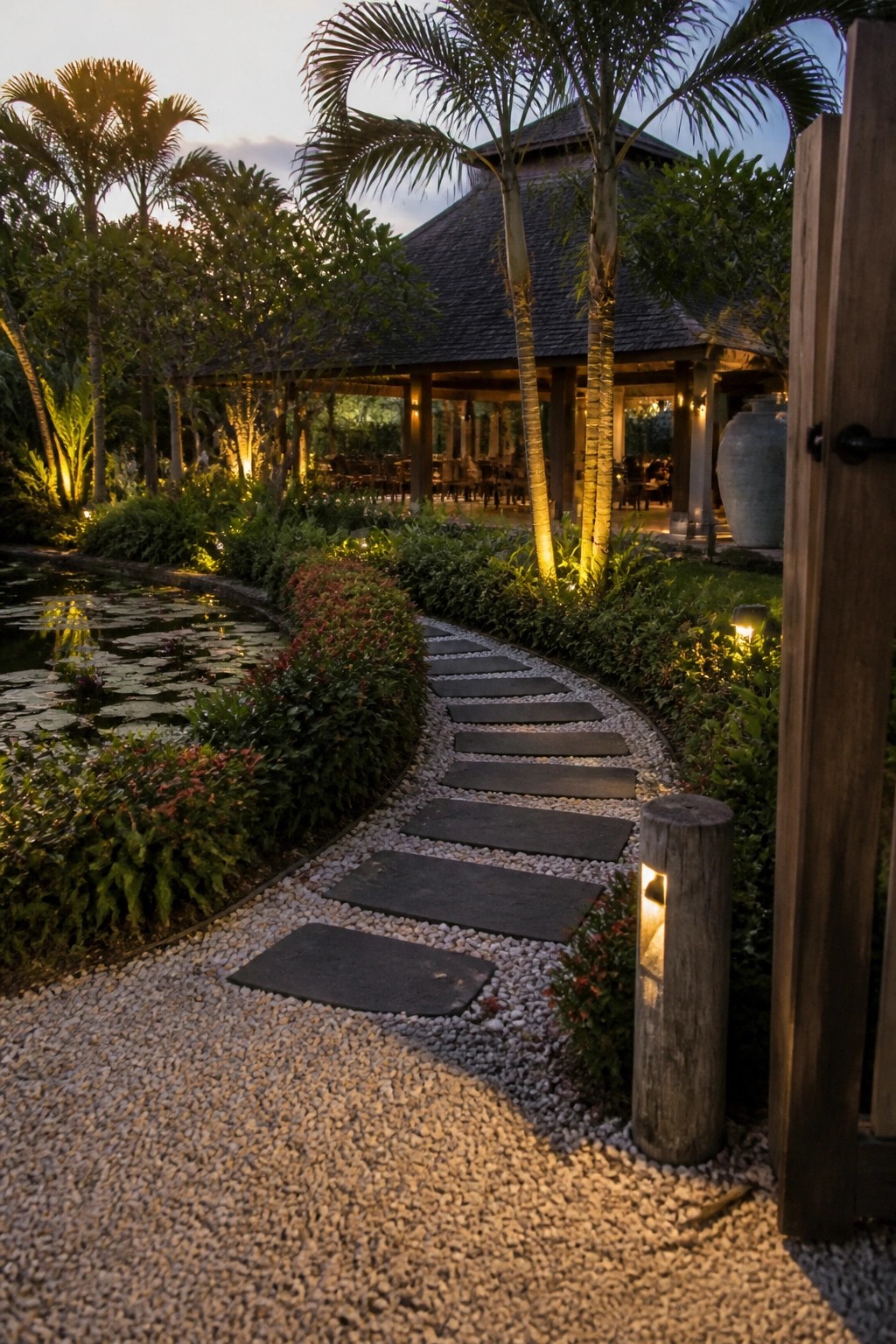
A path made of flat stepping stones set into light gravel gives a garden an easy, natural flow without looking too planned. It works especially well in tropical settings where you want the planting to feel full but still direct people toward a main structure like a pavilion.
Try this approach when the garden wraps around an outdoor living area. Keep the stones spaced for comfortable steps and let the gravel blend into the beds so the path feels like part of the landscape rather than something added on top.
Pavilion Layouts With an Outdoor Shower
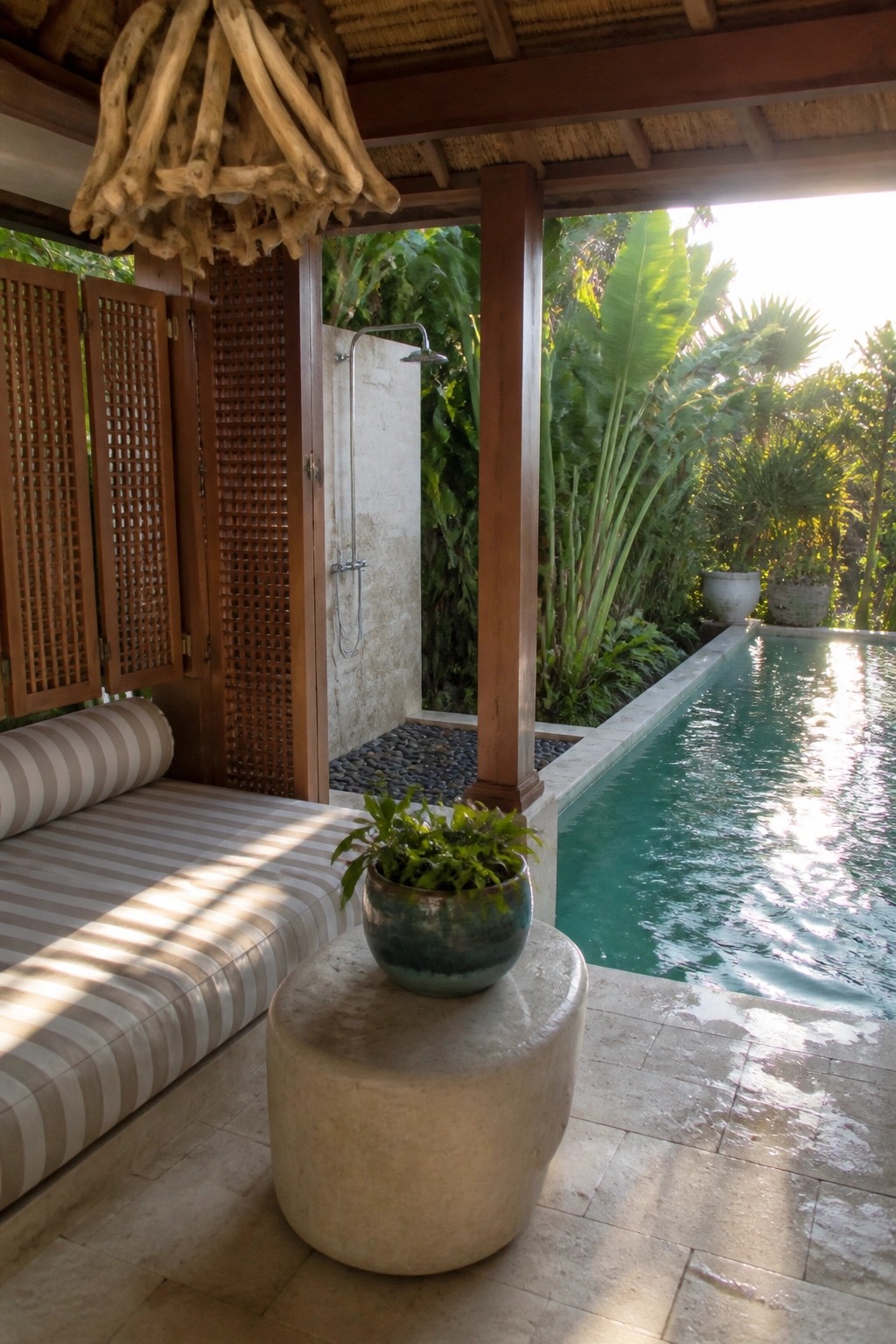
One useful idea in pavilion-style homes is adding an outdoor shower right in the covered space instead of tucking it away in a separate corner. It keeps the area practical for pool use and lets the whole zone feel connected without extra walls.
This works best in warm climates where people move between the water and seating often. Place the shower near the edge of the pavilion so the rest of the space stays open for lounging, and add simple screens if more privacy is needed during the day.
Built-In Planters in Home Offices
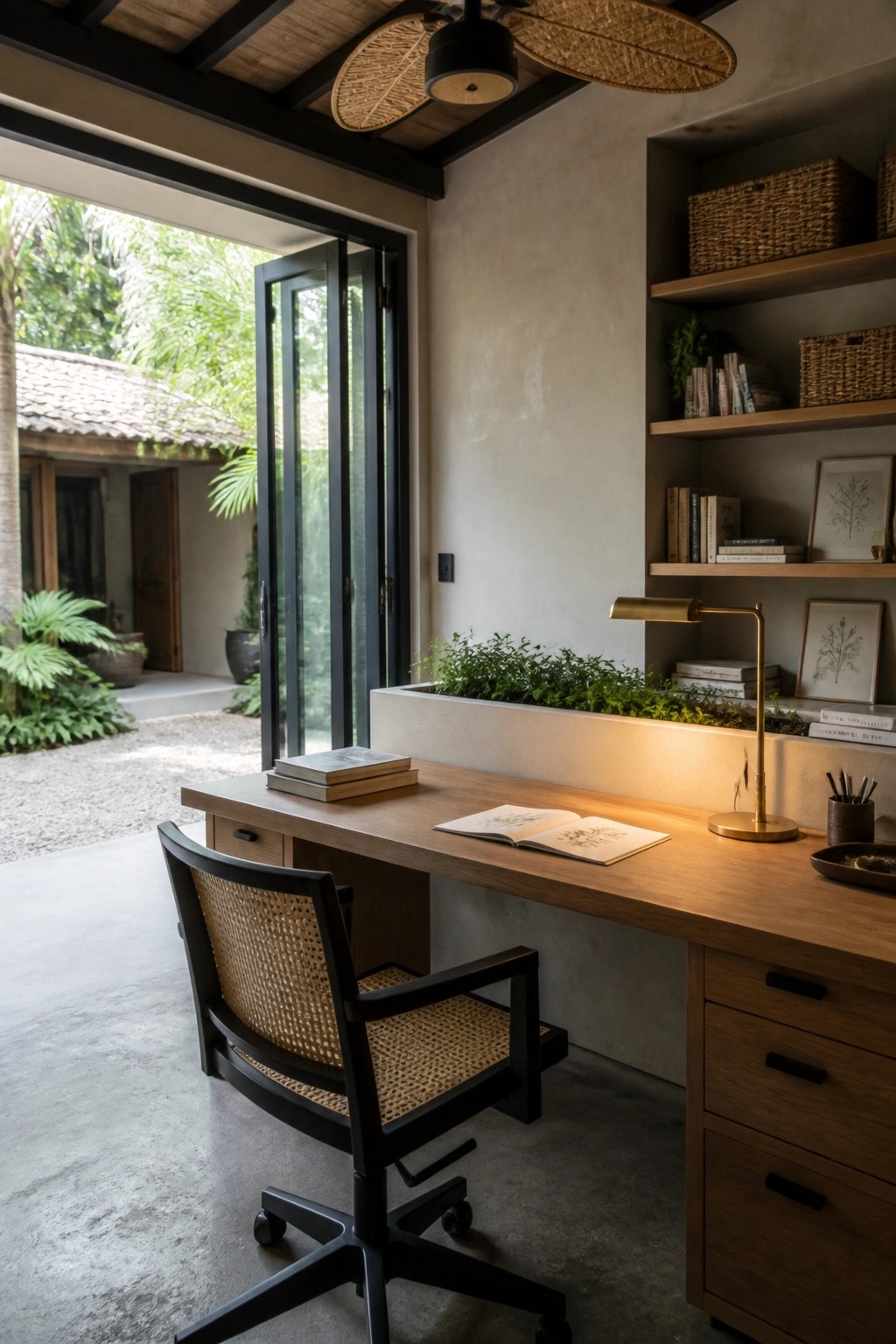
Many tropical homes add a built-in planter right behind a desk so plants stay close without taking up work space. This keeps the room feeling calm and connected to the garden outside, especially when doors stay open most of the day.
The setup works best in rooms with steady light and simple furniture. Choose low plants that stay neat, and let the planter run along the wall so it feels like part of the room rather than an afterthought.
Wide Doors That Open the Living Area to the Garden
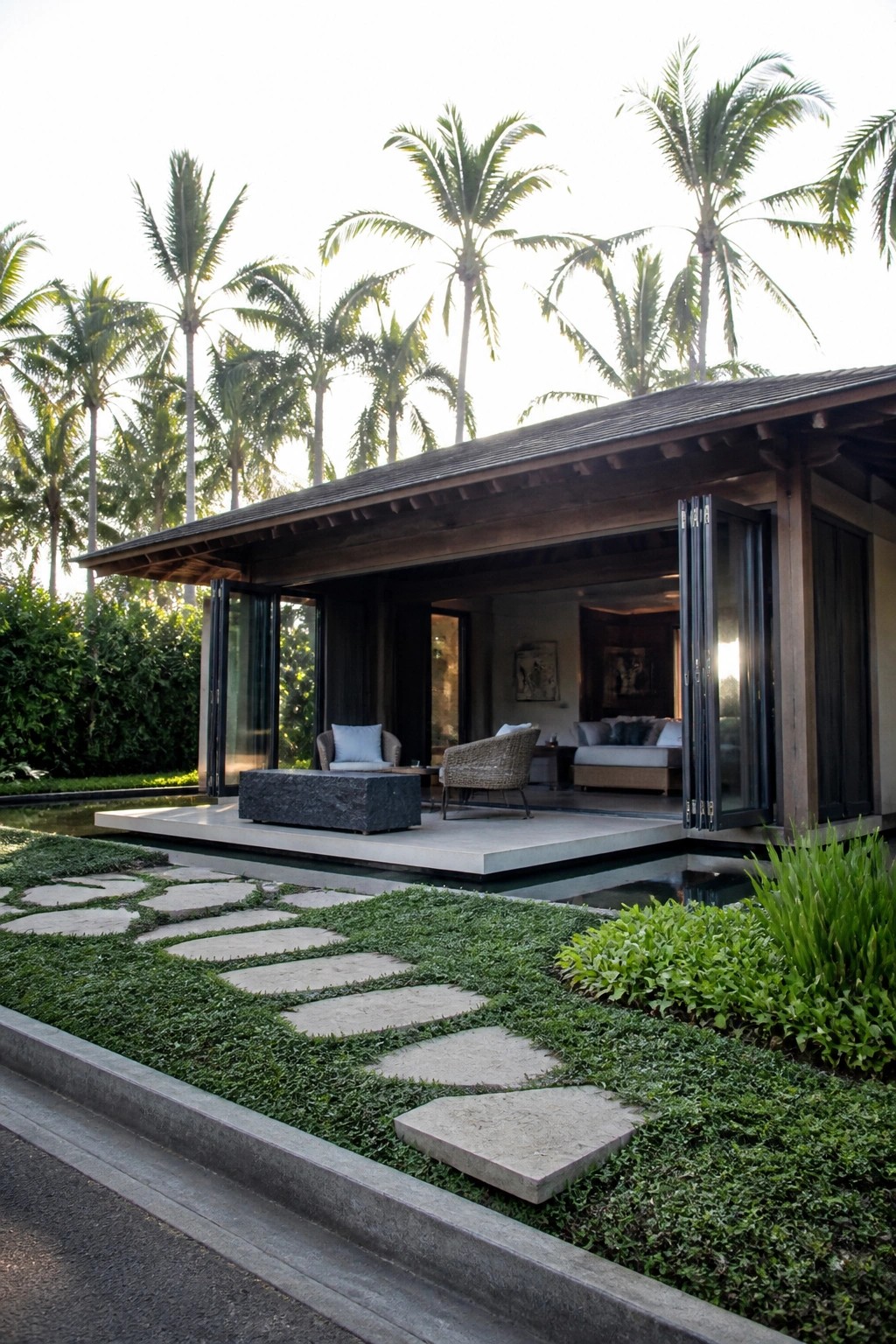
Large folding doors make a big difference when you want the main living space to feel like part of the outdoors. They let you keep the house closed on cooler days but swing the whole wall open when the weather is good, so the patio and interior read as one connected area. The simple stone path leading up to the edge helps guide that flow without adding clutter.
This works best on homes that already have a decent garden or pool edge right beside the main rooms. Keep the doors on a single long wall rather than scattering them, and make sure the patio surface sits at the same level as the indoor floor. That small detail keeps the transition smooth and avoids the feeling of stepping up or down every time you move between the two.
Bamboo Screens for Poolside Privacy
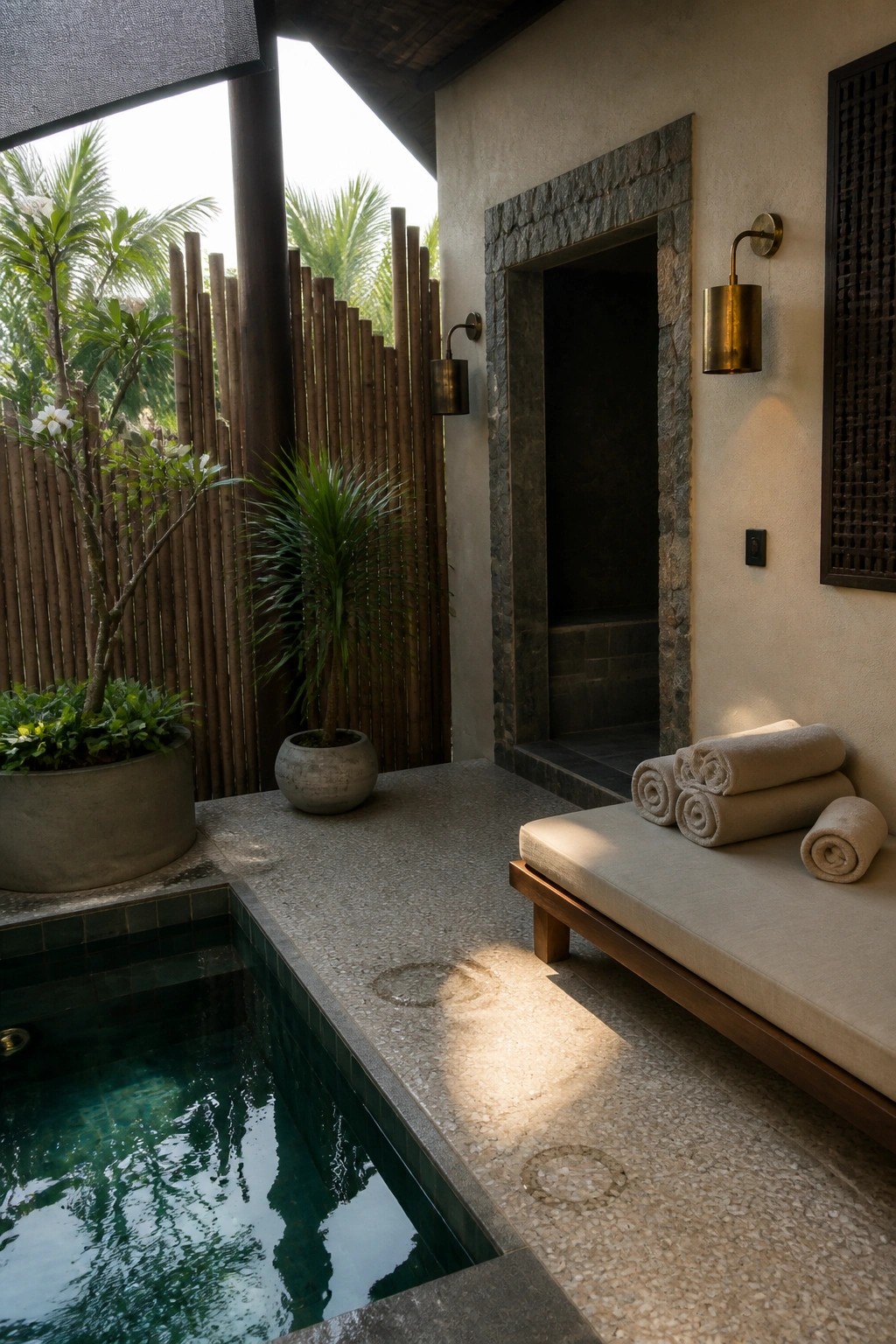
Many tropical villas use a tall bamboo screen along one edge of the pool deck to create a quiet zone without building full walls. The screen blocks outside views while still letting air and light move through, which keeps the whole area feeling open rather than boxed in.
This approach works well on smaller lots or when the pool sits close to a property line. Set the screen a few feet back from the water, then place one or two large planters in front so the line looks softer and more natural.
Covered Outdoor Tables Next To The Pool
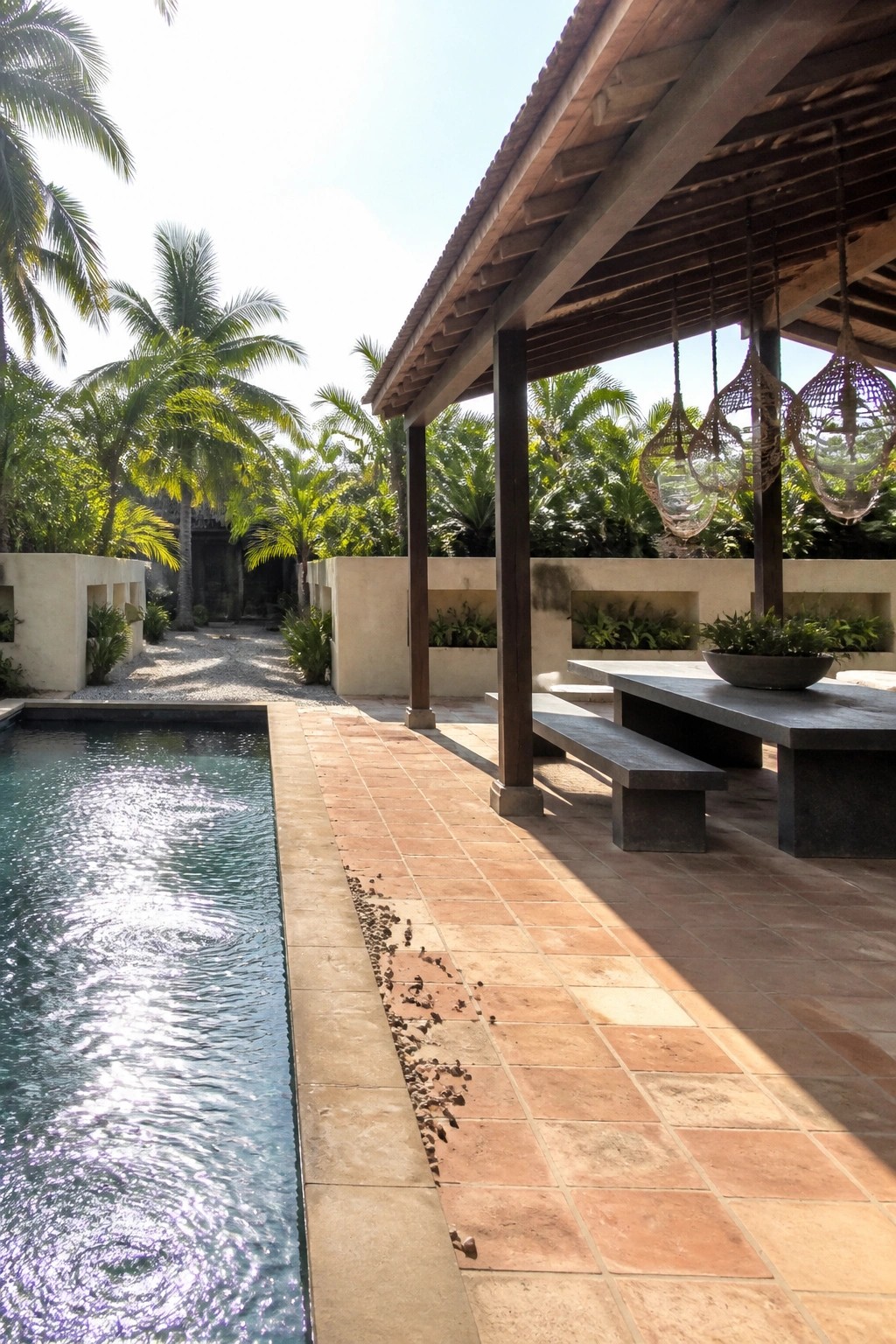
A covered pavilion with a long stone table gives you a shaded place to eat or gather without going far from the water. It works especially well in warm climates because the roof blocks the sun while still letting you stay connected to the pool and garden. The simple bench seating keeps things open and easy to move around.
This setup suits homes where people spend most of their time outside. Place the table close to the pool edge so meals feel part of the same space, and keep the structure low and open on the sides. Make sure the roof matches the main house materials so it does not feel like a separate building.
Water Channels Along the Entry Steps
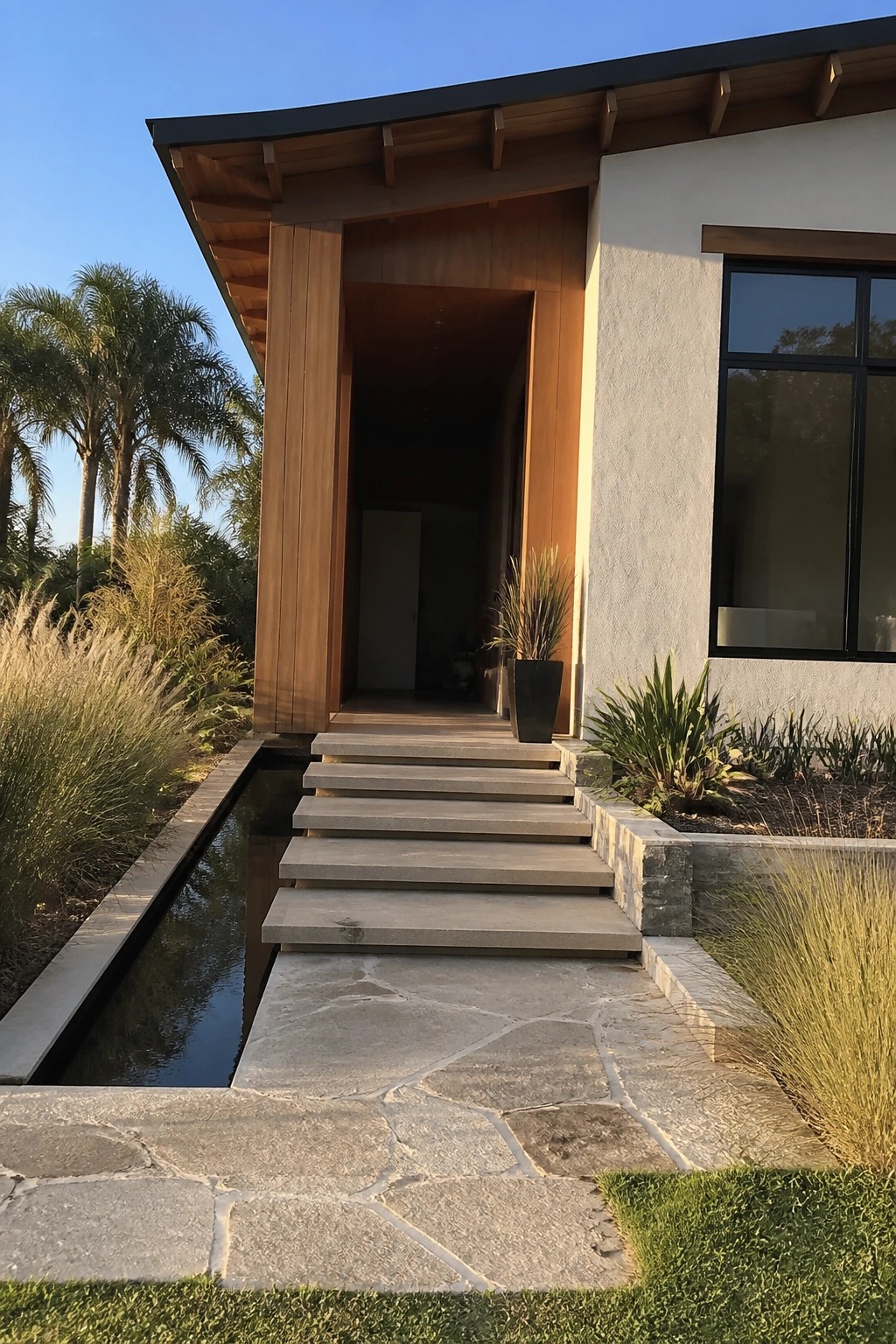
A narrow water channel running beside the front steps gives the entry a calm, steady feel without any extra fuss. The water reflects light and breaks up the hard surfaces, so the approach feels softer even though the house itself stays quite modern.
This idea works best on homes that already have a bit of room between the street or driveway and the door. Keep the channel simple and low maintenance, and make sure the steps stay wide enough for comfortable use in all weather.
Open Showers That Open Straight To The Garden
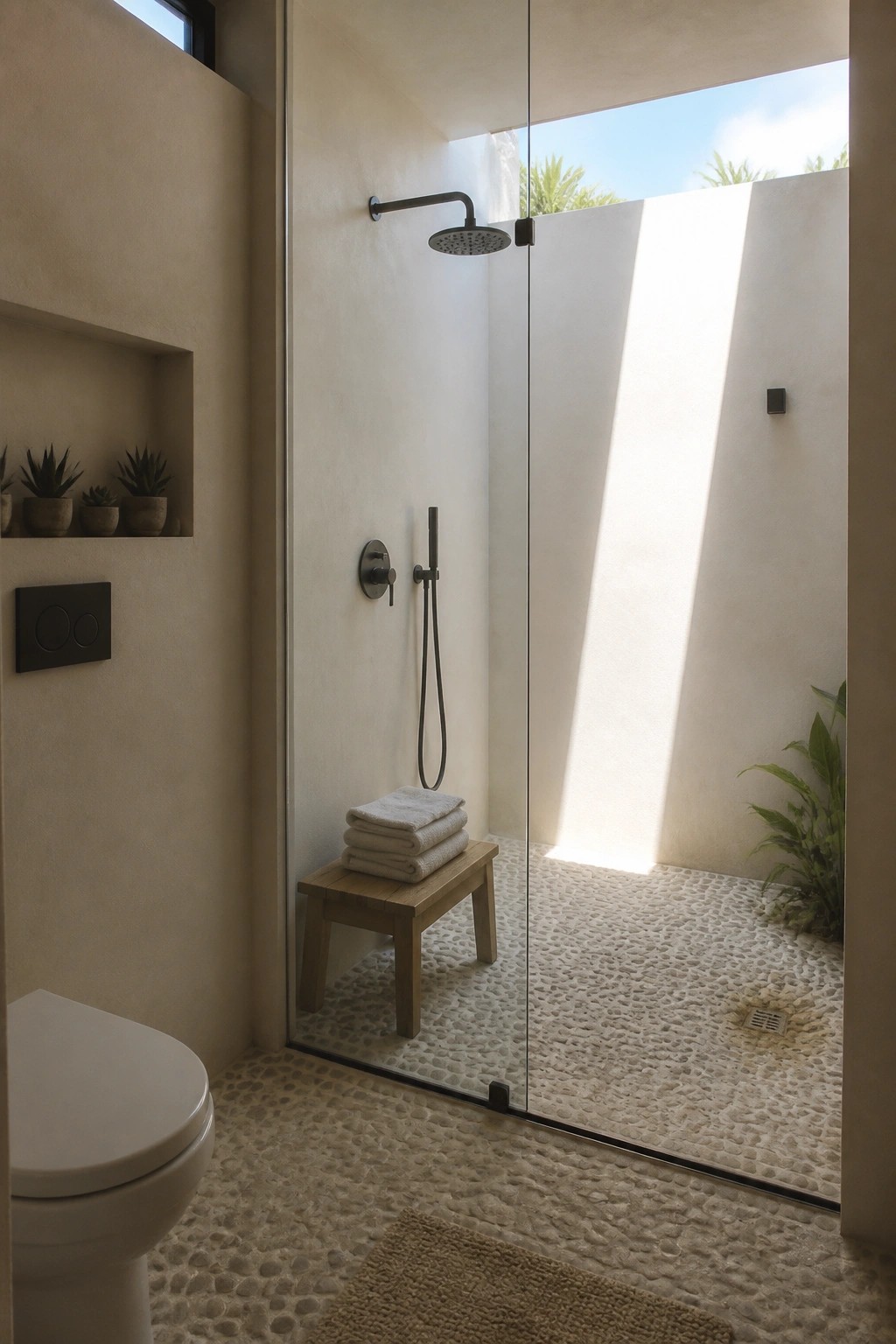
An open shower with a simple glass panel lets the bathroom connect directly to an outdoor area. This setup works especially well in warmer climates where you want the space to feel larger and more connected to the surrounding plants and light. The pebble floor carries through both sides, which keeps the transition smooth without adding extra walls or doors.
It suits tropical style homes that already lean toward pavilion layouts. Keep the rest of the bathroom simple so the view stays the main focus, and make sure the outdoor side has good drainage and some privacy screening if neighbors are close.
Bar Seating for Outdoor Kitchens
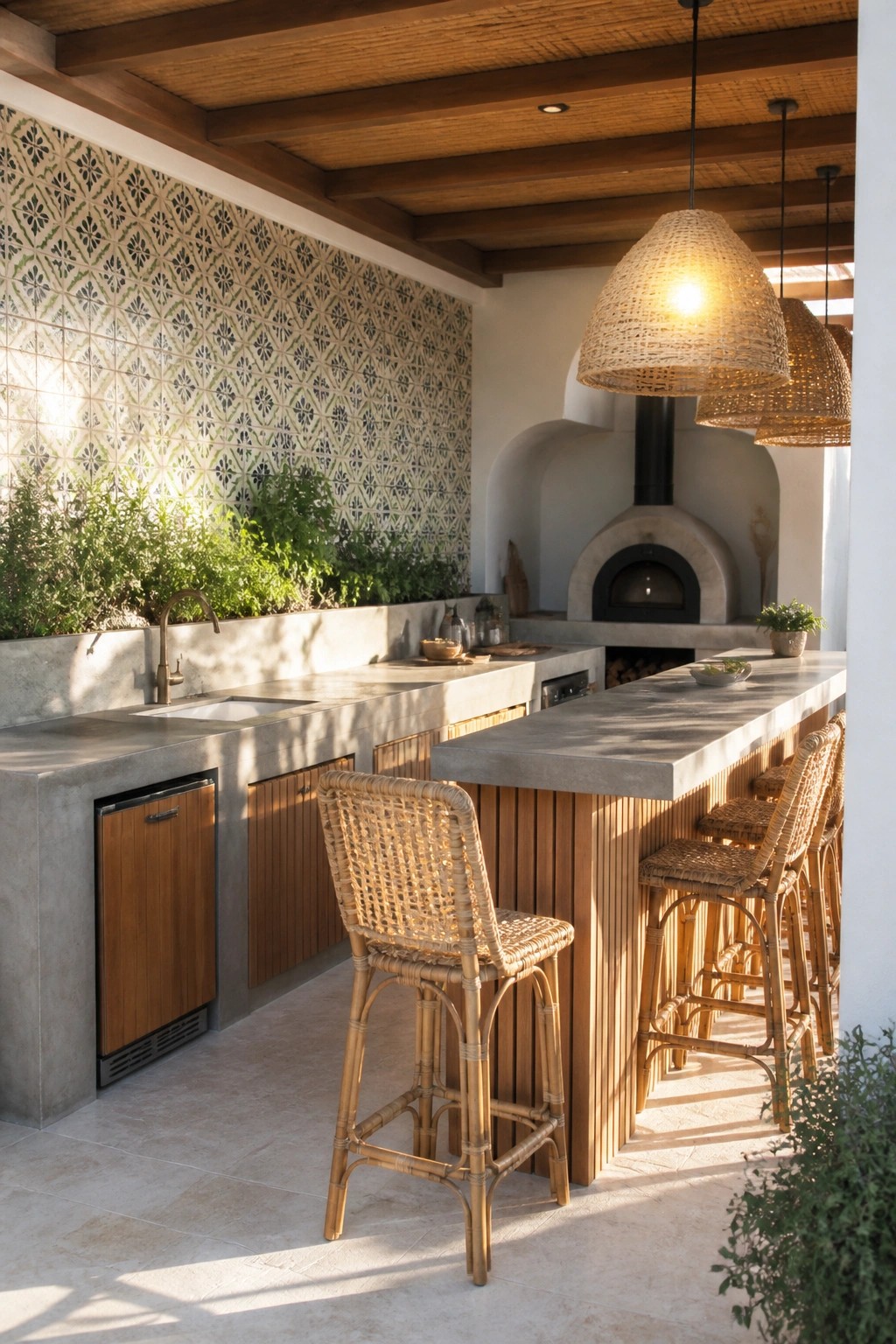
An outdoor kitchen works better when there is a place for people to sit and stay awhile. A long bar counter with stools turns the cooking area into a spot where guests can gather without getting in the way.
This setup works especially well in pavilion-style homes where the kitchen opens to the outdoors. Keep the counter height comfortable for sitting and choose stools that hold up in the weather. The concrete surface and simple wood base shown here keep things practical while still feeling relaxed.
Canopy Beds That Keep The Room Open
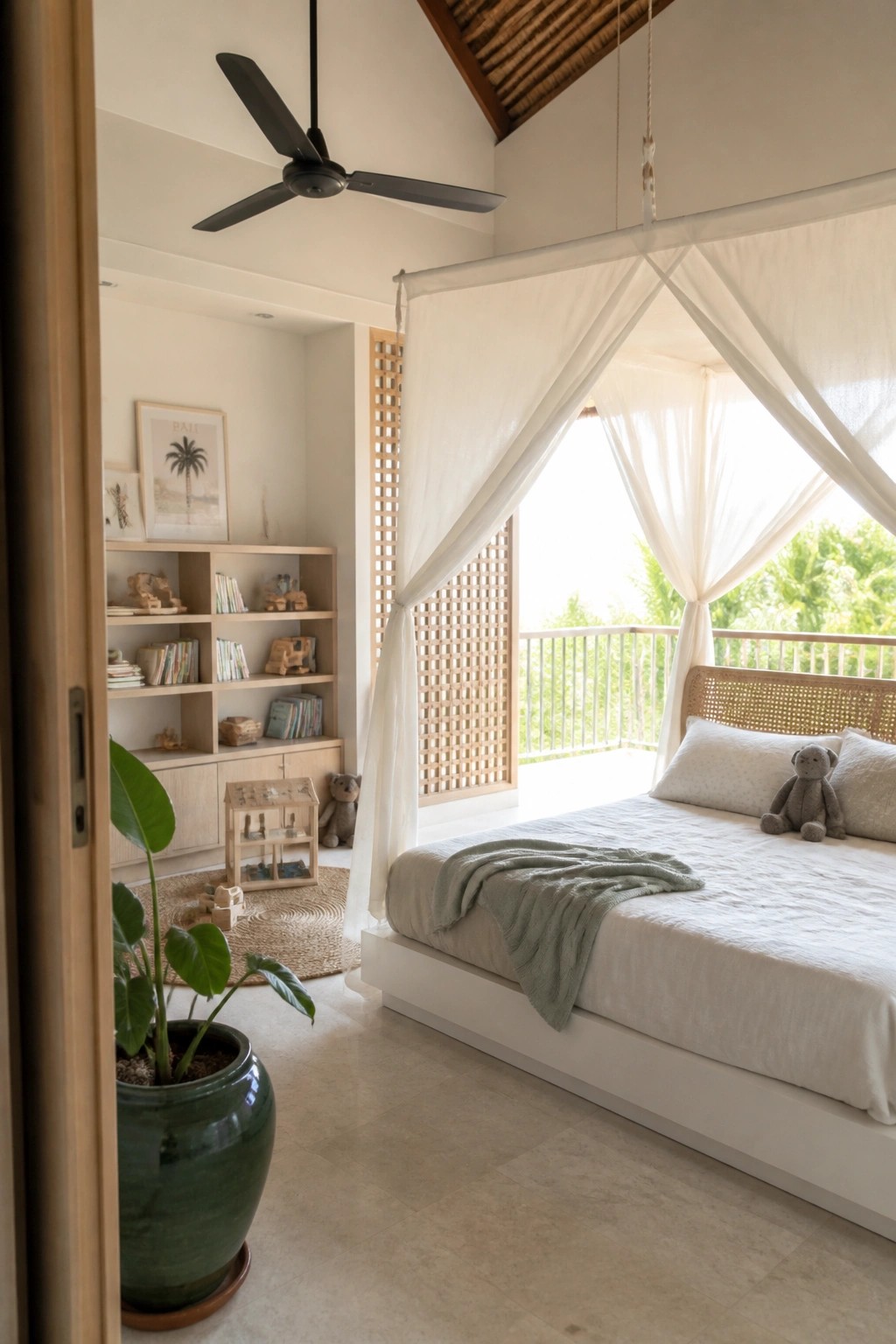
A canopy bed with light fabric works well in tropical bedrooms because it adds a soft boundary without closing off the space. The drapes move with any breeze and still let the view from the balcony stay connected to the room.
This idea suits homes that already open to an outdoor area. Keep the frame simple and the fabric thin so the ceiling height and natural light stay the main features.
Pavilions That Extend Living Space Outdoors
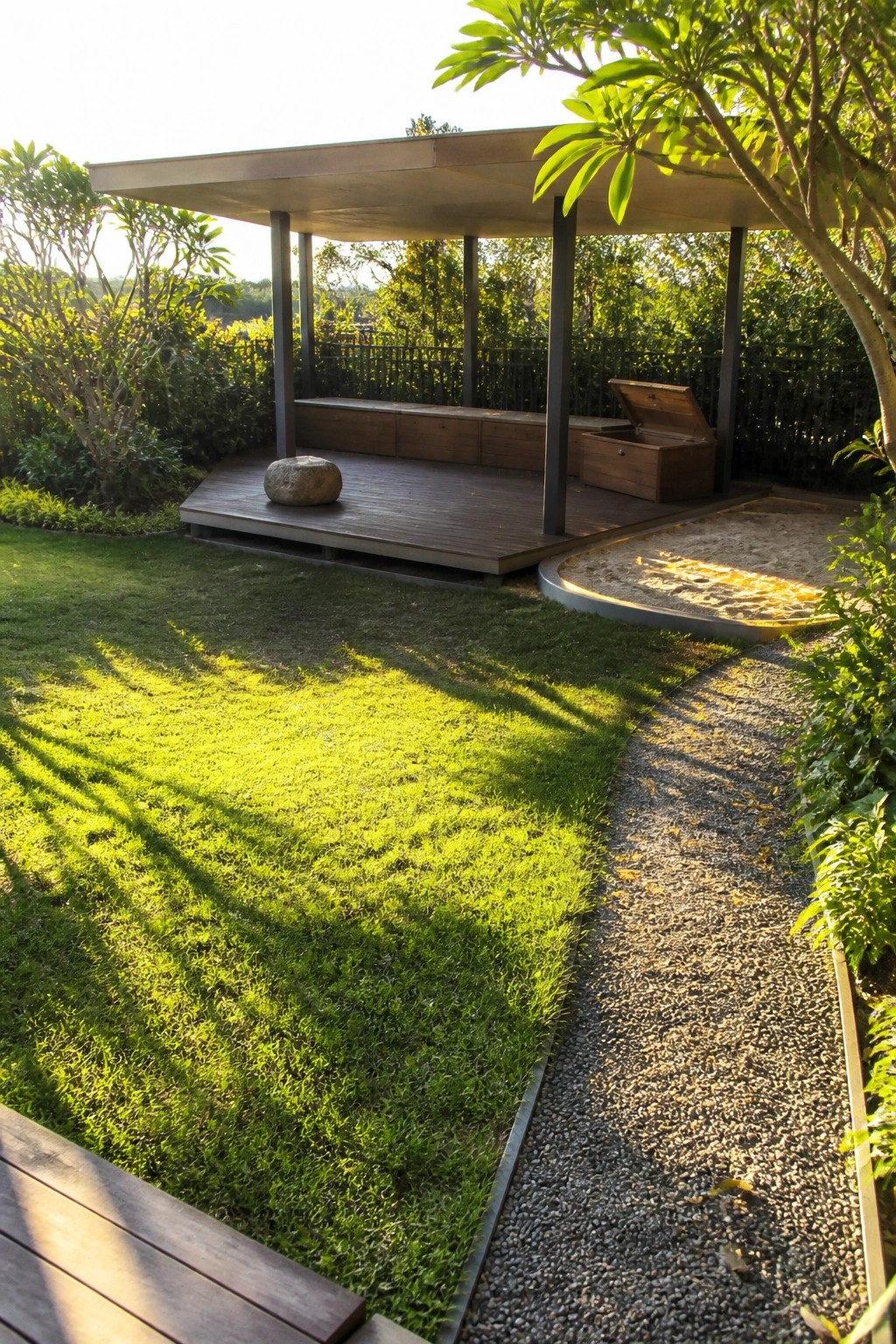
A pavilion like this gives you a shaded platform right in the middle of the garden without closing off the view to the lawn. The flat roof and open sides keep the space feeling airy while still offering protection from sun or light rain. It turns an empty patch of grass into a spot people actually use during the day.
This layout works best on homes with enough yard space to place the structure a short distance from the house. Run a simple gravel path between the two so the pavilion feels connected rather than isolated. Keep the deck low to the ground so the transition from lawn to seating stays easy and natural.
Separate Pavilions For Natural Zoning

Many tropical villas feel more usable when the main living areas sit in their own separate structures instead of one big building. The pavilions stay smaller and easier to open up on all sides, so each zone gets its own bit of garden and breeze without the whole place feeling like one giant room.
This approach works best on lots that have room to spread out a little. Keep the paths between buildings simple and well lit, and let the planting fill in around the edges so the structures read as part of the landscape rather than a single mass.
Frequently Asked Questions
Q: Can these pavilion layouts still feel private on a smaller lot? A: Position the main structure so the open sides face inward toward a small garden or pool. Tall planting along the edges blocks views from neighbors without closing off the air flow. The high roof keeps everything feeling spacious anyway.
Q: How do you stop rain from blowing into the main living area? A: Set the pavilion so its longest side runs parallel to the usual storm direction. Deep overhangs on the roof edges catch most of the water before it reaches the furniture. A few roll-down screens on the windiest side give extra protection when needed.
Q: What kind of flooring works without turning slippery in wet weather? A: Choose textured stone or sealed wood planks that grip under bare feet. These surfaces dry fast in the breeze and stay cool underfoot. Skip anything too polished that could send someone sliding after a quick shower.
Q: How much outdoor space do you really need around the pavilion itself? A: A modest deck or patio ring is enough to tie the rooms together. It gives room to walk around furniture and catch the breeze without needing a huge yard.
