


In tropical climates the covered areas between rooms and the yard often decide whether you spend time outside or stay shut in.
I have watched friends build beautiful verandas that stayed empty because the sun hit them wrong at the hours when people actually wanted to relax.
That changes the whole plan.
Thinking through the flow from kitchen to these transition spots helps me picture which ideas might actually get used instead of just looking nice on paper.
A few of the details in these examples feel like the kind of practical fixes worth trying when the current setup does not quite work.
Add A Ceiling Fan Over Covered Outdoor Seating

A ceiling fan makes a big difference on a covered deck or patio in a warm climate. It keeps air moving so the space stays usable even when the sun is strong or the air feels heavy. The wooden ceiling and simple fan setup here show how little it takes to turn a basic covered area into something people actually sit in for hours.
This works best on homes where the deck sits right between the main living room and the pool or garden. Keep the fan simple and the ceiling low enough to feel sheltered without closing the space in. Watch the height so it does not interfere with taller plants or furniture arrangements nearby.
Covered Patios That Work As Outdoor Dining Rooms
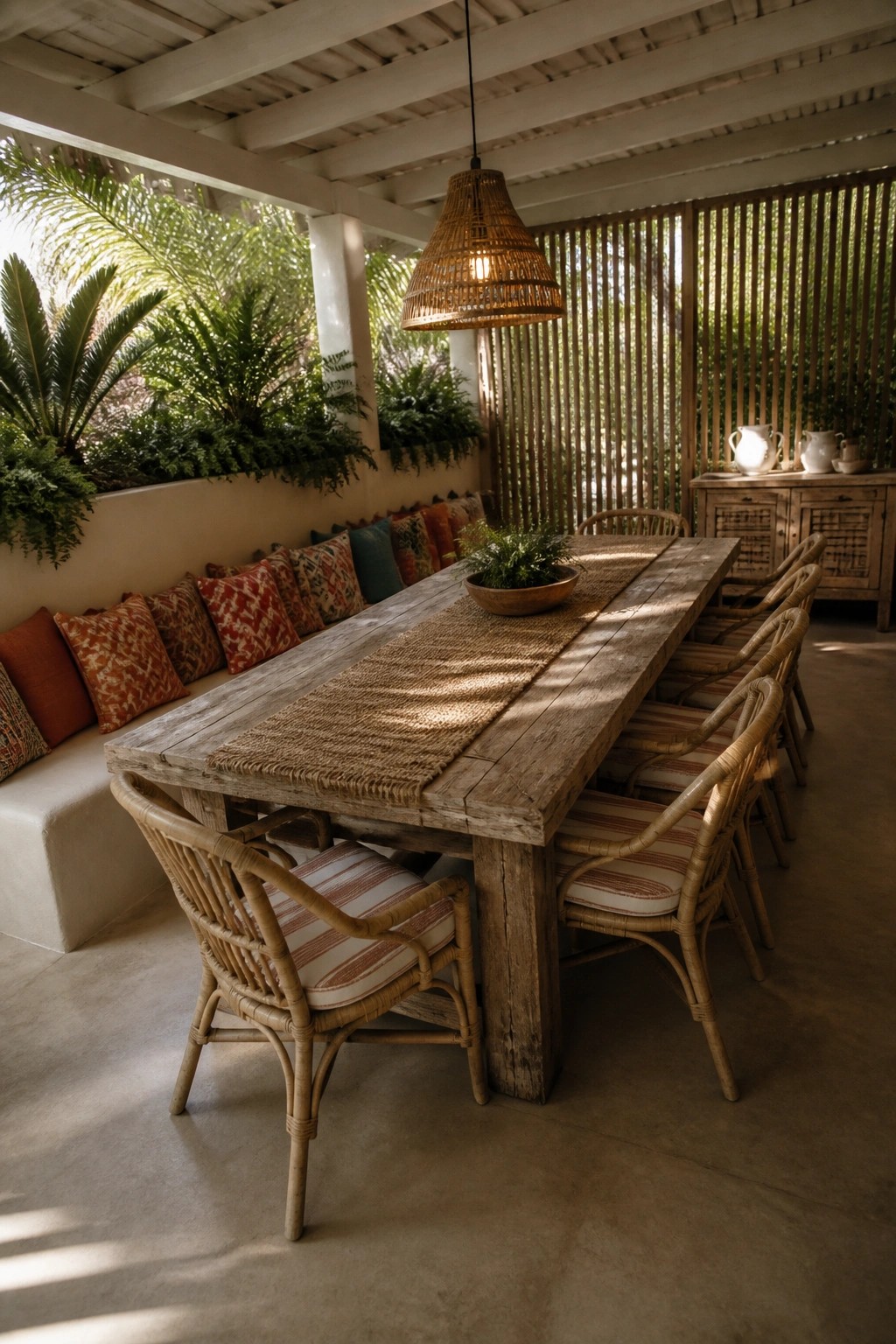
A roof over the patio turns the space into something you can actually use every day instead of only on perfect weather days. The cover gives shade and keeps rain off the table, so meals happen outside more often without any extra effort.
Set a long table in the middle and mix in chairs on one side with a built-in bench along the wall. This works best on homes where the patio sits right off the main living area and faces the garden so the indoor and outdoor rooms feel connected.
Line a Covered Transition With Bench Seating
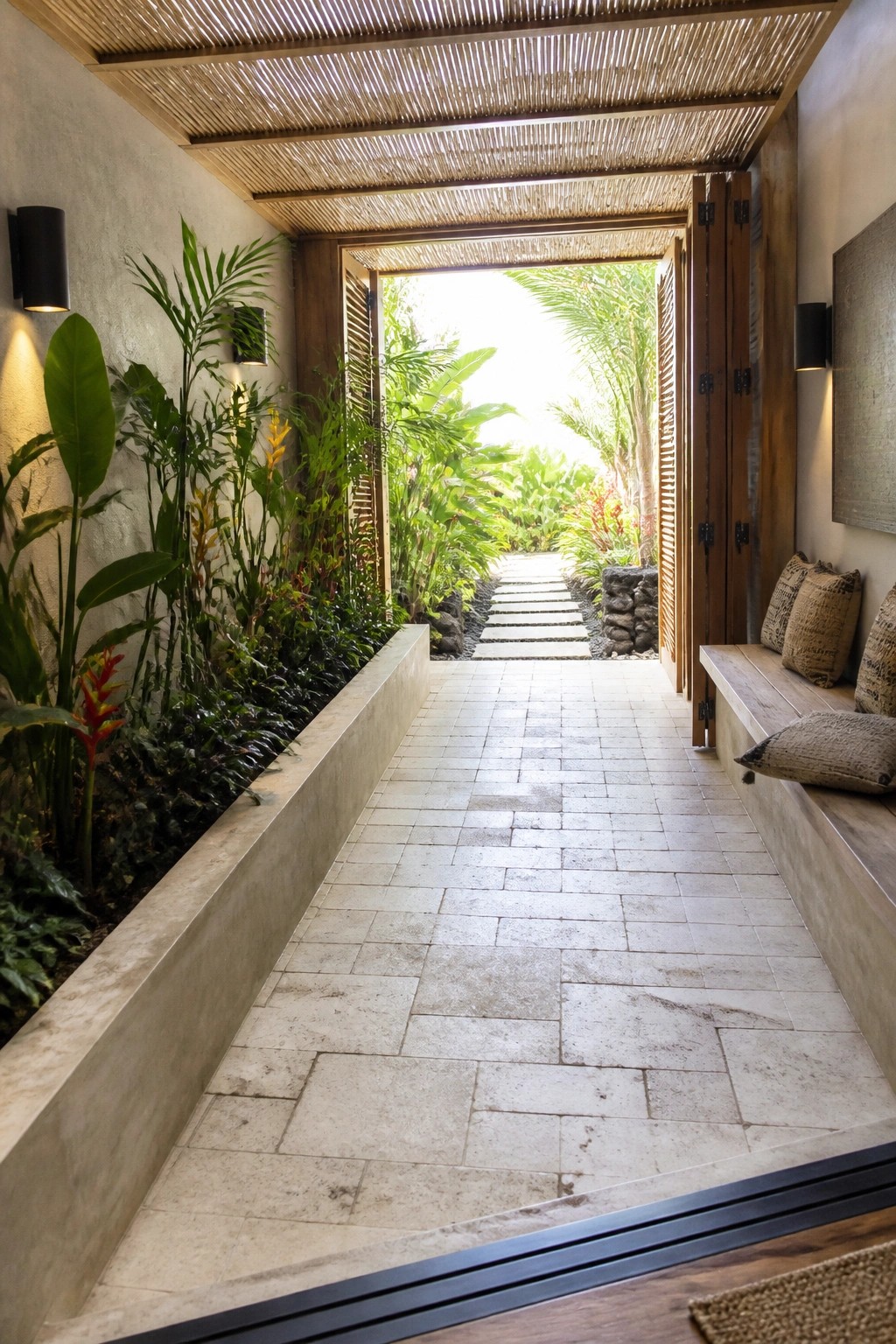
A covered walkway feels much more useful when you add a long bench along one side. It gives people a place to sit without crowding the path or adding loose furniture that gets in the way.
This setup works best in homes where the indoor rooms open straight to the garden. Keep the bench simple and low so it does not block movement, and let planting run along the opposite wall to soften the space.
Hang a Hanging Chair in the Covered Transition Area
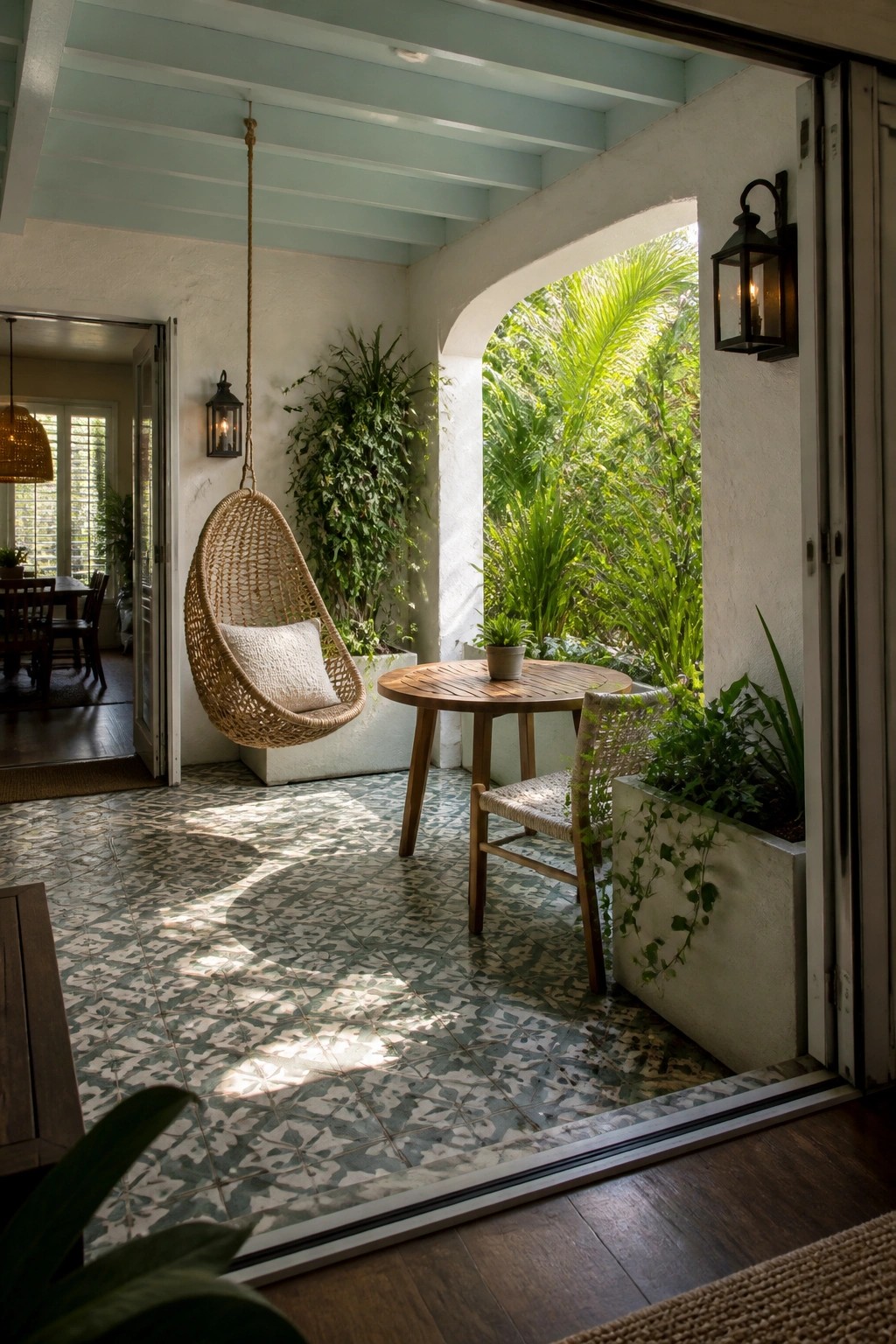
A hanging chair works well in a covered spot like this because it frees up floor space while still giving you a comfortable place to sit. The woven style fits the tropical feel without adding clutter, and the rope mount keeps the look light.
Place it where the doorway opens to the outdoors so the chair feels like part of both the inside and the patio. It suits homes with modest covered porches or loggias that already have solid flooring and some shade. Just check the ceiling structure can handle the weight before you hang it.
Cover Just the Kitchen on Your Deck
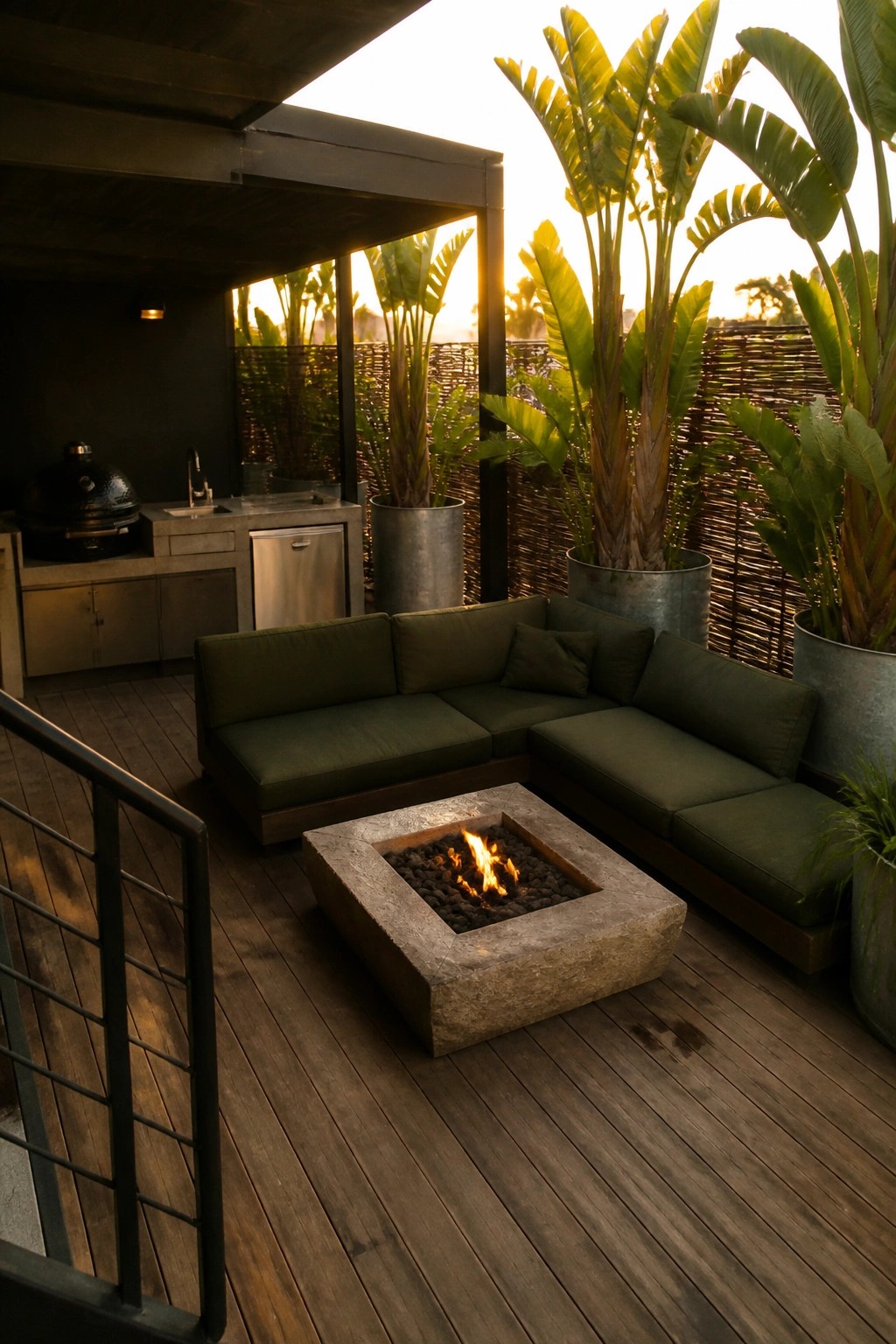
A covered kitchen zone next to open seating makes the whole space more usable. The roof keeps the grill, sink, and fridge protected from weather while the rest of the deck stays open for air and views. This setup works especially well in tropical spots where sudden rain or strong sun can interrupt cooking.
Try it on a deck or patio where you want to cook often but still enjoy an open fire pit area. Keep the seating low and simple so it does not compete with the covered part. Large pots of tall plants help mark the edge without closing the space in.
Pergola Shade For Outdoor Dining
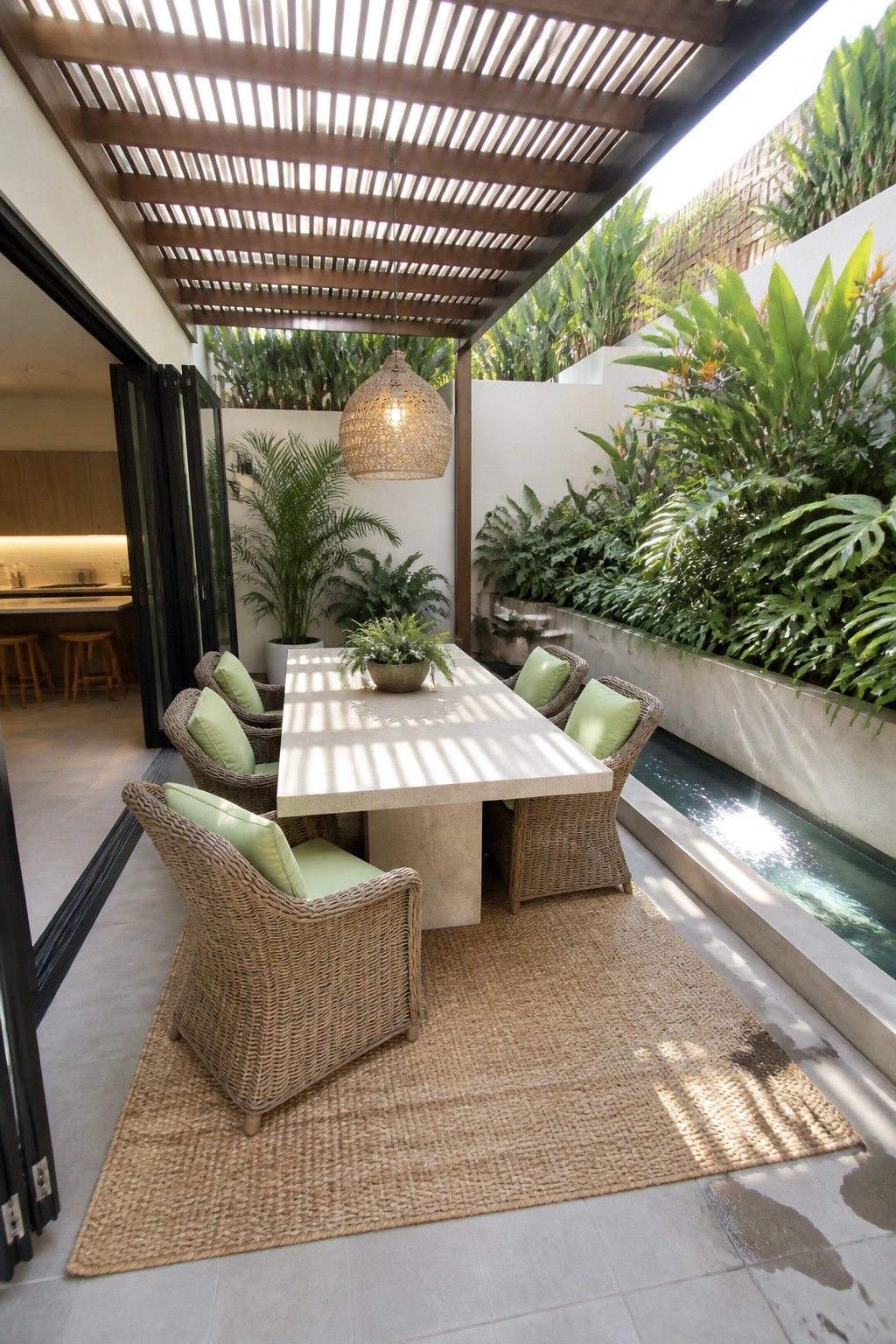
A simple slatted pergola overhead makes an outdoor table usable even when the sun is strong. The gaps in the wood let some light through so the space still feels open instead of closed in.
This setup works well on homes with easy access from the kitchen or living room. Place the table close to the doors and add a rug underneath to mark the spot. It suits tropical climates where you need shade but still want fresh air.
Louvered Shutters Improve Covered Porches

Louvered shutters give a covered porch more control over sun, breeze, and privacy without closing the space off completely. In tropical climates this matters because the weather can shift quickly, and you want the area to stay comfortable for meals or sitting.
Place them along the outer walls so they can open wide during good weather or close partway when the sun gets strong. They work especially well on homes with deep overhangs where you already have a solid roof overhead.
Add Built-In Seating to Covered Paths
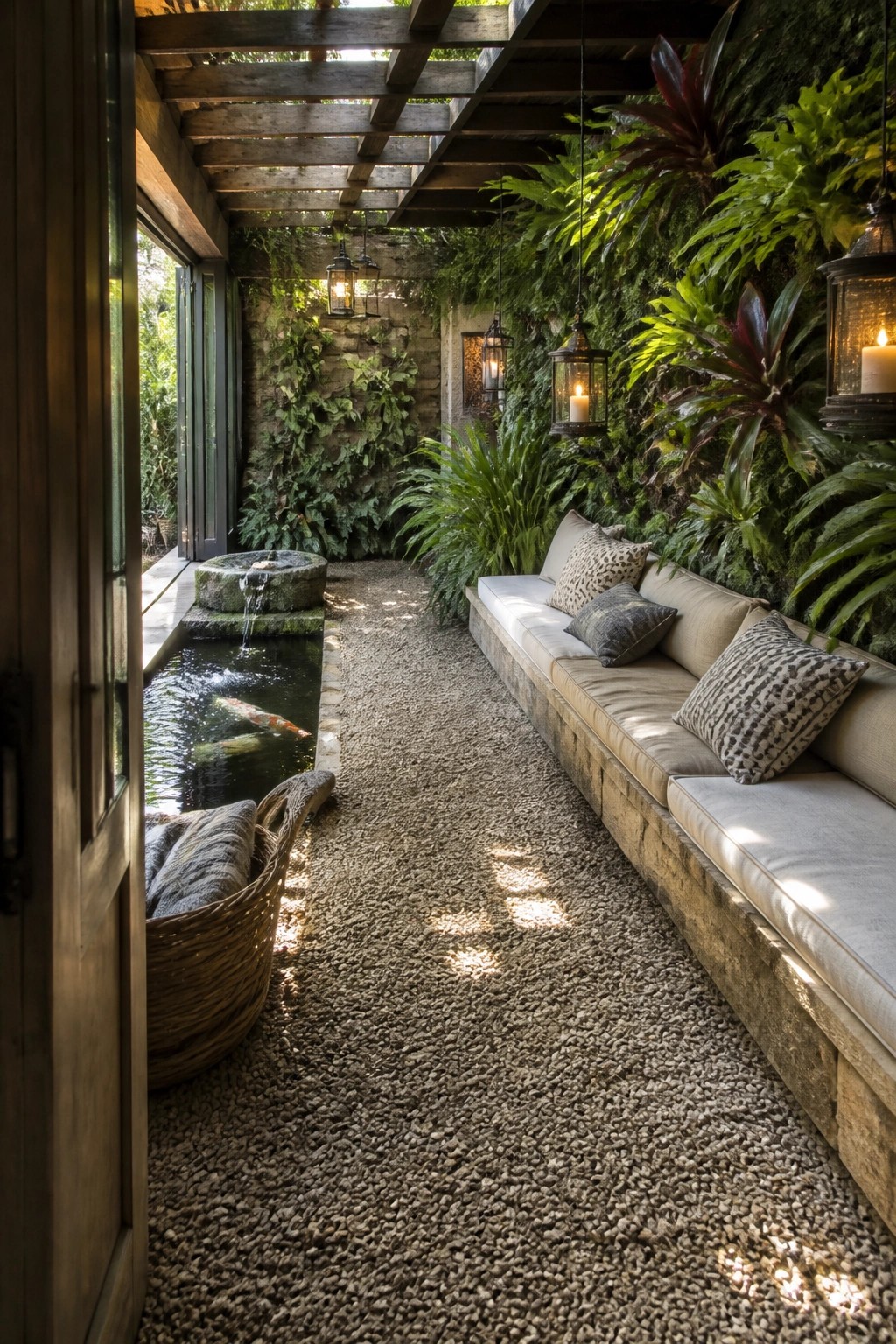
A covered walkway with a long built-in bench turns what could be just a passage into a place where people actually want to sit. The stone base keeps it sturdy while the cushions make it comfortable, and the overhead structure provides shade without closing the space in. This setup works especially well in tropical settings where you want to spend time outside but still need protection from sun or rain.
It suits homes with garden connections or side yards that link different parts of the property. Keep the bench simple and low so the path stays open, and use the wall behind it for vertical plants if you want more greenery. Just make sure the seating faces the main view so it feels inviting rather than like an afterthought.
Add A Thatched Roof For Shade Over The Patio
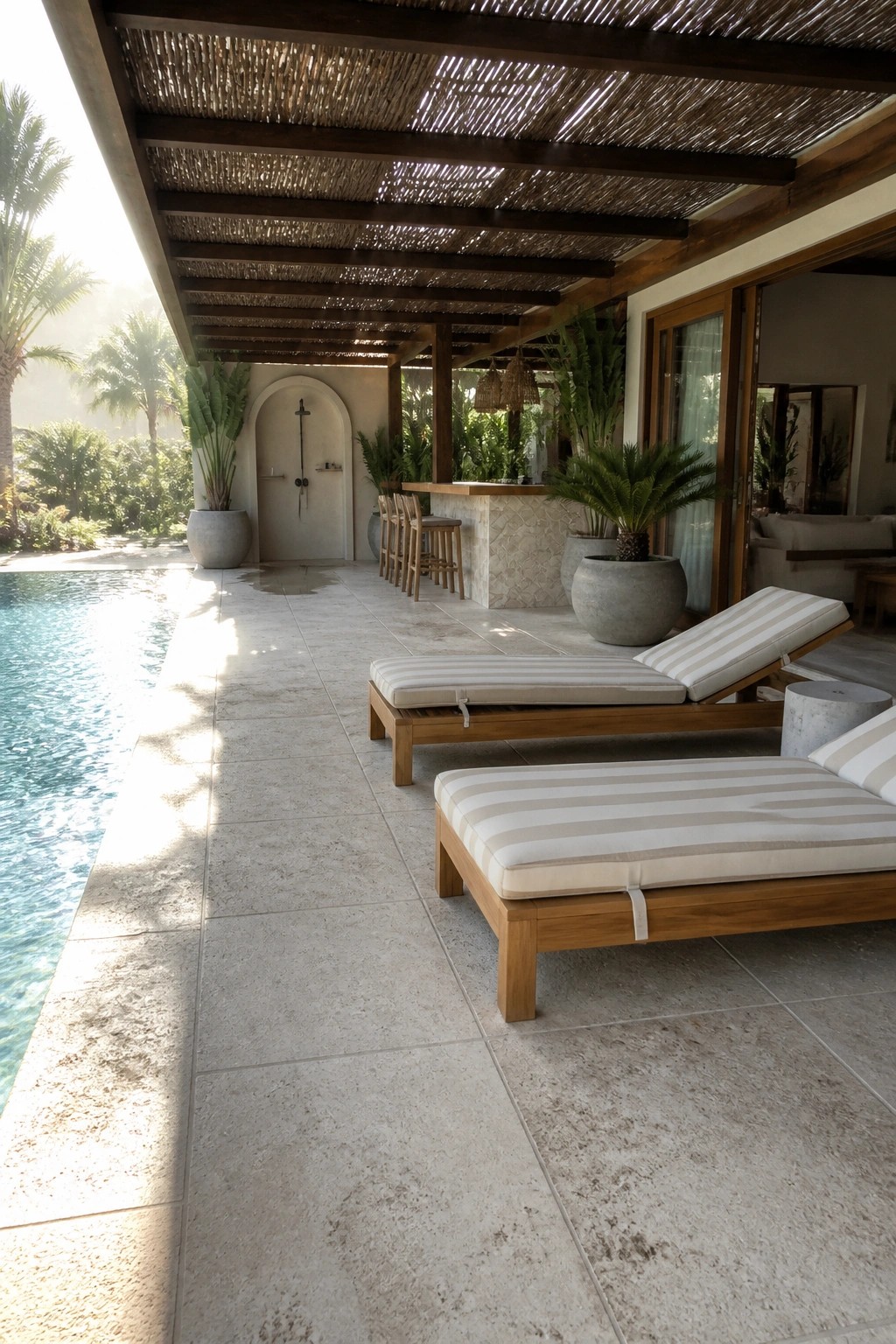
A thatched roof gives solid shade while still letting some light through, which makes the patio comfortable even on hot days. It turns the space right next to the pool into a place where people actually want to sit and linger instead of rushing back inside.
This works best on homes in warm climates where the pool gets heavy use. Keep the furniture simple, like low wooden loungers, and add a small bar nearby so the whole area functions as an extension of the main living space.
Turn a Covered Porch Into an Outdoor Workspace

A covered transition space works well as a workspace because it gives you fresh air and natural light without the full exposure of an open patio. The setup stays comfortable through most of the day and keeps your laptop and papers protected.
Set a desk against a wall or under a skylight so the light stays even. Keep the furniture simple, add a few plants for a bit of greenery, and make sure the chair is comfortable enough for a few hours. This kind of spot suits homes with deep eaves or existing porch structures that already have some cover.
Hang Plants from the Porch Ceiling
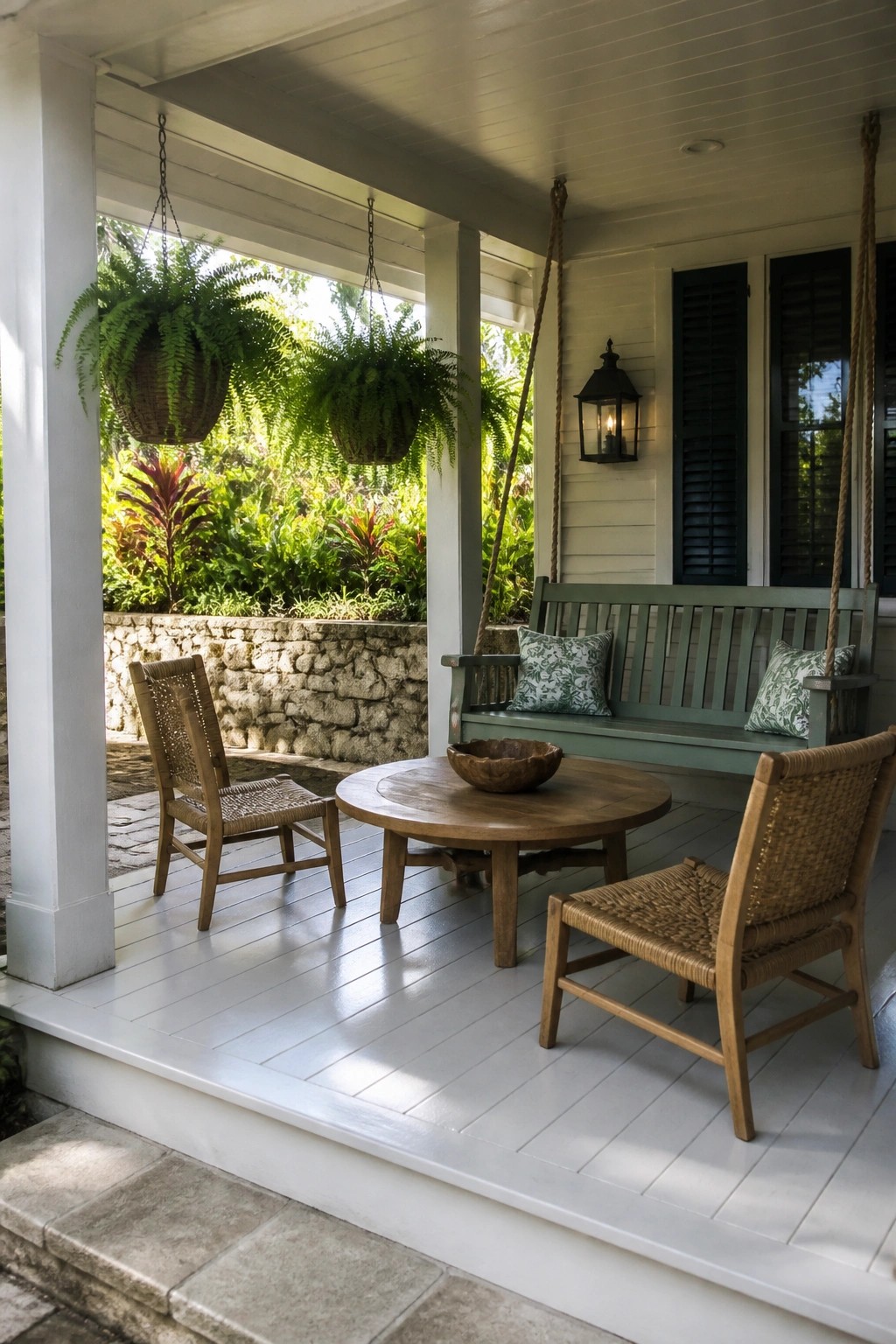
Hanging plants from the ceiling of a covered porch brings the garden closer without leaving the shelter of the roof. It softens the edges of the space and makes the transition from indoors to outdoors feel more natural, especially in tropical settings where shade and humidity matter.
This works best on porches that already have good overhead structure and some protection from direct rain. Use sturdy chains and choose plants that handle lower light, then keep the seating simple so the greenery stays the main feature.
Built-In Seating On Covered Balconies

A built-in bench along one wall turns a narrow balcony into a useful spot for sitting without taking up much floor space. The concrete ledge with simple cushions works well because it stays out of the way and leaves room for a small table and a couple of extra chairs when needed. This setup feels practical in warm climates where you want shade but still like being outside.
It works best on balconies that connect directly to a living area or bedroom through sliding doors. Keep the bench low and wide enough for lounging, then add a few tall planters along the edge to soften the look and give a bit of privacy. Avoid overcrowding with too many pieces since the bench already provides the main seating.
Covered Patios Make Outdoor Dining More Practical
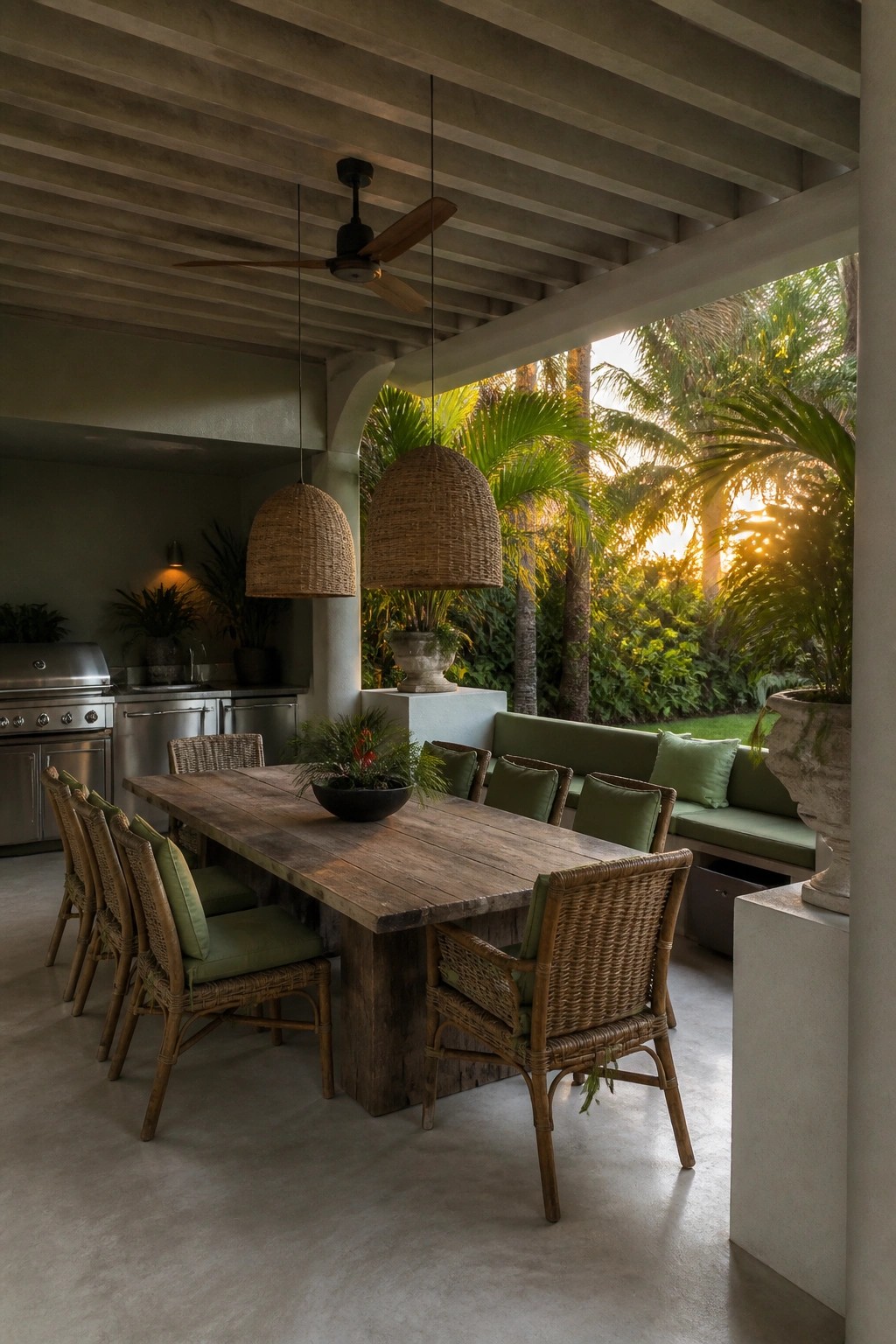
A covered space with a long table lets you eat outside without worrying about sudden rain or too much sun. The solid overhead structure and sturdy furniture give the area a settled, usable feel that loose patio sets often lack.
This works well on homes that already have a roof extension or can add one over a patio area. It suits warmer climates where you want to spend more time outdoors but still need shade and shelter. Keep the table size in scale with the space so movement stays easy.
Seating in Covered Transition Spaces

A simple wooden bench placed right in a covered spot between the house and garden makes the whole area feel more usable. It turns what might be just a walkway into a place where you can sit for a few minutes, enjoy the air, and still stay dry when it rains. The stone floor helps with that easy back and forth movement without tracking much inside.
This setup works best on homes with a clear doorway to a small garden or courtyard. Keep the bench low and plain so it does not block the flow, and make sure the roof overhang gives real shade and shelter. It suits tropical climates especially well because it lets you enjoy the outdoors without dealing with direct sun or sudden showers.
Add A Central Island To Your Covered Outdoor Space

A central island turns a covered transition area into a real gathering spot. It gives you room to prep food or set out drinks while keeping the space open enough that people can move around and still see the garden through the arch.
This works best in warm climates where you want to cook and entertain without going fully inside. Use durable materials like concrete for the top and keep the seating simple so the whole area stays practical rather than fussy.
Hang Plants to Blur Indoor and Outdoor Lines

Hanging plants work well in covered transition spaces because they add layers of greenery without taking up floor room. In this setup the plants drop down from the overhang right where the seating meets the garden view, which makes the boundary feel less sharp and more like one continuous space.
This idea suits homes with decent roof overhangs or deep porches where you can hang from the structure above. Keep the pots simple and the strings long enough to reach eye level so the plants actually connect the two sides instead of just sitting up high.
Hanging Seating Along Covered Walkways

One simple way to turn a basic covered path into something more useful is to hang a couple of chairs along it. This keeps the walkway open for movement but gives you spots to sit without crowding the floor space. In warmer climates it makes sense because the overhead structure already provides shade.
It works best on longer side passages or between house sections where you need a bit of breathing room. Keep the chairs lightweight so they do not overload the beams, and use sturdy rope or chain attachments. Avoid placing too many if the path is narrow.
Built-In Seating On Covered Porches
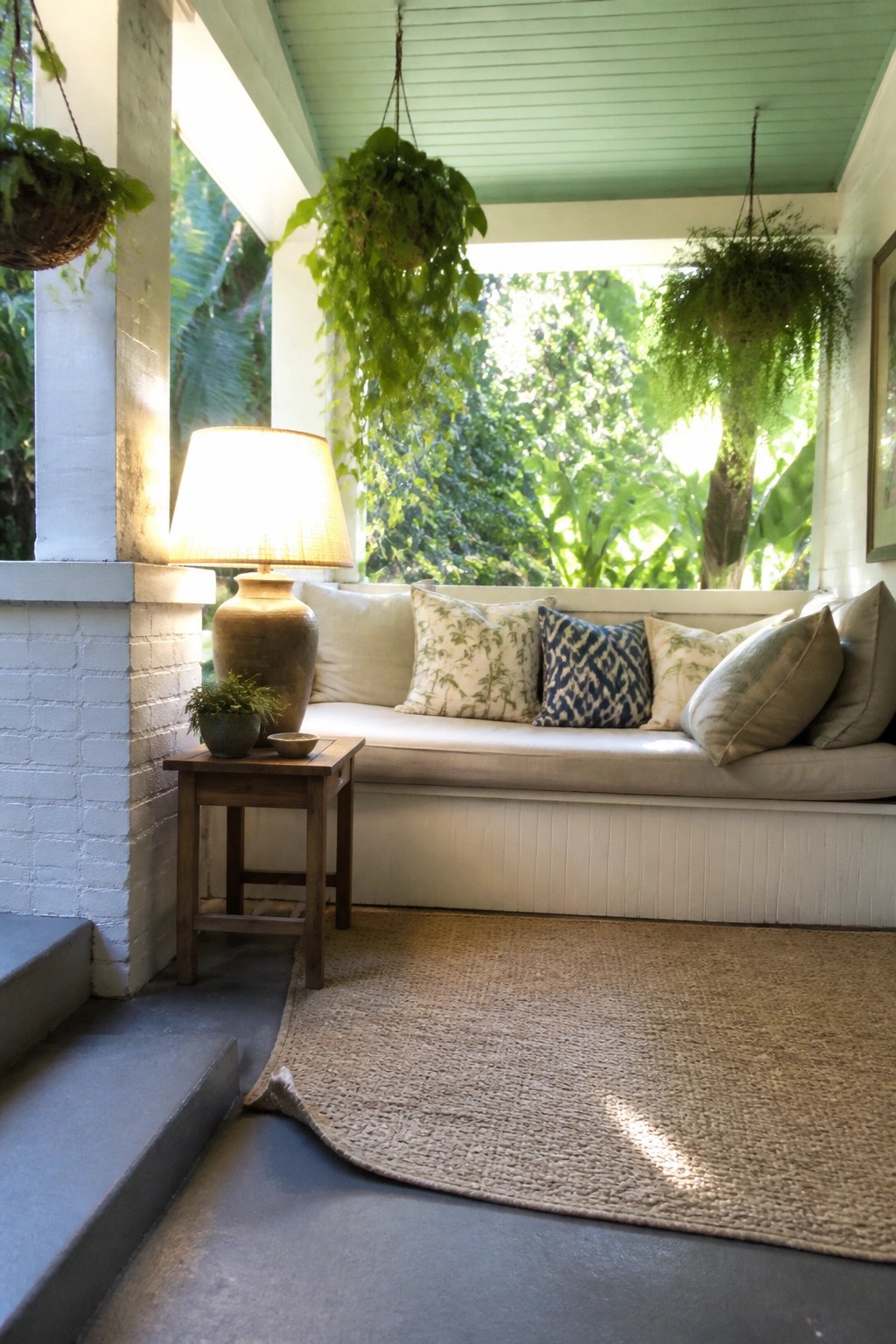
A built-in bench turns a covered porch into a usable living space without crowding the floor. It gives you a permanent place to sit while keeping the area open and easy to move through, which works especially well in spots that connect the house to the garden.
This setup suits homes in warmer climates where you want to spend time outside but still need shade. Add a few hanging plants overhead and keep the cushions simple so the bench stays comfortable without feeling cluttered.
Frequently Asked Questions
Q: What kind of flooring works best in these transition areas when it gets wet? A: Choose tiles with a textured surface so they stay slip resistant after rain. They also clean up easily with a quick hose down. Add some outdoor rugs in drier spots for extra comfort underfoot.
Q: How can I bring more plants into the space without worrying about them getting too much shade? A: Pick shade loving tropicals like ferns and philodendrons that thrive under cover. Hang some from the ceiling beams to free up floor space. Water them on a schedule that matches the lower light levels.
Q: Is it hard to keep these spaces clean with all the tropical growth around? A: Sweep the floor weekly and trim vines that creep in. A simple broom does the job fast.
