

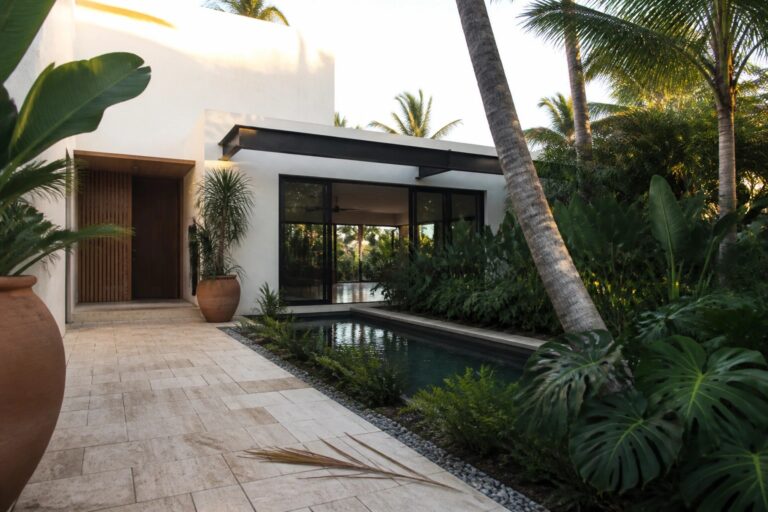
When I look at modern tropical homes the planting around the base and sides often decides whether the facade feels anchored or oddly exposed.
The better examples use staggered heights and densities to frame windows and entries without hiding the lines of the house itself.
Layering changes more than most people assume.
I have noticed that homes with only a single row of palms or shrubs along the front tend to look flat from the street even when the architecture is strong.
A couple of these approaches to building depth around rooflines and walkways are ones I would test if I were updating the outside of my place.
Layering Plants To Frame Modern Exteriors
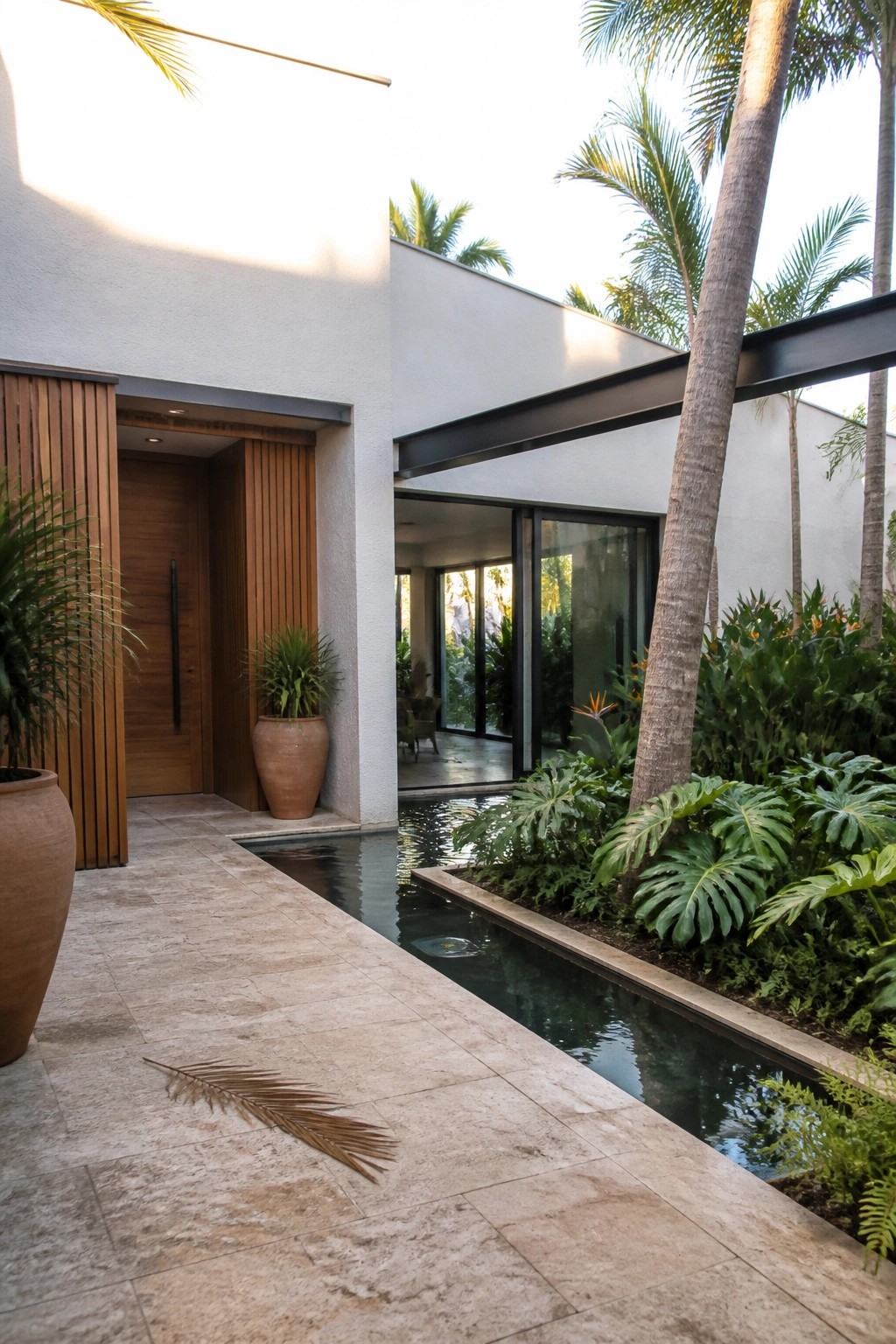
Many modern homes gain a lot from planting that is built up in stages right against the walls. Tall palms set the height while mid level shrubs and lower ferns fill out the base and give the clean surfaces more life without covering them up.
This works best on houses with simple shapes and wide wall areas. Keep the beds fairly narrow near doors and paths so the layers add interest but still leave room to move and let light reach the windows.
Stepping Stone Paths Let Planting Frame the Entry

A gravel path with round stepping stones keeps the walkway simple while letting the plants grow close on both sides. This setup works especially well with tropical gardens because it avoids a hard edge and lets the layers of palms, shrubs, and ground cover feel connected to the house.
It suits modern homes that sit low to the ground and have room for planting beds along the approach. Keep the stones large and evenly spaced so the path stays easy to use, and choose gravel that drains well in wet weather.
Raised Planters for Layered Tropical Planting

Raised concrete planters give you a clean way to add depth to a poolside space. They lift the plants so the layers show up better from seating level and keep the ground open for walking or lounging.
This works best along the edge of a pool or terrace in warmer climates. Keep the mix simple with one or two taller plants at the back and lower growth in front so the bed feels full without blocking the view.
Plant in Layers Along the Exterior
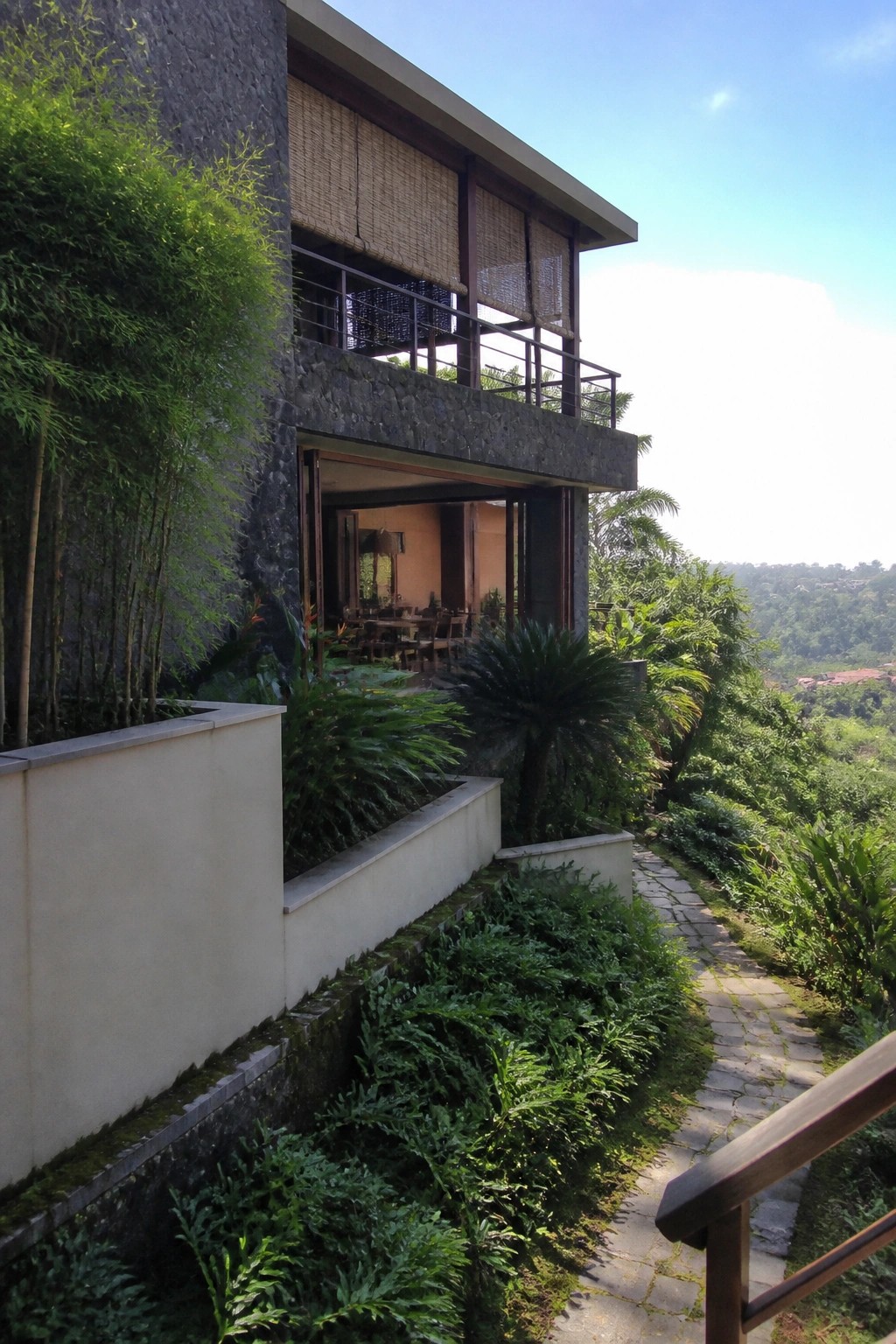
Layering plants of different heights and textures helps a modern house settle into its surroundings instead of standing apart from them. Tall stalks like bamboo can run up against stone walls while mid-height ferns and palms fill the middle ground and low ground covers spill over the edges. This approach keeps the architecture visible but gives it a softer, more grounded feel.
It works especially well on sloped lots where the path and beds can step down naturally with the house. Keep taller plants away from windows so light stays open inside, and choose species that stay full without constant trimming. The mix of heights also creates a gradual shift from built structure to garden without needing extra screens or walls.
Layered Planting Along Garden Paths
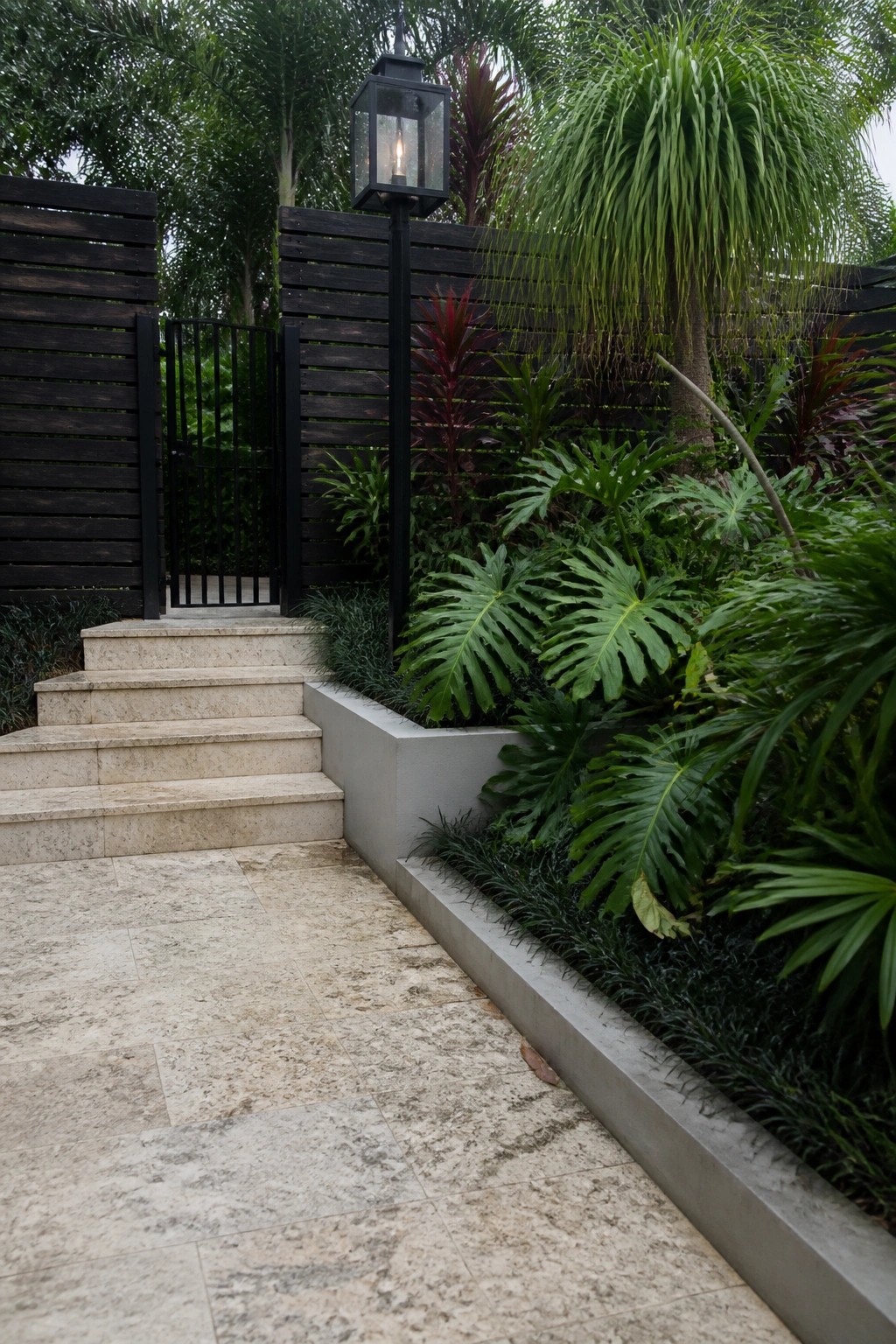
Large-leaf tropical plants placed right against a concrete edge can turn a simple walkway into something much softer. The key is choosing foliage that spills forward and creates depth without needing a wide bed. This approach works especially well in smaller side yards or front entries where you want greenery to feel full but contained.
It suits homes with clean hardscaping that could otherwise look stark. Keep the tallest plants toward the back of the bed and let shorter or trailing varieties fill the front so the layers stay visible from the path. Avoid overcrowding the edge itself or the plants will lose their shape.
Outdoor Lounges Right Beside The Pool

A covered patio placed directly next to the pool edge makes the whole area feel more like an extra room than just a deck. The shade from the overhead structure and the solid flooring keep the space comfortable for sitting even in bright sun, while the open sides keep it connected to the water.
This works best on homes where the pool runs close to the house or garden wall. Use simple wood-framed seating and a low fire pit to anchor the spot, and let the planting grow tall behind it so the area feels enclosed without losing the view.
Layer Plants Along the Foundation
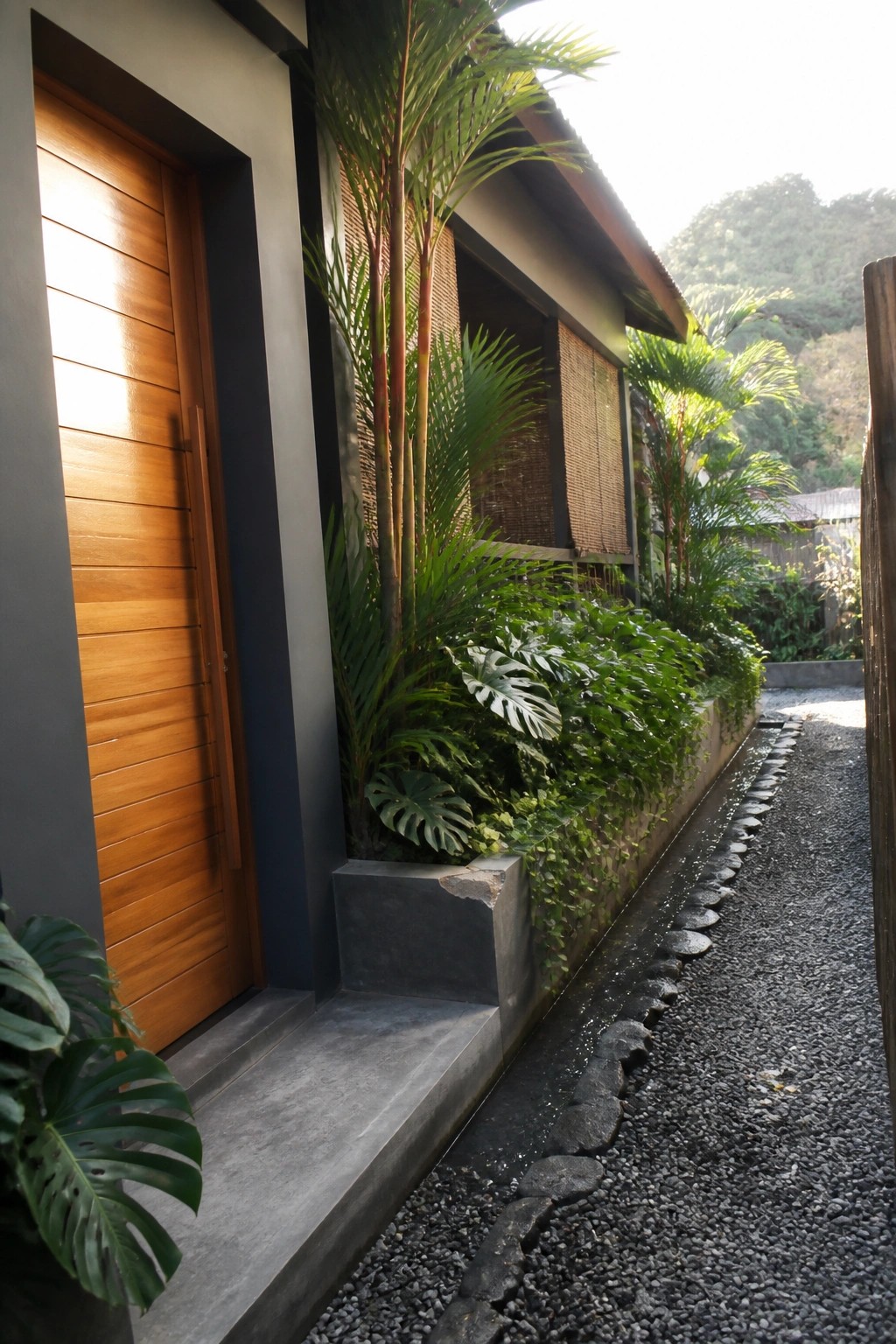
Running a deep bed of plants right against the house wall helps a modern exterior feel more settled in its setting. The mix of heights keeps the facade from looking too stark while still letting the materials show through.
This approach works well on homes with clean lines and simple siding or concrete. Make the bed at least a couple of feet wide so taller palms can sit behind lower leaves, and keep the path material simple so the planting stays the main focus.
Concrete Planters That Frame The Entry

Raised concrete planters work well at house entries because they let you bring dense planting right up against the architecture without losing clean lines. The plants soften the hard surfaces and make the approach feel more connected to the surrounding garden.
This setup suits modern tropical homes where you want structure but also want the greenery to do some of the visual work. Keep the planters simple in shape and fill them with layered foliage that stays full year-round so the entrance stays inviting even when the rest of the yard feels open.
Linear Water Features Through Outdoor Patios

A narrow water channel running down the center of a patio can tie the seating area to the pool without crowding the space. It adds a quiet sense of movement and reflection while still leaving plenty of room to walk around both sides. The setup works especially well on larger paved surfaces where a full width pool would feel too dominant.
This approach suits homes with tropical planting and open outdoor rooms that already have a strong connection to the pool. Keep the channel simple and let the surrounding plants and furniture do the rest. Avoid making it too wide or adding too many edges, since the point is to keep the flow easy and open.
Layer Planting to Soften Modern Lines
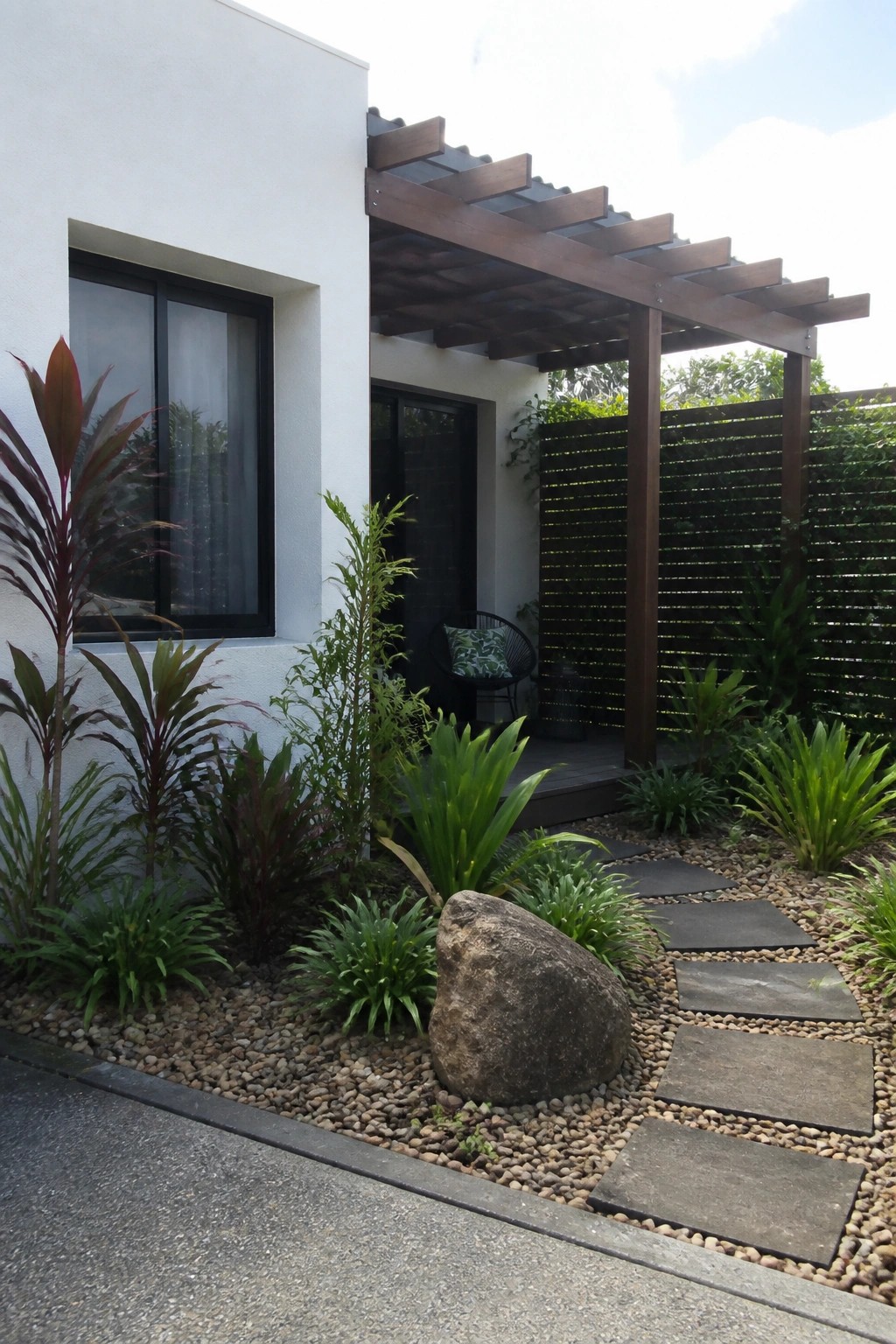
Layering plants of different heights and textures makes a modern house feel more settled and connected to the garden. The mix of tall foliage near the walls, bushier mid-level plants, and low ground covers fills the space without crowding it, and the gravel bed keeps everything looking neat while letting the plants stand out.
This works best on homes with simple shapes and clean edges. Keep the path clear with stepping stones set into gravel so the planting frames the entry instead of blocking it. Use the same approach along side yards or front beds where you want a full look that still feels easy to maintain.
Adding Tropical Planting Around Outdoor Cooking Areas

Placing a grill right up against a wall of layered tropical plants gives the cooking area a softer edge without needing extra structures. The mix of palms and flowering shrubs hides the hard concrete and makes the whole patio feel more connected to the garden.
This setup works best on balconies or terraces that already have some height to the planting beds. Just leave enough clearance for heat and smoke so the plants stay healthy over time.
Define Outdoor Seating With a Screen Wall

A bench placed right against a screen wall gives the seating area a clear sense of place. The screen blocks the view from outside while still letting light and air through, which keeps the spot feeling open rather than closed in. In a tropical setting this simple move turns an open patio into a usable seating zone without needing a full structure.
This works best in smaller courtyards or side gardens where you want one quiet spot to sit. Keep the bench simple, add a cushion or two, and let the planting do the rest around the edges. Just watch the scale so the screen does not overpower the bench.
Layering Tropical Plants In Large Planters

Grouping plants in big wooden boxes gives an outdoor seating area a settled, full look without needing a full garden. The different heights and leaf shapes create natural screening while still leaving room for chairs and a small table to sit comfortably.
This approach works especially well on rooftops or balconies where soil is limited. Stick to sturdy planters that can handle weather, choose plants with similar water needs, and leave a bit of open gravel or deck space so the area does not feel crowded.
Adding Bar Seating To An Outdoor Kitchen

Running a long concrete counter with bar stools along the garden side turns the kitchen into a spot where people actually want to gather. The stools let guests face the planting instead of staring at the back wall, which makes the whole space feel more open and usable during meals or casual cooking.
This layout works best on homes with enough room for a deep island and some established greenery nearby. Keep the counter material durable and low key so it holds up outside, and make sure the path beside it stays clear for easy movement between the kitchen and the rest of the yard.
Layer Tropical Planting at the Entry

Many modern homes have strong vertical lines that can look a bit sharp on their own. Placing layered tropical plants right up against those lines softens the overall look while still letting the architecture show through.
This works best when the plants are grouped by height so the foliage builds up gradually. It suits homes in warm climates where the greenery can stay full year round without extra fuss.
Layered Planting in Concrete Beds
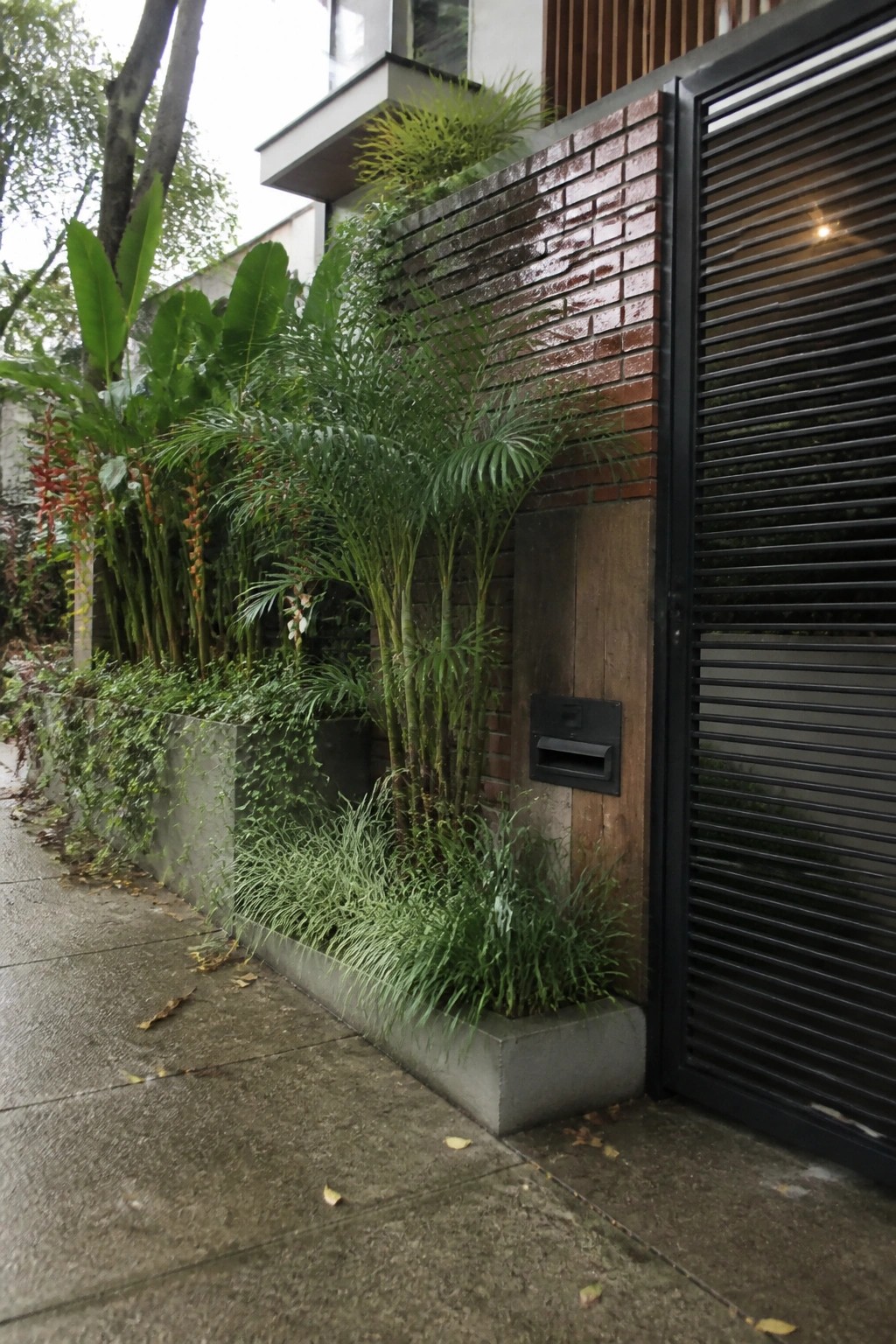
Many modern homes use simple concrete beds to hold a mix of tall palms, grasses, and lower ground cover right along the facade. This approach keeps the planting dense without needing a full garden overhaul, and it helps the hard lines of brick and metal feel less stark from the street.
The setup works well on narrow side paths or front edges where space is limited. It suits homes that already have clean architecture, as the layers add softness while staying low maintenance if the plants are chosen for the local climate.
Adding an Outdoor Shower to a Pool Deck

An outdoor shower fits well on a deck that runs along the pool because it turns the whole area into a working space instead of just a place to sit. The water source stays handy after a swim, and the surrounding plants give a bit of cover without needing extra walls.
Place the shower against a dense row of tall greenery so it feels tucked in rather than stuck out in the open. Dark stone or concrete works best for the base since it hides water marks and holds up in wet conditions. Keep the deck surface simple and level so the shower does not interrupt the flow from chairs to water.
Layering Plants Along the Front of the House
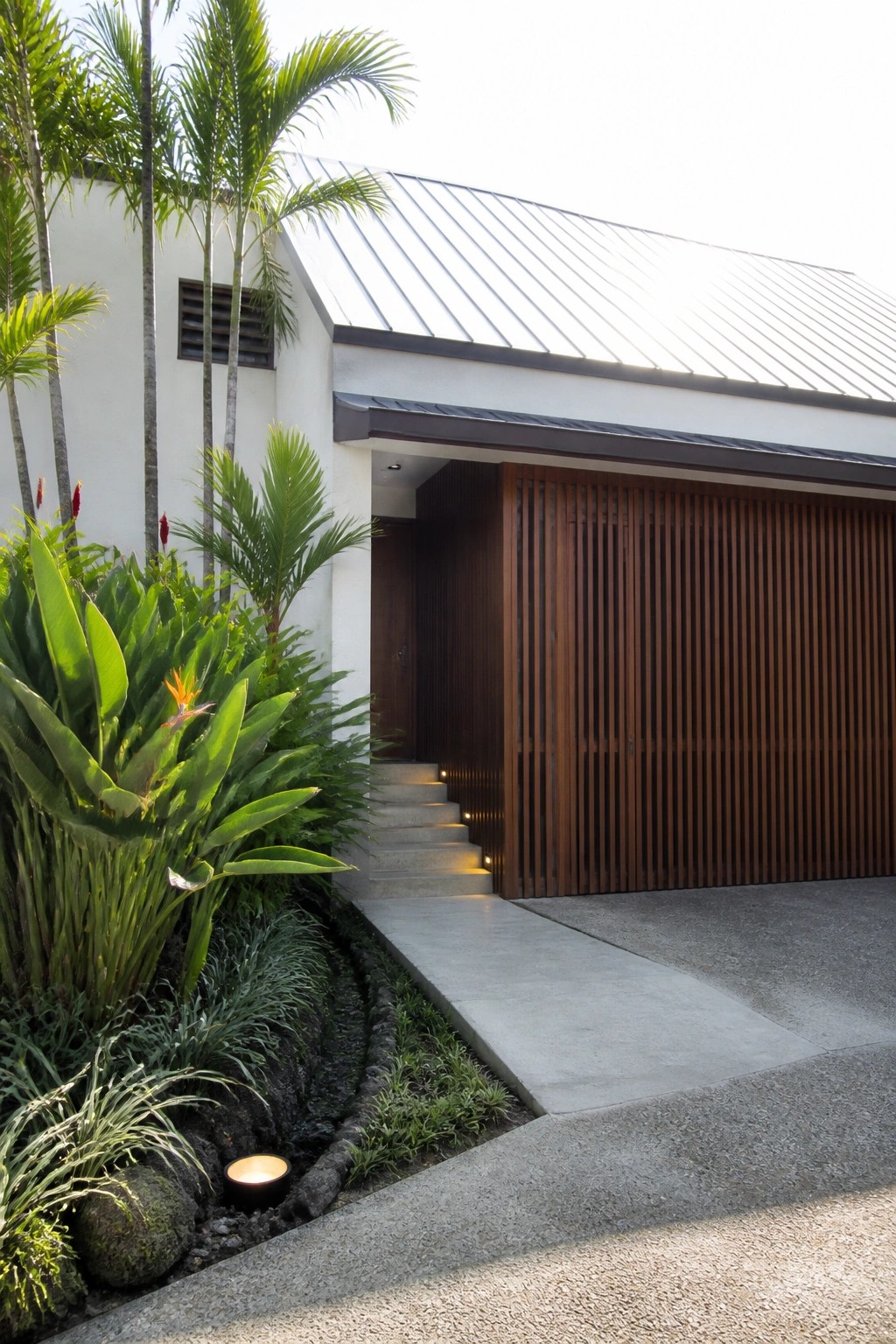
One simple way to make a modern house feel more connected to its setting is to build up layers of plants right along the front. Different heights and leaf shapes add depth without needing a lot of extra decoration. The plants sit close to the walls and soften the straight lines of the building.
This approach works well on houses with clean materials and simple shapes. Keep taller plants toward the sides and step the heights down near the walkway so the entry stays open. It helps the house feel grounded while still showing off the architecture.
Winding Paths Through The Planting

A curved path made of dark stone works well because it slows people down and lets the garden feel like part of the arrival. The plants sit right up against the edges, so the walk feels enclosed without looking forced. This setup keeps the house from sitting too exposed on its own.
It suits homes where the front feels a bit flat or open. Keep the path width comfortable for two people and let the planting layers vary in height so nothing looks too trimmed. Avoid straight runs if the lot has any depth, since the curve adds interest without extra features.
Layered Planting Around Deck Seating
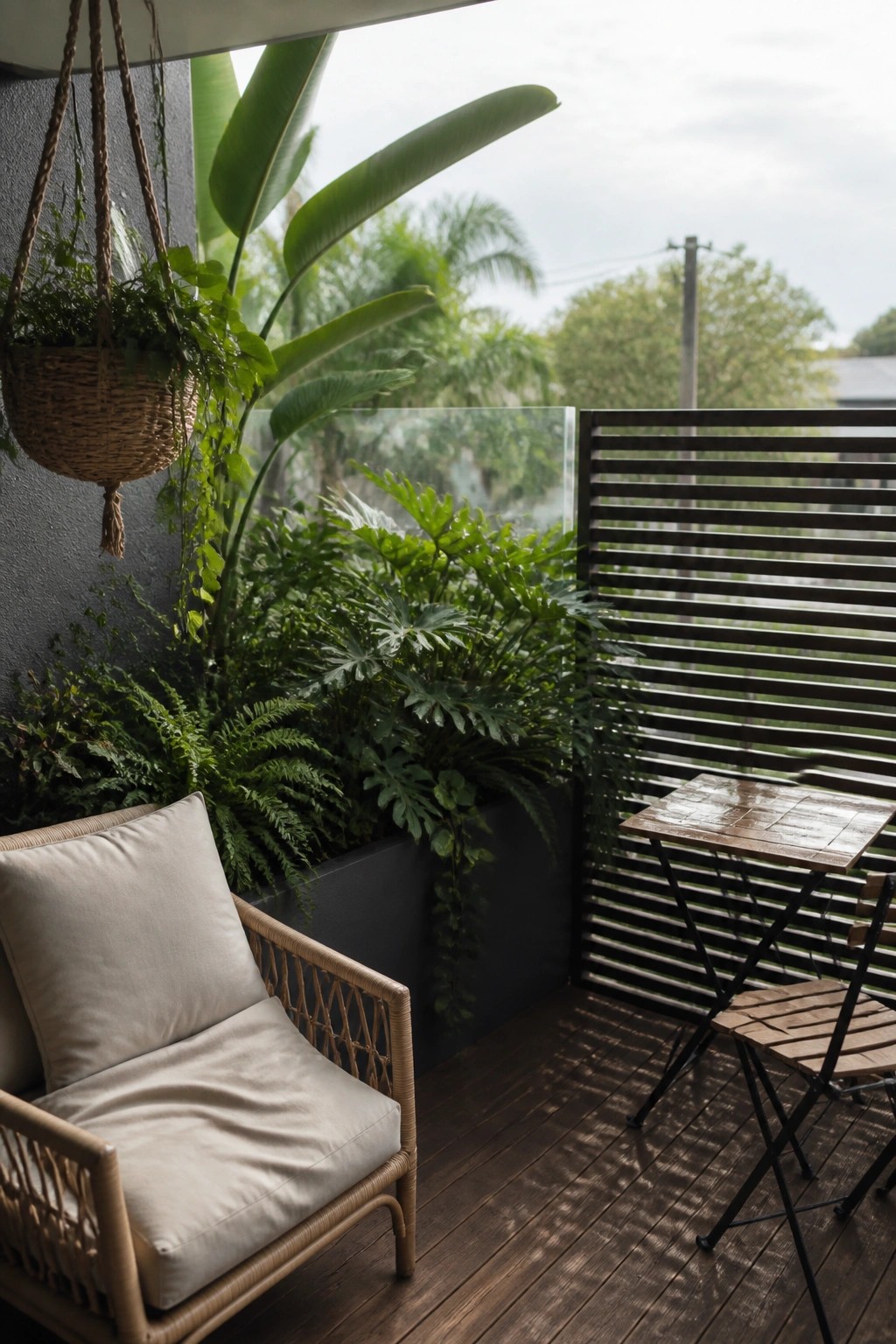
Layering different sizes and shapes of tropical plants around an outdoor seat turns a basic balcony or deck into a much more comfortable spot. The mix of hanging baskets, tall fronds, and lower ferns creates a sense of enclosure without needing walls or screens.
This approach works best on smaller outdoor spaces where you want some privacy and shade. Try grouping plants in a few different heights right beside the seating so the area feels like part of the garden rather than just furniture on a deck. Watch that the planters do not block too much floor space if the area is tight.
String Lights Over Outdoor Dining Areas

String lights work well over an outdoor table because they provide soft, even light that lets people sit comfortably after sunset. The simple strands keep the focus on the space itself rather than on any single fixture, and they pair easily with a covered roof and nearby plants.
This approach suits homes with existing garden space or a patio that opens to the yard. Space the bulbs evenly and use warm tones so the light stays gentle and does not wash out the surrounding greenery.
Frequently Asked Questions
Q: How do I layer plants so they frame the house without blocking windows or doors?
A: Place taller palms or trees first at the sides and back edges. Add mid height shrubs in front of them to build depth. Finish with low ferns or ground covers right up against the walls.
Q: What if my yard gets less sun than the ones in the photos?
A: Choose shade tolerant palms and broad leaf plants for the back layer. Fill the middle with smaller ferns that handle dappled light. This keeps the lush look going even with partial shade.
Q: How much work is it to keep the layers looking full year round?
A: Trim back any dead fronds every few months to let new growth come through. Mulch the base once a season to hold moisture and cut down on weeds. The plants fill in faster once roots settle.
