

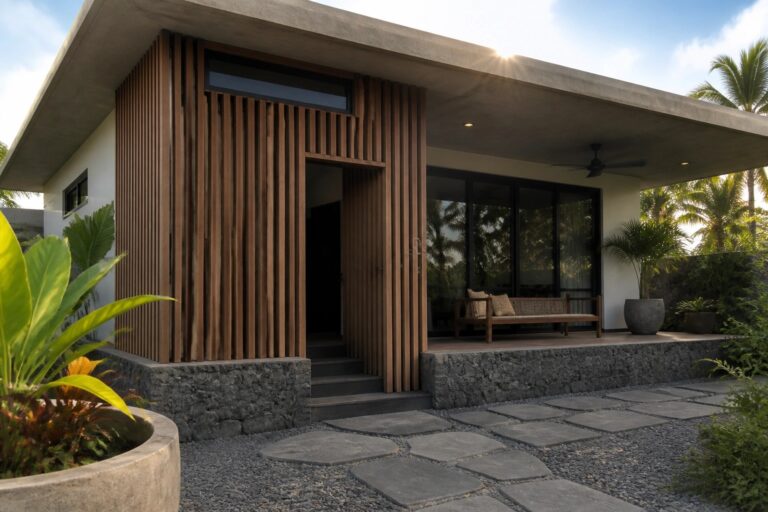
I often find that the exteriors which feel most settled in their setting rely on just a couple of natural materials handled with care.
Timber screens bring movement to the facade while natural stone anchors the base.
The effect shows up best in person.
I would start by studying how the screen pattern casts shadows on the stone before choosing a design for my own place.
These details shape how the house reads from the outside and how it ages with the landscape around it.
Timber Screens For The Entry
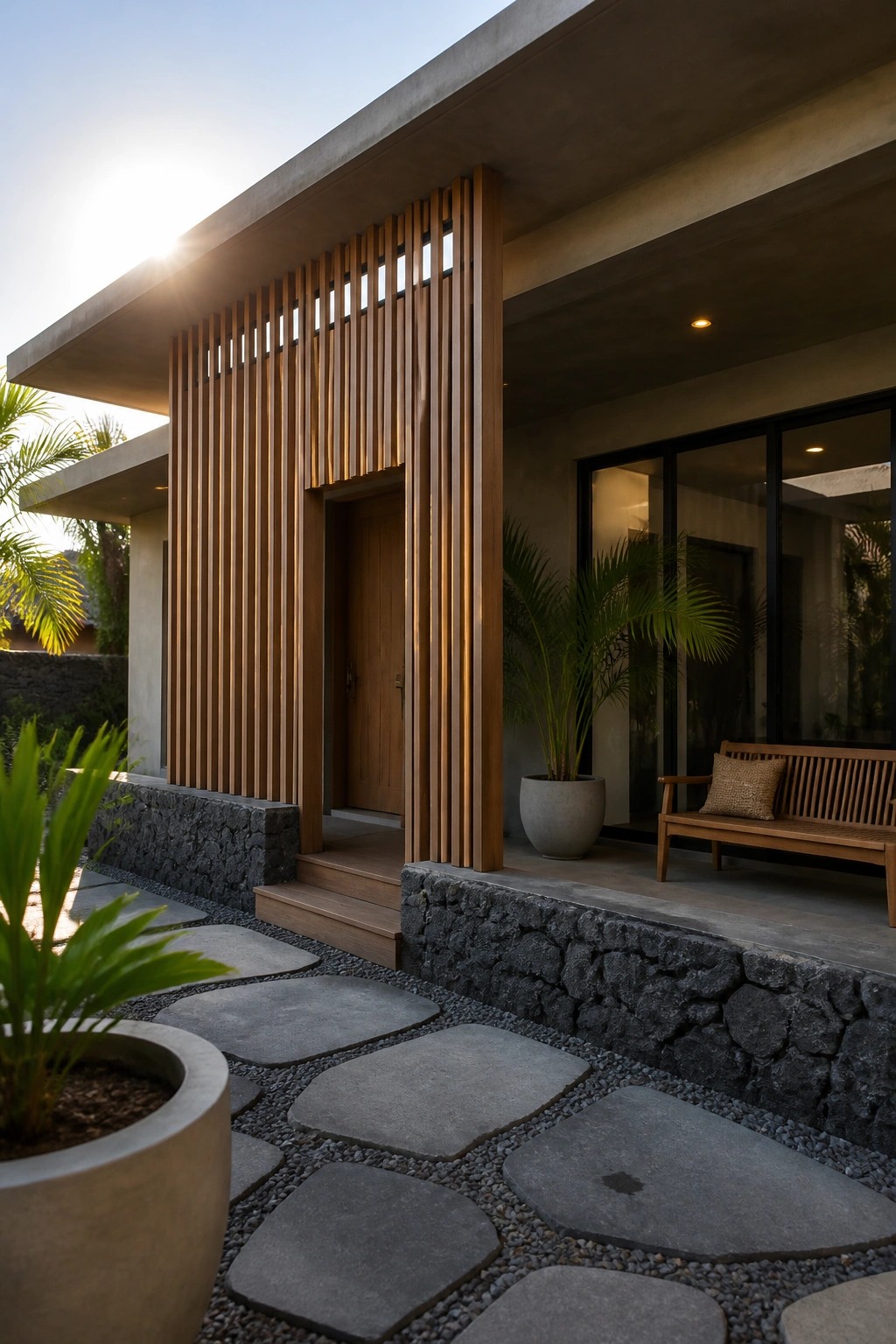
Many tropical modern homes use a vertical timber screen to break up a plain concrete wall. The slats add texture and let light through without leaving the door fully exposed.
This works best on homes with simple shapes and natural materials nearby. Keep the base low with stone and use gravel or pavers for the path so the screen stays the main feature instead of competing with other details.
Timber Screens For Poolside Privacy
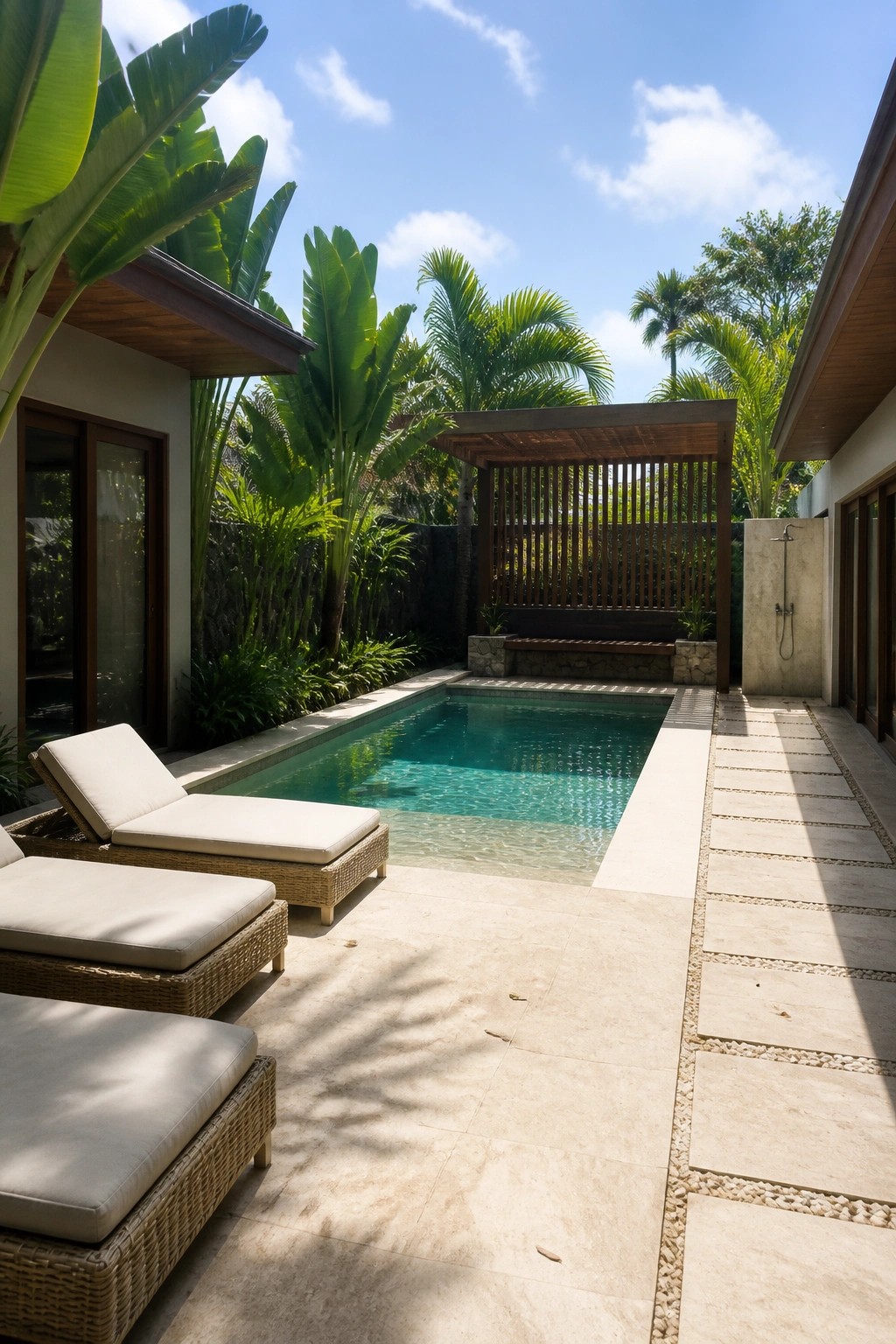
Timber screens give a pool area a clear sense of privacy without cutting off the open feel. The vertical slats block direct views while still letting air and light move through, which keeps the space comfortable in warm weather.
Place the screen along one side or at the back of the pool deck, especially on smaller lots or where neighbors sit close. Pair it with simple stone paving to hold the look together and add a bench or seating right against it for everyday use.
Timber Screens for Entry Privacy

Many homes use a timber screen right beside the front door to give a little separation from the street without making the entry feel closed off. The open pattern lets light and air through while still blocking direct views, which works well in warmer climates.
This detail pairs nicely with natural stone because the wood softens the heavier look of the wall. It works best on houses that already use mixed materials and need a simple way to add texture and privacy at the same time.
Timber Screens for Shaded Outdoor Patios
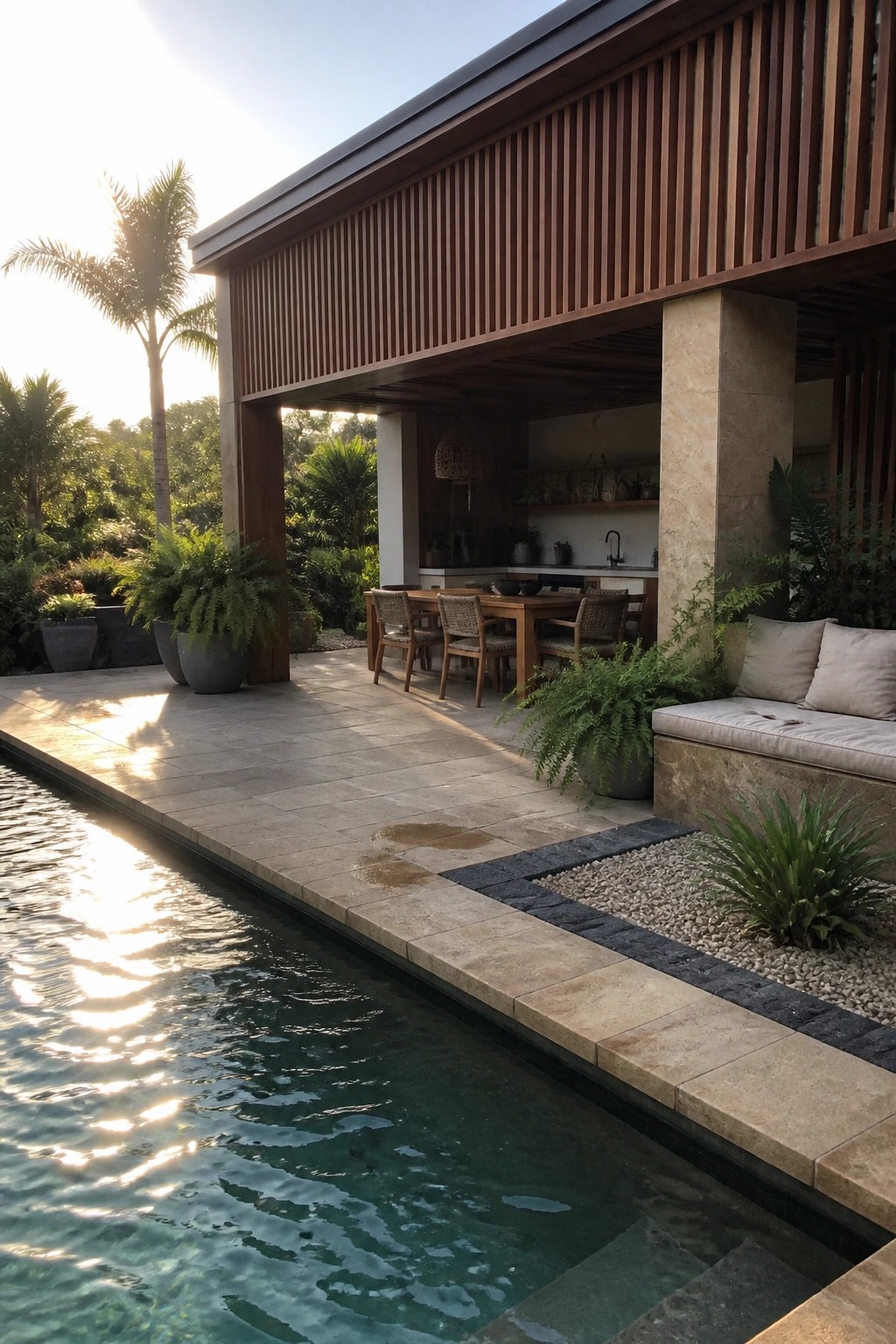
Timber screens work well when you want shade and a bit of enclosure without losing the open feel of a poolside space. They filter light nicely and keep the area cooler during the day while still letting air move through.
Place them along the outer edge of a patio so the space feels connected to the house but protected. Stone columns or walls underneath help the screens sit naturally with the surroundings and give the whole area a solid base.
Timber Screens With Natural Stone

Many homes in tropical settings use vertical timber screens to soften large upper walls and add a layer of shade and privacy. When these screens sit above natural stone, the wood brings warmth while the stone keeps the base grounded and solid.
This mix works best on houses with some slope or elevation changes. Let the stone handle the lower retaining walls and foundations, then run the timber screens across the main living level above. Keep the proportions simple so the two materials do not compete.
Timber Screens With Stone Walls
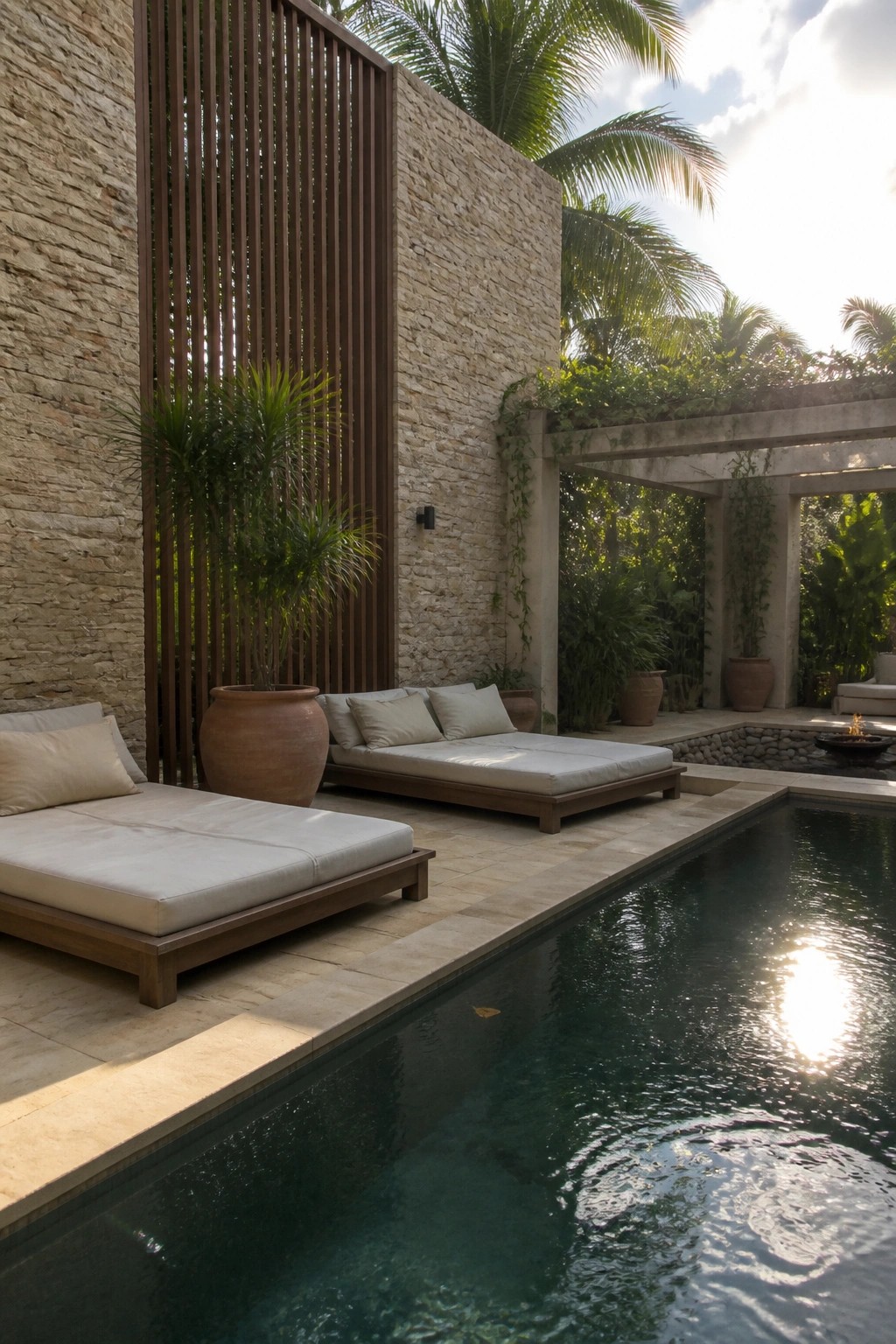
Timber screens add a clean vertical break next to rough stone walls and help zone an outdoor space without making it feel boxed in. The slats let air and light through while giving a bit of privacy right where you need it most.
This works best along the edge of a pool deck or patio in a warm climate. Keep the screen height around eye level or slightly taller, and let the stone wall handle the heavier visual weight behind it.
Timber Screens For Balcony Privacy
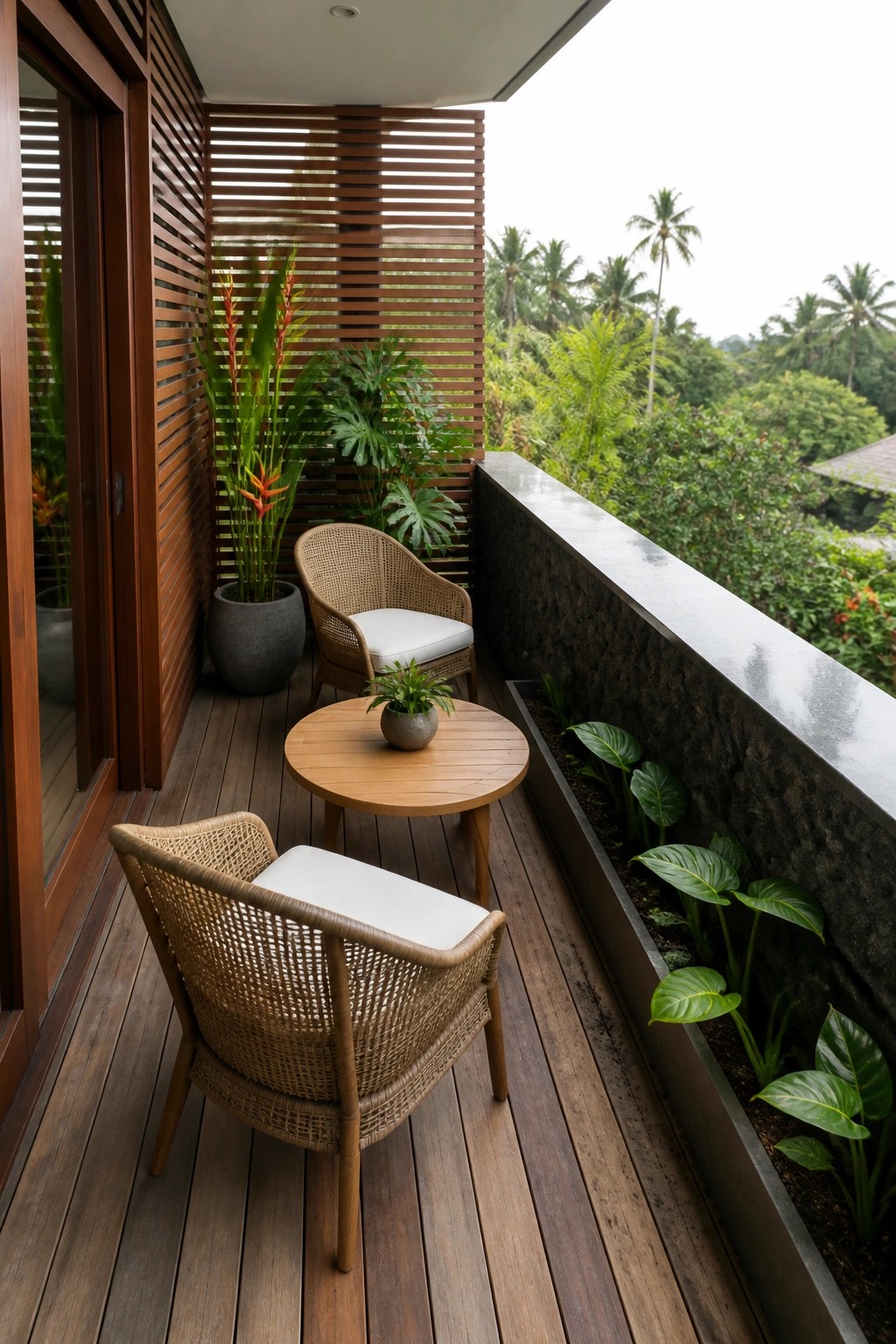
Timber screens work well on balconies because they give a bit of enclosure without cutting off the view or the breeze. The vertical slats create a soft boundary that makes the space feel more settled while still keeping it open to the outdoors.
This approach suits tropical homes where you want a simple seating spot that feels private but not closed in. Place a couple of chairs and a small table in front of the screen and keep the rest of the deck clear so the area stays easy to use.
Timber Screens Along Outdoor Dining Areas
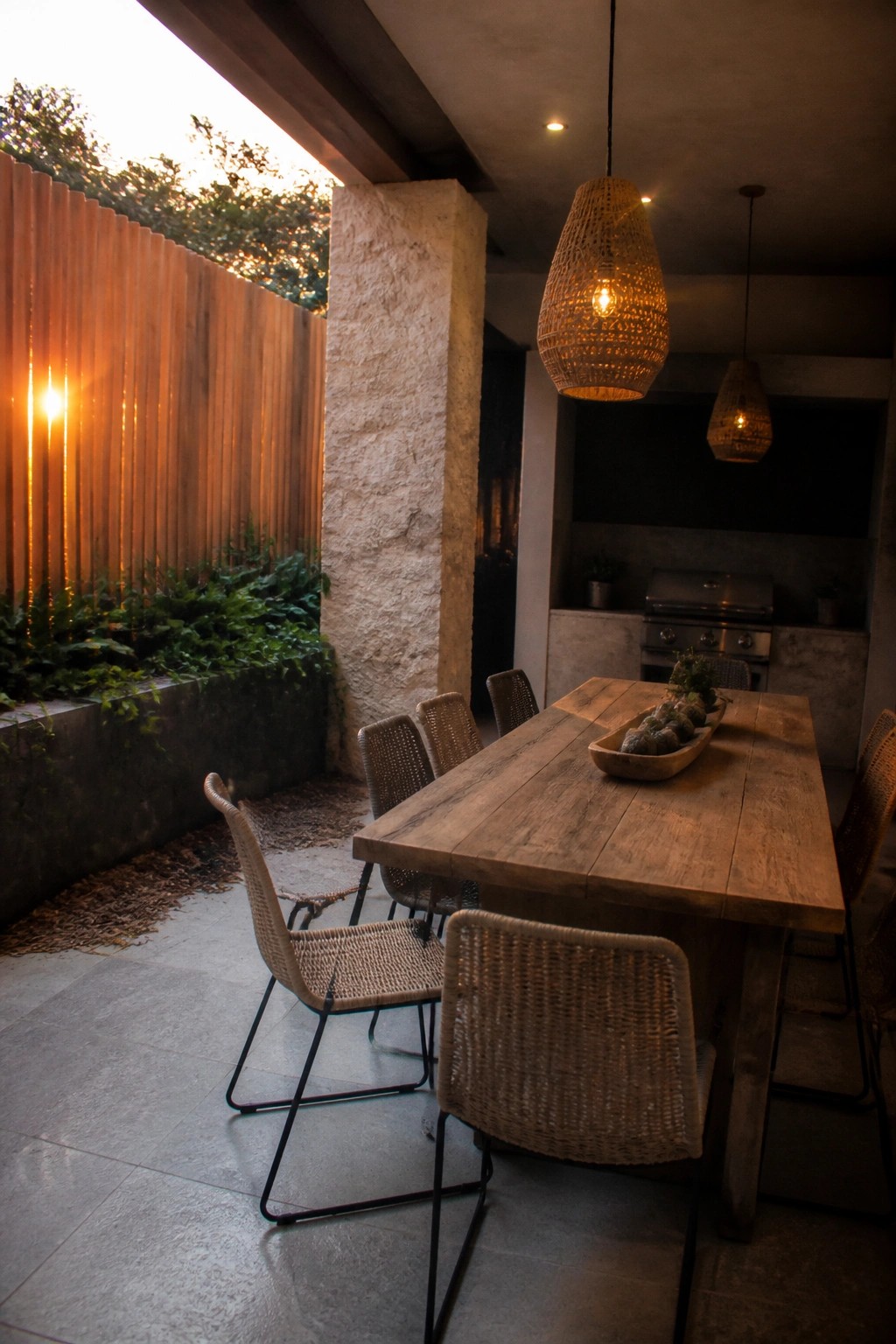
Timber screens work well when you want an outdoor dining area to feel a little more private without building full walls. They let air and light through while blocking views from the side, and they pair naturally with stone pillars or planters to keep the whole space feeling grounded.
This setup suits tropical modern homes where you eat outside most of the year. Run the screen along one or two edges of the patio, keep the height around eye level or just above, and let a few plants grow against it so the wood softens over time.
Stepping Stone Paths In Gravel
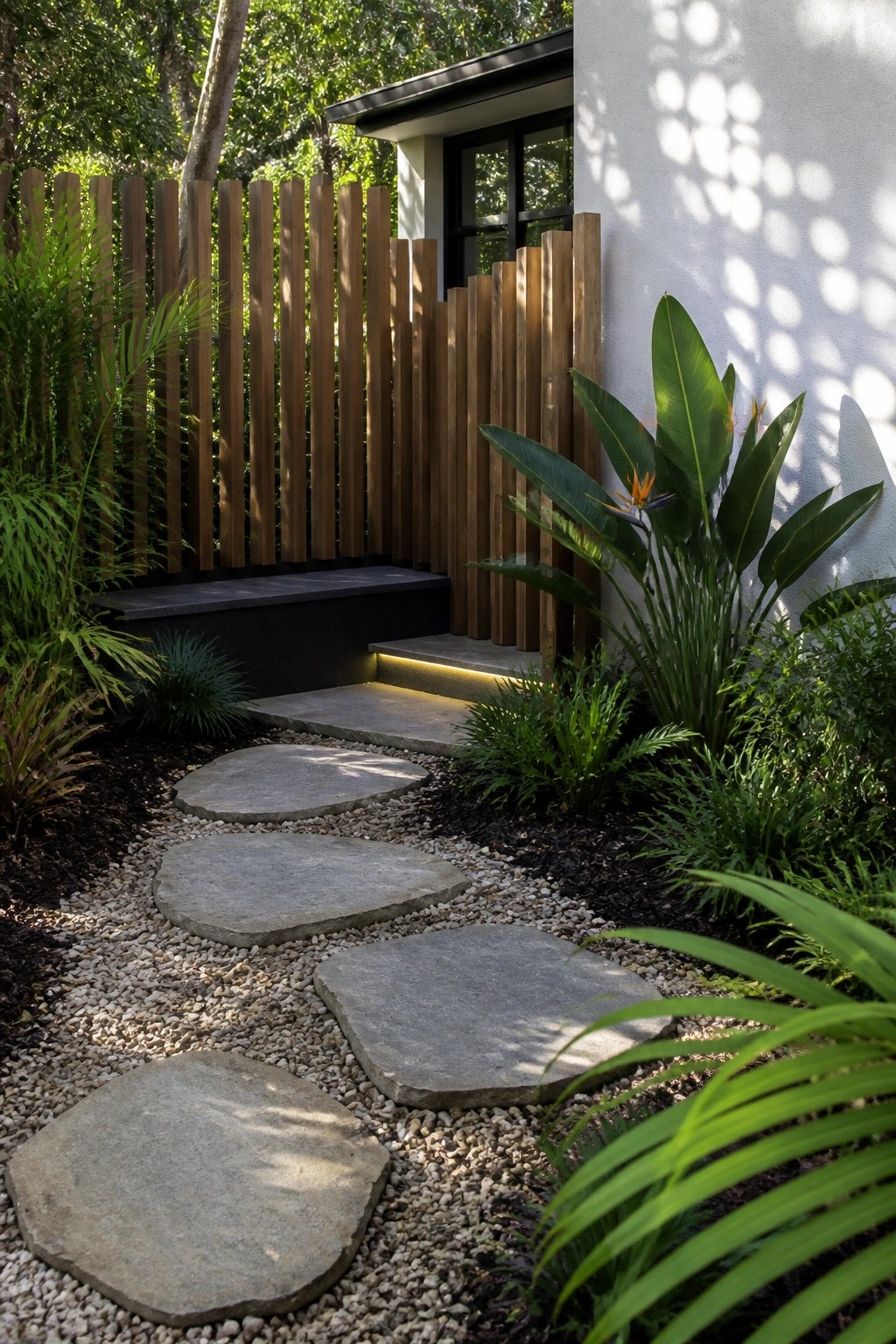
A path made from large flat stones set into gravel gives the garden a relaxed flow that feels easy to walk on. It lets the planting do most of the work while still marking a clear route toward the house.
This approach works best in tropical settings where you want the garden to feel connected to the entry without a solid paved surface. Space the stones so each step lands naturally and keep the gravel light in color so the whole path stays bright even under heavy foliage.
Integrate Water Into Garden Paths

A narrow water channel running right beside a stepping stone path adds a quiet sense of movement that works well in tropical gardens. The stone walls and timber screen keep the space feeling structured without closing it in, and the gravel between the pavers helps everything drain cleanly.
This setup suits homes with narrow side yards or rear garden walks where you want something simple but not plain. Keep the water line straight and low so it does not compete with the planting, and use the same stone for both the path and the edging to tie the whole thing together.
Vertical Timber Screens On The Facade
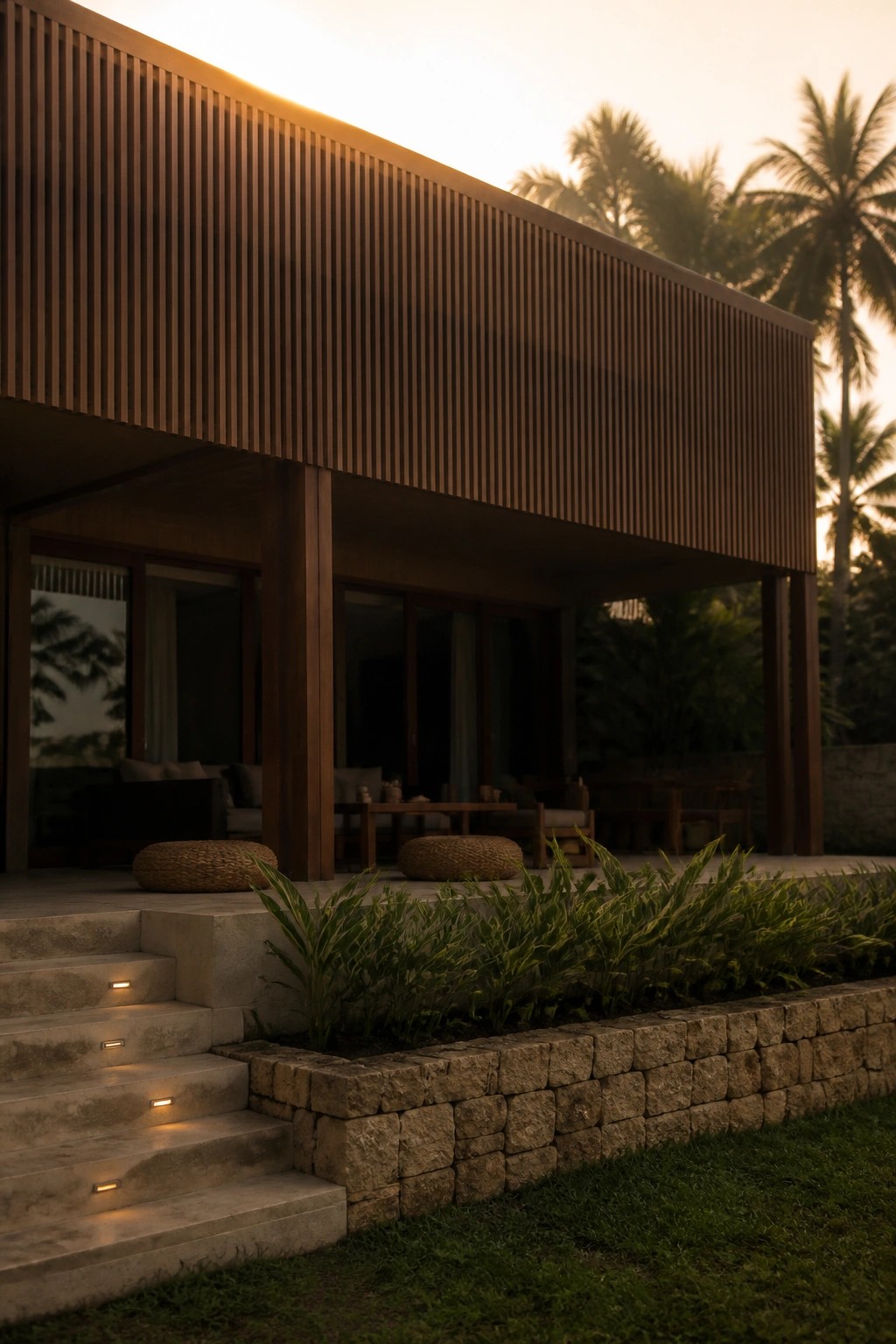
Vertical timber screens give a tropical modern house a clear upper edge without closing it in completely. They add rhythm and a bit of shade while letting the lower level stay open and connected to the outdoors.
This works best on houses where the ground floor is meant for living and the upper part needs a solid look. Pair the screens with stone at the base so the whole exterior feels grounded rather than floating. Keep the spacing even and the wood tone natural so it ages well in the sun.
Timber Furniture on Stone Patios
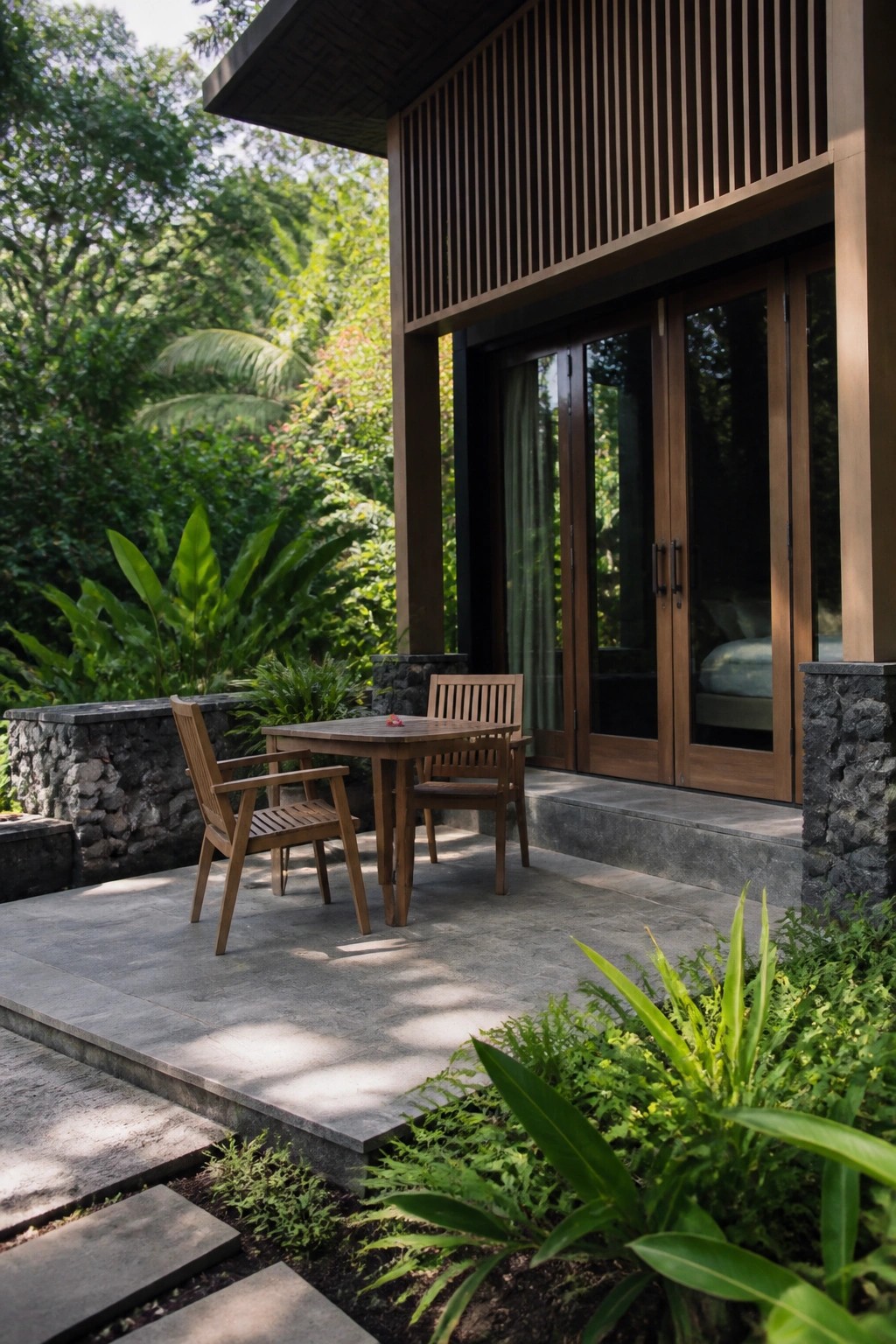
A small timber table and chairs placed right on the stone surface gives the outdoor area a relaxed, usable feel without much extra effort. The wood tones tie in with the house screens and keep the whole spot looking simple and natural rather than decorated.
This works best on homes where the patio sits close to the main living areas so meals can move outside easily. Use untreated or lightly finished timber so it weathers along with the stone, and keep the layout open enough for a couple of chairs without crowding the doors.
Timber Screens Framing Stone Entryways
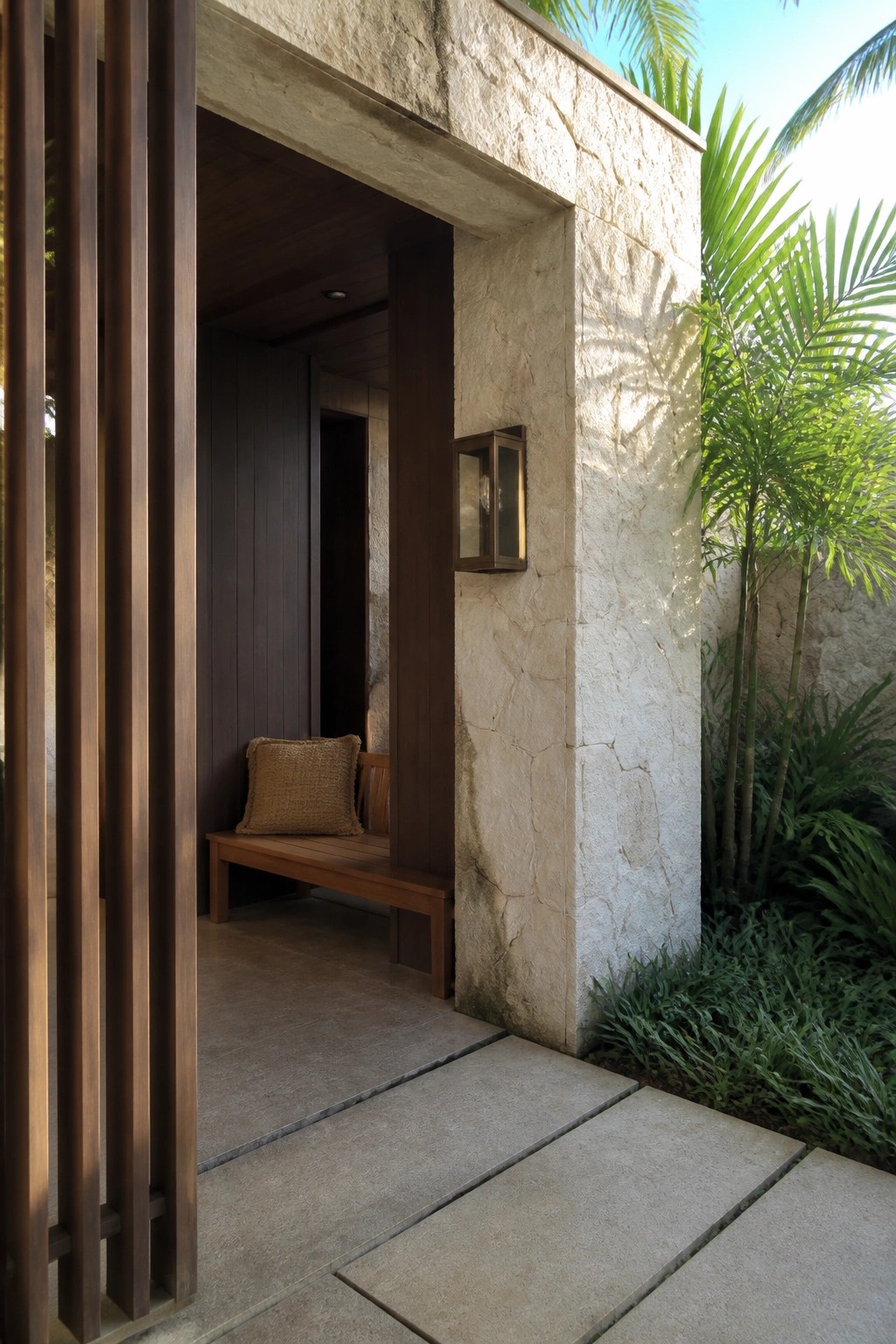
Vertical timber screens add a simple layer of depth to a stone entry without making it feel closed off. They break up the heavy look of the wall while letting in light and air, which works especially well in warmer climates where shade matters.
Place them along one side of the doorway or across part of an opening so the entry stays welcoming but gains some privacy. This approach fits homes that already use natural stone and want a bit of contrast without adding more solid walls.
Timber Screens Around Outdoor Seating Areas

A simple timber screen can give an outdoor seating area the privacy it needs without closing it off completely. In a tropical setting it blocks views from certain angles while still letting breezes pass through and keeping the space open to the surrounding garden.
Place the screen along one edge of the patio or near a seating zone so it creates a quiet corner. This approach works best on homes with open yards where a full fence would feel too heavy, and it pairs naturally with gravel paths and low planting to keep the overall look light.
Timber Screens With Stone At The Entry
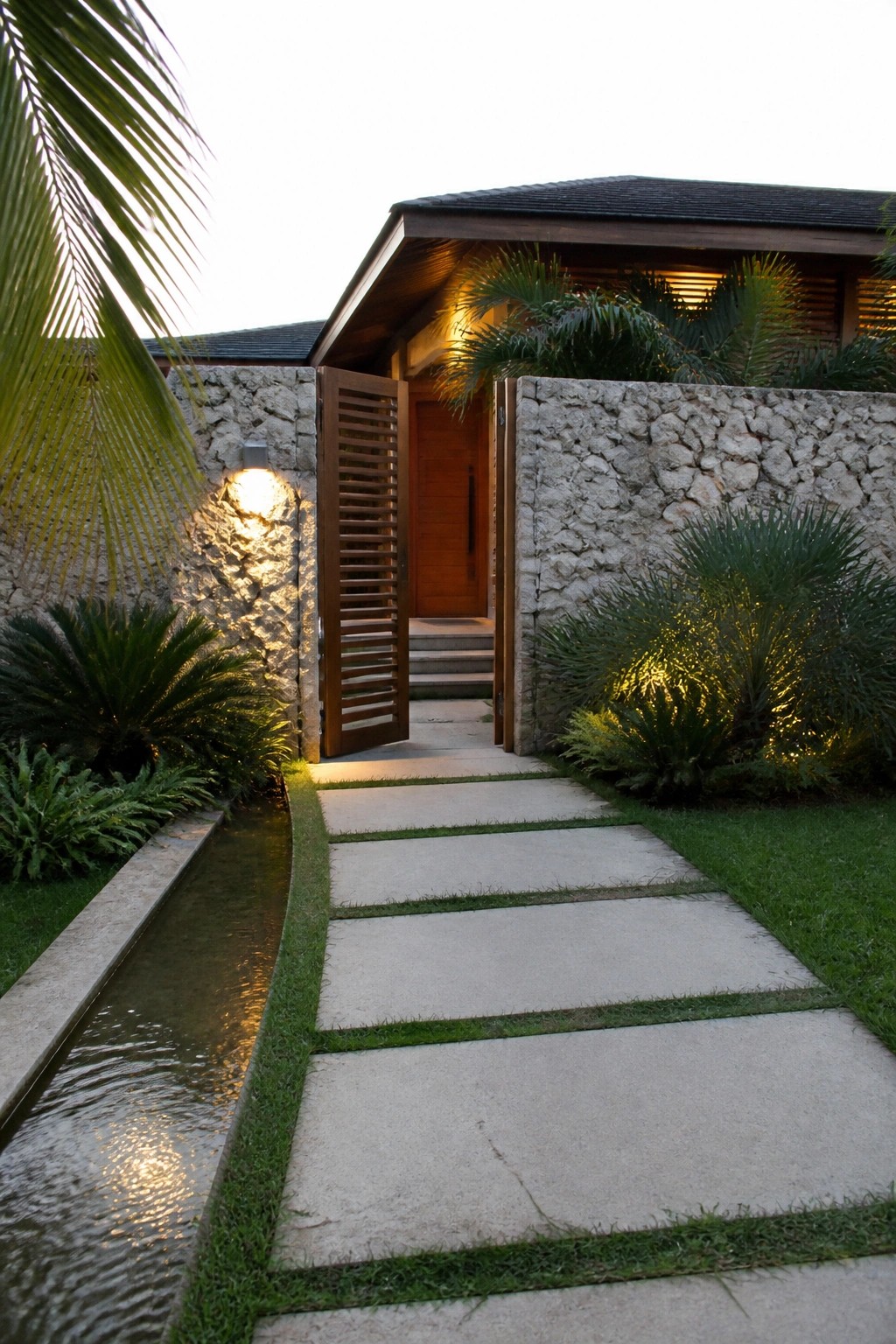
A timber screen next to stone walls gives the entry a softer edge without losing the solid feel of the material. The vertical slats add some movement and let light filter through, which keeps the approach from looking too heavy or closed in.
This setup works best on homes with a simple path leading up to the door. Keep the screen on one side only so it frames the entrance rather than blocking it, and match the wood tone to any other timber details on the house.
Natural Stone for Outdoor Kitchen Islands
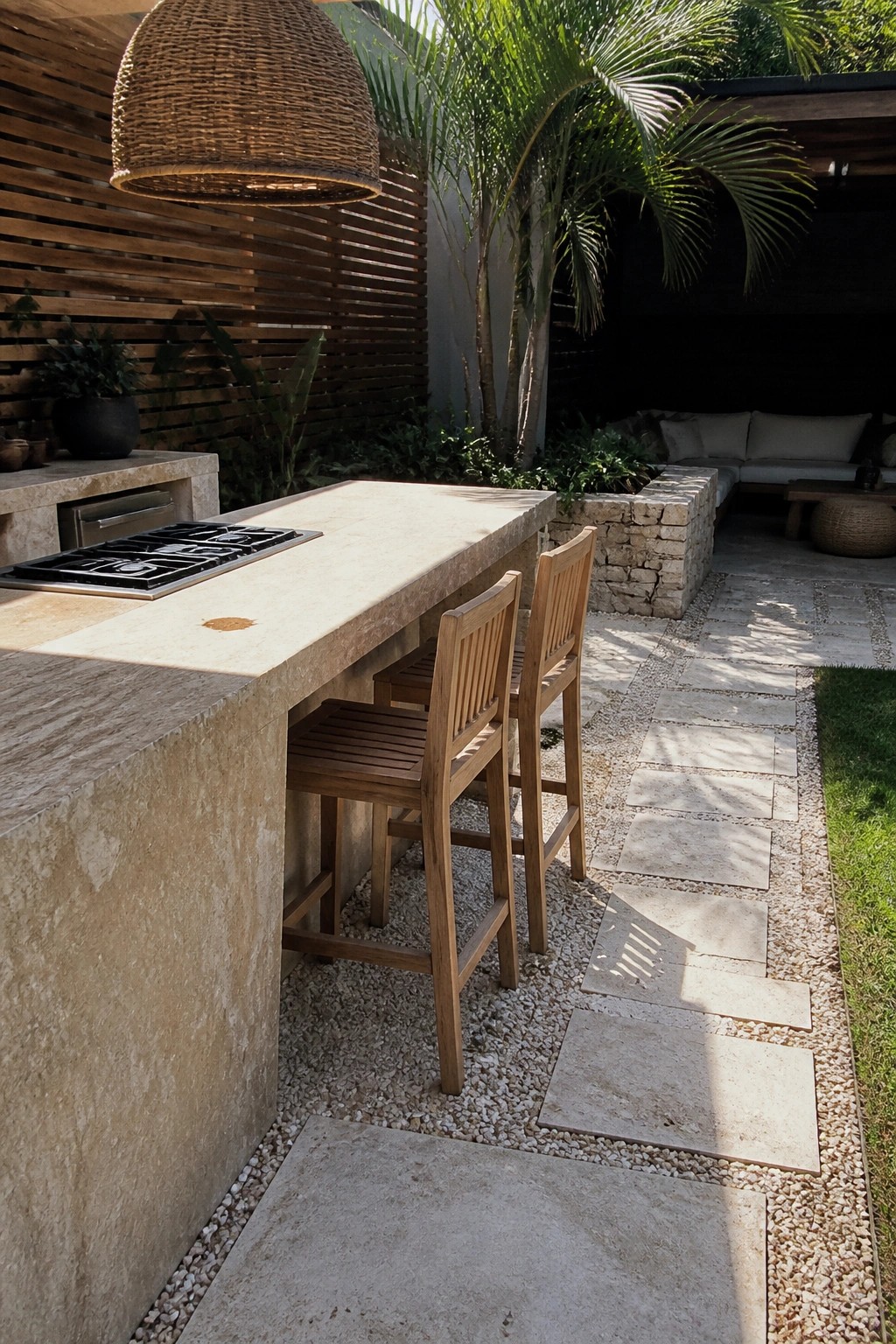
Natural stone holds up well outside and gives an outdoor kitchen a grounded feel that matches the rest of the hardscaping. It works especially well in tropical settings where the counter can run long and serve as both a cooking surface and a casual bar.
Place the island so the bar stools rest on gravel or pavers rather than a solid deck. Back it with a simple timber screen to add privacy without closing off the space. This setup suits homes that already use stone paths or walls and keeps the whole area feeling connected to the garden.
Timber Screens For Rooftop And Terrace Privacy

Timber screens give an outdoor space a clear boundary without cutting off light or views. The vertical slats let air move through while blocking sightlines from nearby buildings, which makes the terrace feel more private and settled.
They pair naturally with stone paving and pool edges because the wood adds warmth against the cooler surfaces. This setup suits rooftops or side terraces where you want some enclosure but still need the area to feel open to the sky and distant views.
Frequently Asked Questions
Q: How often do I need to treat the timber screens? A: Oil them every six months if they face full sun. This stops them from drying out and splitting. Stone stays fine with just a quick wash now and then.
Q: Does the stone make the house hotter in the tropics? A: No, the timber screens create shade that cools the walls down. Stone actually absorbs heat slowly and releases it at night. Together they balance the temperature better than plain walls.
Q: What if the timber color fades over time? A: Let the timber weather naturally to a silver tone. The stone next to it will still stand out.
