

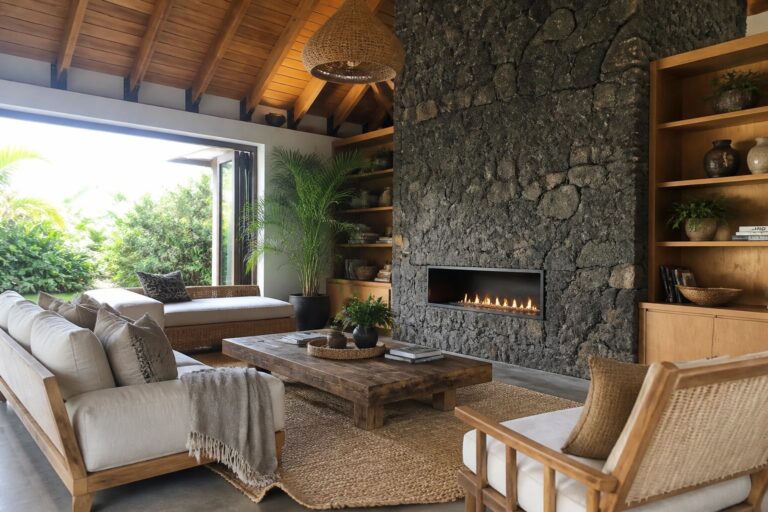
In homes with tropical influences the choice of ceiling material often sets the tone for how comfortable a space feels over time.
Timber brings in natural grain and subtle color shifts that change with the light coming through windows.
Stone walls need careful positioning.
I have seen cases where a feature wall placed opposite a large opening made the room feel cooler and more balanced during hot afternoons.
These combinations work best when the layout allows easy movement around the heavier elements.
Stone Walls That Give a Room Real Weight
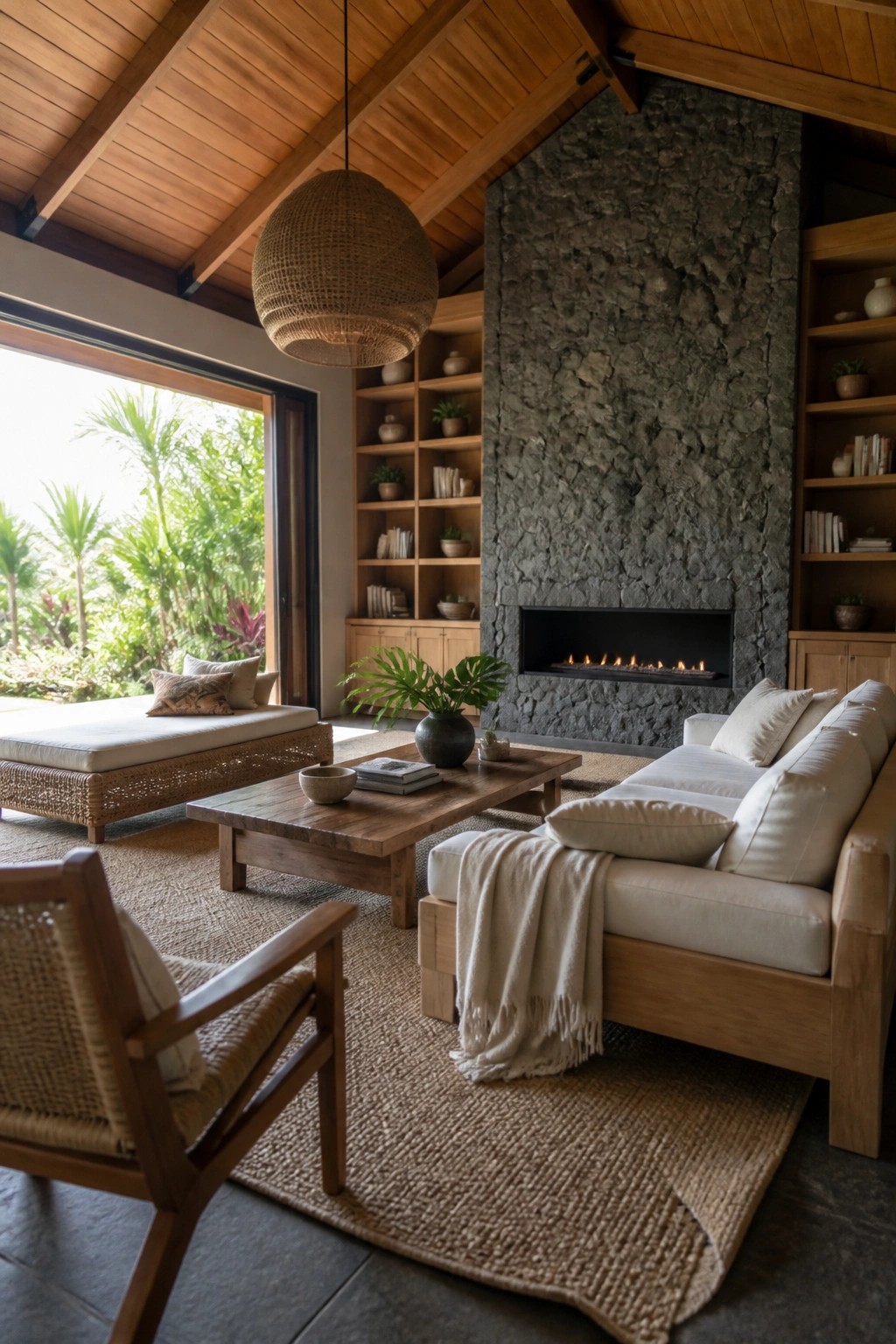
A tall stone feature wall works especially well in rooms with high timber ceilings because it brings a sense of weight and permanence without needing extra decoration. The rough texture contrasts nicely with the smooth wood overhead and helps the space feel more grounded.
This approach suits open-plan living areas where you want one strong vertical element to hold everything together. Keep the wall simple, add a few built-in shelves on either side if the layout allows, and let the natural materials do most of the work.
Timber Ceilings and Stone Walls in Bedrooms
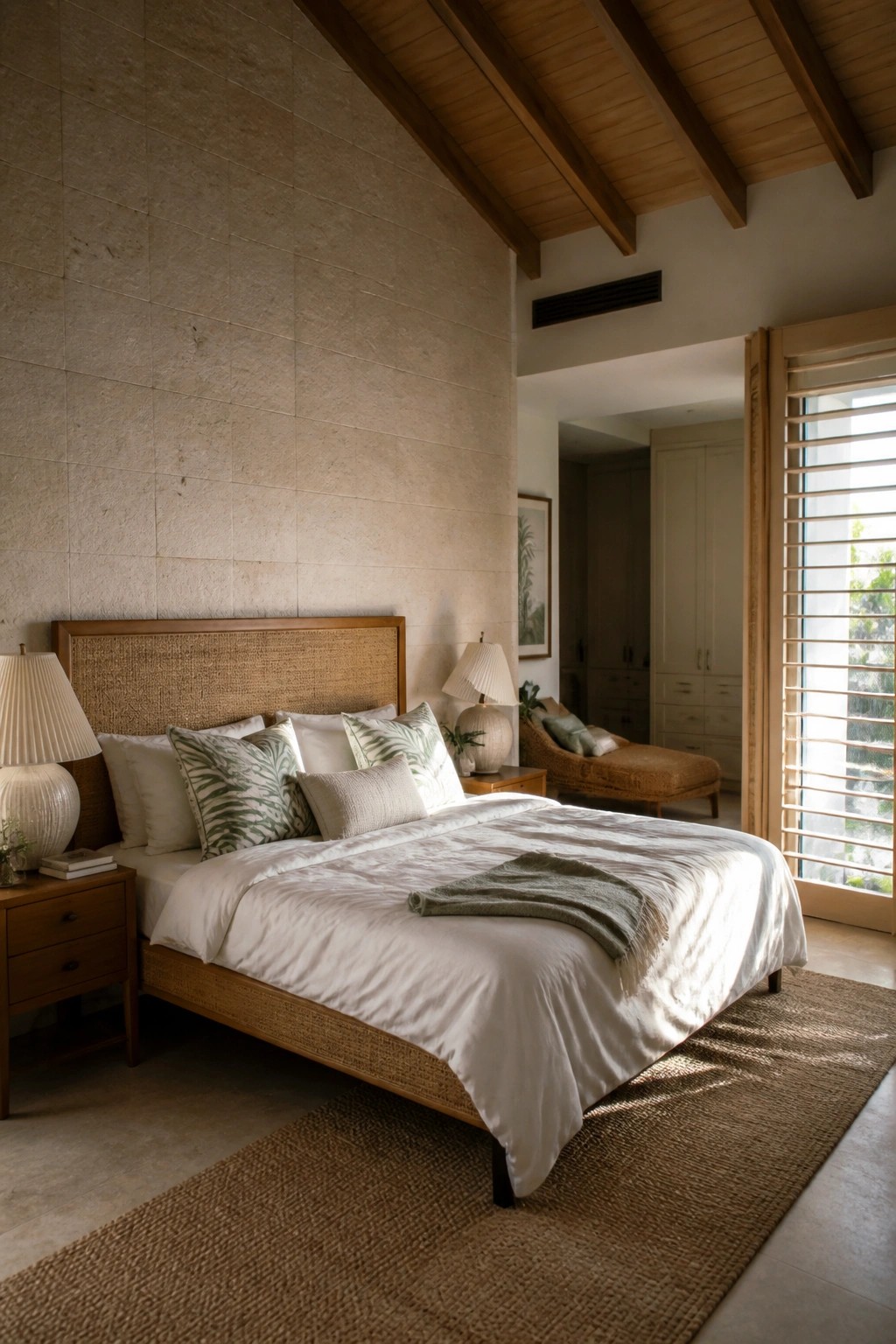
Many bedrooms feel more settled when a timber ceiling sits over a stone wall. The wood adds height and warmth while the stone gives the space weight and texture without needing extra decoration.
This mix suits homes with a relaxed tropical style. Keep other surfaces light and simple so the ceiling and wall can do the work.
Stone Feature Walls in Kitchens
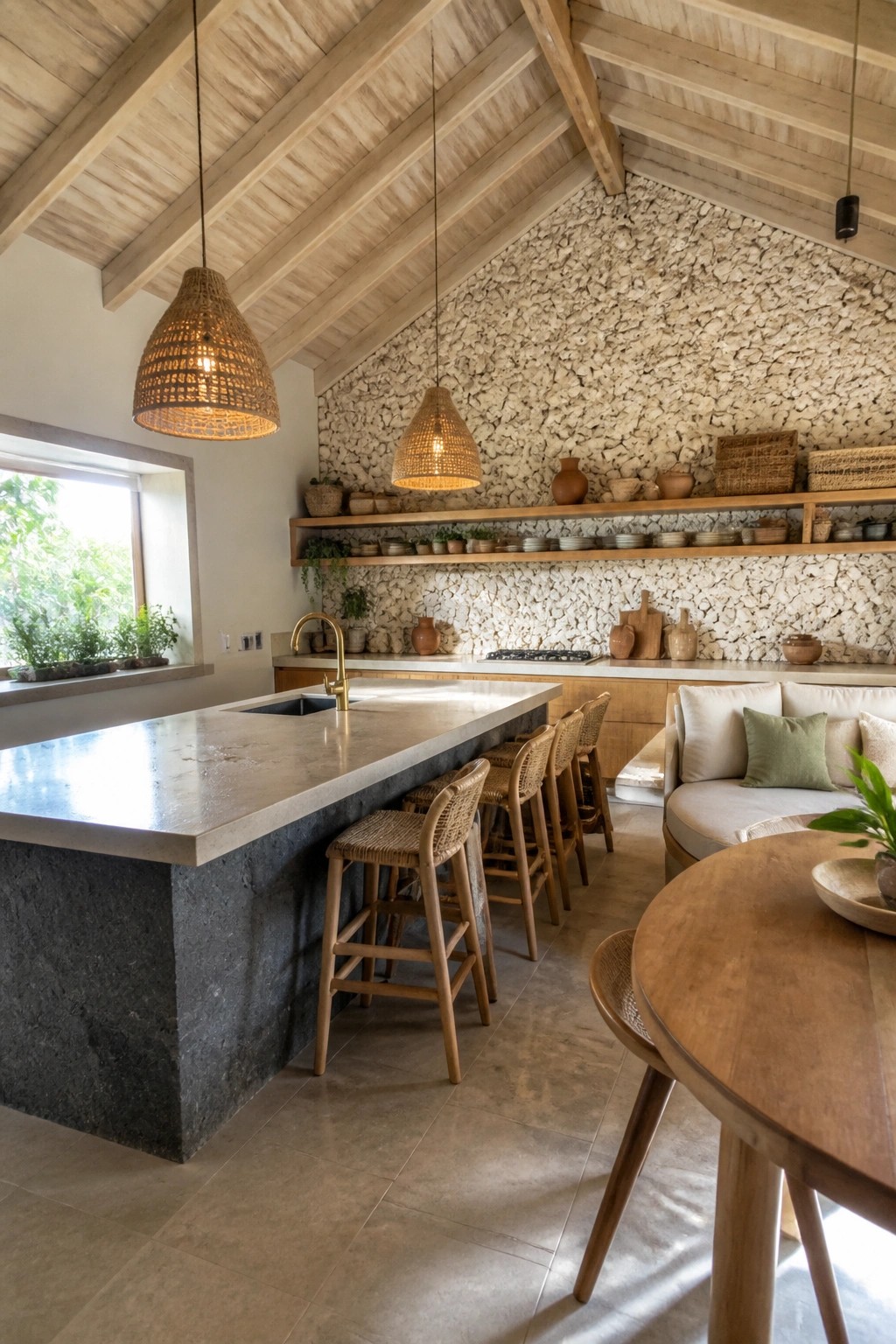
A stone feature wall gives a kitchen some real weight and texture without crowding the space. It works especially well when the room has a high timber ceiling, since the rough surface of the stone balances the lighter look of the wood overhead.
This kind of wall suits open kitchens that connect to living areas. Keep the other surfaces fairly plain so the stone can stand out, and choose a finish that feels natural rather than too polished.
Recessed Shelving in Stone Walls

Building open shelves straight into a stone wall gives a bathroom practical storage without adding extra furniture. It keeps daily items like towels within reach and lets the natural texture of the stone stay front and center. The wood ceiling helps balance the look so the room still feels warm rather than cold or stark.
This approach works best in homes that already lean toward natural materials and need extra storage in smaller wet areas. Keep the shelves at comfortable heights and use baskets for anything that looks messy. Make sure the stone is properly sealed if the space gets heavy steam.
Stone and Timber in Open Dining Areas
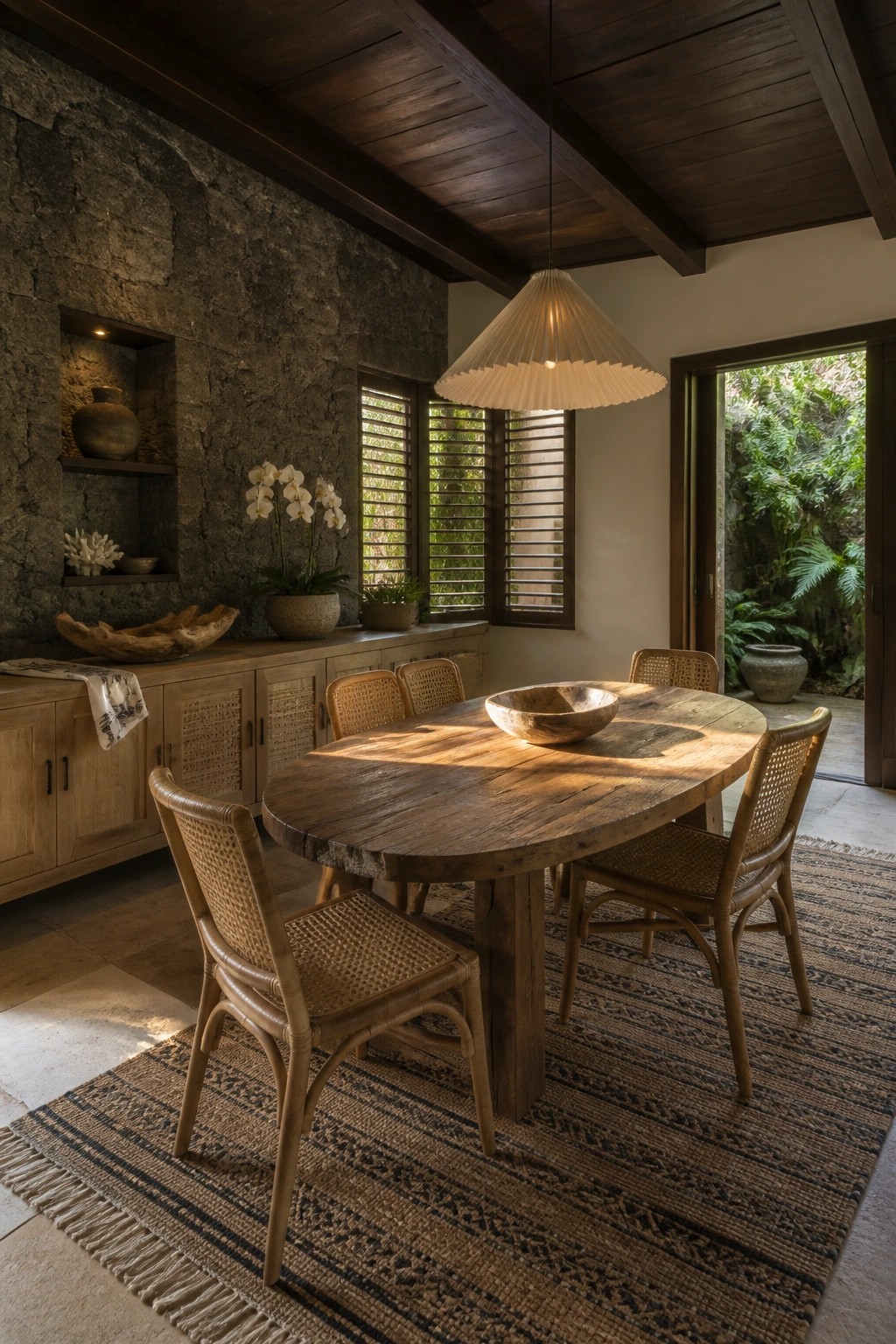
A stone feature wall next to timber ceiling beams gives a dining room real weight without closing it in. The rough texture of the stone balances the warmth of the wood overhead, and the contrast keeps the space from feeling too polished or flat. It works especially well when the room stays fairly open and gets light from windows or doors nearby.
This approach suits homes that already lean natural or tropical. Keep the rest of the furnishings simple, like wood or woven pieces, so the two main materials stay the focus. Avoid crowding the wall with too many small items or the contrast can get lost.
Stone Walls With Built-In Seating

Stone walls can make an entry feel grounded without adding clutter. When you add a simple bench into the wall itself, the space gains a place to sit and drop things while keeping the look clean and natural.
This works best in tropical homes that already use wood ceilings and light floors. Keep the bench shallow so it does not block the walkway, and use the wall above it for hooks or a small shelf.
Built-In Timber Desks Against Stone Walls

A built-in timber desk and shelving unit set against a stone wall gives a workspace a solid, grounded feel without needing much extra decoration. The wood brings warmth and the stone adds texture, so the room stays simple but still looks finished. This setup works especially well when you want storage that feels like part of the architecture rather than something added later.
It suits homes that already use natural materials and need a quiet place to work. Keep the surface fairly clear and let the wall and wood do most of the work. Just watch the scale so the desk does not overpower a smaller room.
Timber and Stone for Calm Tropical Rooms
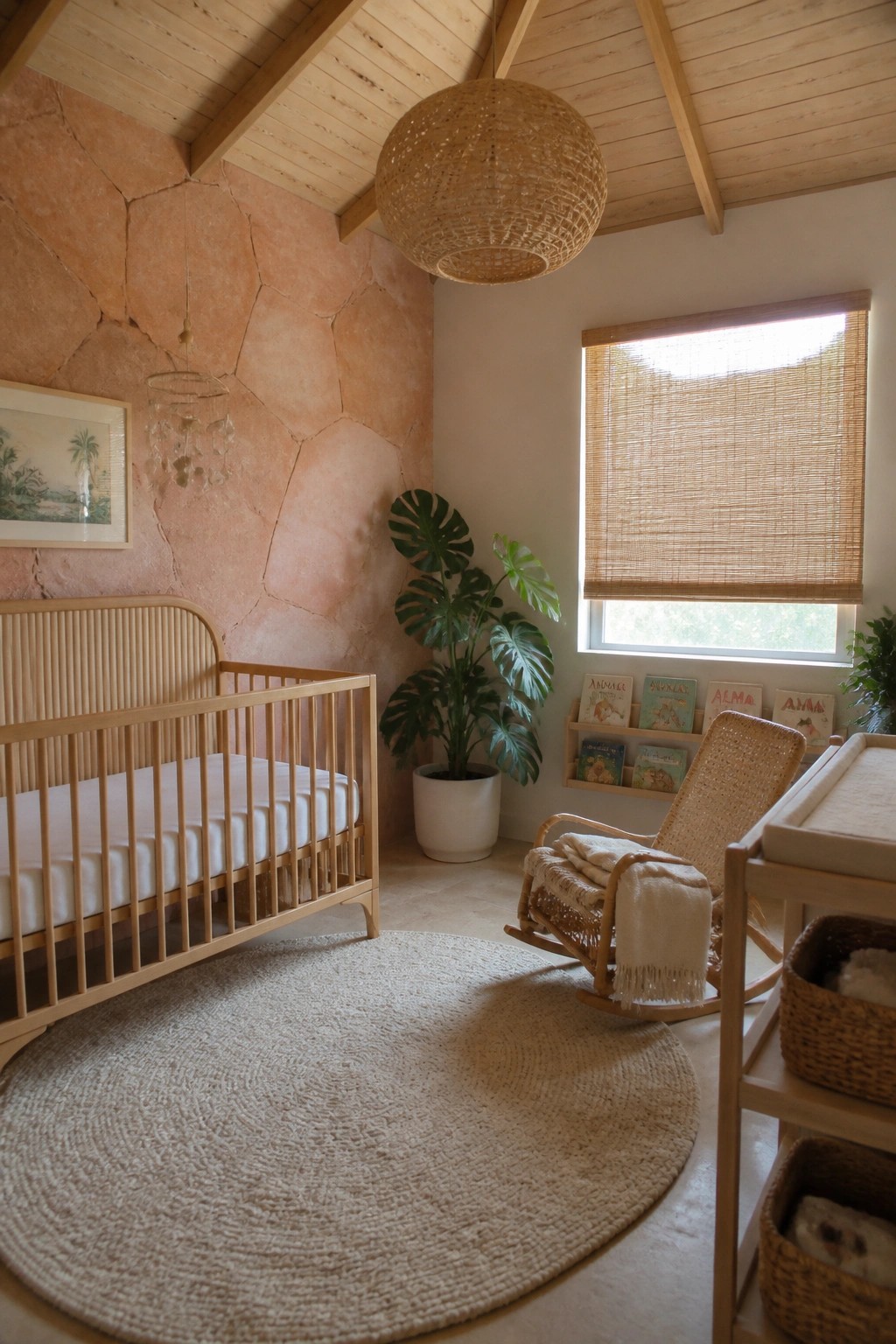
A timber ceiling paired with a stone feature wall sets a quiet, natural tone that works well in tropical interiors. The wood brings warmth and a sense of height, while the stone adds texture without making the space feel heavy or cold.
This combination suits bedrooms or smaller rooms where you want a calm backdrop. Keep other finishes light and simple so the ceiling and wall remain the main elements.
Open Shelving With Baskets In Utility Rooms
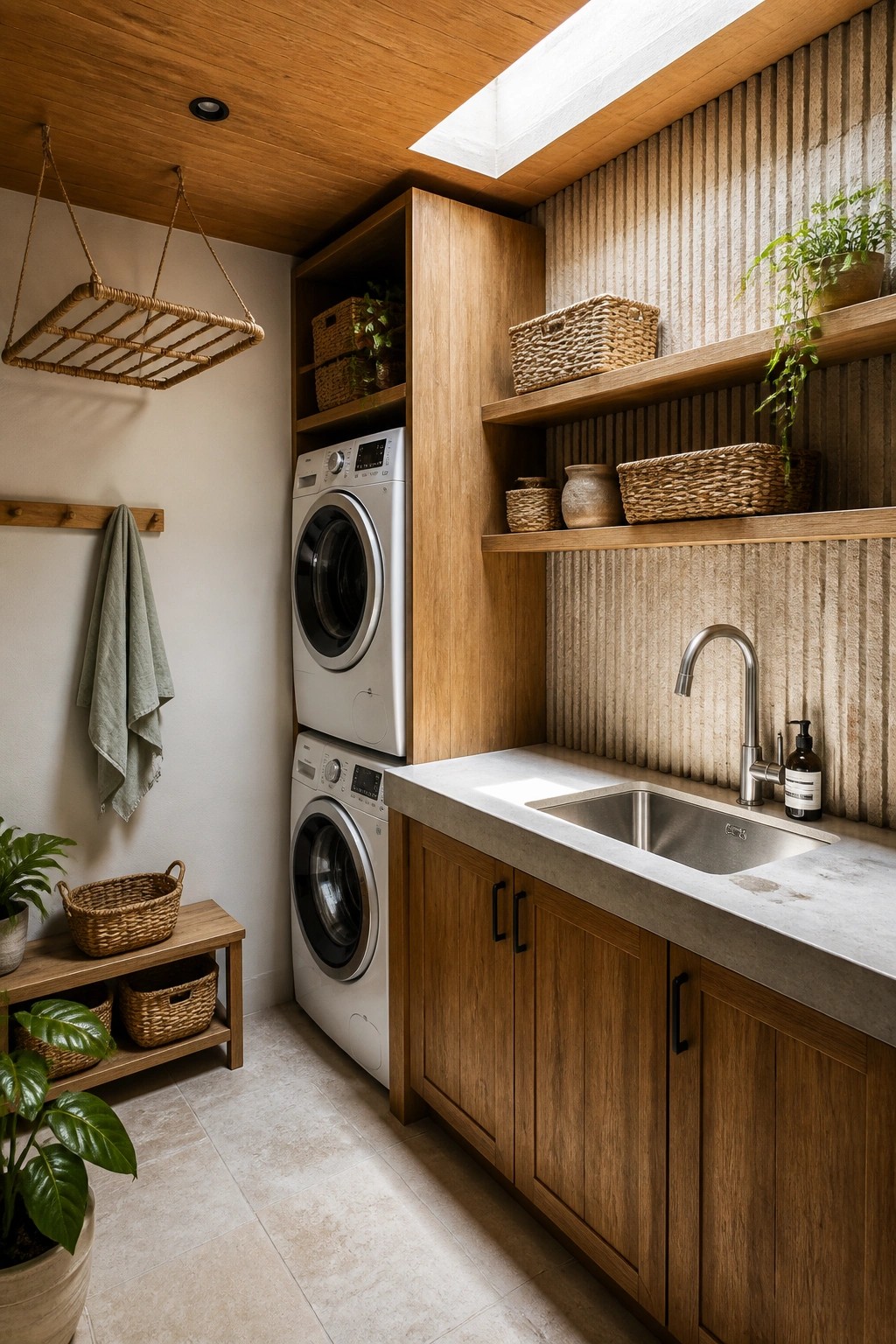
Open shelving above a laundry counter gives you quick access to the things you reach for often. Baskets keep the smaller items contained without closing everything off, so the space stays practical while still feeling open.
This approach works best in homes that already use wood tones and natural textures elsewhere. It suits smaller utility rooms where full cabinet walls can feel heavy, and it lets you adjust the storage as your needs change.
Stone Feature Walls In Living Rooms

A stone feature wall gives a living room real presence without needing lots of extra decoration. It works especially well in tropical homes because the natural texture pairs nicely with wood ceilings and simple furniture. The dark stacked stone here creates a solid backdrop that makes the mounted television feel settled rather than floating.
This approach suits homes with open layouts and decent ceiling height. Keep the rest of the room light in color so the stone does not overpower the space. Avoid covering the entire wall if the room is small, since a full wall of dark stone can close things in.
Stone Accent Walls Behind the Bed

A stone feature wall behind the bed pairs well with an exposed timber ceiling because both materials bring texture without needing much else. The light stone keeps the wall from feeling heavy while the wood above adds warmth and structure. This mix works especially well in tropical homes where you want a calm, grounded bedroom that still feels connected to natural surroundings.
Try it in rooms with decent ceiling height so the beams have room to show. Keep bedding and side tables simple in tone so the wall and ceiling stay the main focus. Darker wood tones on the floor can help tie everything together without competing.
Built-In Seating Along Stone Walls
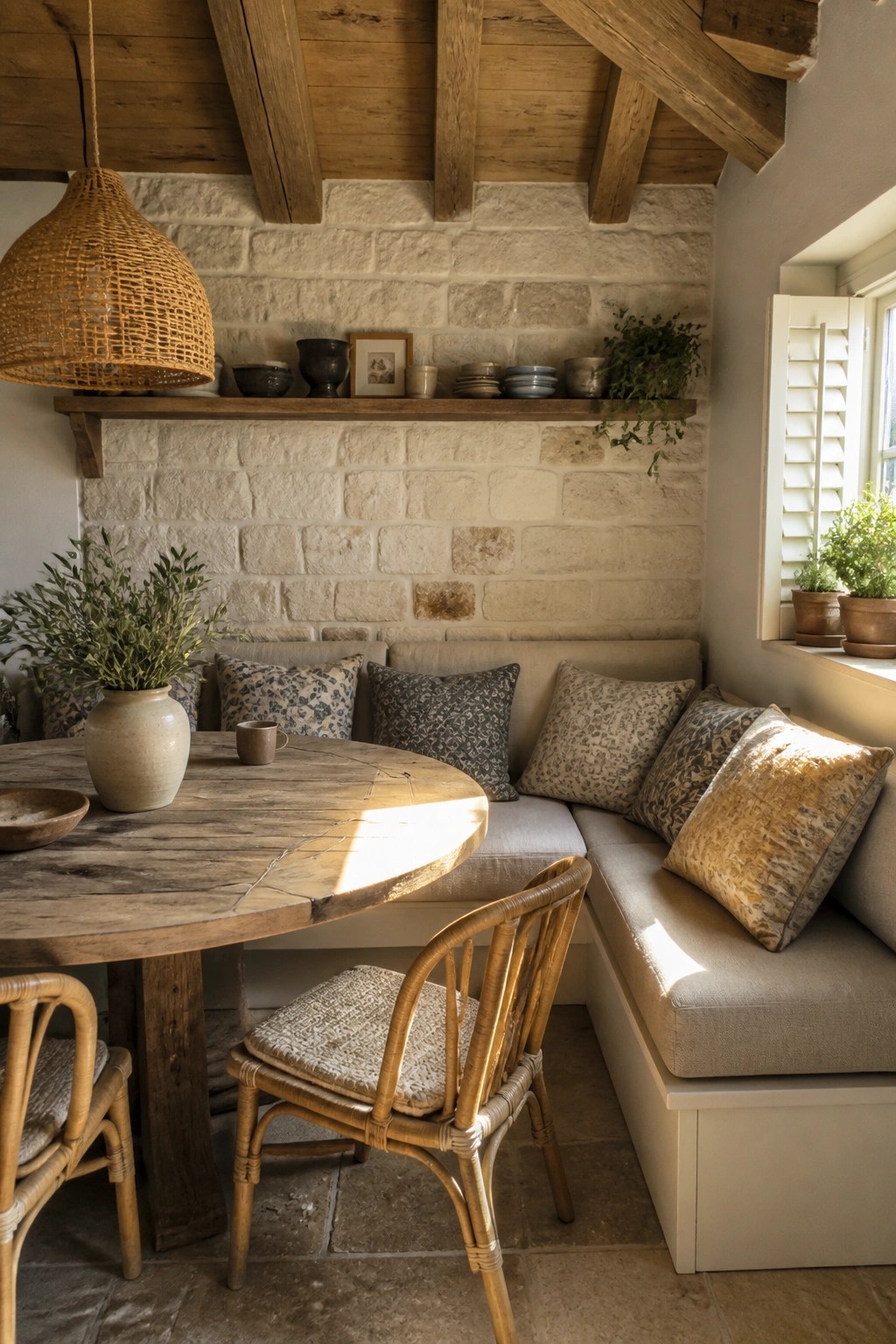
Built-in seating against a stone feature wall turns a simple dining spot into something more useful and comfortable. It makes the most of the wall without needing extra furniture, and the stone gives the space a solid, grounded feel that pairs naturally with timber ceilings.
This setup works best in homes where the dining area sits near a kitchen or in a smaller room that needs extra seating without crowding the floor. Keep the bench cushions in neutral tones and add a few pillows for support. Just watch the depth so people can sit easily without their legs hitting the table.
Curved Bar Counters for Casual Gatherings
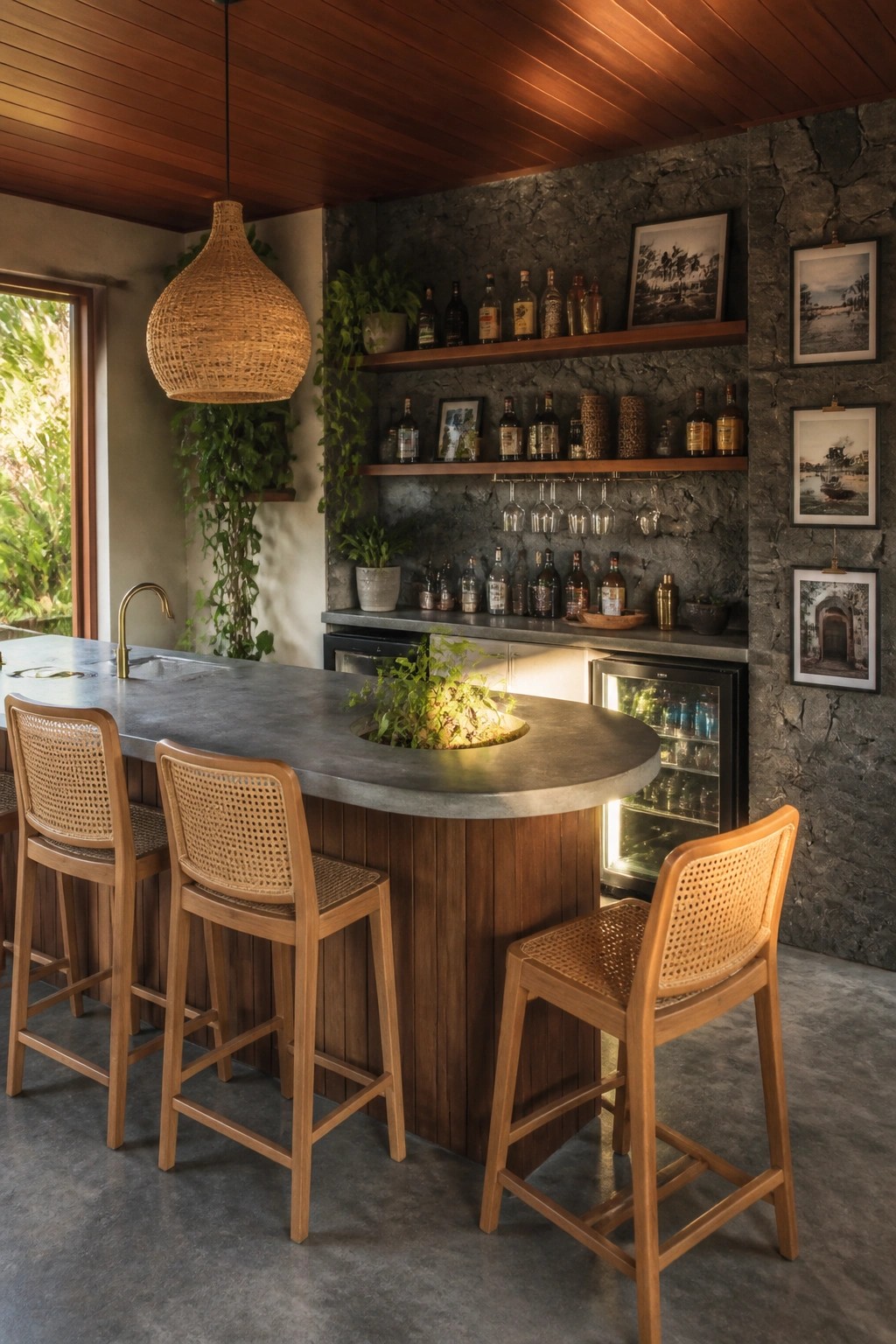
A curved bar counter changes how people use the space. Instead of lining up along a straight edge, guests can face each other more easily, which keeps conversation flowing during parties or quiet evenings at home. The shape also softens the look of the bar and helps it fit into open living areas without blocking movement.
This works best in homes that already have natural materials like wood and stone. Keep the counter height standard for seating and choose durable finishes that handle spills. Avoid making the curve too tight or the bar will feel cramped when stools are pulled up.
Stone Accent Walls in Dressing Rooms

A stone feature wall inside a closet adds a bit of natural texture that keeps the space from feeling too boxy or flat. The contrast with the wood shelving and ceiling makes the whole area feel more finished without needing extra decoration or color.
This works well in larger dressing rooms where you already have built in storage. Keep the rest of the surfaces simple so the stone stays the main point of interest. It suits homes that already use stone elsewhere, since the material then feels consistent rather than added on just for show.
Timber Ceilings Over Stone Bathroom Walls
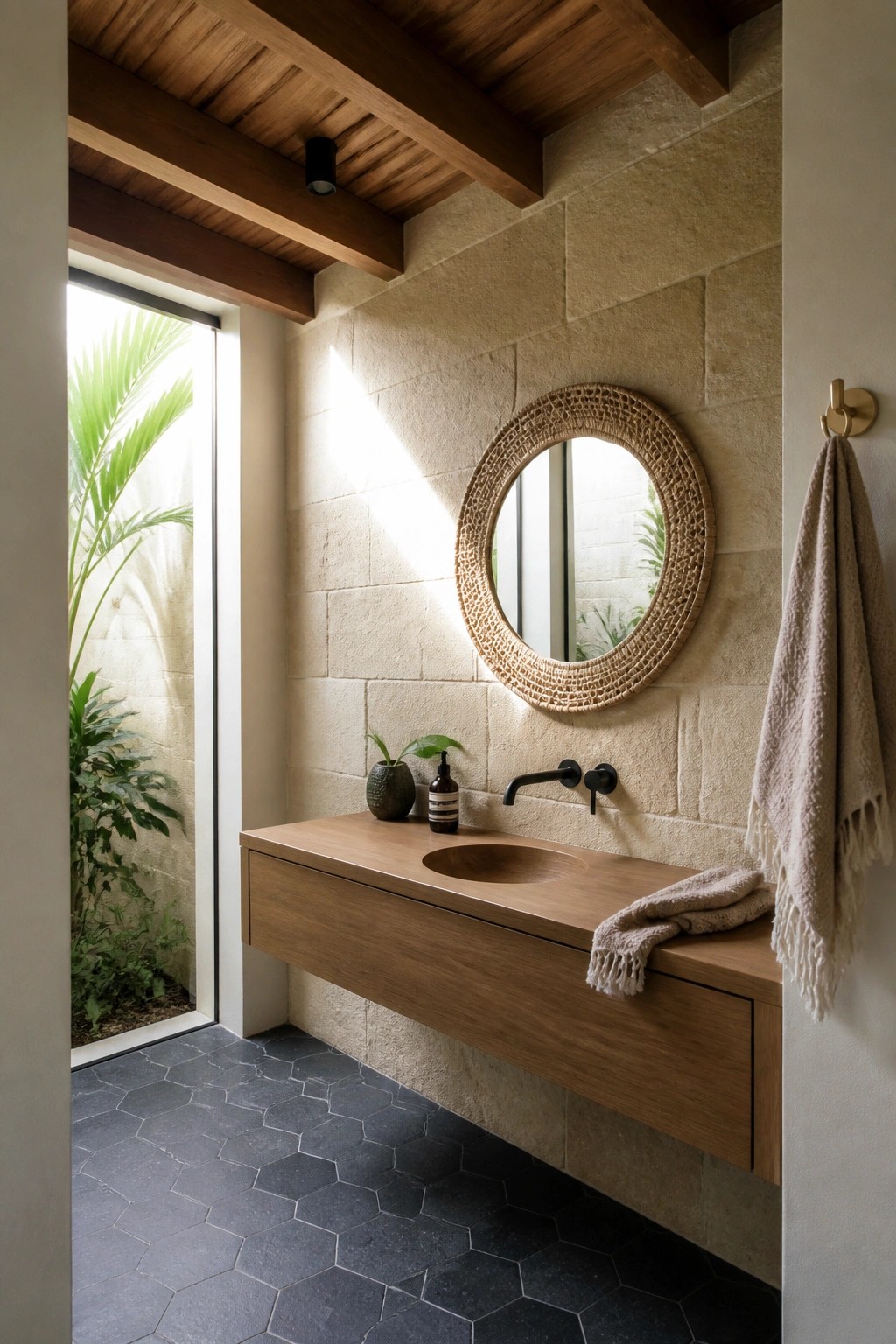
Timber ceilings bring warmth to rooms that have stone walls. The wood softens the hard surface and keeps the space from feeling cold or bare.
This mix works especially well in bathrooms. It suits homes that already lean toward natural materials and pairs best with simple fixtures rather than busy details.
Stone Feature Walls in Home Offices

A stone feature wall gives a home office a steady, natural presence that works well with tropical interiors. The rough texture stands out against smoother wood furniture and helps the room feel connected to the outdoors without needing many extra decorations.
This approach suits compact workspaces best, where you want visual interest but still need the area to stay practical. Place the desk against the stone so the wall becomes the backdrop, then keep other surfaces simple with wood tones and a few plants to avoid crowding the space.
Stone Walls Behind Outdoor Daybeds

A stone wall gives an outdoor daybed a solid anchor point that feels more permanent than freestanding furniture. It also helps define the space without needing extra screens or dividers.
This works best on covered patios in warm climates where the daybed can stay out year round. Keep the platform low, use weatherproof cushions, and let the stone do most of the visual work.
Rough Stone Walls for Tropical Walk-In Closets

A rough stone wall can give a walk-in closet more character without much extra work. It adds weight and texture that balances all the wood tones and soft fabrics, and it works especially well in tropical homes where natural materials already feel at home.
This approach suits rooms that already have timber ceilings or built-in wood storage. Keep the rest of the space simple so the stone stands out, and make sure there is enough light from above or the side so the texture reads clearly.
Frequently Asked Questions
Q: How do I stop the timber ceiling from feeling too heavy next to a big stone wall?
A: Pick a lighter wood tone that picks up the stone’s natural colors. Keep the ceiling beams simple and spaced out so light still moves through the room. This mix keeps the space open instead of closed in.
Q: Will the stone wall hold up if I open the windows every day in humid weather?
A: Seal the stone once a year with a breathable product made for wet climates. Wipe off any moisture that sits on it after heavy rain. The timber above stays fine as long as you let air flow around the edges.
Q: What if I want to add color without fighting the wood and stone?
A: Bring in soft fabrics like linen cushions or a woven rug in muted greens. These pick up the tropical feel and sit quietly against the main materials. One or two pieces are enough to warm the room.
