

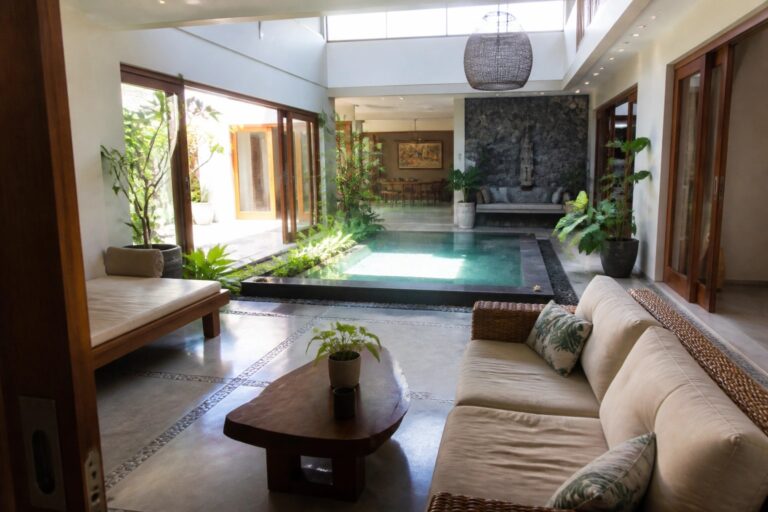
The central courtyard in these tropical houses often dictates how the outer walls and rooflines sit on the lot so the whole exterior feels balanced rather than boxed in.
I keep noticing that the better examples use simple changes in height and material to keep the street view interesting while still hiding the inner garden from passersby.
Not every layout looks as open in person as it does on drawings.
Materials like concrete and timber have to handle constant moisture yet still let the courtyard read as part of the main structure instead of an afterthought.
A few of the screening choices shown here are worth testing on a small lot to see if the same sense of enclosure holds up once the plants fill in.
Central Courtyard Pools That Shape Daily Living
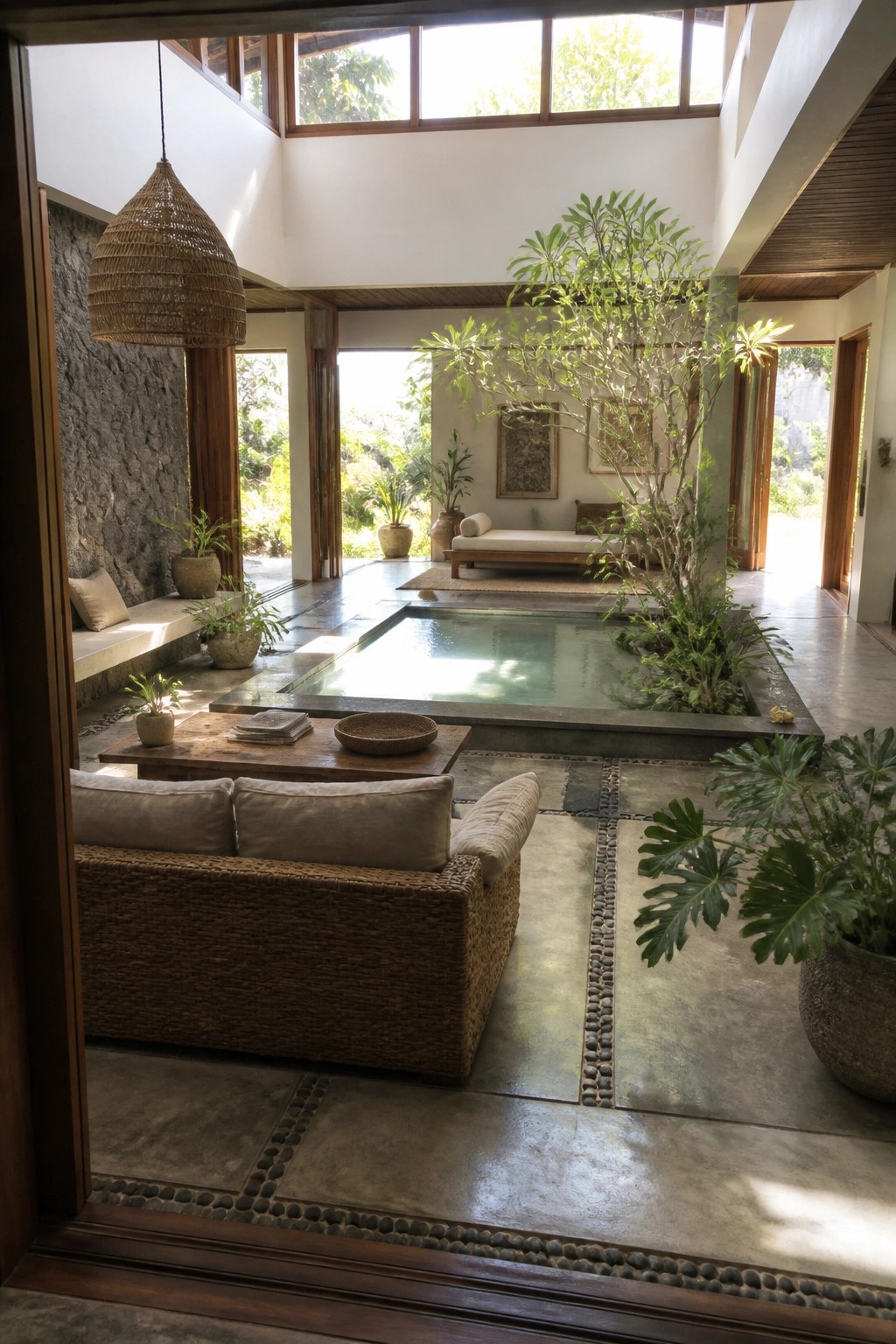
A pool placed right in the middle of the house gives the main living areas a clear focus and pulls light and air deep into the space. The open layout lets the water and surrounding plants become part of the room rather than something viewed from a distance.
This setup works best in warmer climates where the pool can stay uncovered most of the year. Keep the surrounding floor simple and consistent so the courtyard reads as an extension of the indoor floor rather than a separate zone.
Opening Bedrooms To A Central Courtyard
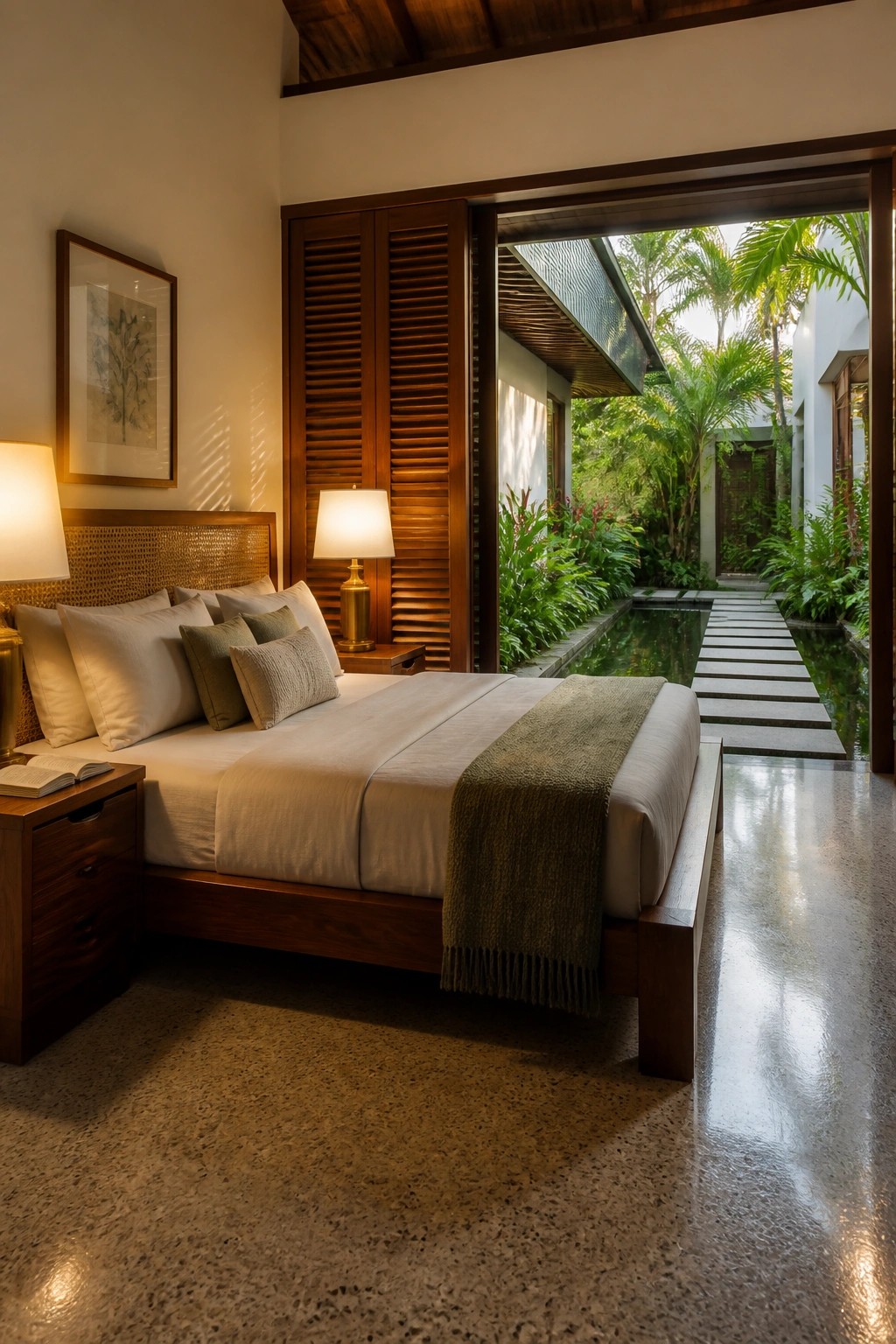
Many homes place the main bedroom right beside a central courtyard so the space feels bigger without adding square footage. Wide openings let air move through and bring in steady light from the planted area just outside.
This works best in warm climates where you can leave the doors open for much of the year. Keep the bed low and simple so the view to the courtyard stays the main feature rather than competing with heavy furniture.
Run Decking Right Beside the Pool
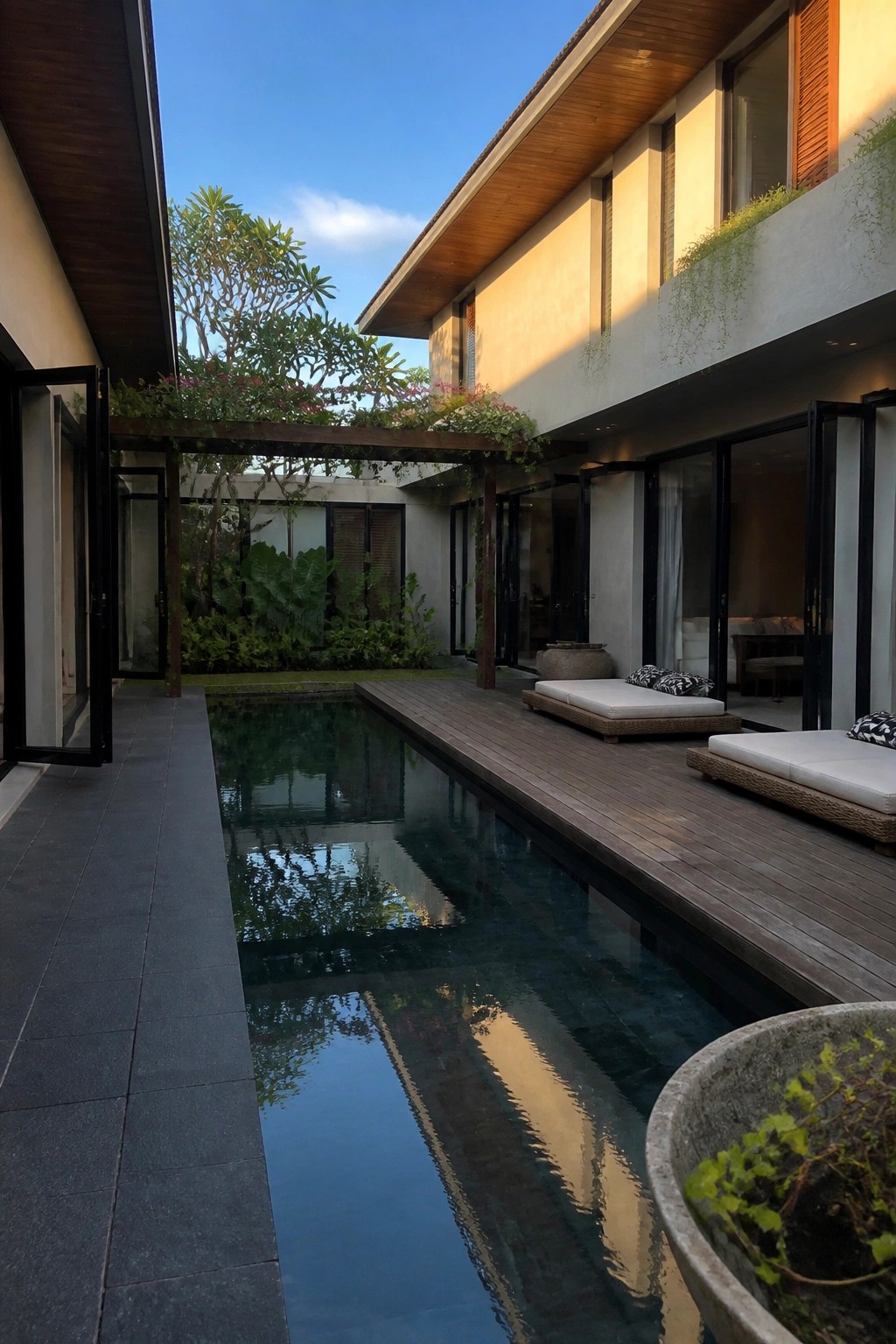
A long narrow pool works better when the deck sits right next to it instead of being set back. This layout turns the water into part of the everyday outdoor space so people can step out and sit or swim without crossing a big gap. In a central courtyard it also helps reflect light into the surrounding rooms.
This approach suits warm climates where the pool can stay in daily use. Keep the deck material simple and level with the pool edge so the whole area feels connected. Just watch that the loungers do not block the narrow walkway around the water.
Connecting The Kitchen To A Central Courtyard
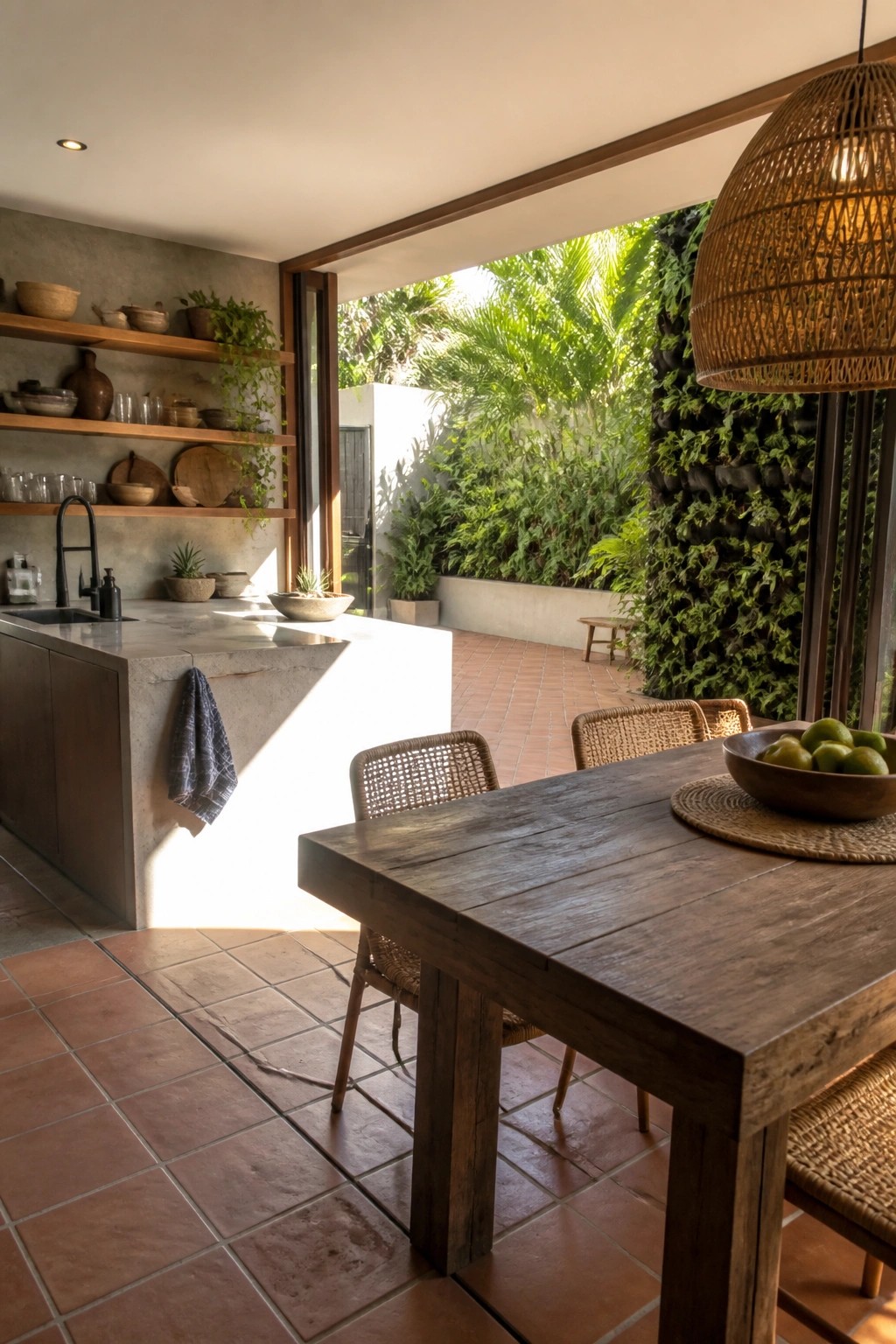
Many homes built around a courtyard place the kitchen and dining area right at the edge so the space feels open and connected. The large opening lets light reach the counters and table while the plants outside become part of the daily view.
This works best in layouts where the island and dining table sit parallel to the courtyard. Keep the floor level the same and avoid heavy curtains so people can move between the two areas without any break.
Benches Along Courtyard Paths
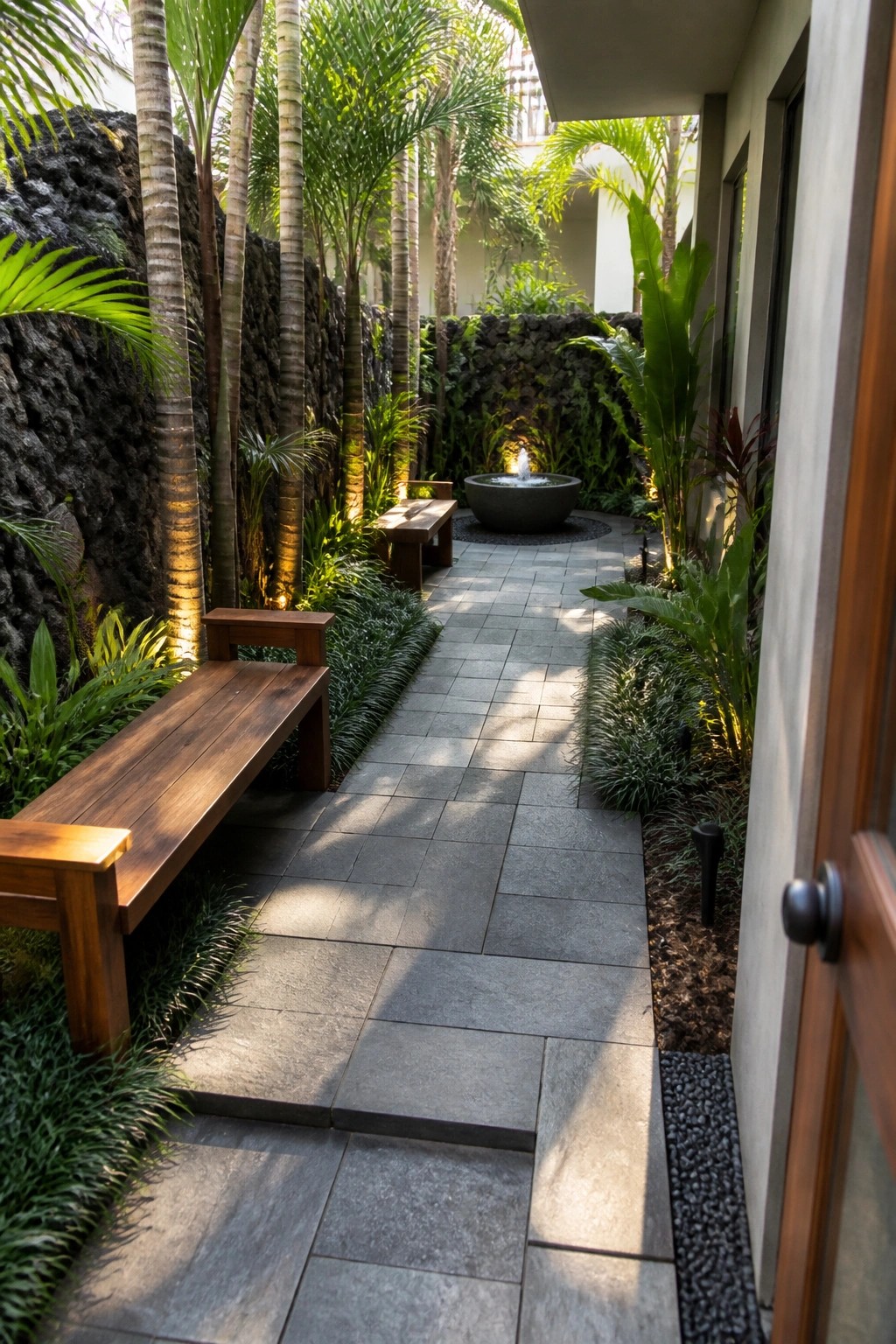
Placing simple wooden benches along a narrow stone path helps turn a courtyard walkway into something more usable. The benches sit low and close to the planting, so they do not crowd the space but still give people a place to stop and sit without needing a whole separate seating area.
This works best in long, enclosed courtyards where the path is the main feature. Keep the benches plain and in the same tone as any nearby wood or stone so they feel like part of the garden rather than added furniture. Avoid spacing them too evenly if the path has a clear focal point like a fountain at the end.
Putting A Pool In The Central Courtyard
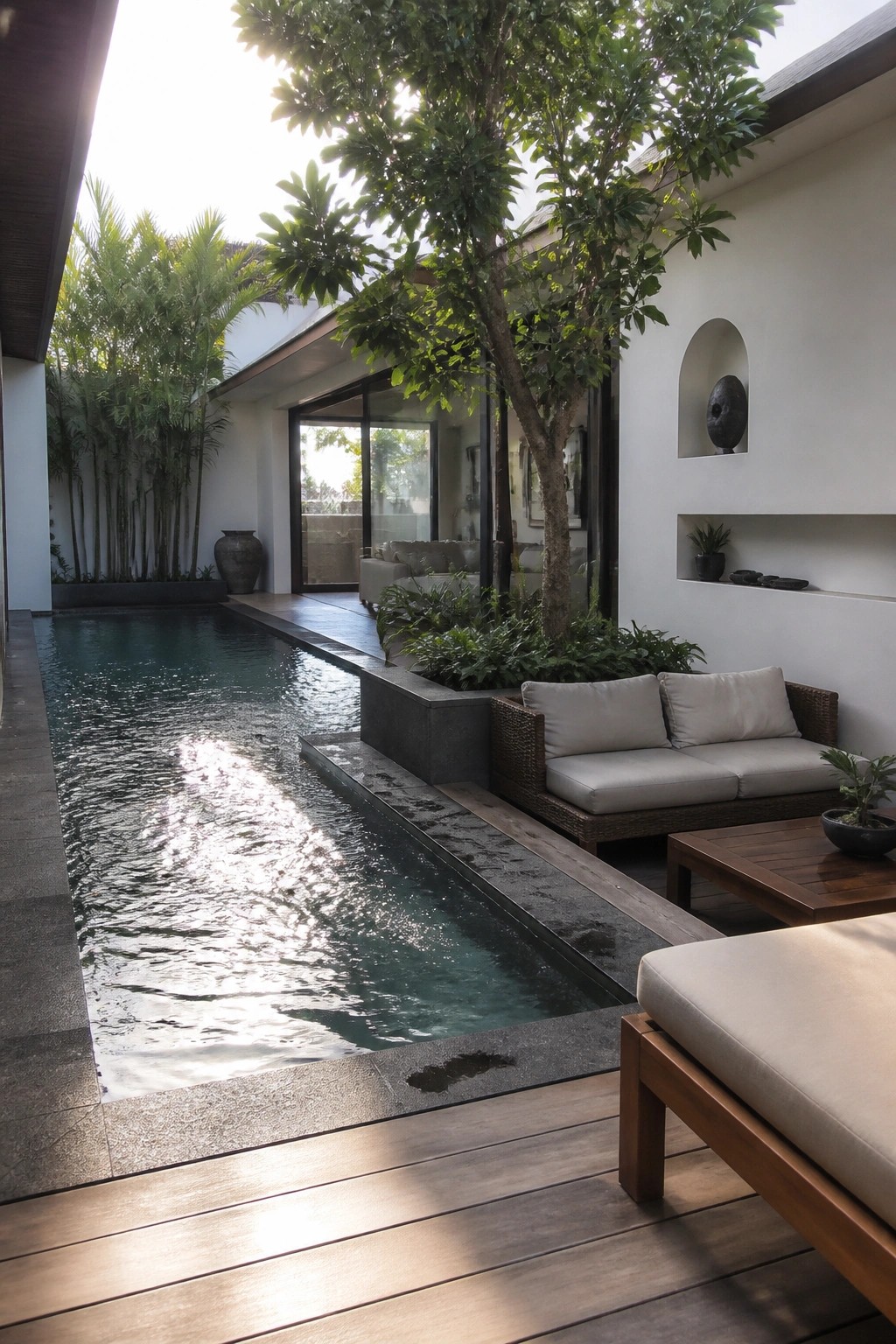
Many tropical homes use a central courtyard to create a private outdoor zone that feels connected to the rooms around it. Adding a long pool right in that space turns the courtyard into the main spot for cooling off and spending time outside.
This works best when the decking sits flush with the water and you keep seating close to the edge. The planted areas along the pool help soften the look and keep the space feeling natural rather than built up.
Central Courtyards With Indoor Plants
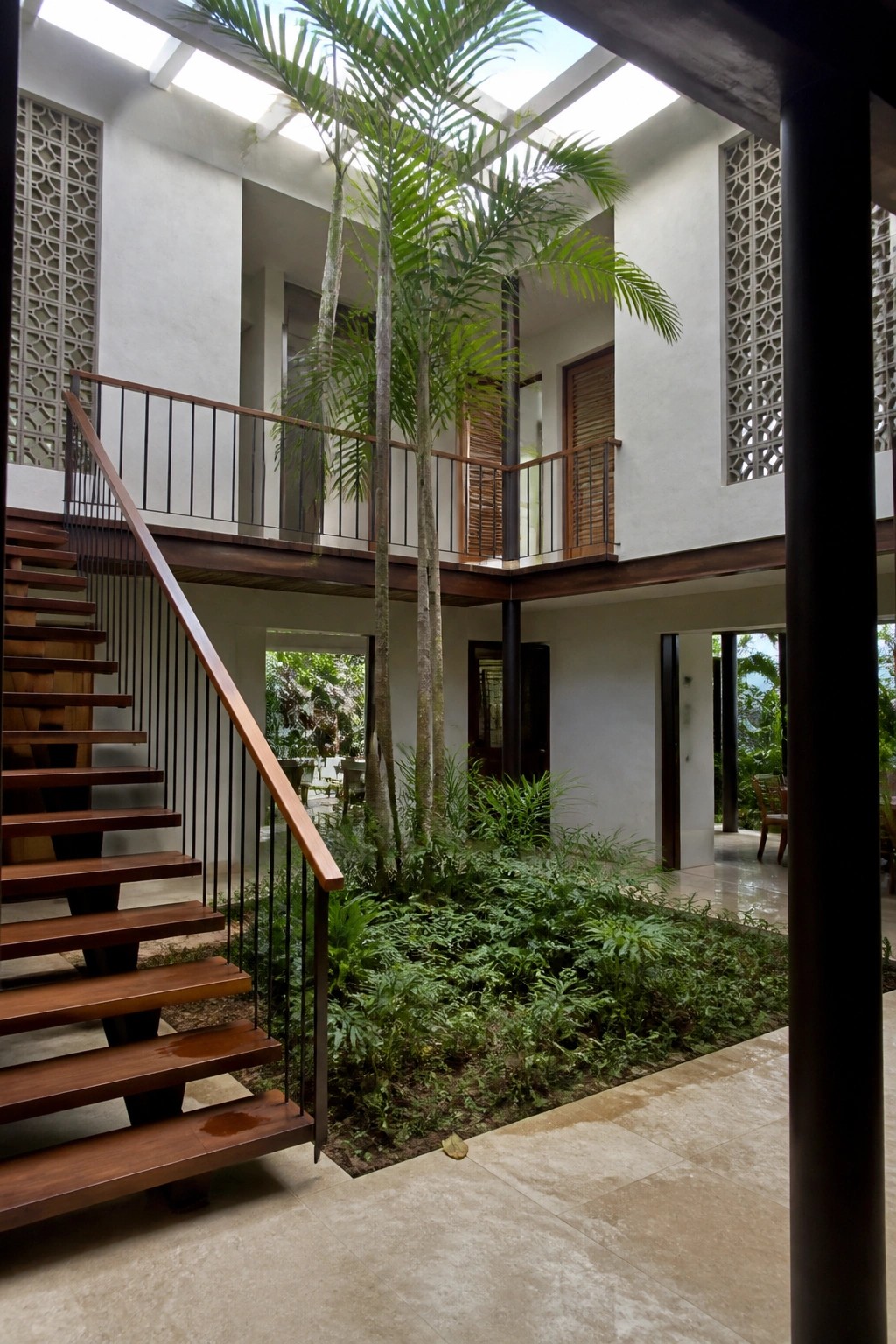
One useful way to bring more light and air into a tropical house is to place a small planted garden right in the middle. The open roof lets rain and sunlight reach the trees and ground cover, so the space feels alive instead of closed in. This layout also helps the rooms around it stay cooler without extra mechanical cooling.
The approach works best in homes that already have a compact footprint and want a strong connection to nature. Keep the planting simple with a few taller palms and low ground cover so the area does not feel crowded. Make sure the surrounding floors slope slightly for drainage and choose plants that handle both shade and occasional direct sun.
Water Courtyards With Stepping Stone Paths
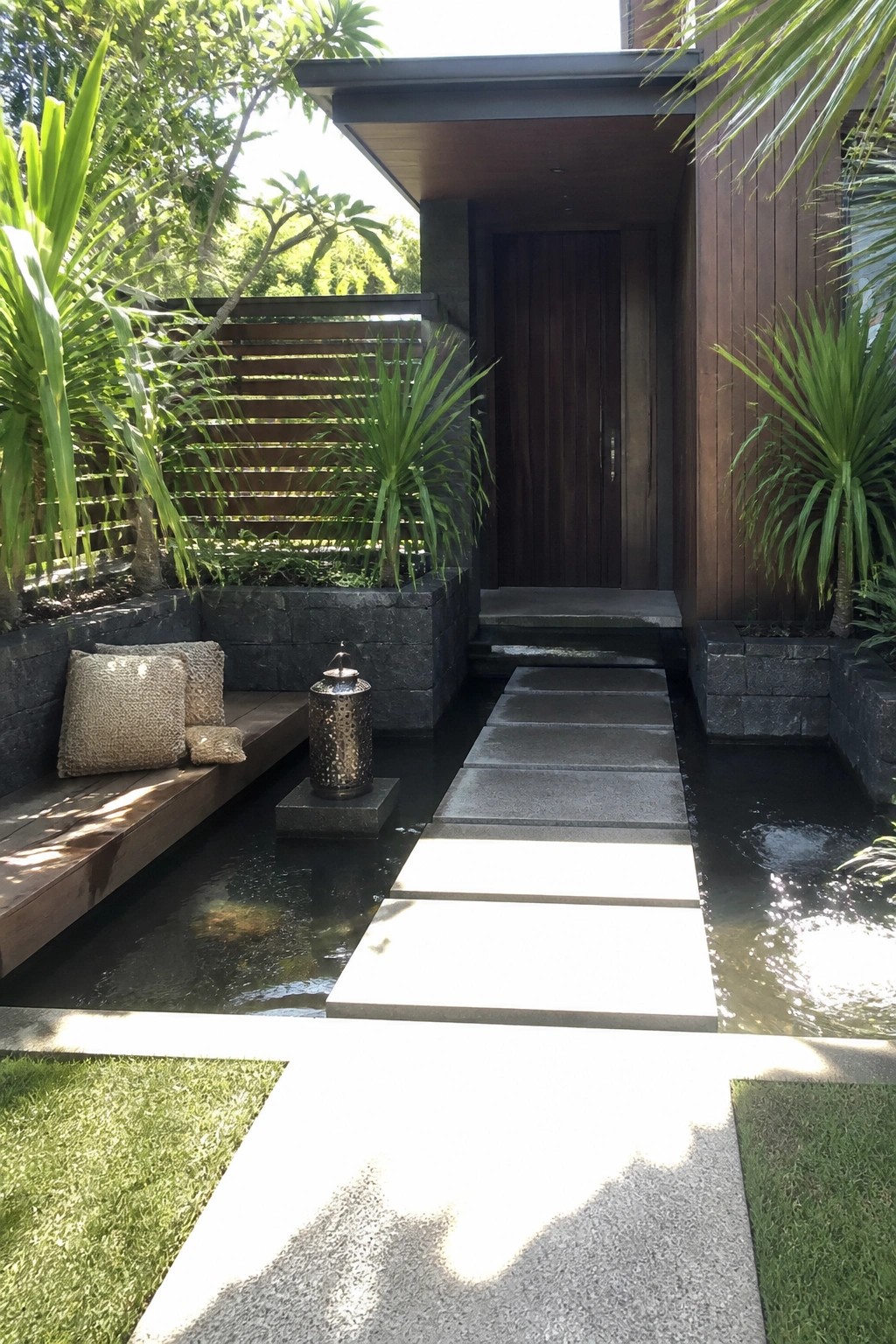
A shallow pool crossed by wide stepping stones gives the entry a quiet tropical presence without adding much structure. It turns the walk to the door into a simple experience that feels tied to the garden around it.
This works best on compact sites where you want the courtyard to feel open but contained. Use dark stone or concrete for the path so it stays cool underfoot, and keep the surrounding plants low so the water stays the main feature.
Built-In Benches Add Seating Without Crowding a Patio
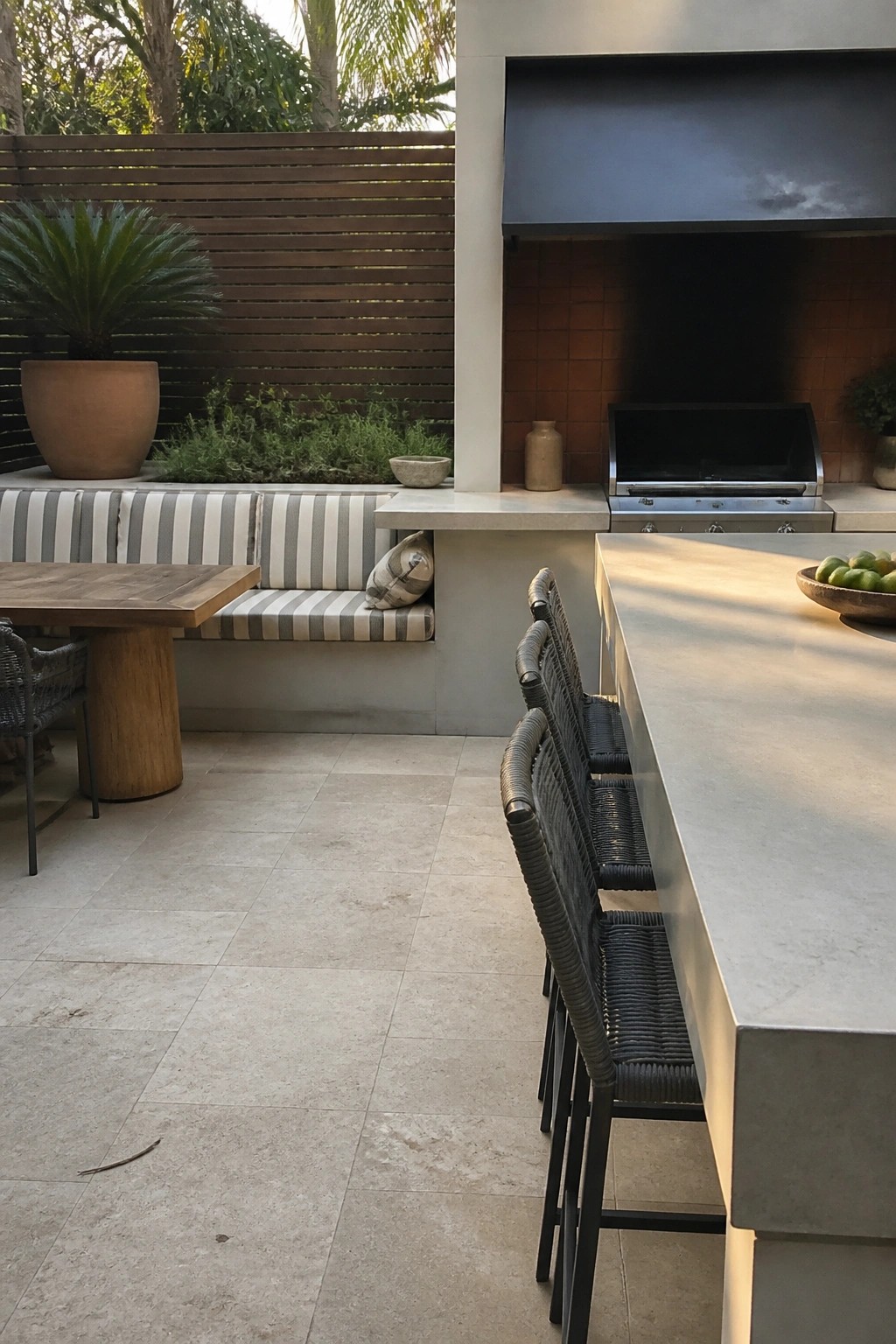
One simple way to keep an outdoor kitchen area comfortable is to run a bench along the back wall instead of relying only on chairs. It creates steady seating that stays in place and leaves more open floor space for walking around the counter and grill.
This kind of built-in works best in courtyard settings where the space needs to feel open yet still hold a group. Add a few cushions for comfort and the bench becomes a natural spot for people to sit while someone cooks.
Central Fire Pits in Small Outdoor Spaces
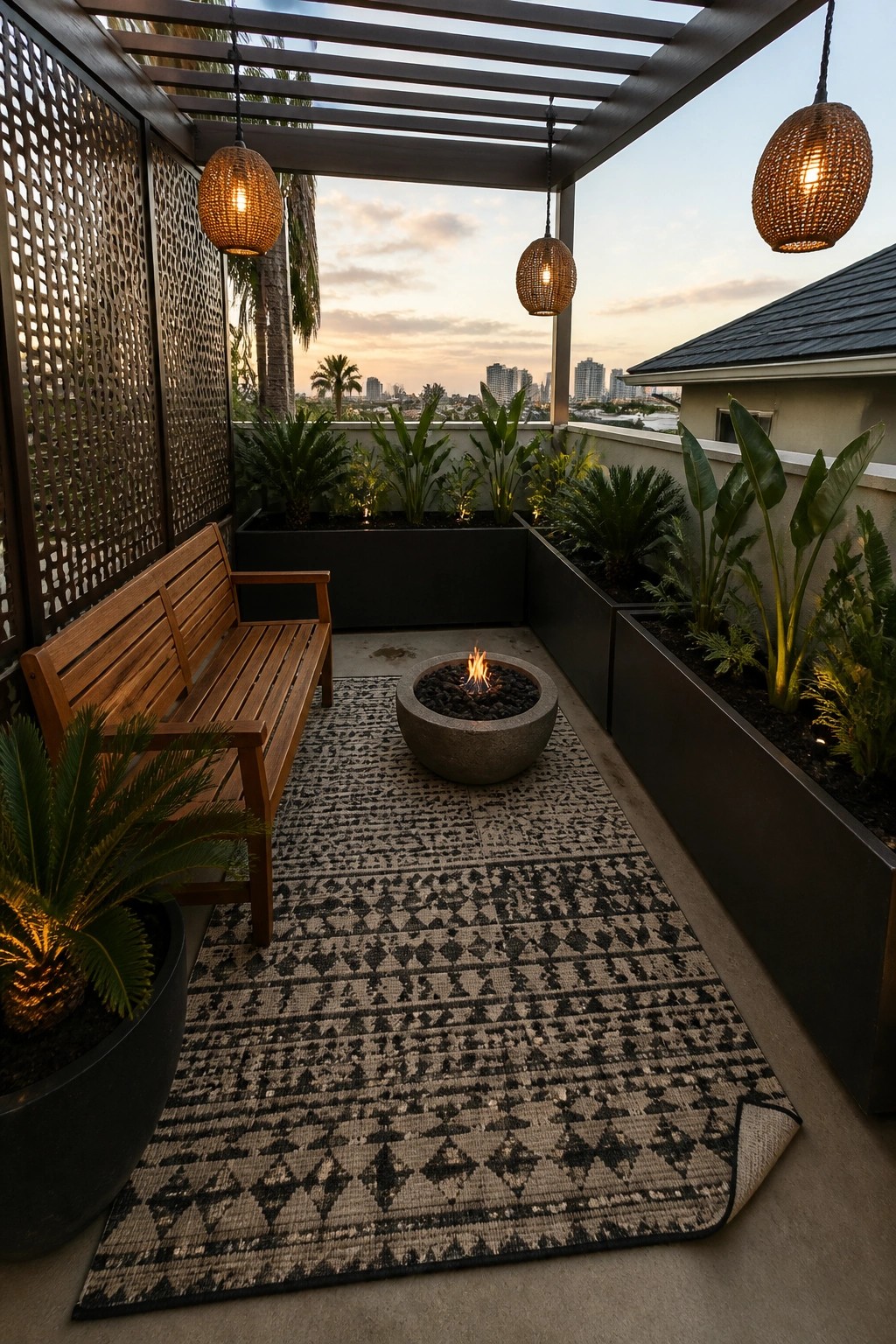
A fire pit placed right in the center gives the patio a clear purpose. People tend to gather around it without much prompting, and the rest of the layout can stay simple.
This setup works well on terraces or compact courtyards where you want the space to feel used rather than empty. Keep the surrounding planters low and full so the area stays green without crowding the middle.
Adding Covered Seating Along Both Sides
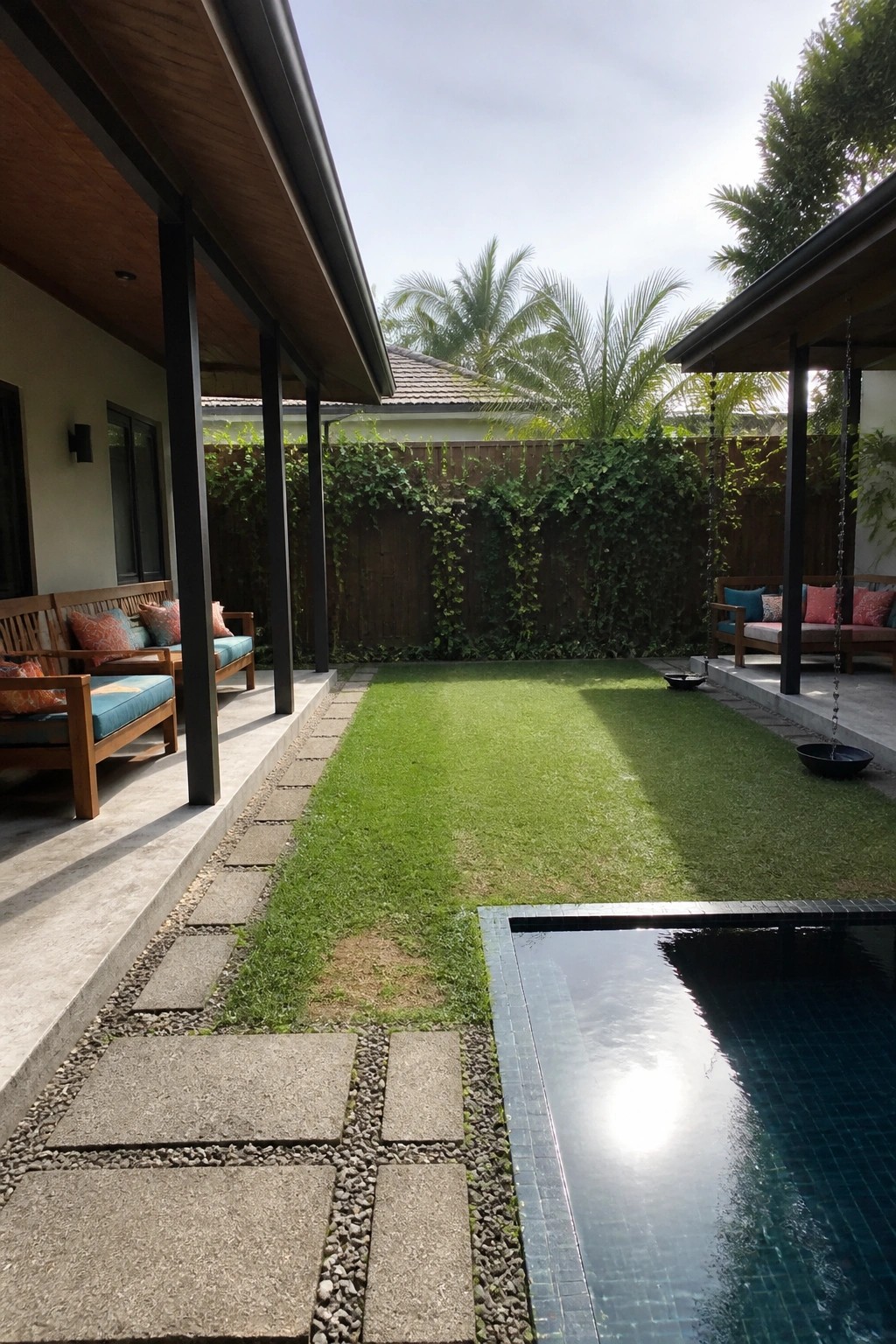
Placing covered seating on opposite sides of a central courtyard gives you shaded spots to use throughout the day without blocking the open middle. The roof overhangs keep the benches comfortable in hot weather and create a natural boundary that still feels connected to the lawn and pool.
This setup suits homes with a long narrow courtyard where the main living areas wrap around the edges. Keep the seating simple and low so the view across the grass stays clear and the space does not feel crowded.
Outdoor Dining Right Next To The Pool
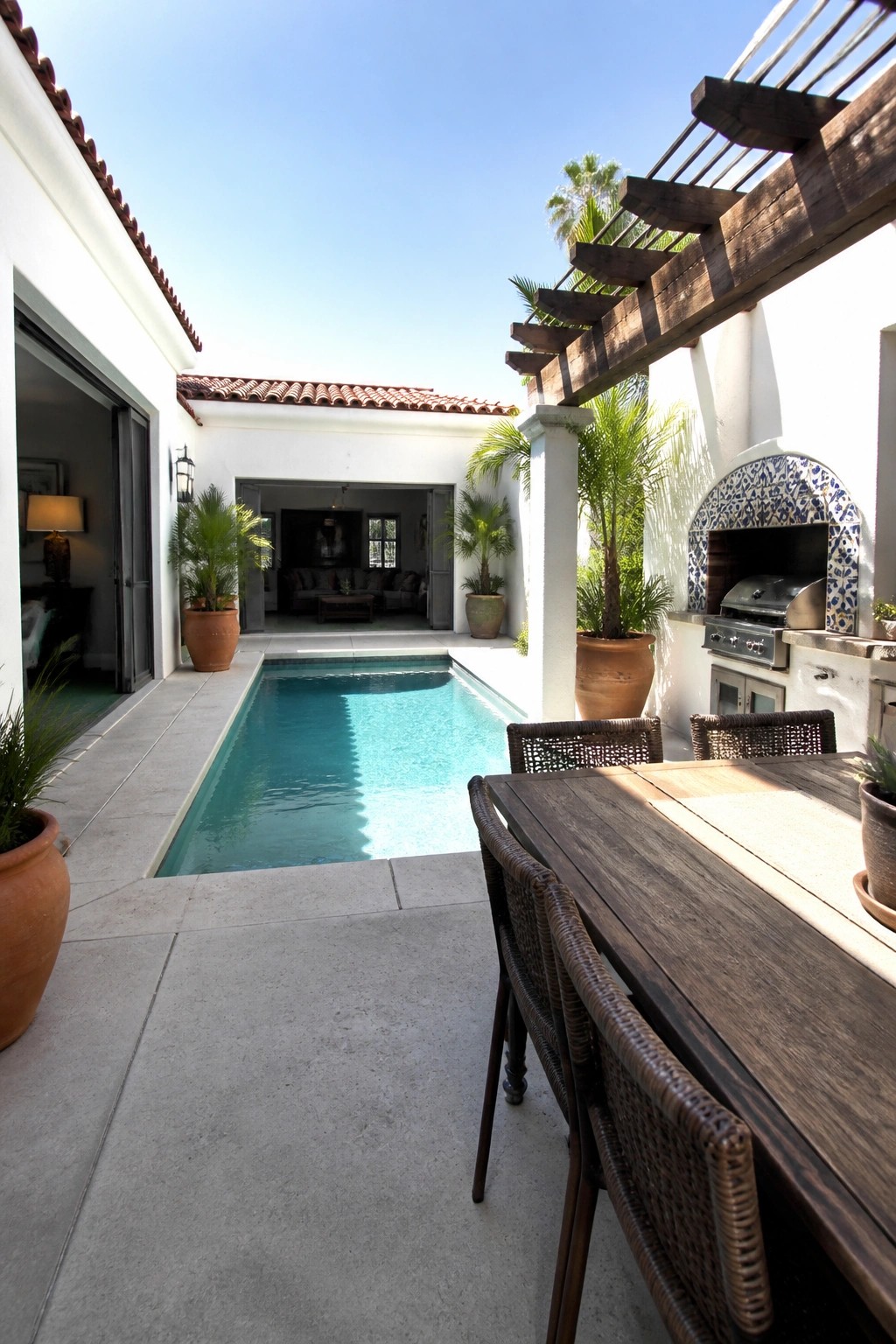
One useful move in a courtyard setup is to set the dining table right at the edge of the pool. This keeps meals connected to the water without needing a separate patio zone, and it makes the whole space feel more open and practical for daily use.
This layout works best in warm climates where people spend most of their time outside. Keep the table and chairs simple and weatherproof, and place the grill or outdoor kitchen nearby so everything stays within a few steps. Just make sure there is enough paved space around the pool edge for chairs to pull out easily.
Gravel Circles Keep a Courtyard Feeling Open
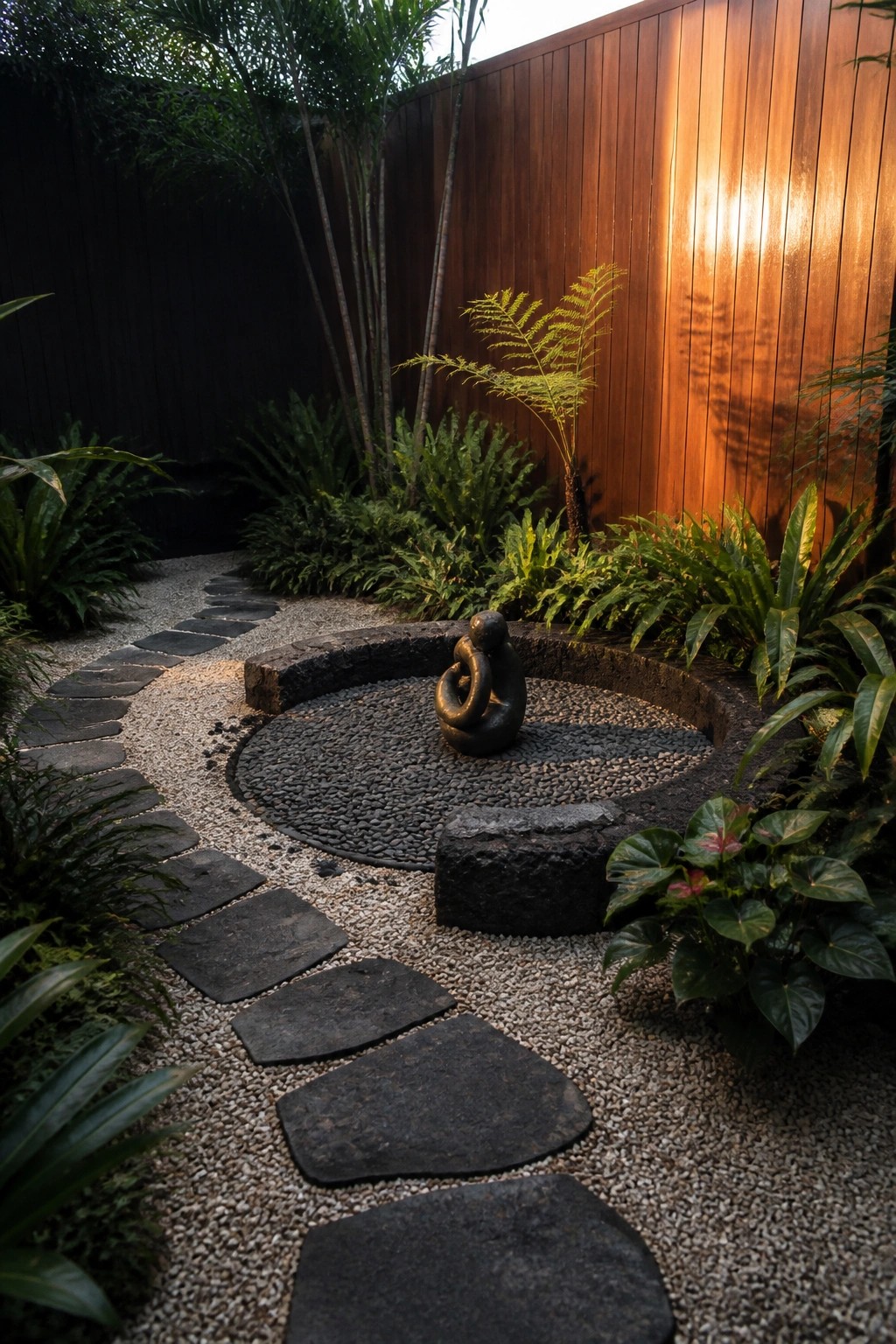
A gravel circle gives the center of a courtyard a clear shape without filling it with plants or furniture. The low stone edge holds everything in place and makes the open gravel stand out against the surrounding greenery.
This layout works best in smaller tropical courtyards where you want one simple focal point. Use irregular stepping stones to lead people in, and keep the planting layered around the edges so the circle stays the main feature.
Connect the Bathroom to the Courtyard
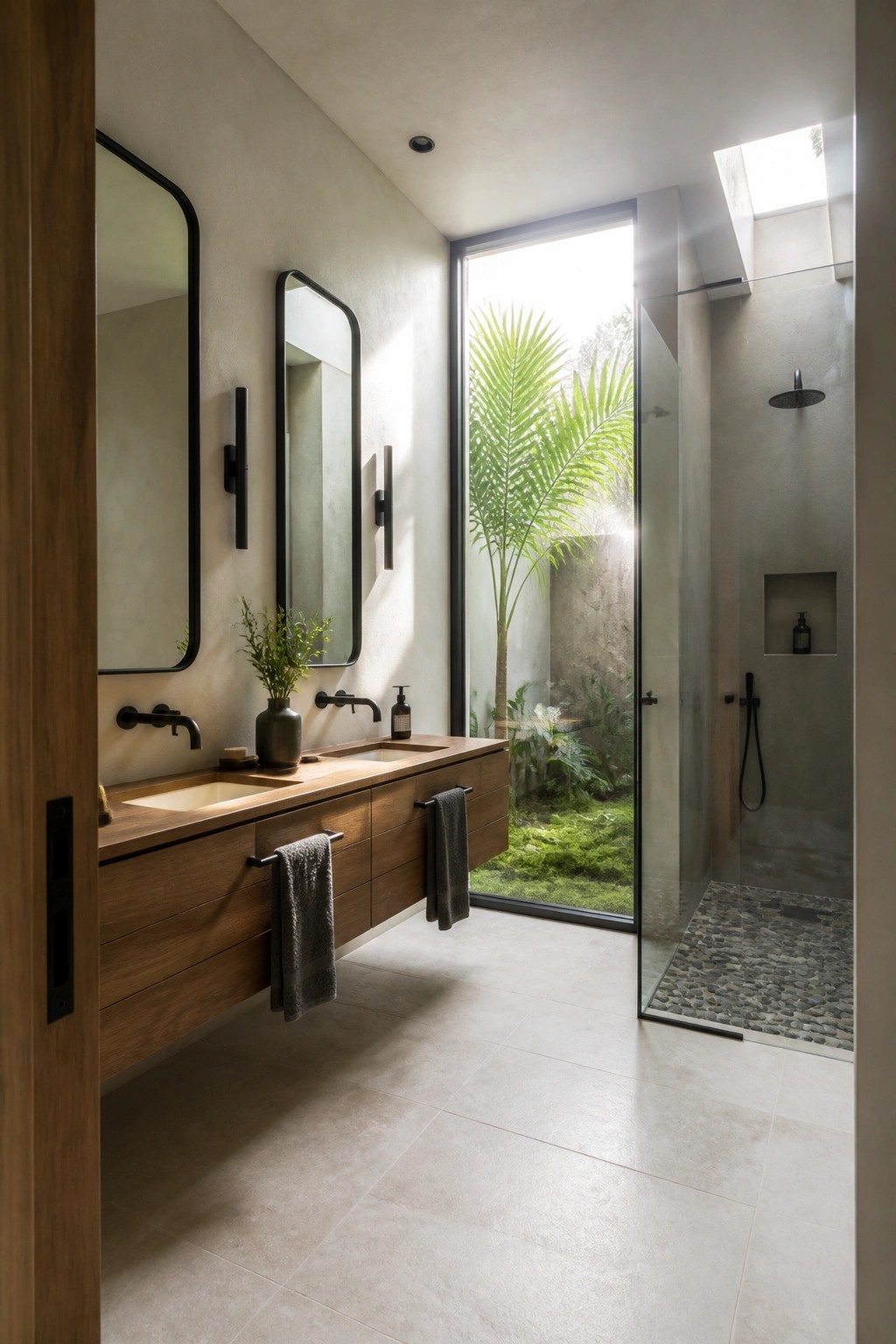
Many tropical homes place a large opening between the bathroom and the central courtyard so the two spaces feel like one. The move brings in steady natural light and keeps the room from feeling closed off during the day.
This setup works best in single-story layouts where the courtyard sits right at the center of the house. Keep the opening simple with sliding glass so the bathroom stays usable even when the weather turns wet.
Breeze Blocks to Shape a Central Courtyard
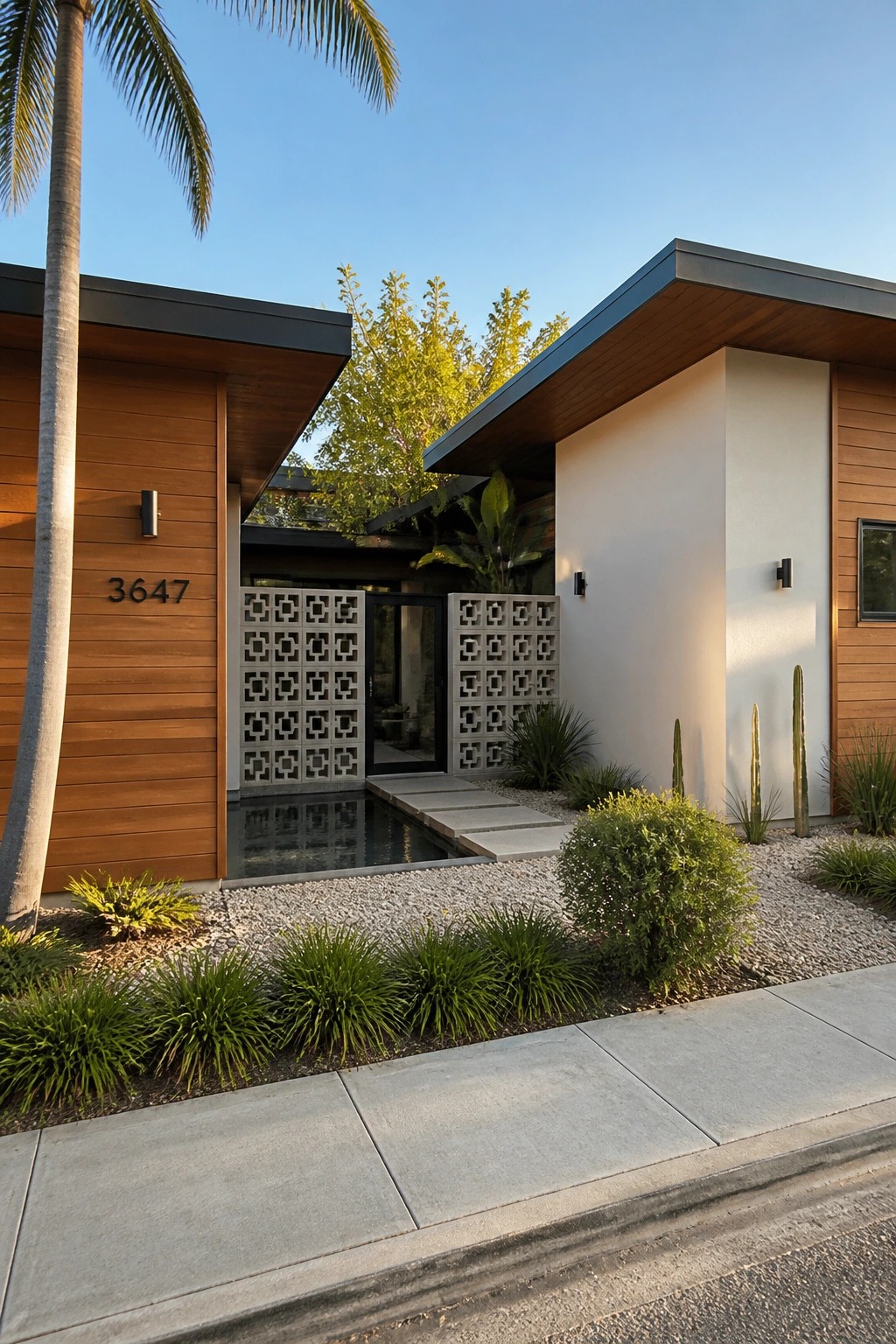
Decorative concrete blocks give a courtyard a clear edge without making it feel closed in. They add pattern and let light and air move through, which works well in a warm climate where you want some separation from the street.
Place them along the front or side of the entry to mark off a small water feature or planting area. This approach suits homes that need a bit of privacy while still keeping the courtyard connected to the rest of the property.
Frequently Asked Questions
Q: How do these courtyards actually help cool the house without extra AC use? A: The open center pulls breezes straight through surrounding rooms so air moves naturally all day. Position larger windows on opposite walls to catch that flow and add a few tall plants for shade. This keeps indoor temps down even in peak heat.
Q: What about privacy if the courtyard sits right in the middle of everything? A: Build solid perimeter walls at least six feet high and angle doorways away from street views. That setup blocks outside eyes while you still enjoy the open feel inside. Many owners add lightweight curtains on tracks for extra control at night.
Q: Do these spaces turn into a maintenance headache with all the plants and weather exposure? A: Pick hardy tropicals that handle rain and sun on their own and lay down gravel or pavers to cut down on mud. A quick weekly sweep and hose off keeps things tidy without much effort. Focus on built in drainage so water never pools.
