

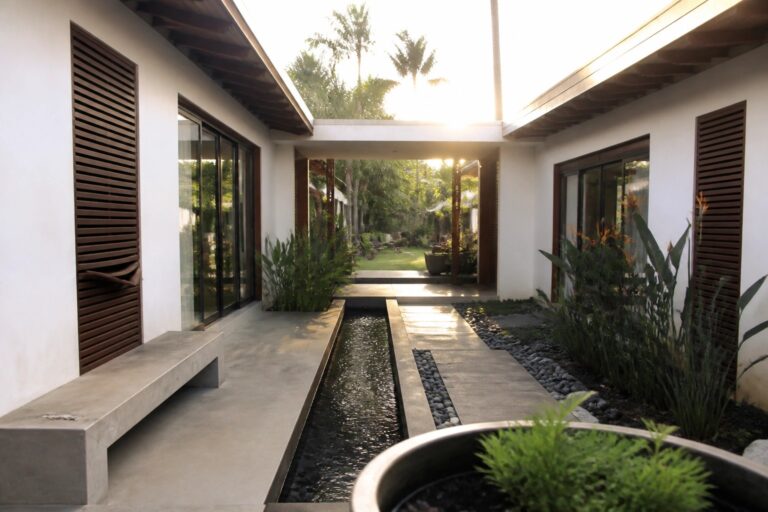
Living in a tropical climate makes you notice how air moves through a house right away.
When a breezeway is added it often changes the way the whole layout feels from the outside as well as inside.
Some work better than others.
I would test a breezeway idea first by checking how the prevailing winds hit my lot before anything else gets planned.
It is the kind of feature that rewards paying attention to the small details of orientation and opening sizes.
Deep Covered Entries For Better Airflow
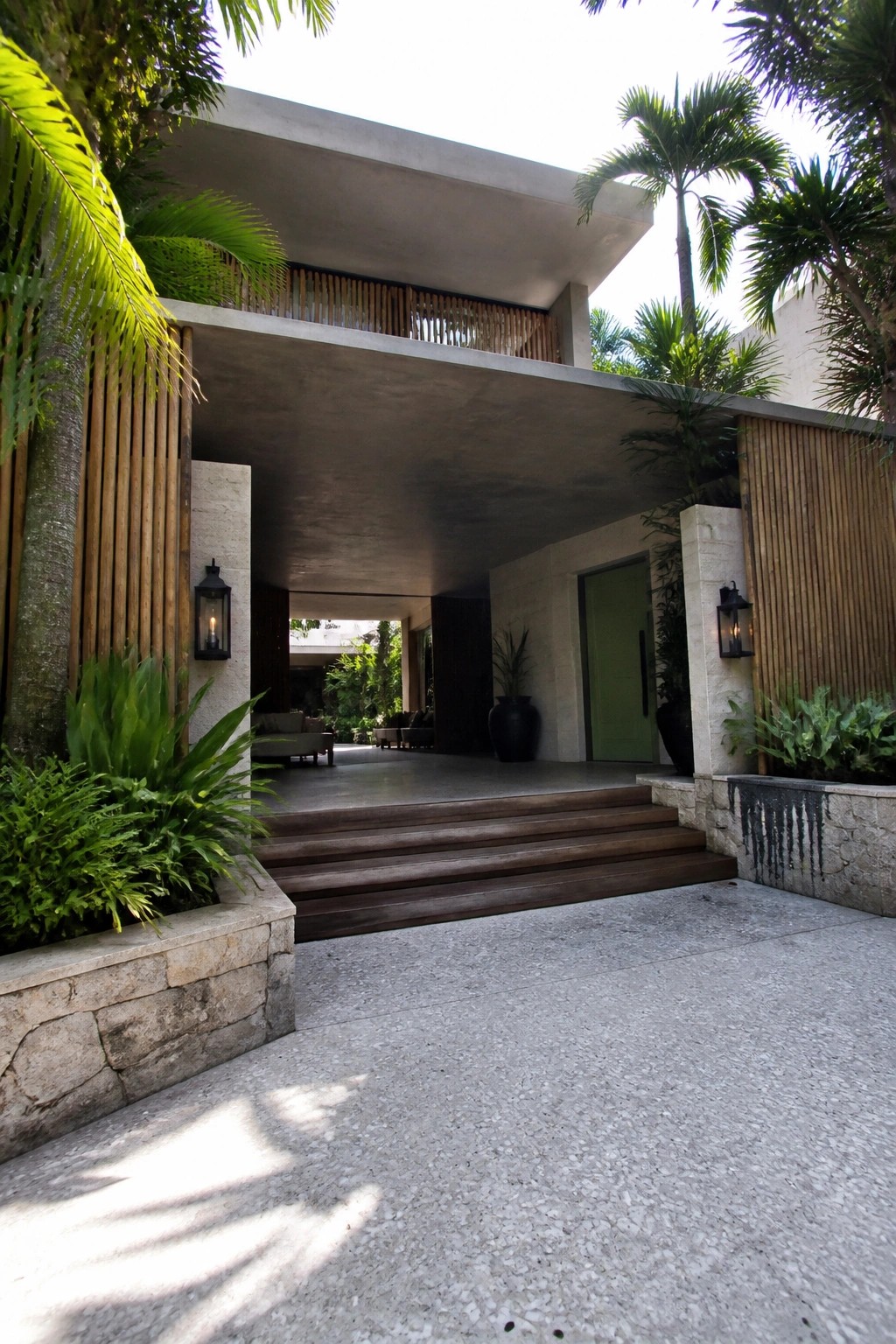
A deep overhang at the front of the house creates a shaded entry that stays open on the sides. This setup lets air move straight through the space instead of getting trapped against the walls. In tropical homes the extra depth also gives some protection from rain while still keeping the flow going.
Place the entry so it lines up with an open area or courtyard at the back of the house. That alignment turns the entry into a working breezeway without needing extra doors or screens. It works best on single-story or low two-story homes where the roof can extend far enough to make the space feel useful rather than just decorative.
Open Pergolas That Channel Breezes Over Pools
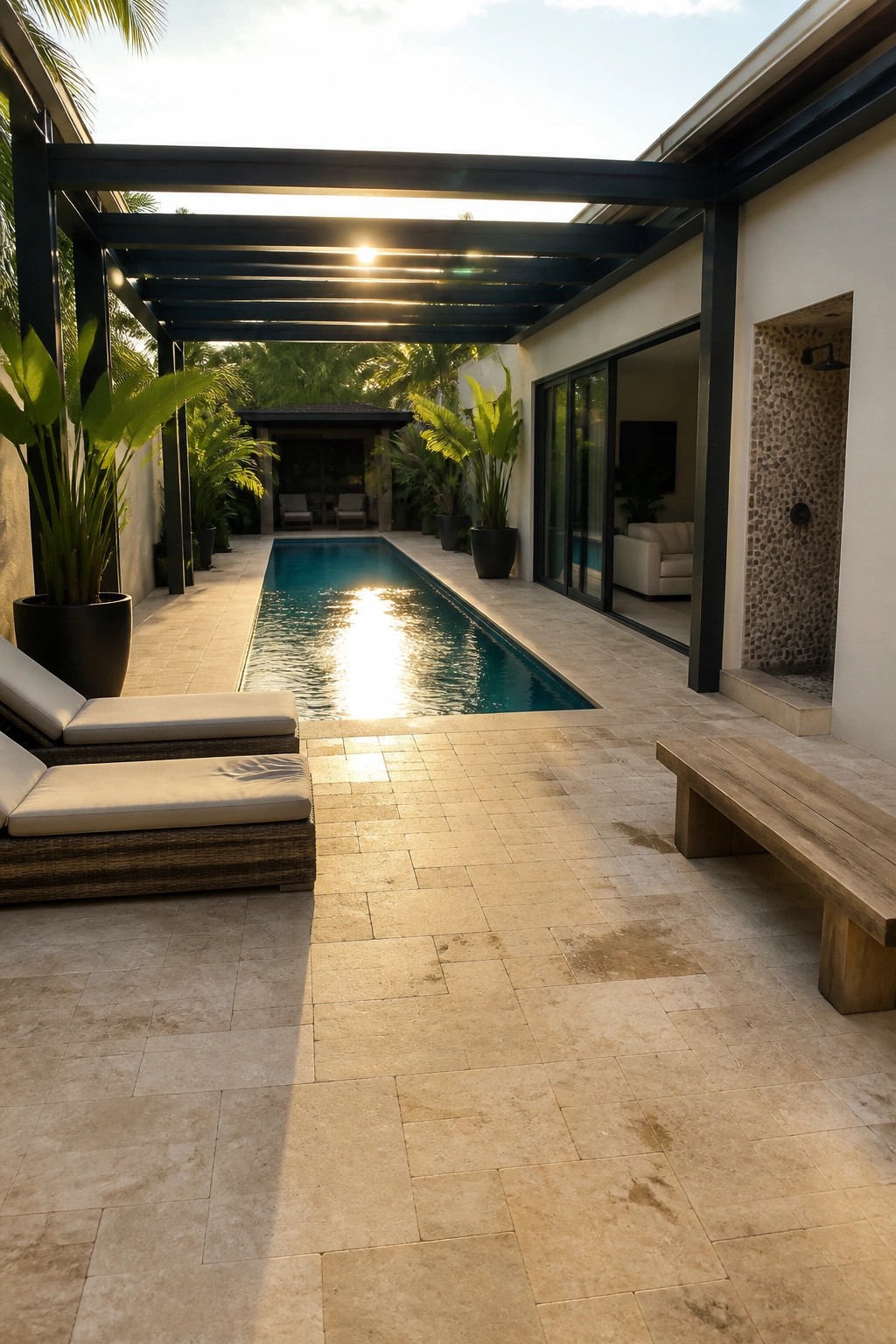
An open pergola running the length of a pool deck gives shade without blocking airflow. The structure lets wind move straight through the space, which helps keep the area cooler in warm weather.
This works best on homes with a long pool layout and open sides at both ends. Keep the roof height moderate so air does not get trapped, and use a simple dark frame that does not compete with the surrounding plants.
Breezeways That Improve Natural Airflow
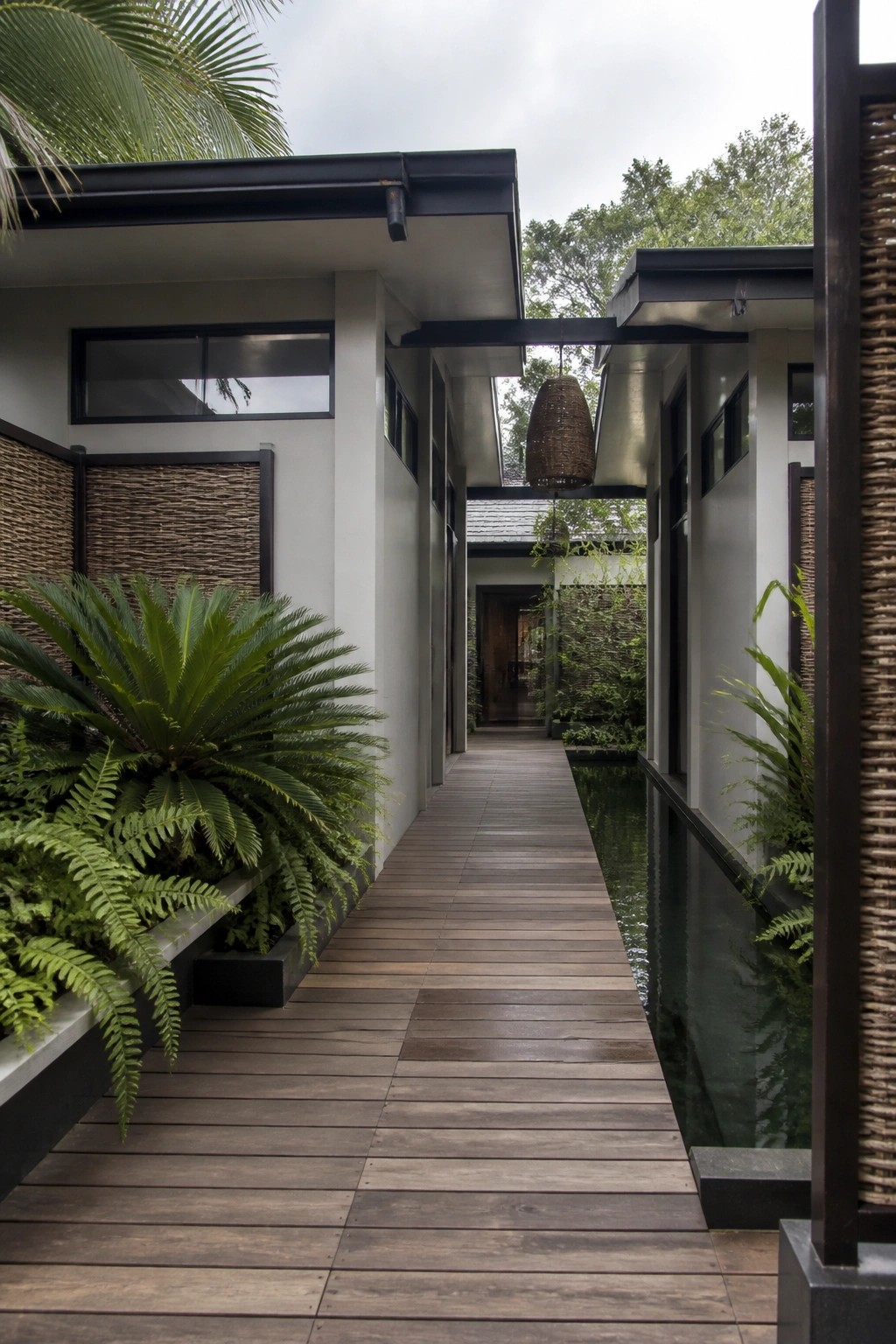
A breezeway like this one works well in tropical homes because it creates a shaded path that still lets air move through freely. The open sides and narrow layout pull breezes along the walkway instead of trapping heat the way a fully enclosed corridor would.
This setup works best on homes where rooms sit on either side of a central spine. Keep the sides mostly open, use simple decking underfoot, and add a water element or planting strip along one edge to help cool the air as it passes through.
Porches With Open Sides For Natural Ventilation
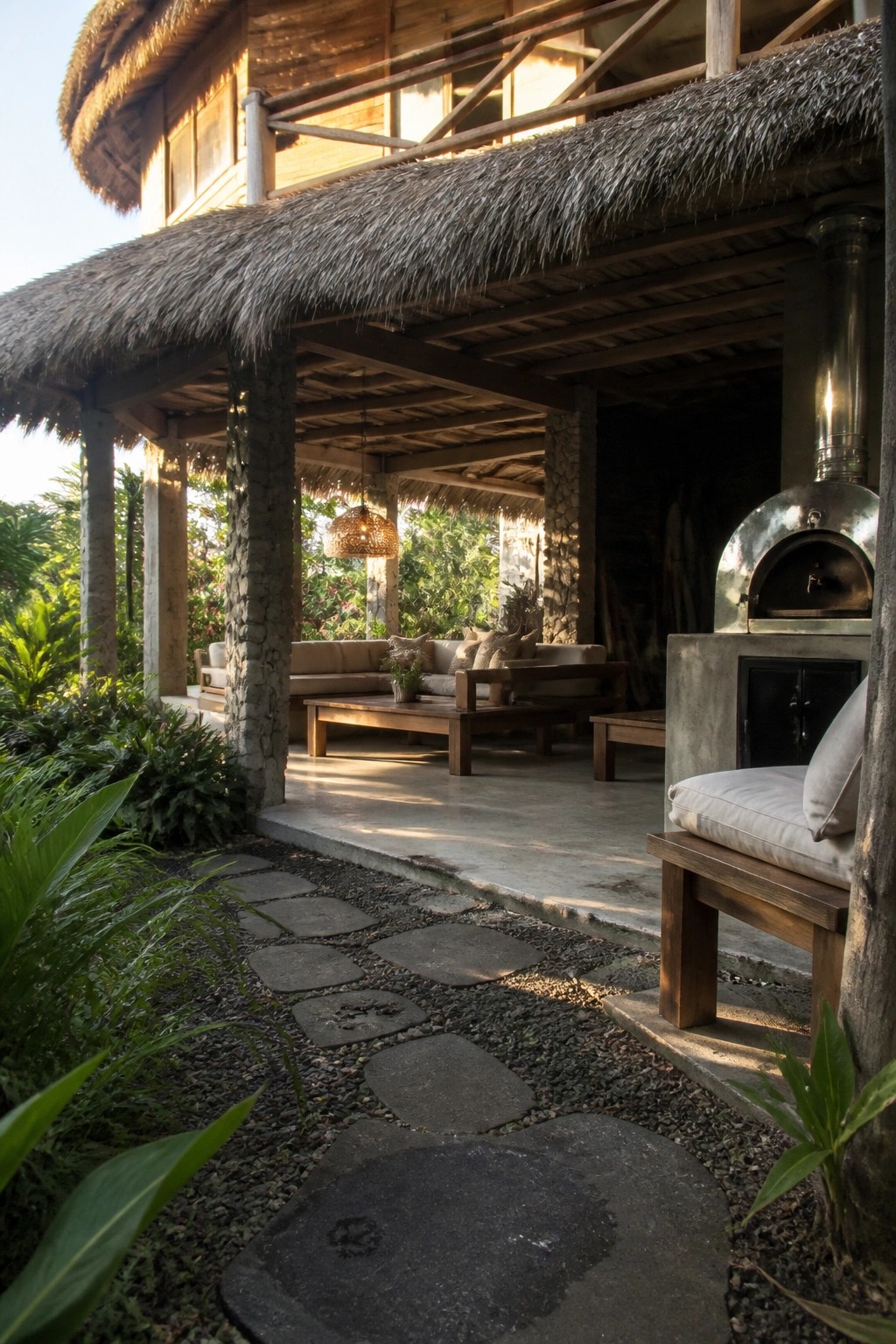
A deep covered porch with fully open sides lets air move straight through the space instead of getting trapped. This simple layout works especially well in warm climates where you want to spend time outside without the heat building up under the roof.
Keep the edges clear of walls or heavy screens so breezes can enter from one direction and exit the other. The thatched roof and open views to the garden help the porch feel connected to the outdoors while still providing shade and shelter. It suits homes that already have good cross breezes and garden space around them.
Breezeways Work Well for Outdoor Dining
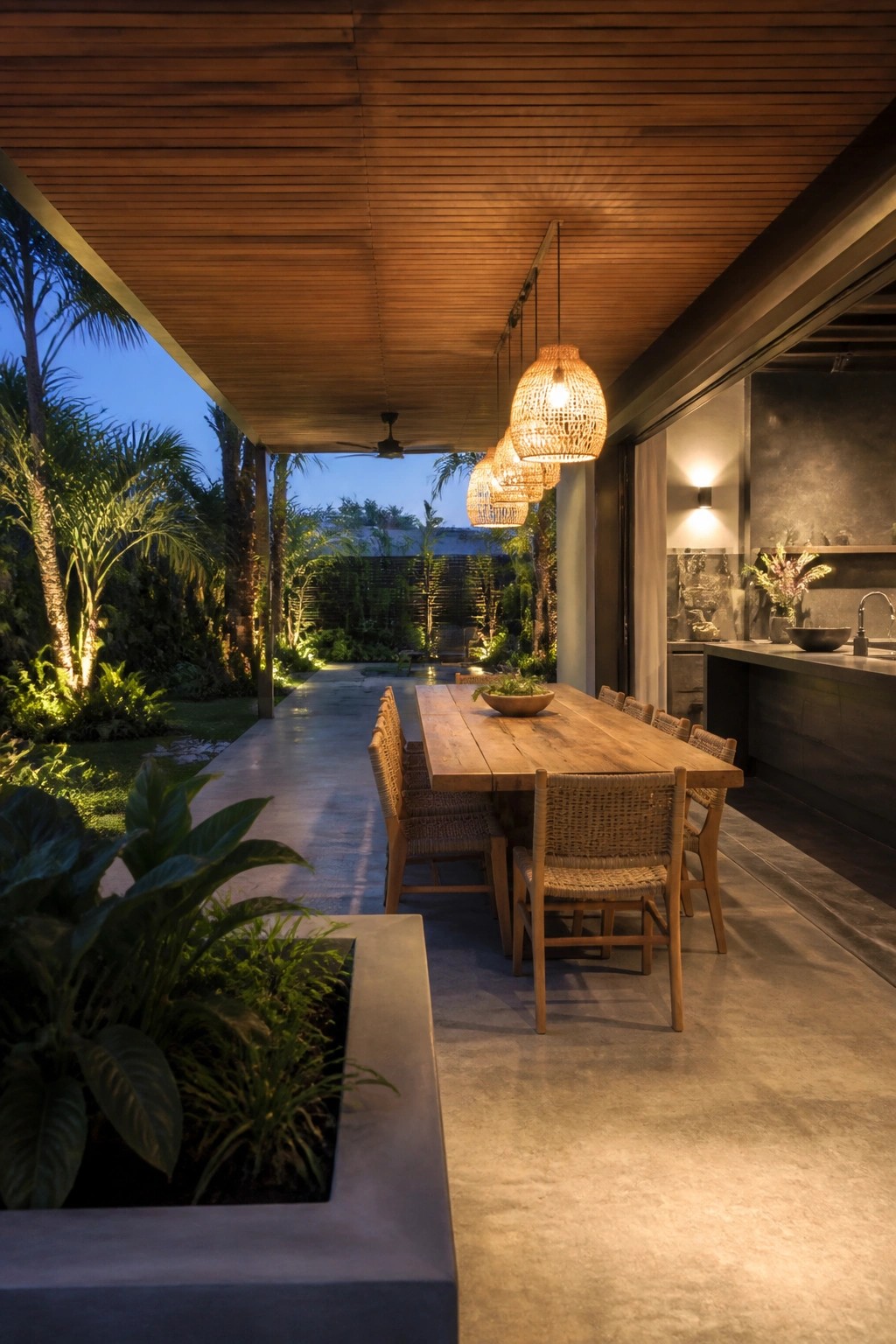
A covered breezeway with open sides gives you a place to eat outside without losing airflow. The long table fits neatly under the roof while the open ends let breezes pass through, which helps in warm tropical weather.
This setup suits homes where the garden sits close to the main living areas. Keep the sides clear of heavy walls or curtains so air can move freely, and use simple furniture that can handle some humidity.
Breezeways That Pull Air Through The House
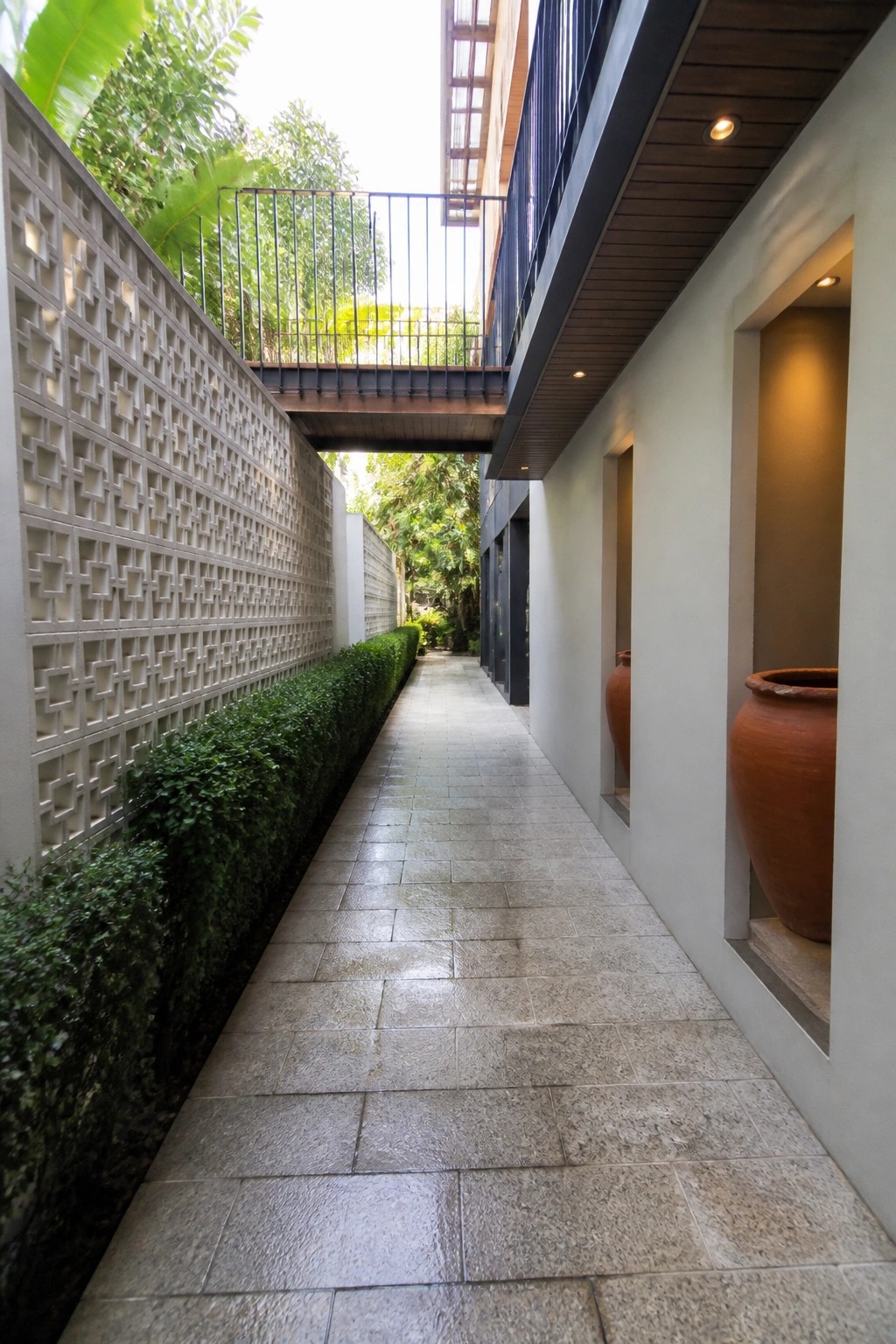
A breezeway works best when it stays narrow and open at both ends. This lets air move straight through instead of getting trapped, which is especially useful in warm climates where you want steady airflow without running fans all day.
Place the breezeway between main living areas or along the side of the house so it connects indoor rooms to the outdoors. Add a patterned screen wall and some low planting along one side to filter light and keep the path from feeling too exposed while still letting the breeze pass.
Breezeways With Ponds For Natural Cooling
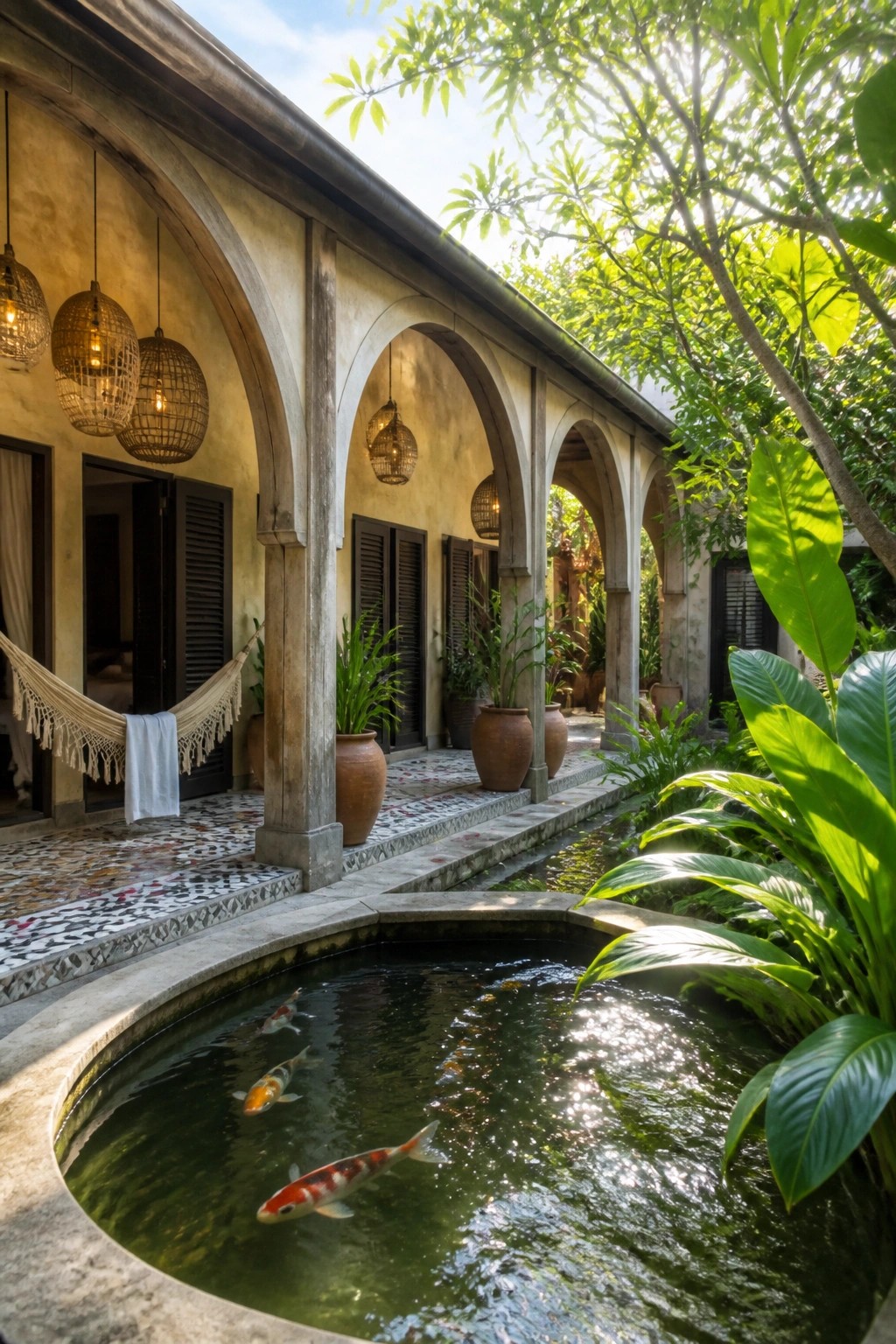
A breezeway works best when it stays comfortable on its own, and adding a narrow pond along one side helps pull cooler air through the space. The running water creates a slight evaporative effect while the open arches let breezes move freely from one end to the other. This setup turns the walkway into more than just a connector between rooms.
Place the pond on the side that catches prevailing winds so the air passes over the water before reaching living areas. It suits tropical homes that need steady airflow without relying on mechanical cooling. Keep the pond shallow and the edges simple so maintenance stays low and the focus stays on air movement rather than decoration.
Adding Privacy With Slatted Screens
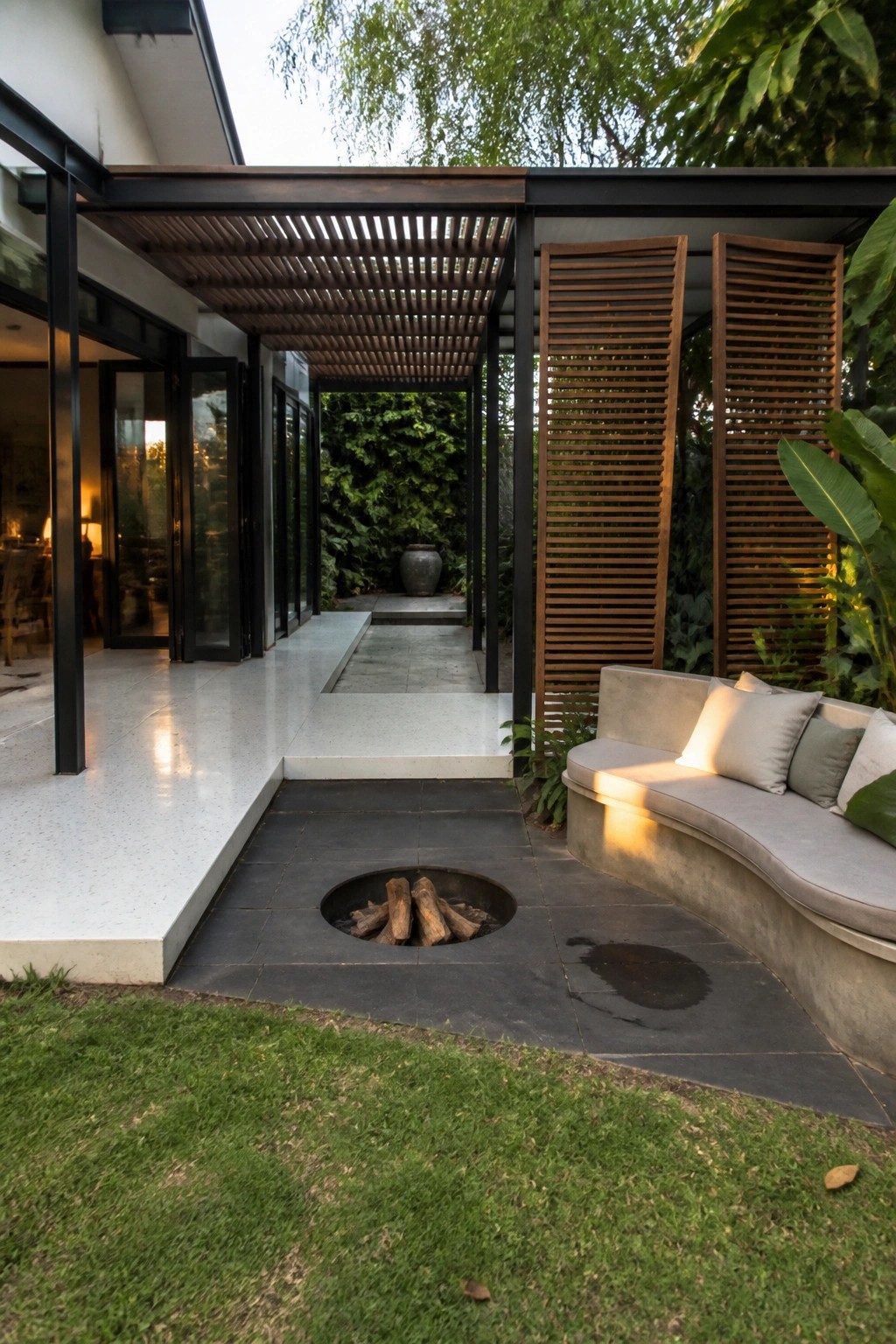
Slatted wood screens work well in outdoor living areas because they block direct views without stopping airflow. In this setup the vertical panels sit beside the seating zone and still let the breeze move through the space toward the garden path.
They suit tropical homes that need shade and separation but want to keep the open feel. Place them along one or two sides of a patio or deck, and keep the gaps consistent so air can pass freely. Avoid making the screen too tall or dense or the area can start to feel closed in.
Central Breezeways That Improve Airflow
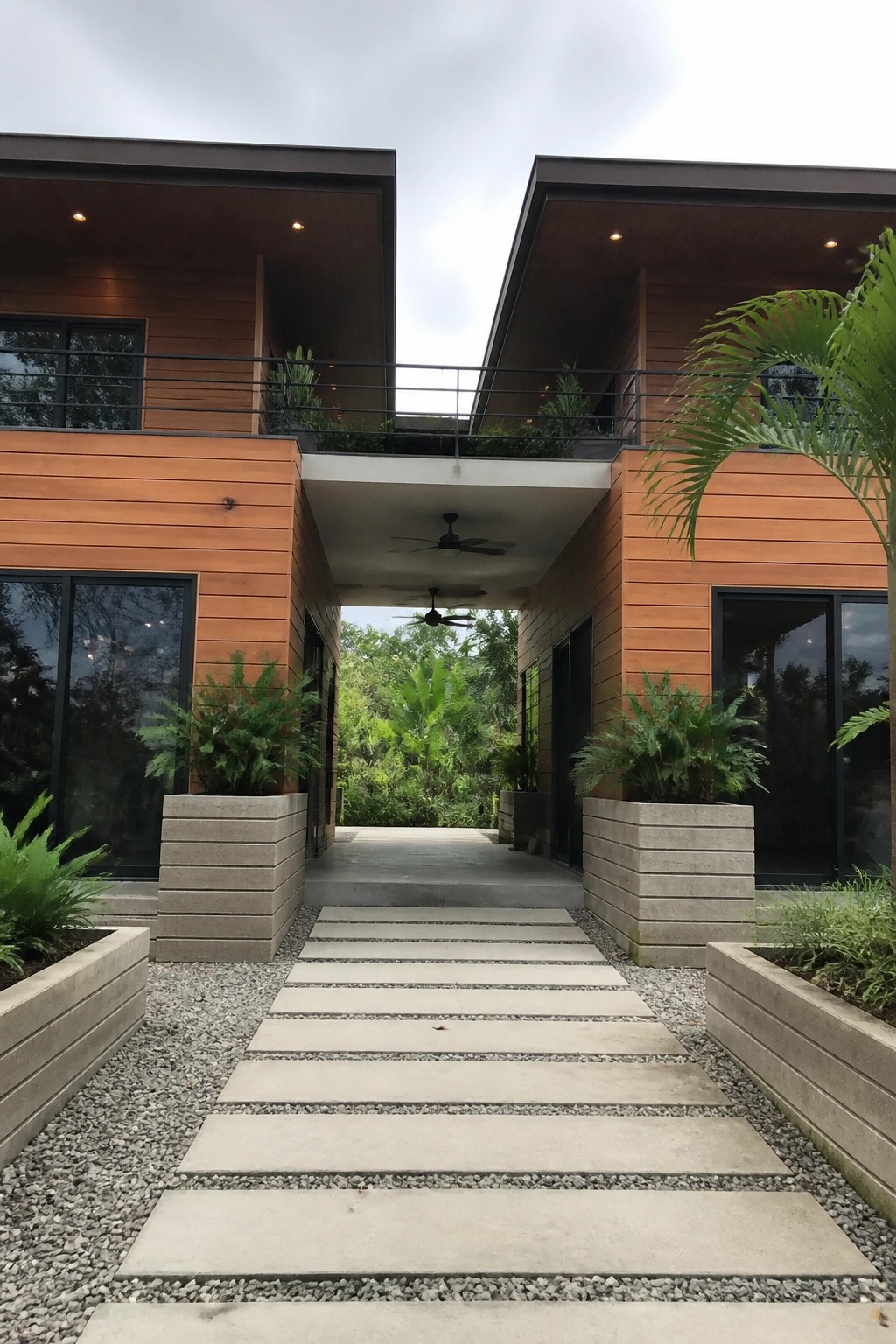
A breezeway running straight through the house helps move air across the full width of the building. In tropical climates this simple opening reduces the need for constant air conditioning by letting prevailing winds pass through.
The approach suits homes with rooms placed on both sides of the central path. Keep the sides fairly open and add ceiling fans along the passage so the space stays usable even on still days.
Breezeways That Lead Straight to the Garden
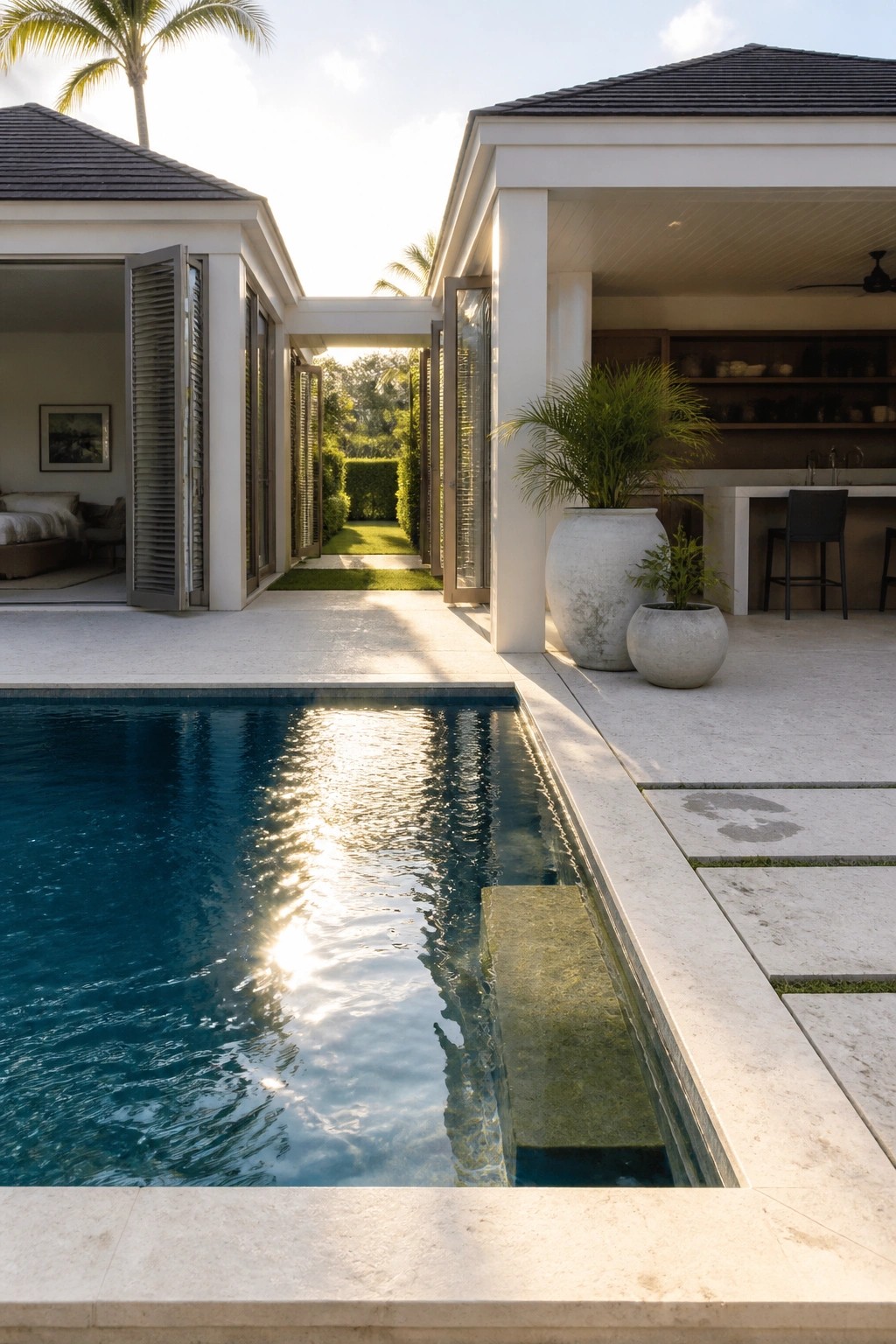
One useful way to improve airflow in a tropical house is to run a breezeway right from the main rooms out to the garden. The open doors and shutters let air move straight through without getting trapped, and the pool sits close enough to catch some of that breeze as well. This setup keeps the indoor spaces cooler during the day without relying only on fans or air conditioning.
It works best on homes where the pool and garden sit on the same side, so the passage can stay wide and mostly open. Keep the doors simple to operate and avoid adding too many plants right in the path, since they can block the flow. A layout like this suits smaller lots where you want the pool area to feel connected rather than closed off.
Elevated Walkways For Cross Ventilation
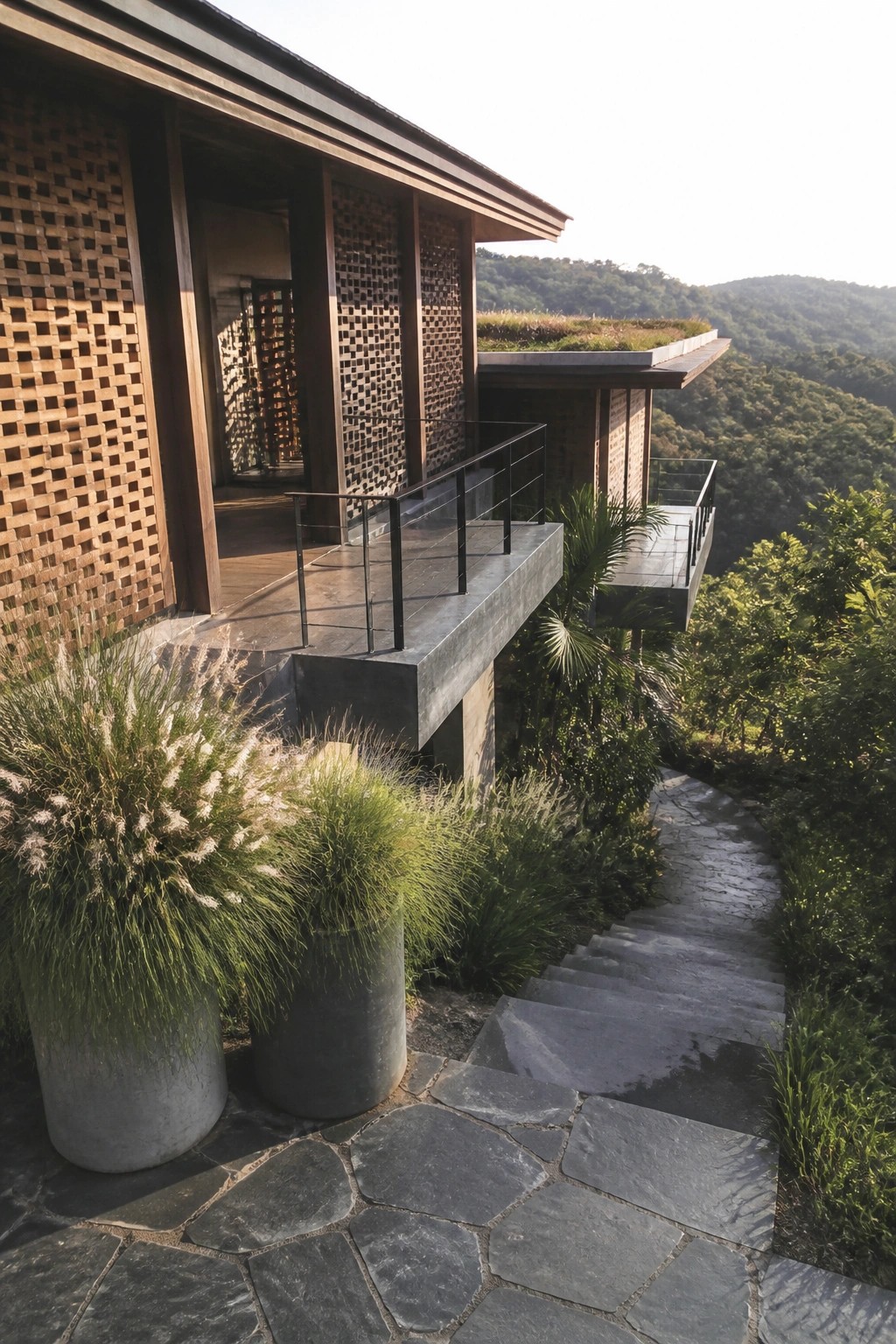
These walkways sit on concrete supports and extend out from the house walls. They keep air moving past the living areas instead of letting it get blocked by solid construction.
They suit homes on slopes or in warm climates where you want steady airflow without adding full rooms. Pair them with open railings and some screening on the house so the breeze can pass through easily.
Breezeways That Encourage Natural Airflow
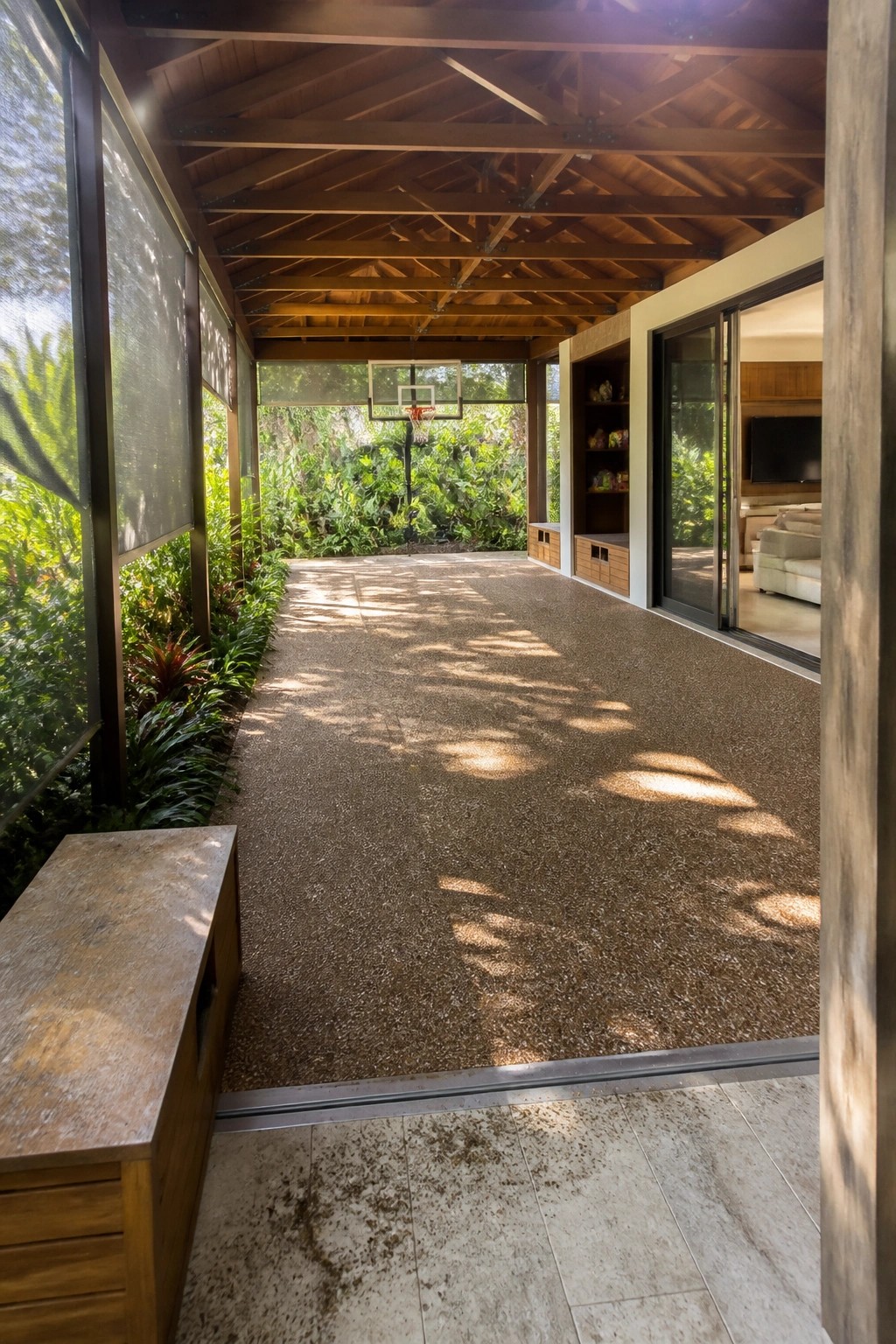
A breezeway works well in tropical homes because it creates a shaded path where air can move through without being trapped. The open sides and solid roof let wind pass while still giving protection from direct sun and rain.
This approach fits homes that already have good exposure to breezes and need a simple way to connect indoor rooms to the garden. It helps most when the breezeway runs in the same direction as the usual wind flow and when screens or partial walls are kept light so they do not block movement.
Open Bedroom Doors For Natural Air Flow
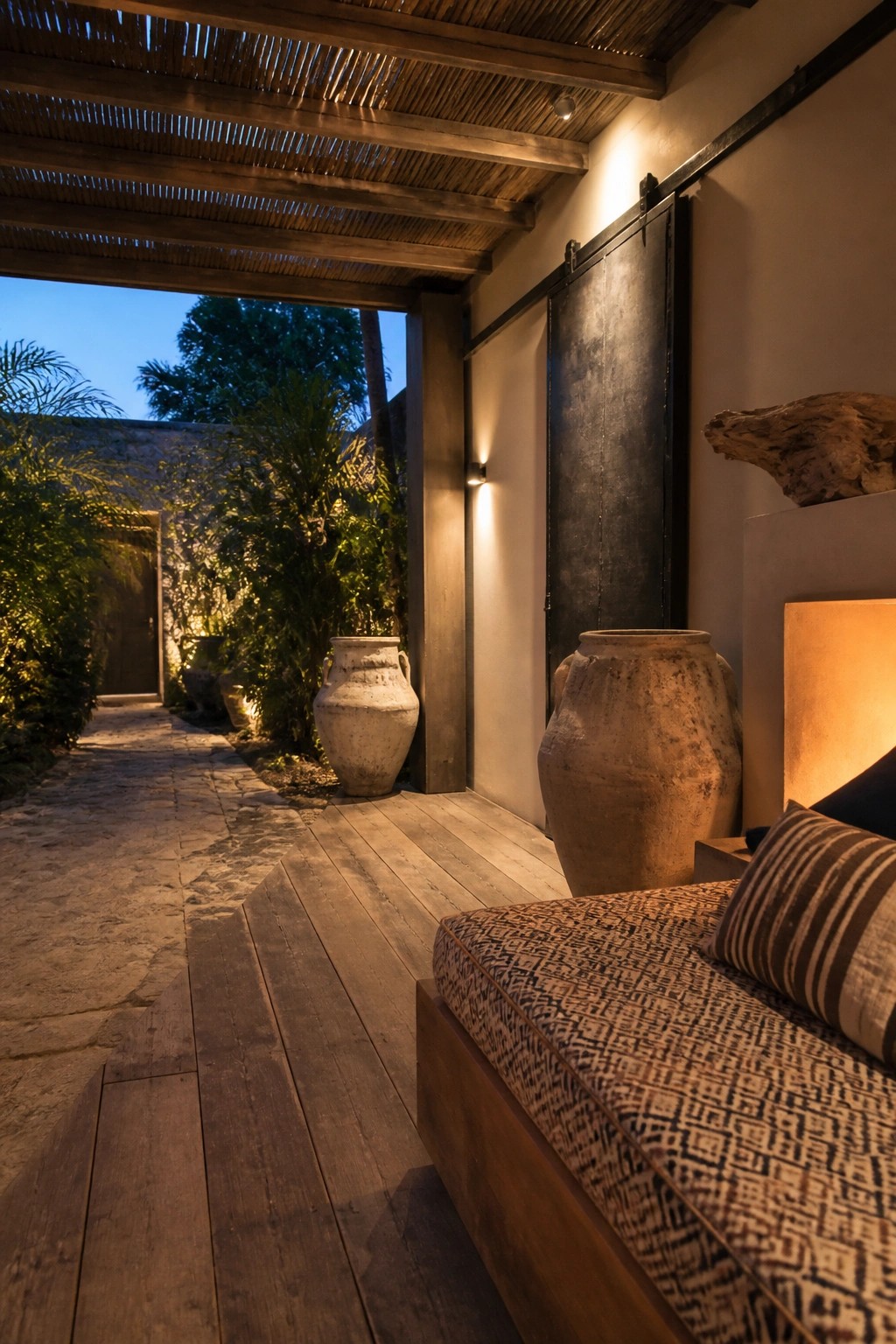
Placing the bed near a wide opening helps pull air through the room on warm nights. The direct link to the garden path keeps things cooler without needing extra fans or closed windows.
This works well in tropical homes where privacy is already handled by the surrounding walls and plants. Keep the path clear and use simple pots to frame the opening so air moves easily from outside in.
Woven Screens Beside The Entry
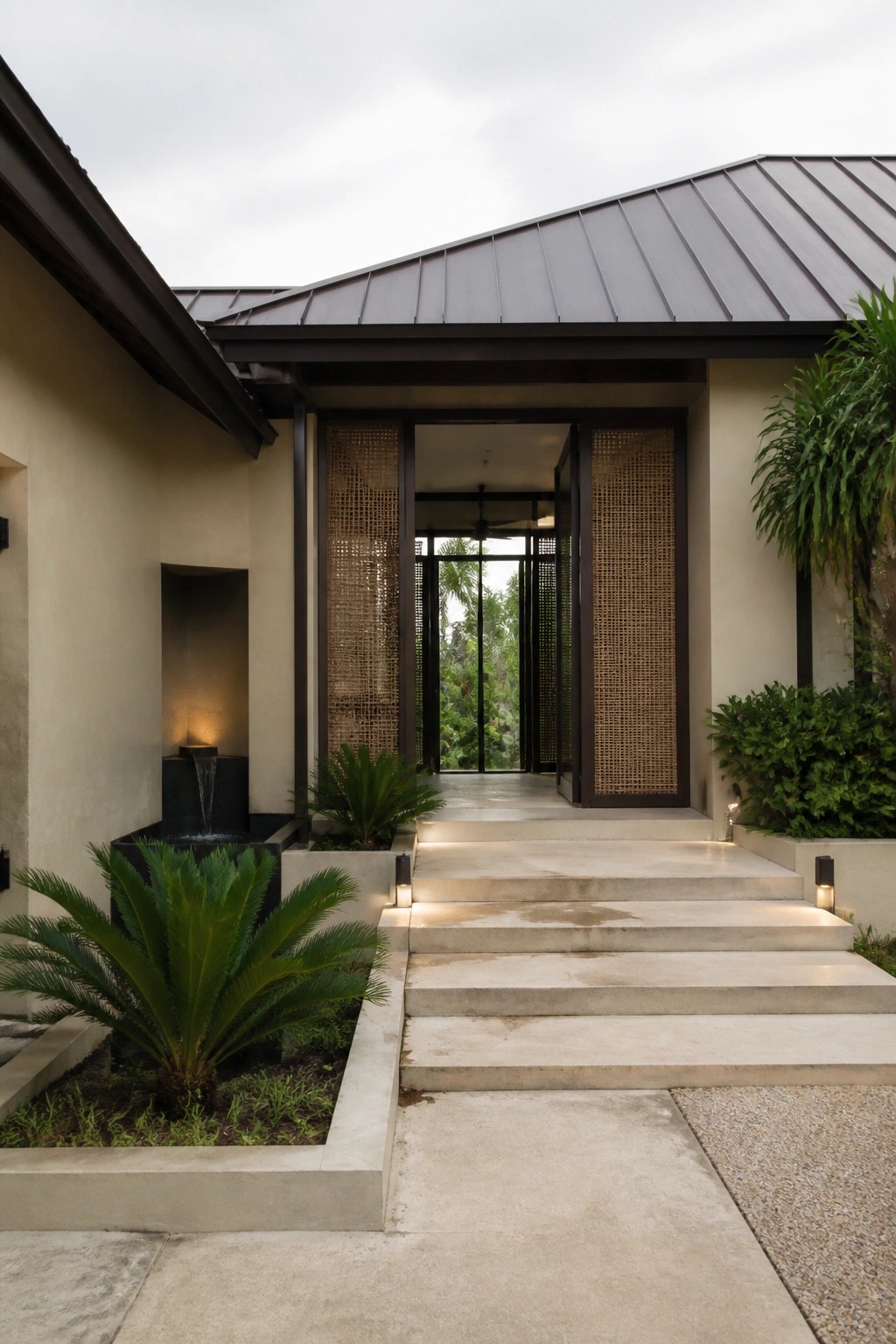
Many modern tropical homes use woven panels right next to the front doors so air can move through without leaving the space completely open. These screens cut down on direct sun and give a bit of privacy while still letting breezes pass into the house. The panels shown here sit on either side of the open doors and work with the wide entry to keep air flowing.
This approach works best on homes where the main door faces the prevailing wind. Place the screens on both sides of the doorway and keep the doors open during the day. It suits single-story houses in warm climates where you want some shade and privacy without adding solid walls that block ventilation.
Create a Breezeway for Better Airflow
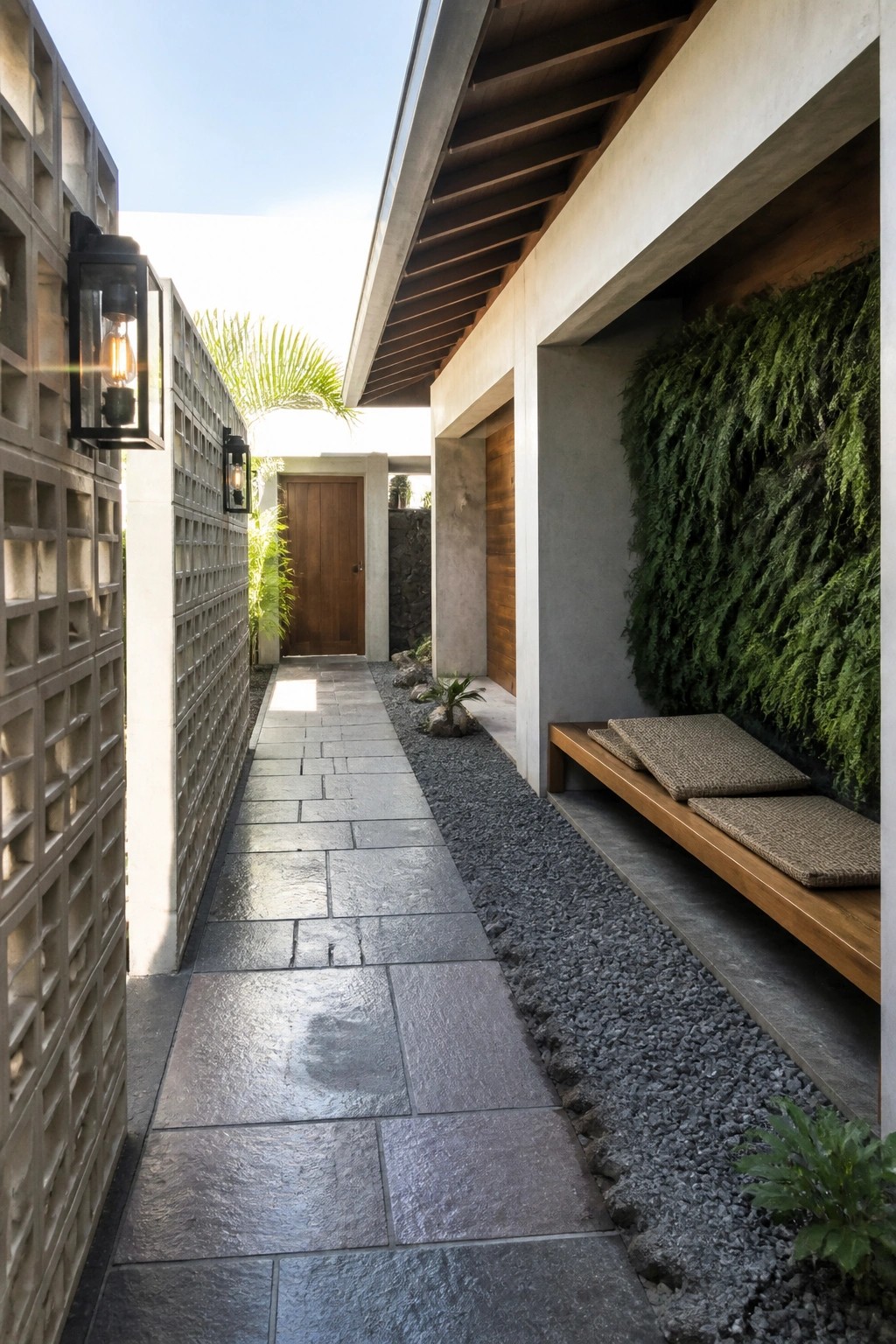
A breezeway helps move air through a tropical house without relying on mechanical cooling. The narrow open path keeps wind flowing between sections of the house and prevents heat from building up in enclosed spaces.
Place one along the side of the house using a gravel strip next to the path and a lattice block wall on one side. This setup works best on narrow lots where you need to link the front and back without closing off the breeze.
Add A Breezeway Along The Pool
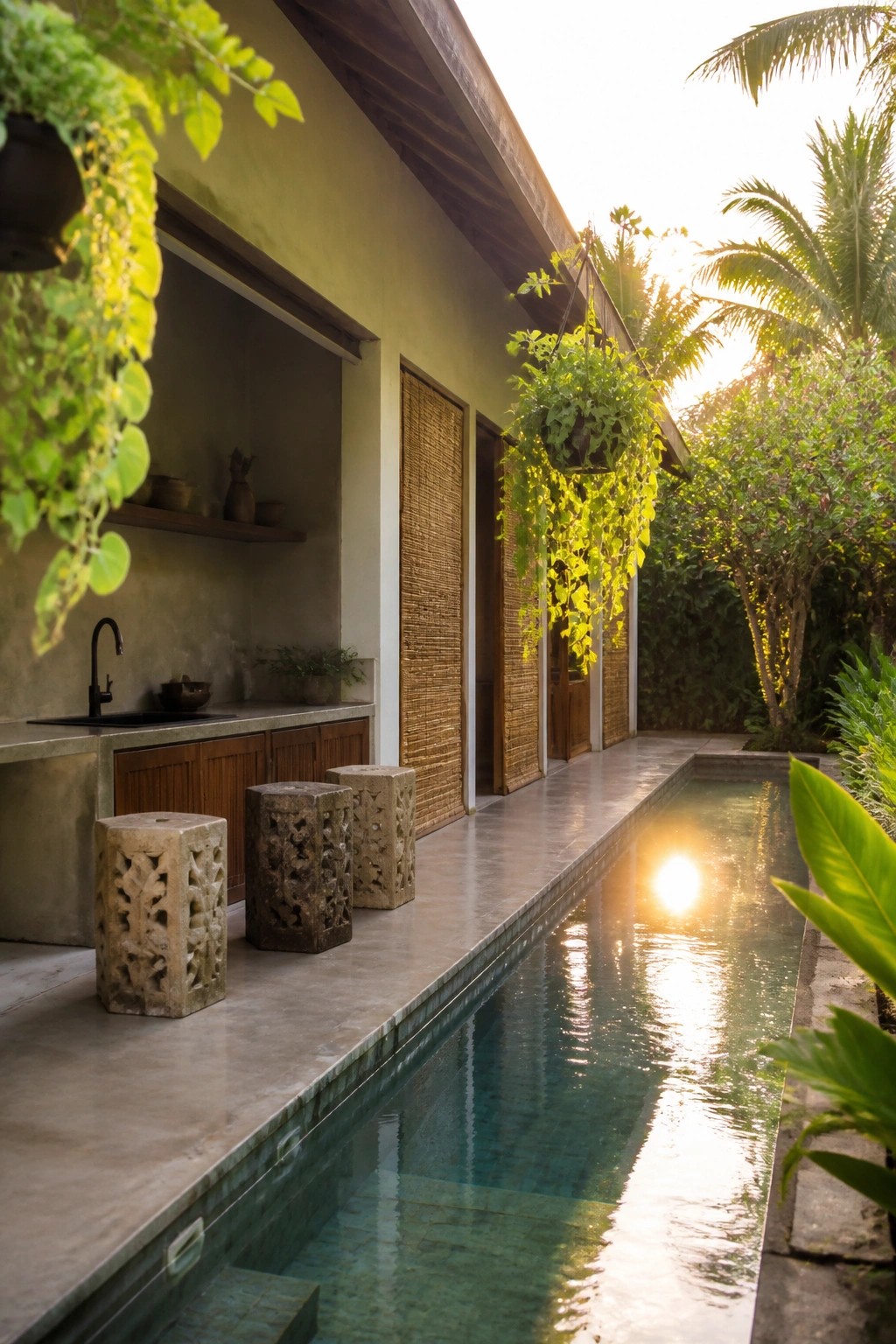
A breezeway running right beside the pool lets air move freely through the space. In tropical homes this setup keeps the walkway cooler and stops the pool area from feeling stuffy during the day.
Place the breezeway on the side that catches the main breeze. Keep the roof low and the sides open so wind can pass through without obstruction. This works especially well on narrow lots where the house and pool sit close together.
Breezeways That Help With Cross Ventilation
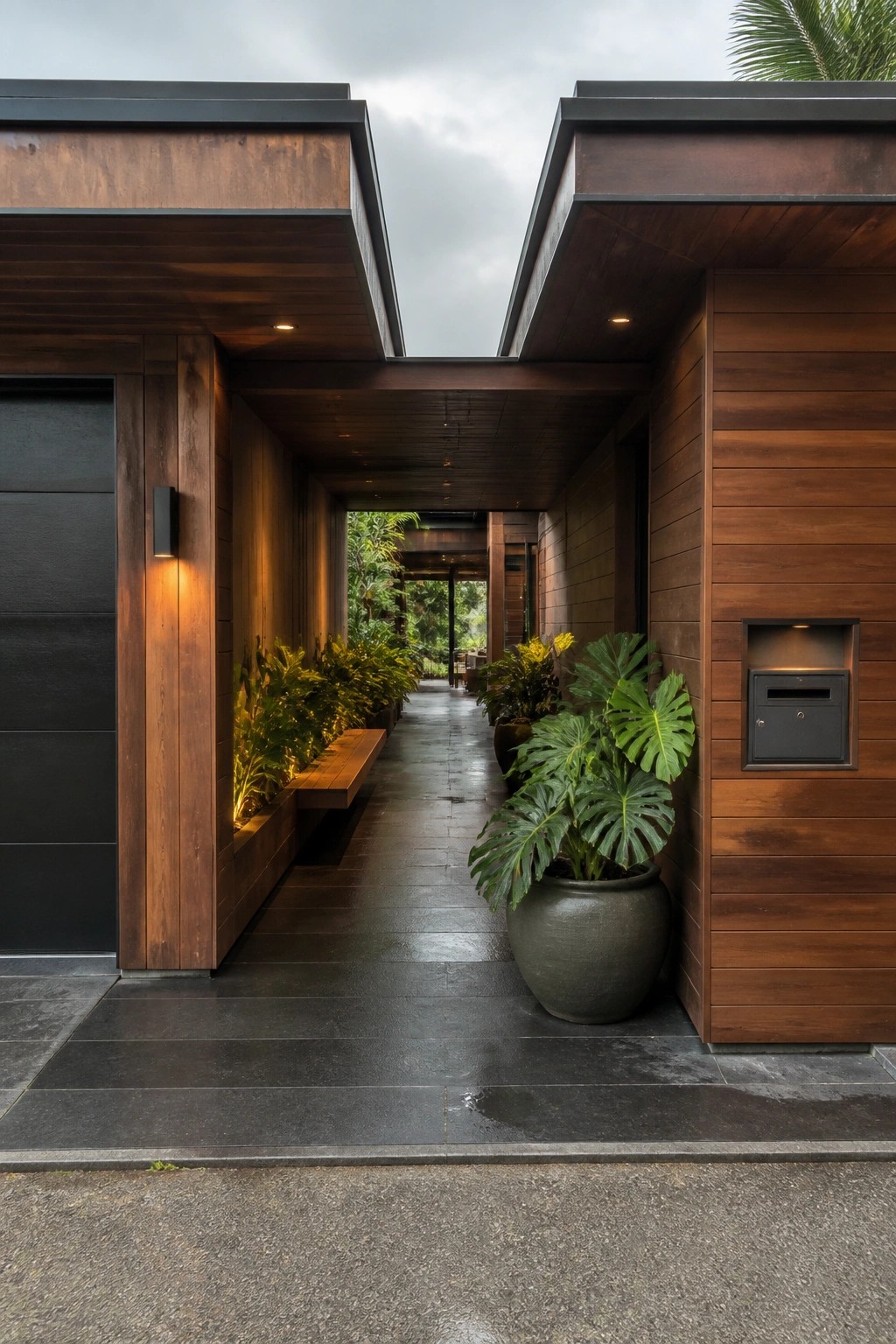
Many modern tropical homes add a breezeway to link separate sections of the house while letting air move straight through. The open ends and covered roof keep rain out but still allow breezes to pass from one side to the other without trapping heat.
This setup works best on homes with rooms on both sides of a central path. Keep the walkway fairly open and add only light planting along the edges so the air does not get blocked.
Run A Breezeway Down One Side
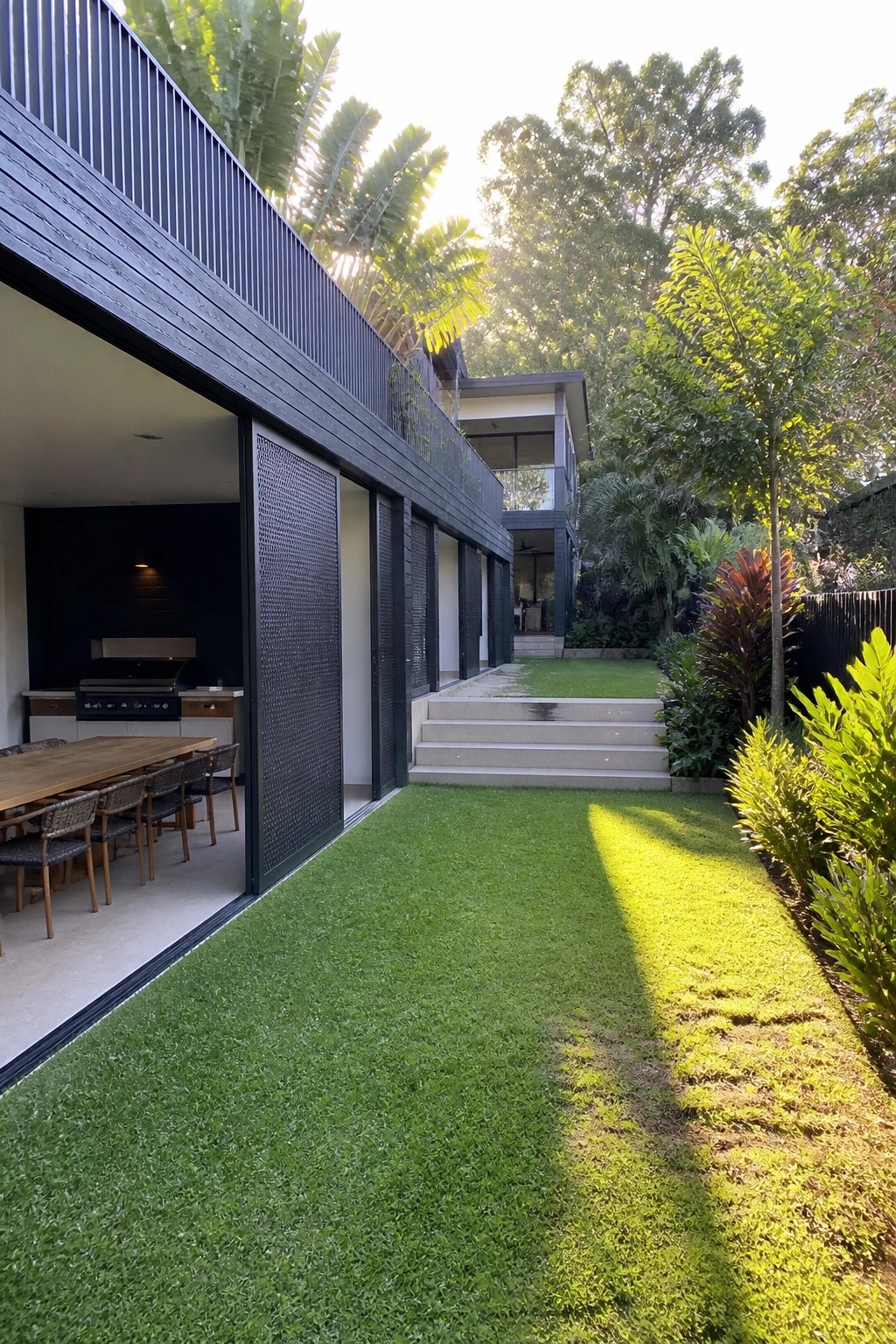
A long breezeway along the side of the house lets air move straight through while giving you usable outdoor space at the same time. The sliding screens can stay open on warm days or close partway when you want a bit more shade or privacy without blocking the flow.
This setup works best on homes with a clear side yard or garden edge. It turns what might have been just a walkway into a place for dining or sitting, and it helps pull cooler air across the main living areas behind it. Keep the screens simple and operable so the breeze stays the main feature.
Breezeways That Let Air Move Freely
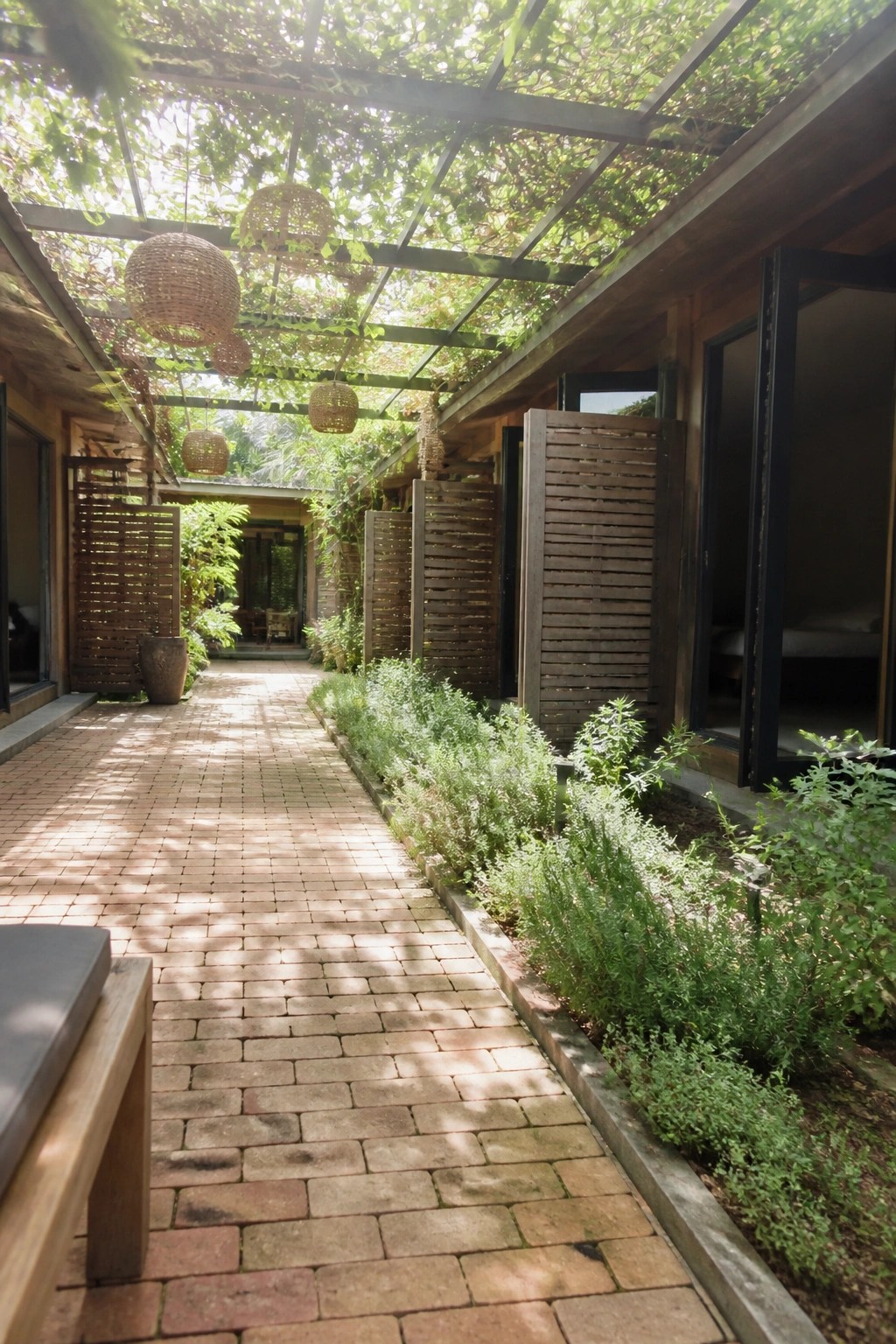
A breezeway works well in tropical homes because it stays open on the sides while still giving some cover from rain and sun. This layout pulls air through the house instead of letting it sit still between rooms.
Keep the path clear and add planting low along one edge so the breeze is not blocked. Brick paving holds up in wet weather and the simple overhead beams let vines grow without closing off the space.
Frequently Asked Questions
Q: How wide should a breezeway be to really pull air through the house?
A: Aim for at least eight feet across so the space feels open. Narrower ones still work but might not cool rooms as well on either side.
Q: Can I add a breezeway to an existing tropical home?
A: Yes if you have space between wings or along one side. Work with the roofline so water drains properly away from the house.
Q: What plants work best around breezeways without trapping humidity?
A: Choose tall palms or slender trees that let air move freely underneath. Low ground covers help too since they do not block flow at sitting height.
