

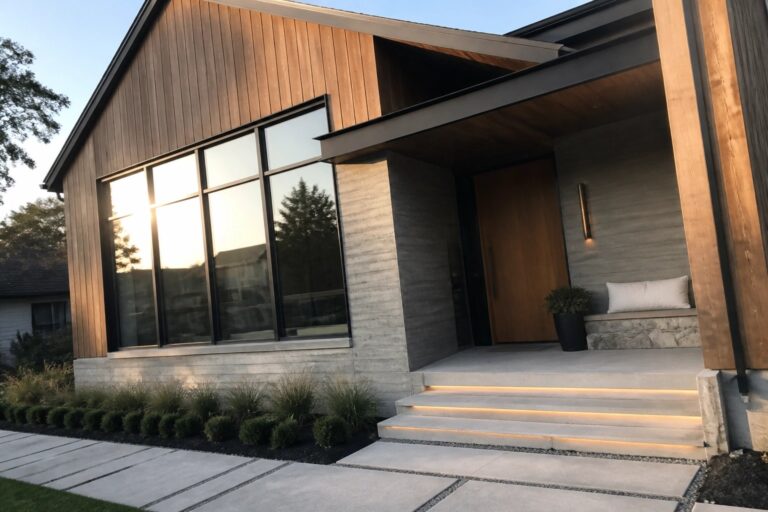
The front of any bungalow tends to shape first impressions more than most people realize, especially when the design leans on expansive front glazing to open things up.
These windows can make the exterior feel more contemporary while also affecting how the entry sequence works for daily arrivals and departures.
I have noticed over the years that the best results come when the glazing is paired with materials that add texture and depth rather than leaving the face too smooth and flat.
Roof pitch and the way the windows sit within the wall plane both play quiet but important roles in keeping the overall look grounded and intentional.
Details like that decide whether the update feels lasting.
Floor-to-Ceiling Windows Next to the Entry
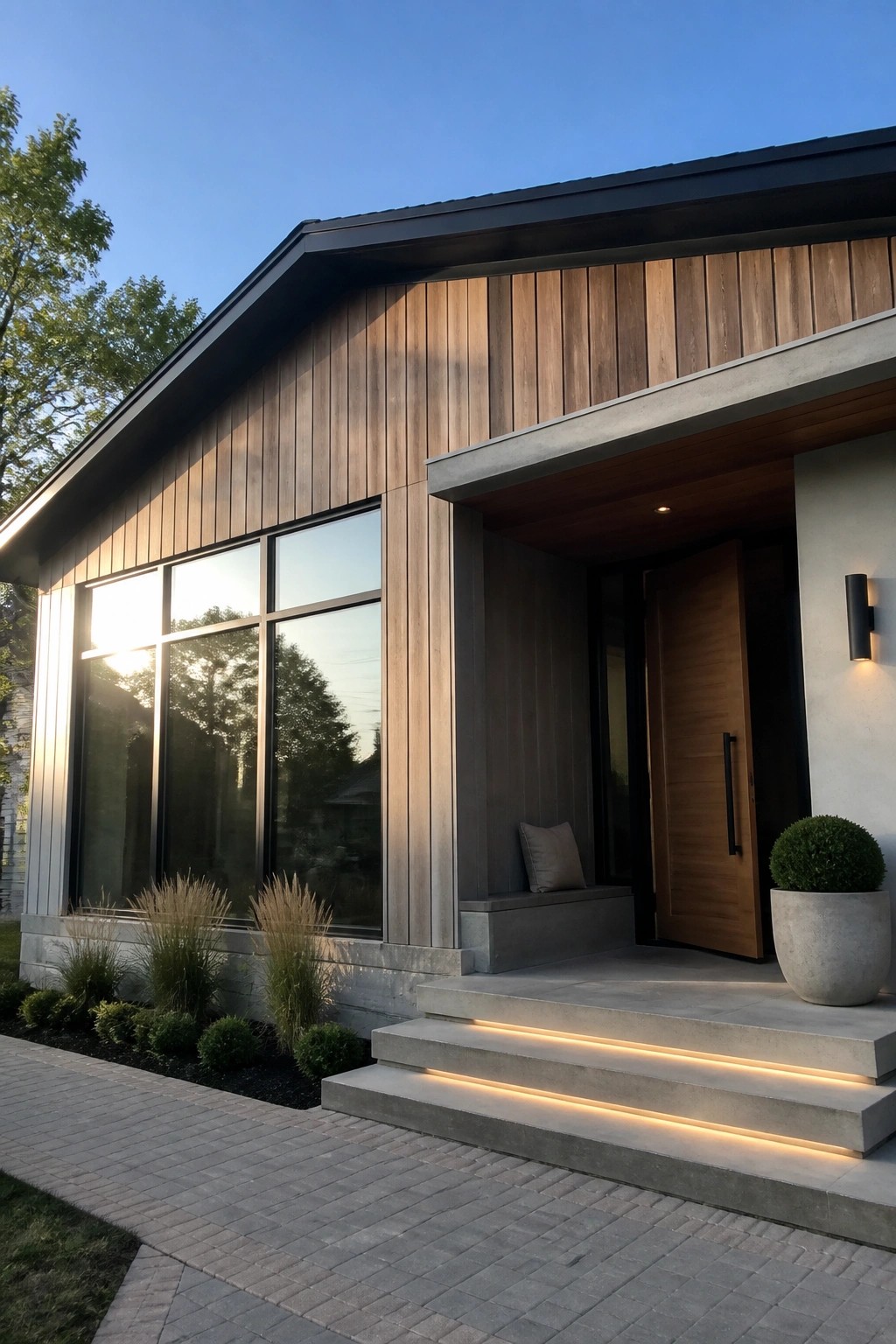
Many modern bungalows gain a lot from running tall windows right up against the front door. This setup pulls in steady daylight and gives the main rooms a direct link to the outside without adding extra depth to the house.
It works best on homes where the front faces a garden or street trees. Keep the siding and door materials simple so the glass does not overwhelm the scale of the facade.
Full Height Glazing at the Entry
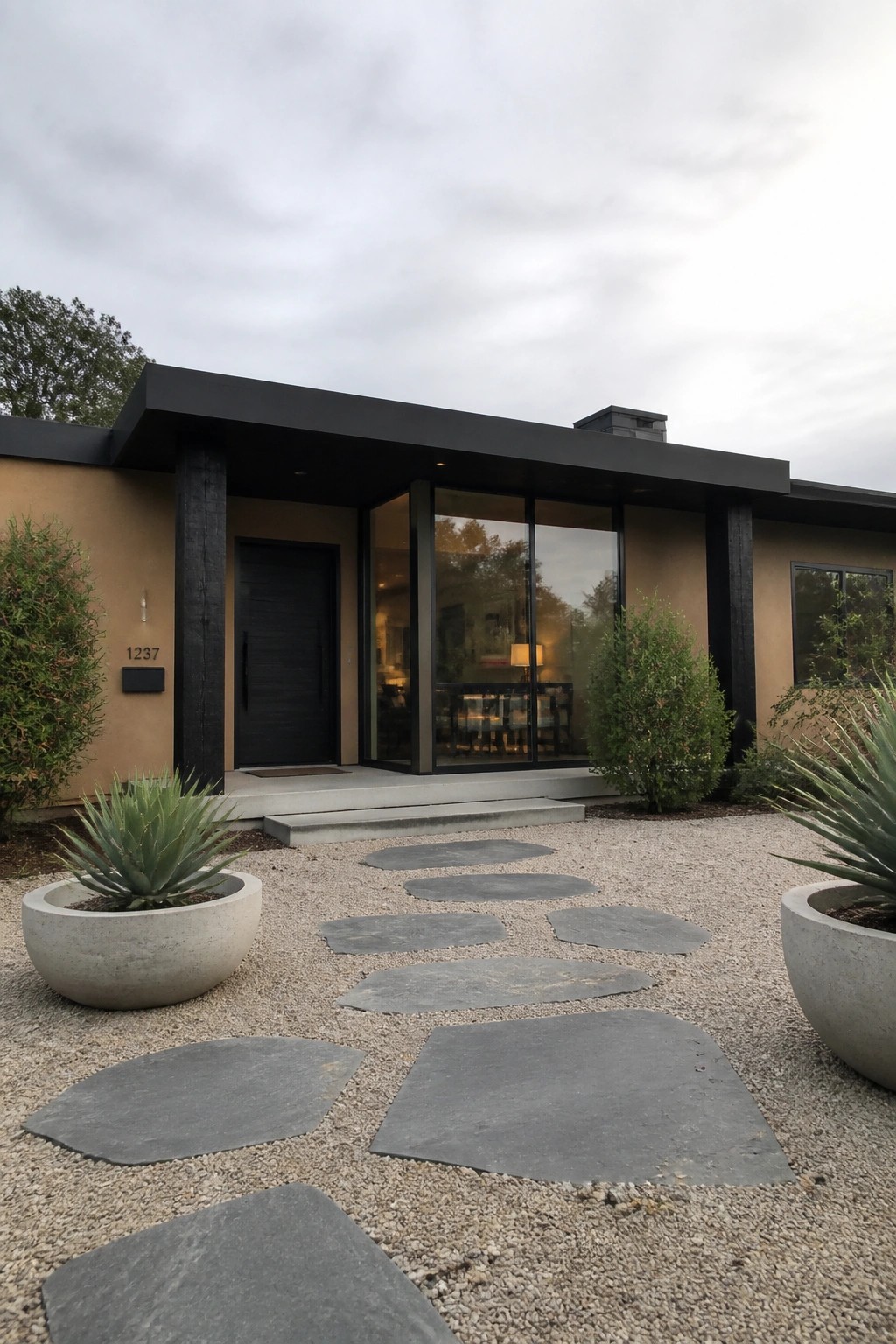
Large glass panels right beside the front door give a modern bungalow a lighter and more open feel. The tall panes let light reach deeper into the house during the day and make the entry feel connected to the front yard without adding much extra detail.
This works best on single story homes with simple rooflines. Keep the frames dark and minimal so the glass stays the main feature, and add a few low plants or a gravel path to lead people up without blocking the view.
Full Height Glazing With A Covered Porch
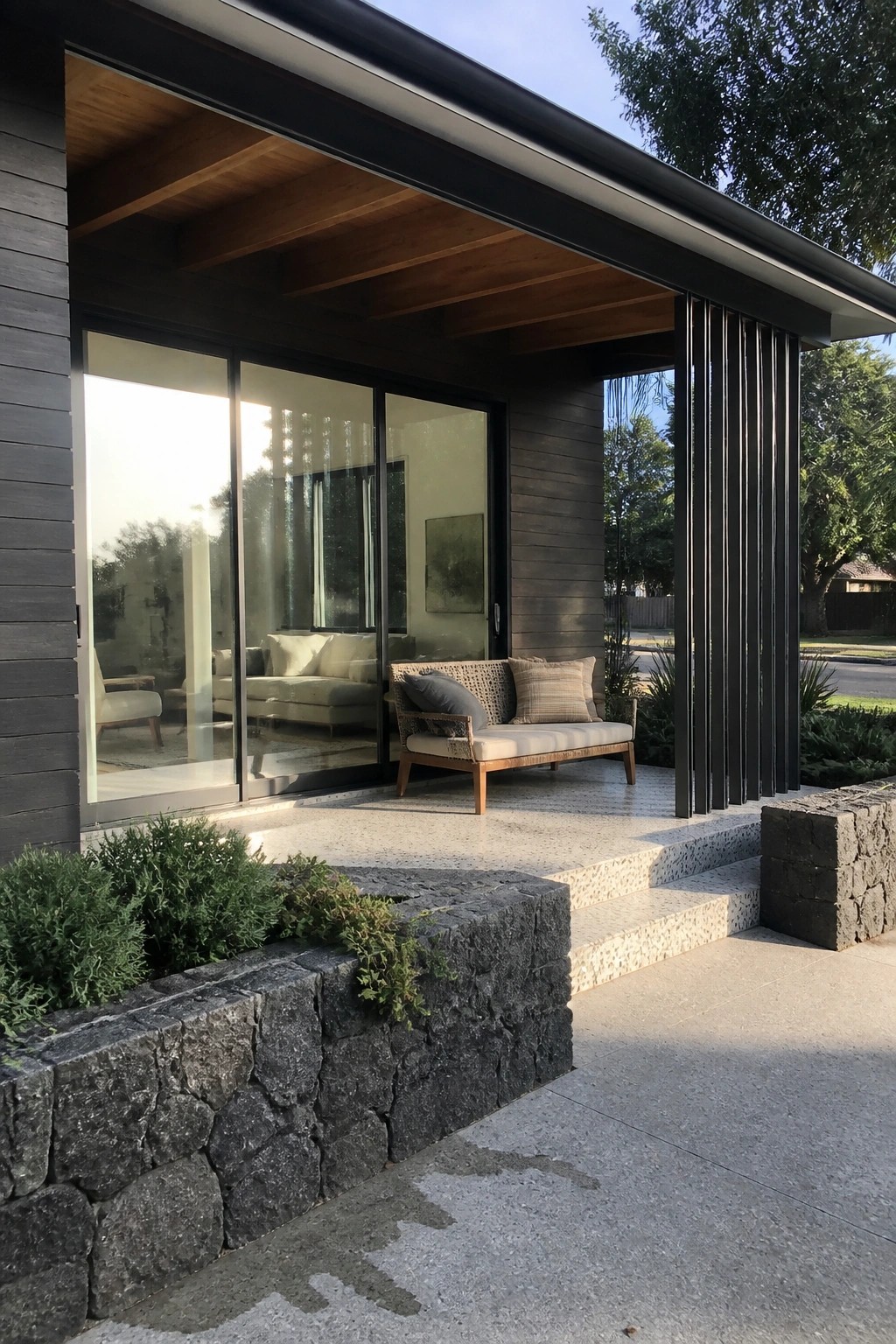
Many modern bungalows gain a lot from running glass from floor to ceiling across the front. It opens the living areas to the street view without making the house feel exposed, especially when the glass sits beside a sheltered spot for seating. The dark frame and wood ceiling overhead keep the look grounded rather than stark.
This setup works best on single story homes where the porch can run along part of the facade. Keep the glazing simple and let the covered area handle the transition to the outdoors. Stone edging and low planting help tie the whole front together without extra decoration.
Floor-to-Ceiling Glazing Across the Front
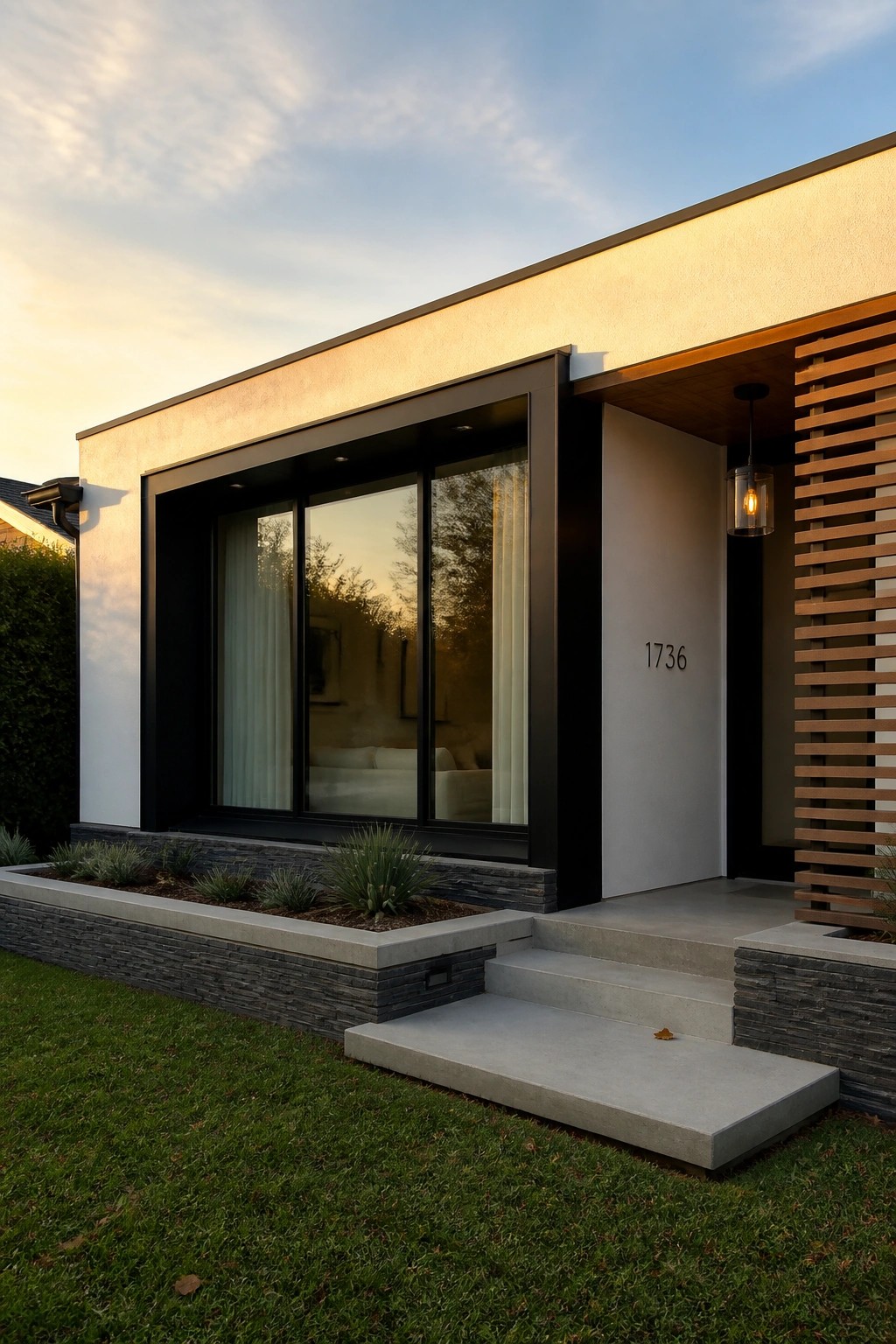
Many modern bungalows look stronger when the main living area gets full-height windows right on the facade. The glass brings in more daylight during the day and makes the front feel less closed off than older styles with smaller openings.
This approach works well on single-story homes that sit close to the street. Keep the frames dark so the glass reads as one big panel, and add simple curtains inside for privacy once the lights go on.
Floor To Ceiling Windows Open The Facade
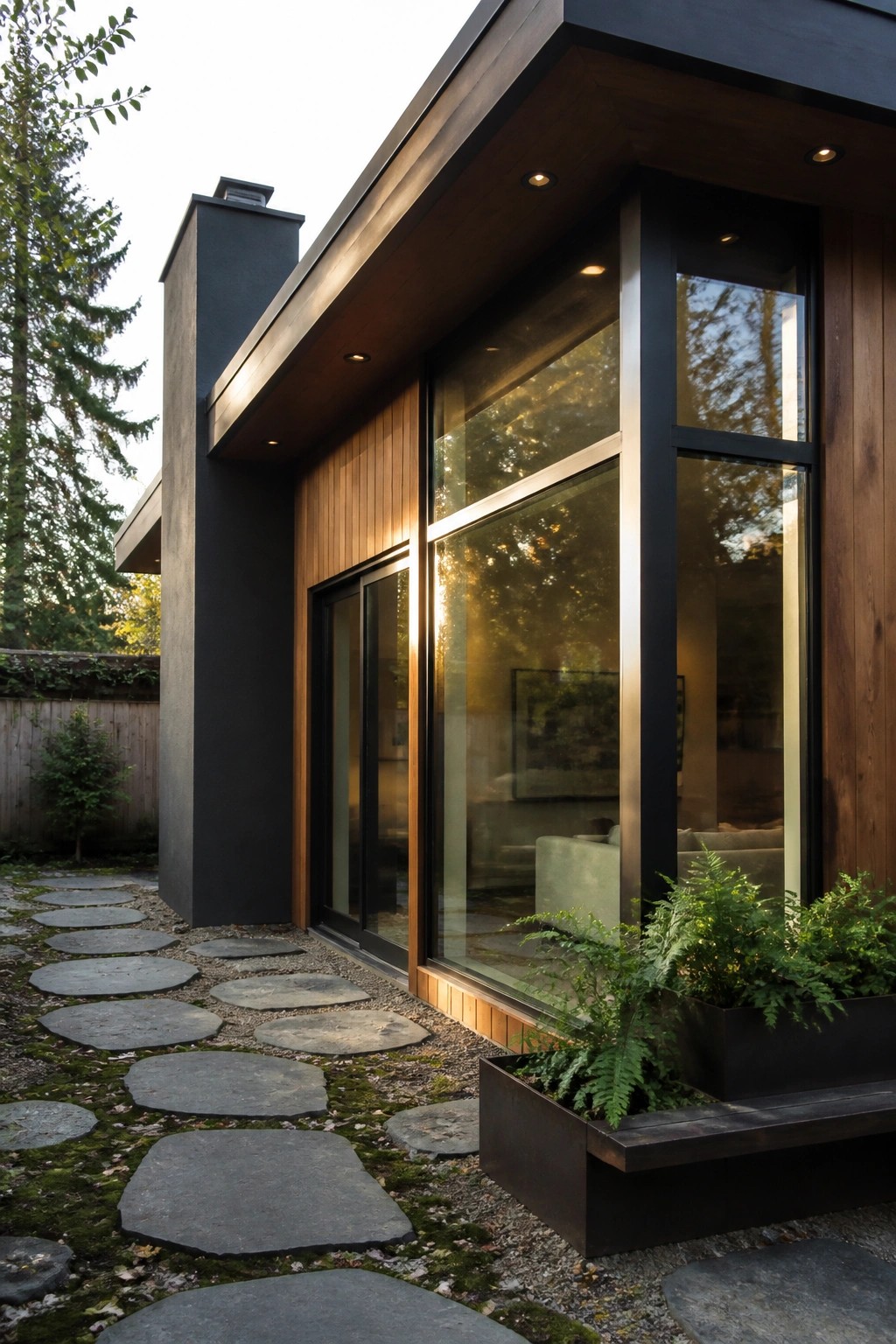
Large windows that run from floor to ceiling can make a bungalow feel much more open without adding extra height. They let light reach deep into the rooms and create a clear view from the path outside.
This approach suits low modern homes that want a clean look. Dark frames help the glass stand out against wood siding, and the windows work best when the interior stays simple so the view stays the focus.
Floor-to-Ceiling Glazing Beneath a Simple Overhang
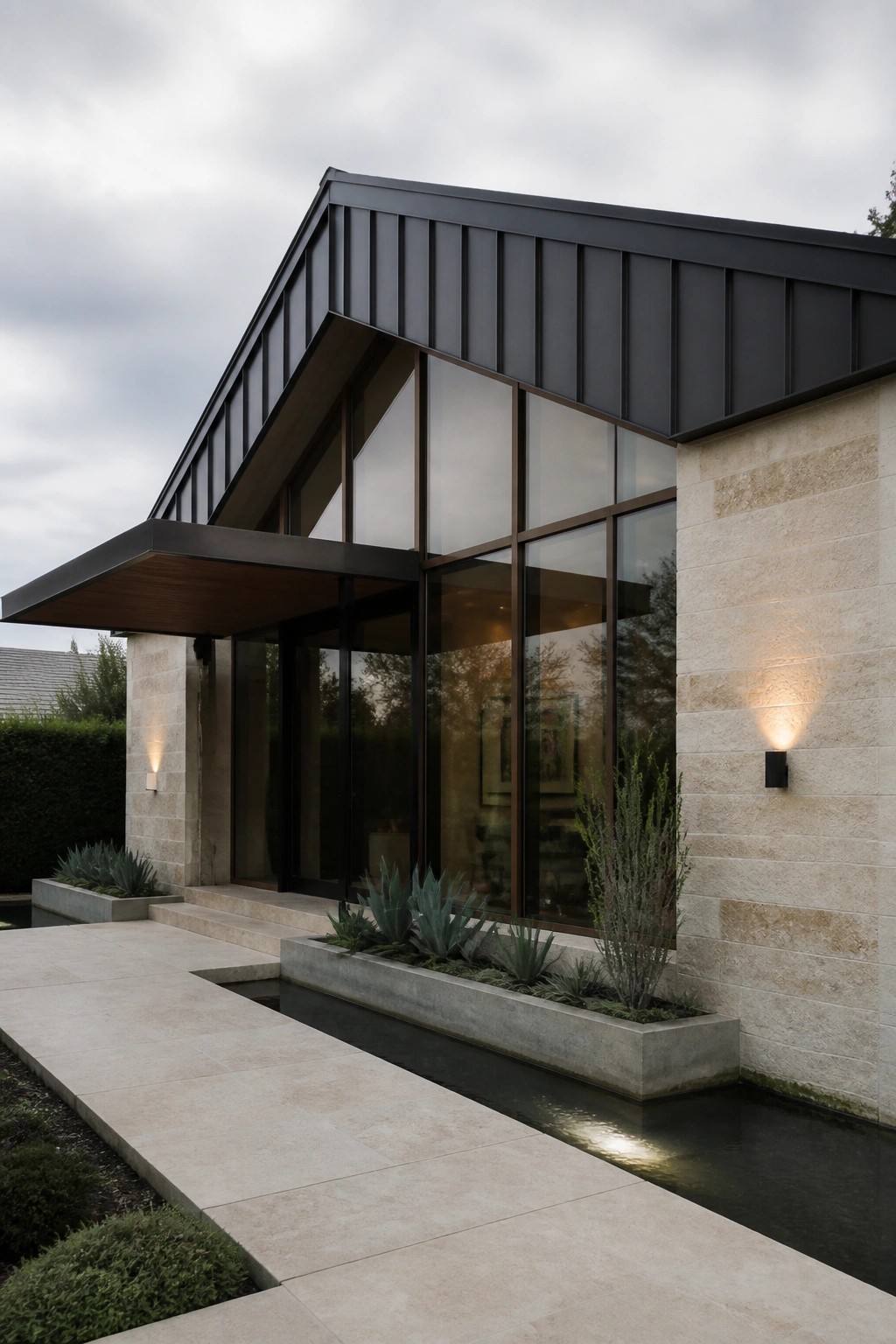
Many modern bungalows use full height windows right along the front to bring in more daylight and open the house to the yard. The glass sits under a simple overhang that gives some shade and helps define the entry without blocking the view.
This works best on homes with clean rooflines and a mix of materials like stone and metal. It suits smaller lots where you want the interior to feel connected to the outdoors, but check local sun angles so the space does not overheat in summer.
Floor To Ceiling Glazing On Bungalow Facades
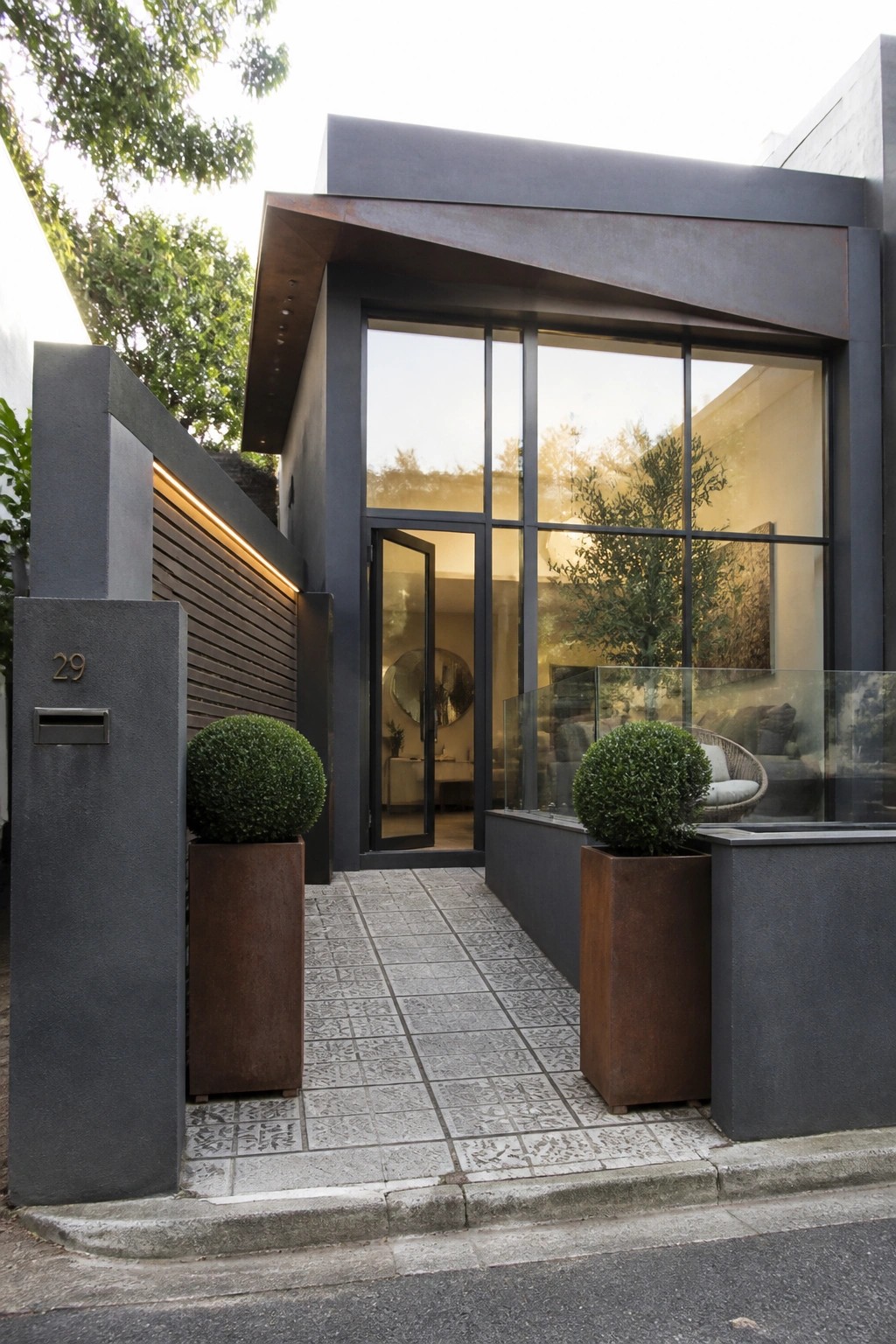
Many bungalows gain a lot from tall glass across the front because it lets light reach deep into the living areas and makes the small footprint feel bigger. The dark frames keep the look clean while the glass itself becomes the main feature instead of added decoration.
This works best on homes with a flat or low roofline and simple wall materials around the windows. Use it when the entry sits close to the street so the glazing can open the house visually without needing extra landscaping to soften the front.
Floor-To-Ceiling Windows Open The Front Facade
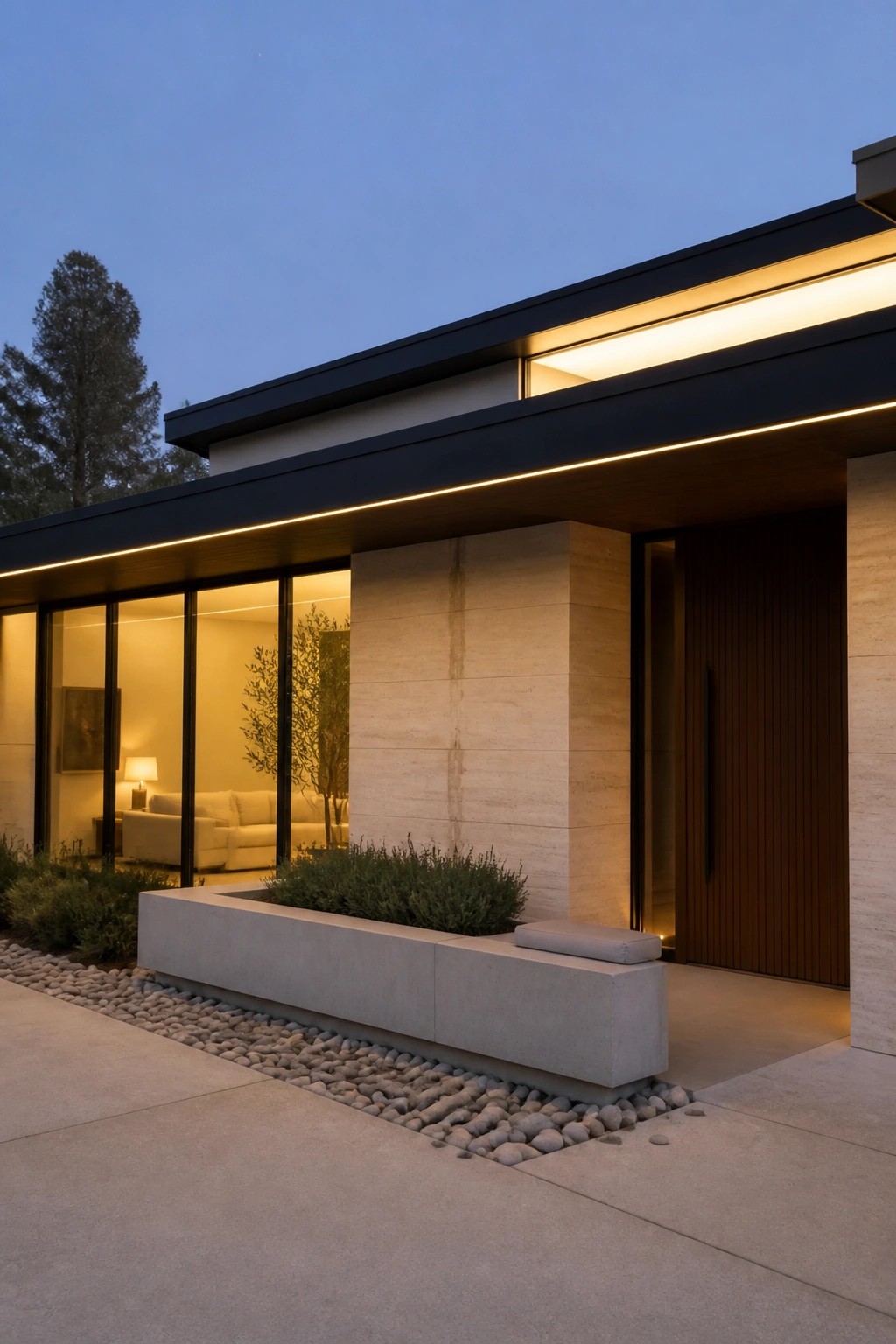
Many modern bungalows use floor to ceiling windows across the front to pull more light into the main living spaces and create a direct view from the street. This choice makes the house feel less closed off and gives it a simple, open presence without needing extra decoration.
It works well when the glass sits next to solid sections like stone walls or a wood door, so the facade does not feel too flat. The same approach suits homes with a deep roof overhang, since that provides some shade and keeps the interior from overheating during the day.
Floor-to-Ceiling Glazing for Sloped Bungalow Lots
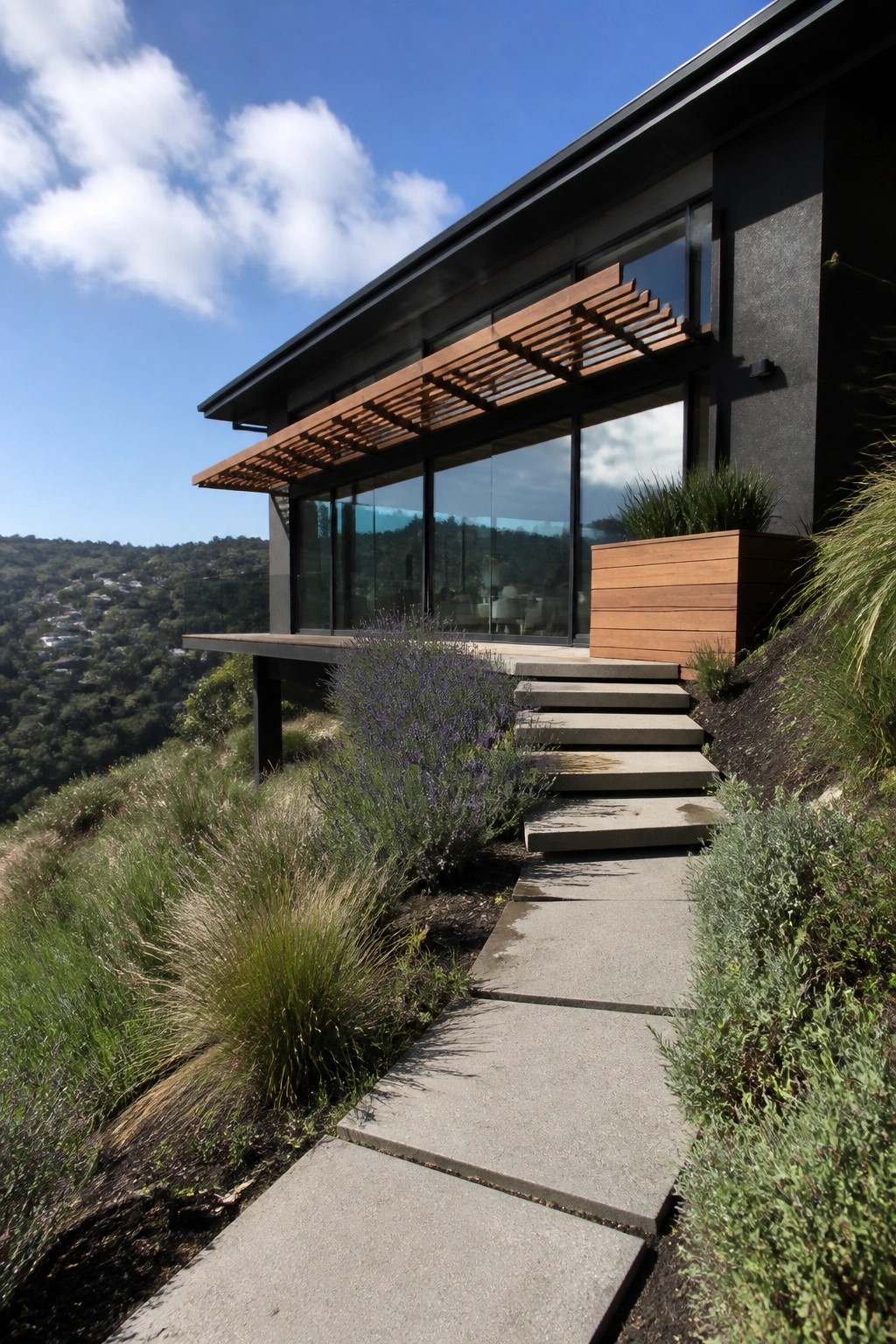
Large glass panels can turn a simple bungalow front into something much more open. They let light pour in and create a direct connection to the outdoors without needing extra decoration. The clean lines also keep the whole look modern rather than busy.
This approach works best on homes that sit on a slope or have decent views, since the glass can take advantage of the setting. Pair it with basic materials like wood accents or concrete steps so the windows stay the main feature. Just make sure the orientation gives some shade in hot months.
Floor To Ceiling Windows Open The Entry
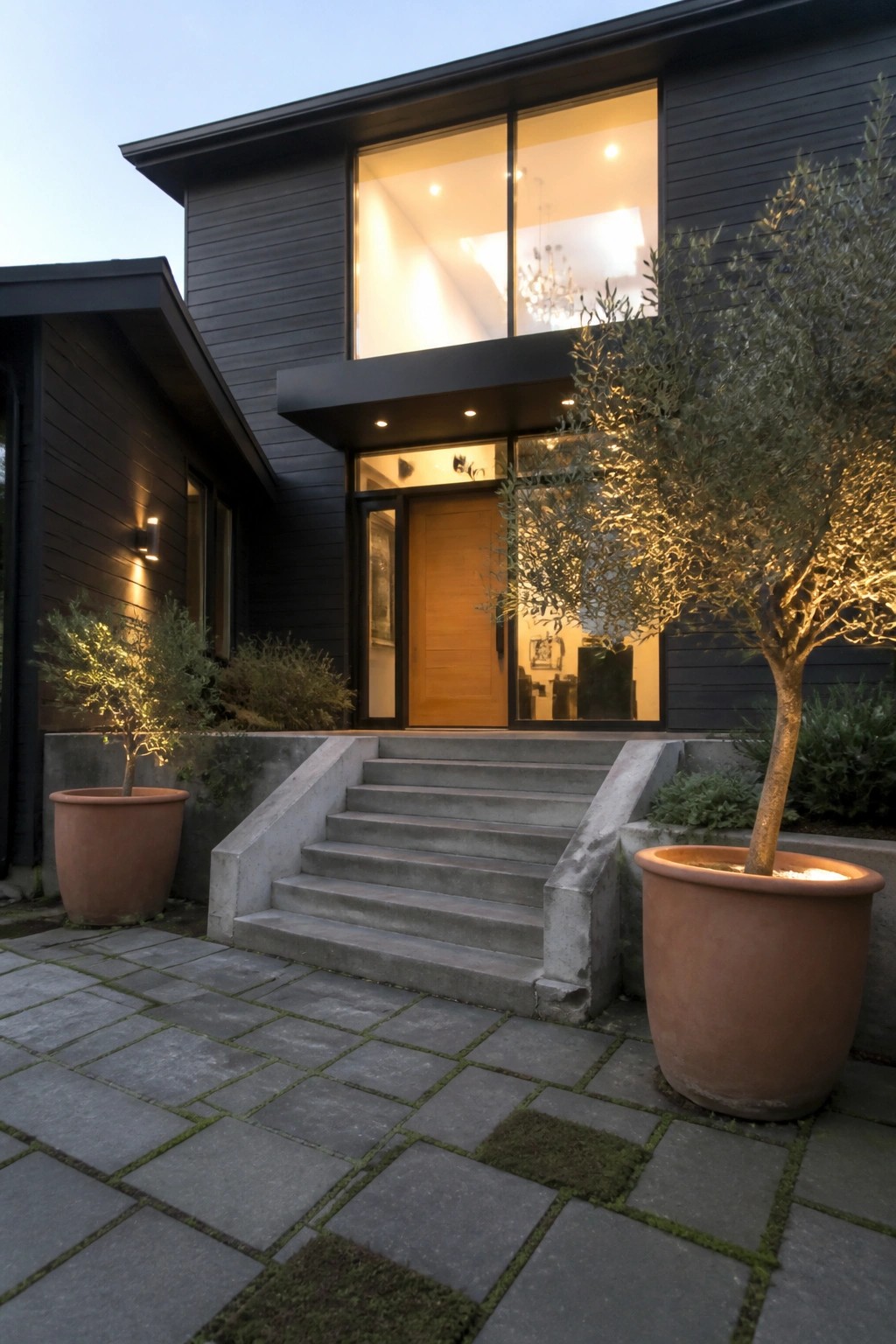
Large glass panels above the front door let plenty of light spill out at night and make the whole front of the house feel more welcoming. The dark siding helps the windows stand out without any extra trim or detail.
This approach works best on simple modern bungalows where the goal is to keep the facade clean while still giving the entry a strong presence. It suits homes that sit close to the street and need that extra bit of visual weight to feel grounded.
Vertical Wood Slats With Large Windows
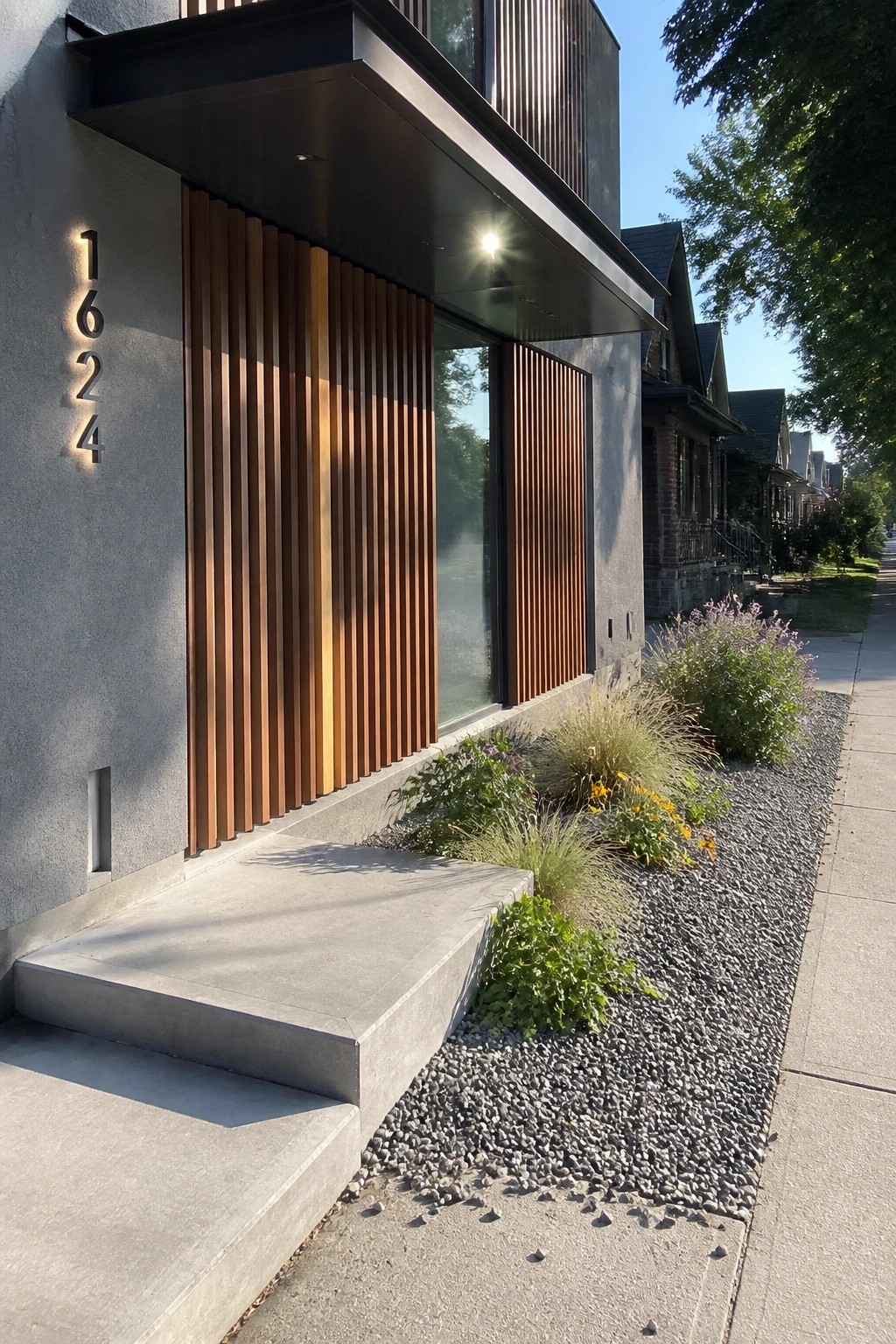
Vertical wood slats give a modern bungalow facade some texture and a bit of screening while still letting plenty of light through the glass. They break up the wall without making the front feel closed off, and they work especially well when placed right next to big windows.
This look suits homes that want a clean, simple exterior but still need some visual weight and privacy from the street. It pairs best with smooth materials like concrete or dark metal trim, and it tends to feel more balanced when the wood is used in a single strong vertical block rather than scattered around.
Floor To Ceiling Glazing At The Entry
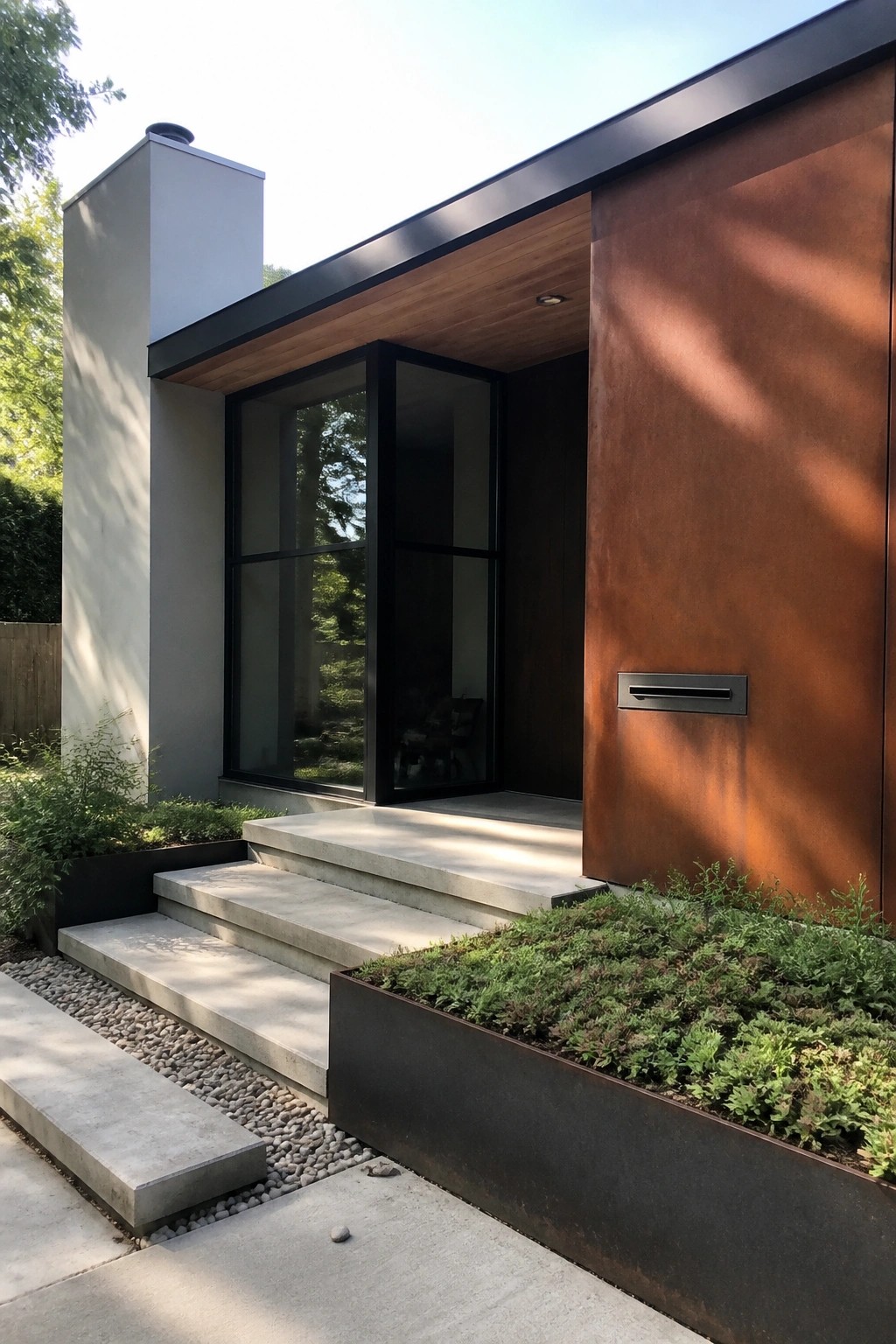
Large glass panels right at the front make a small modern house feel more open from the street. They pull light deep into the main rooms and give a direct view outside without needing extra windows elsewhere.
This approach works best on bungalows with simple rooflines and clean siding. Keep the frames dark and minimal so the glass stays the main feature and does not compete with other materials on the facade.
Floor To Ceiling Glass At The Entry
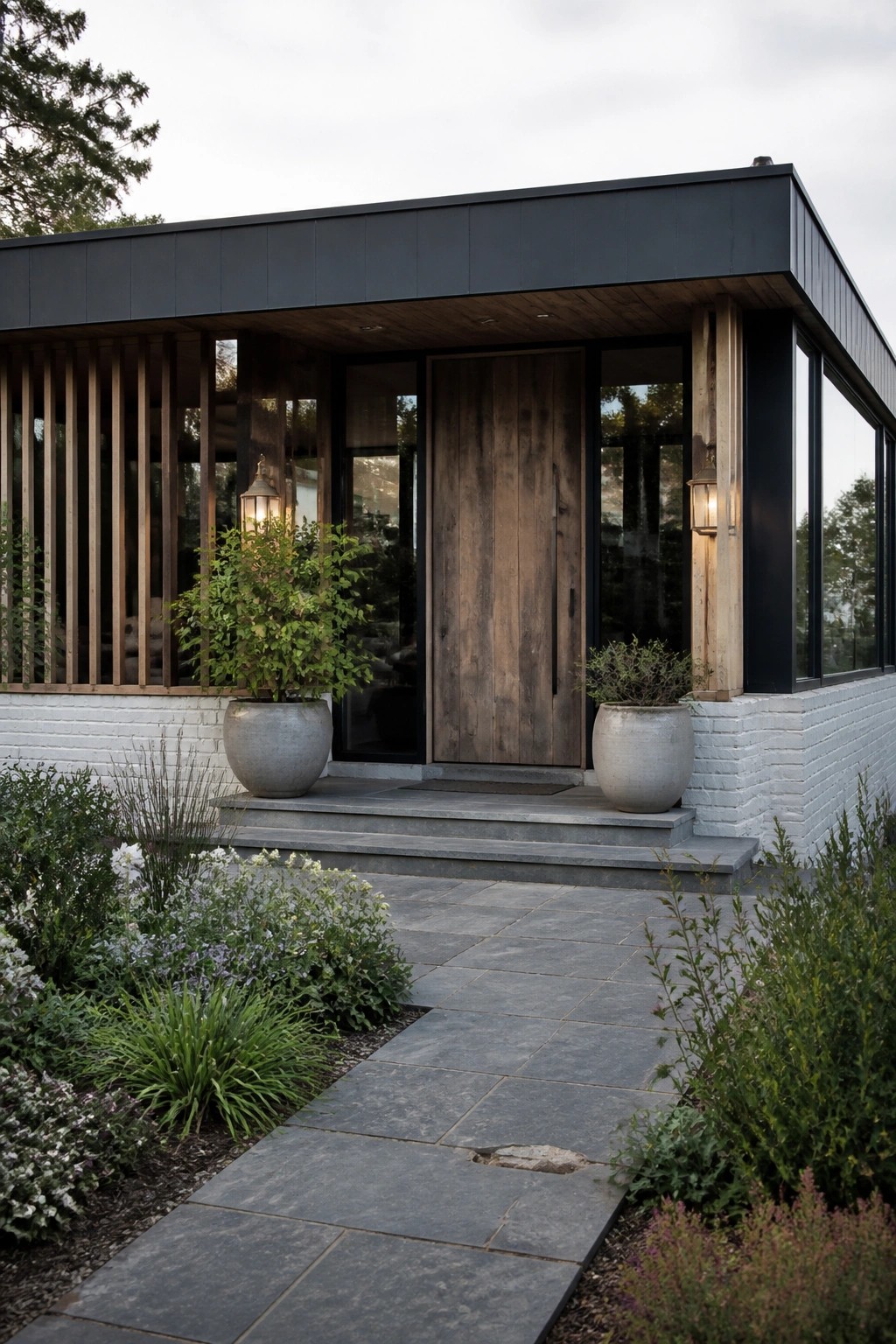
Large glass panels next to the front door give a bungalow a more open and modern feel without making the whole house look like a glass box. The wood door in the middle keeps the entrance grounded and familiar, so the glazing reads as a deliberate choice rather than a showy one.
This approach works best on single story homes where you want light inside but still need some sense of enclosure. Keep the surrounding materials simple, like dark metal trim and wood, and the glass will do most of the work.
Expansive Front Glazing on Modern Bungalows
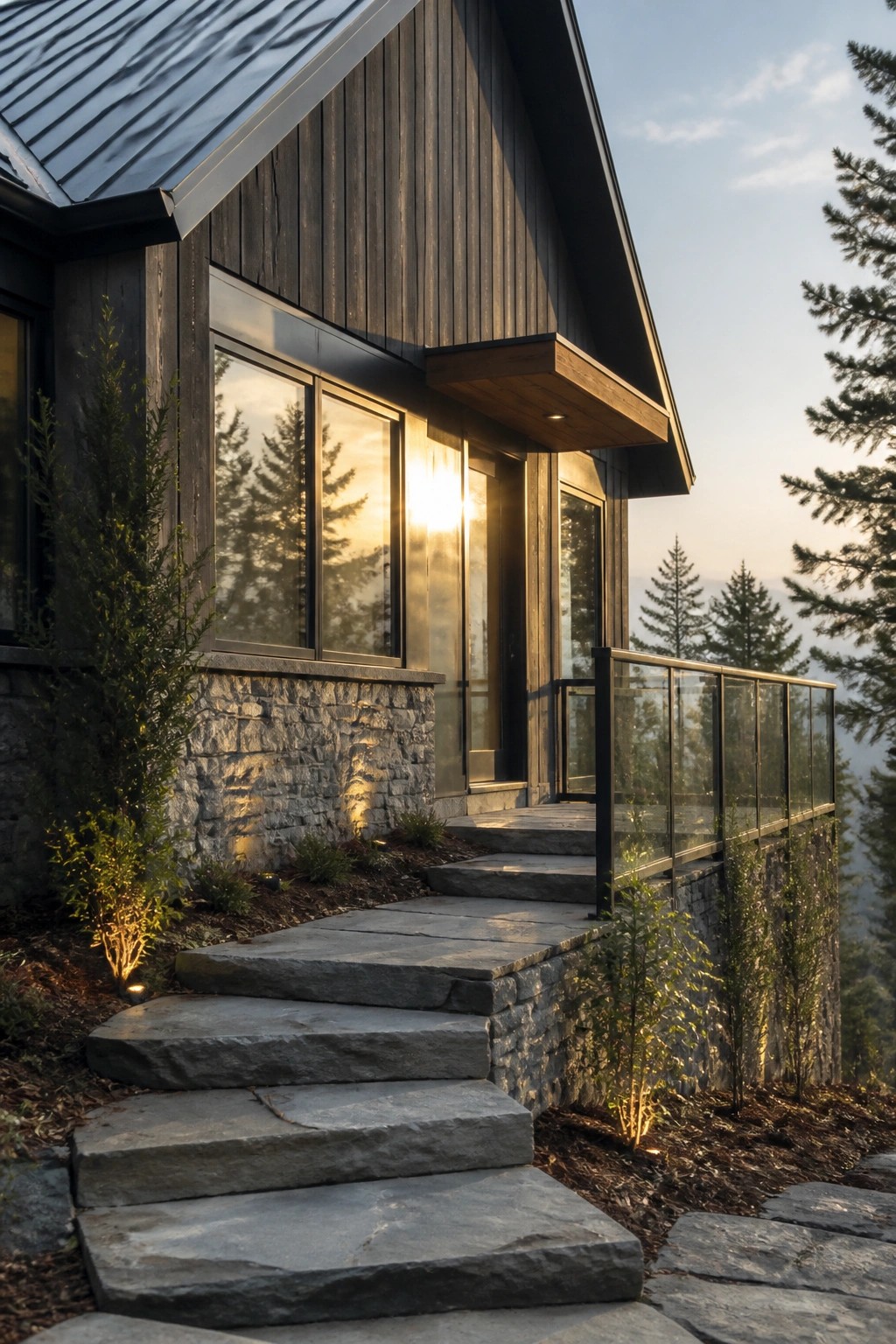
Large windows that run from floor to ceiling can make a bungalow facade feel much more open. They pull in light throughout the day and give the house a direct link to the trees and views beyond the property. This works especially well when the home sits on a slope or faces a natural setting.
The same glazing pairs nicely with simple dark siding and a stone base to keep the overall look balanced. It suits homes where the owners want more daylight without adding extra trim or ornament. Just check the glass type if the site gets strong sun or cold winters.
Add a Concrete Ledge Along the Glazing
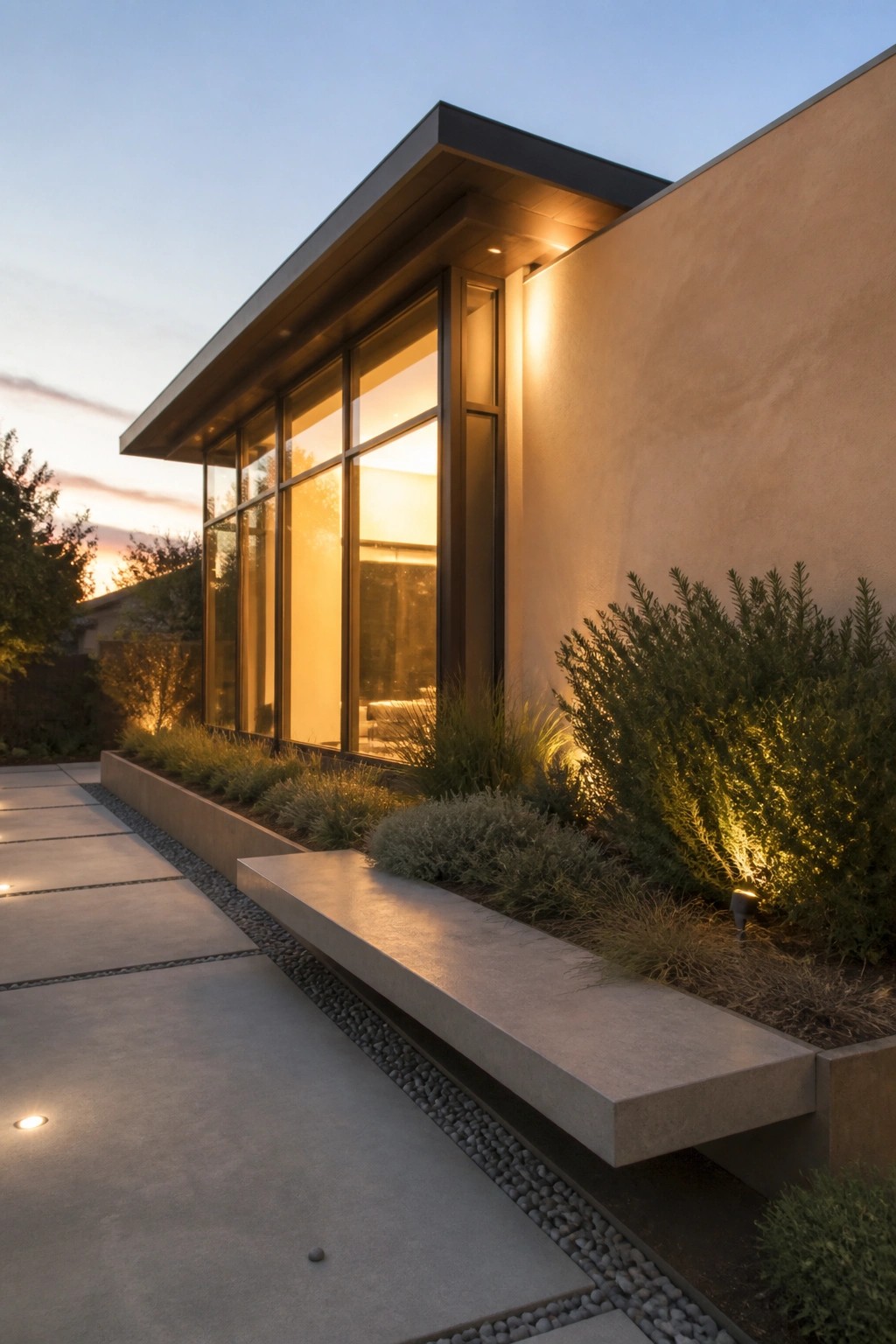
A simple concrete ledge running under tall windows gives the front a solid base without blocking the view. It turns the glazing into something you can actually use instead of leaving it as just a wall of glass.
This works best on low modern homes where the windows sit close to the ground. Keep the ledge at seat height and let the planting stay low so the light inside still reads clearly from the street.
Tall Glazing Around the Front Door
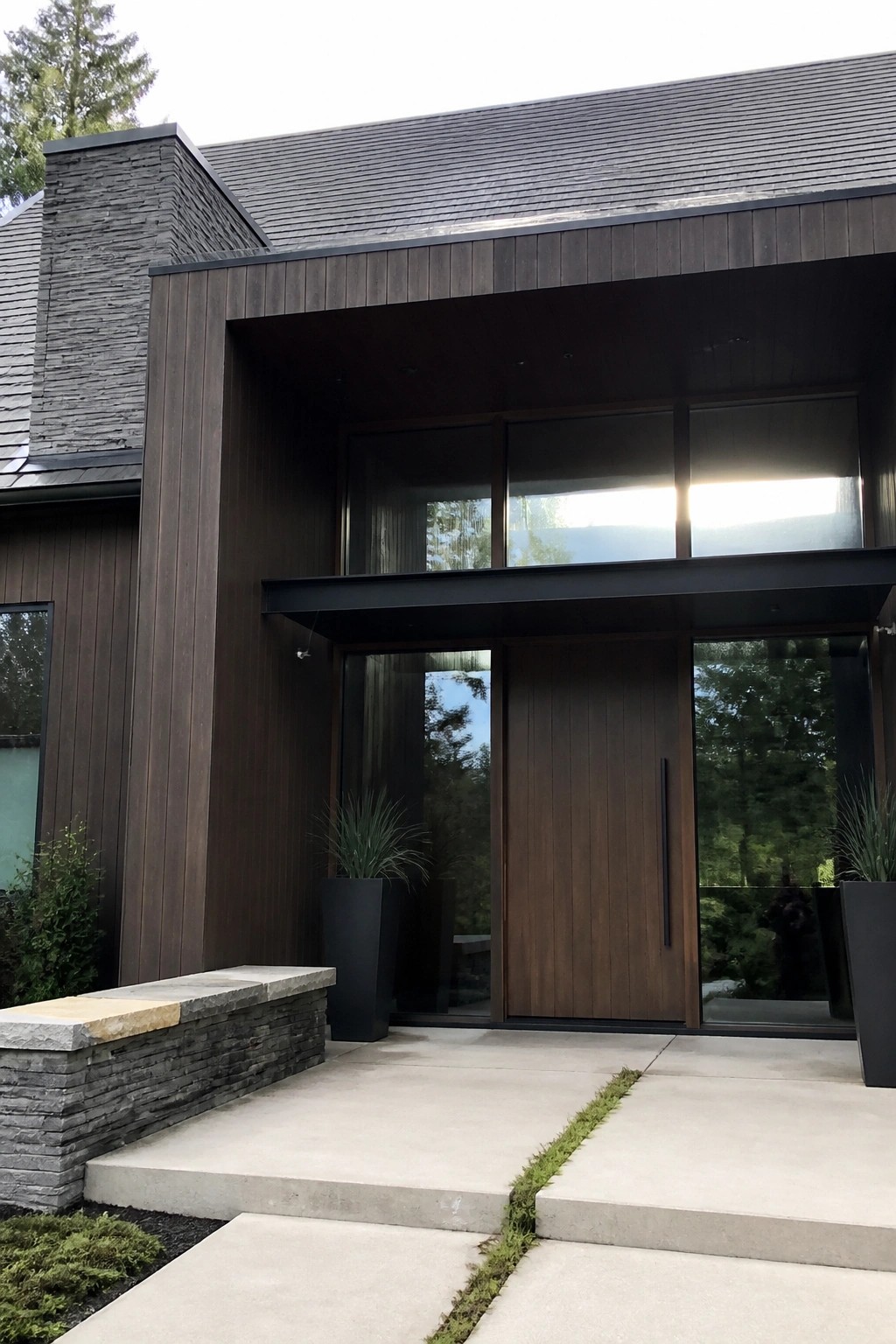
Many modern bungalows place full height glass right next to and above the main door. This move brings in extra light at the entry and makes the front of the house feel more open without adding much extra width.
It pairs well with dark wood siding because the glass breaks up the solid wall and keeps the facade from looking too heavy. Just check the placement so the glass does not leave the entry completely exposed to the street.
Floor-To-Ceiling Windows On The Front
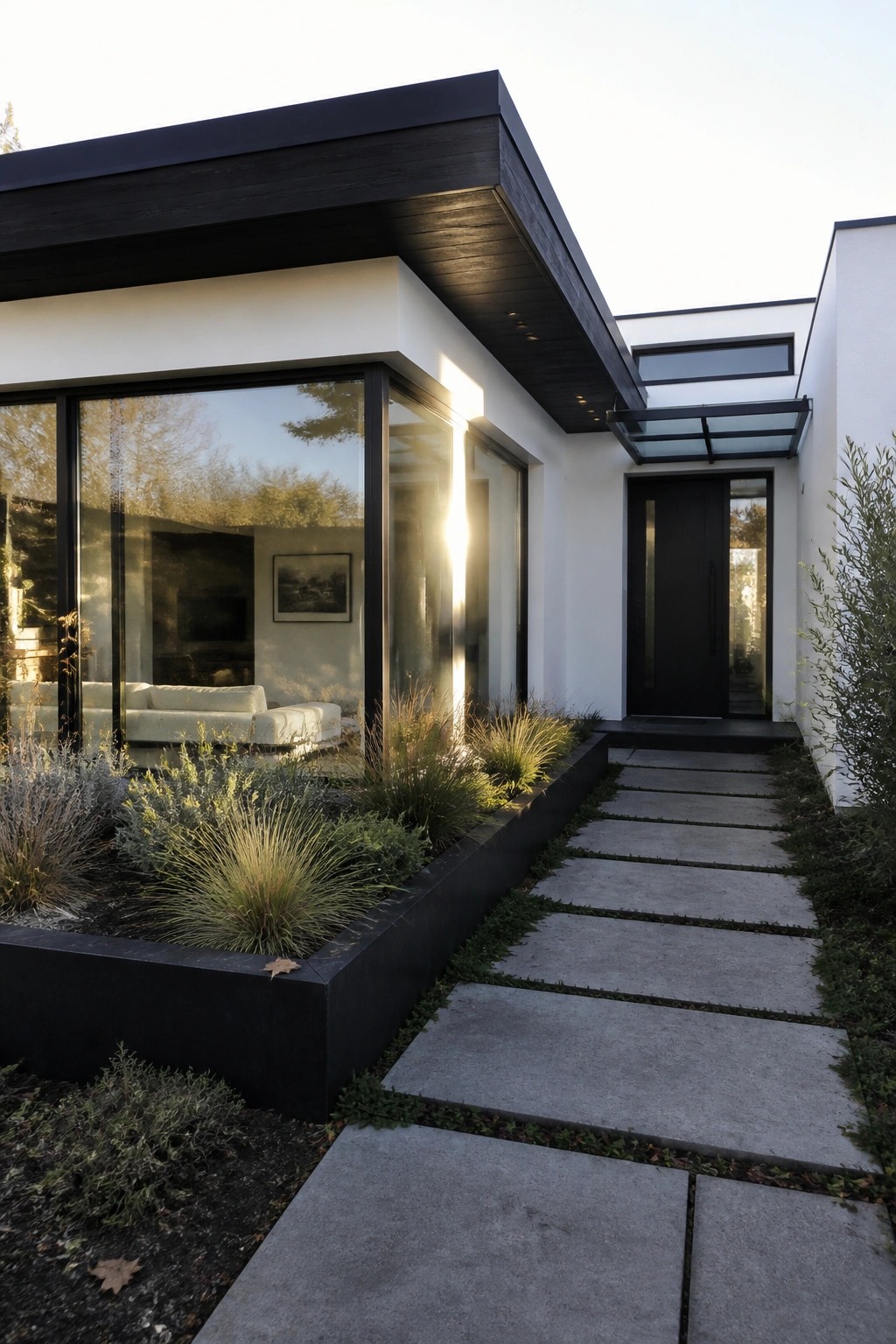
Many modern bungalows use these tall glass panels to make the front feel much more open. The windows let light reach deep into the main living areas and give the house a lighter look from the street without adding extra decoration.
This approach works best on homes with simple rooflines and clean siding. Keep the frames dark so they stand out against lighter walls, and make sure the glass lines up with the entry door so the whole front reads as one clear shape.
Full Height Glazing Brightens a Bungalow Entry
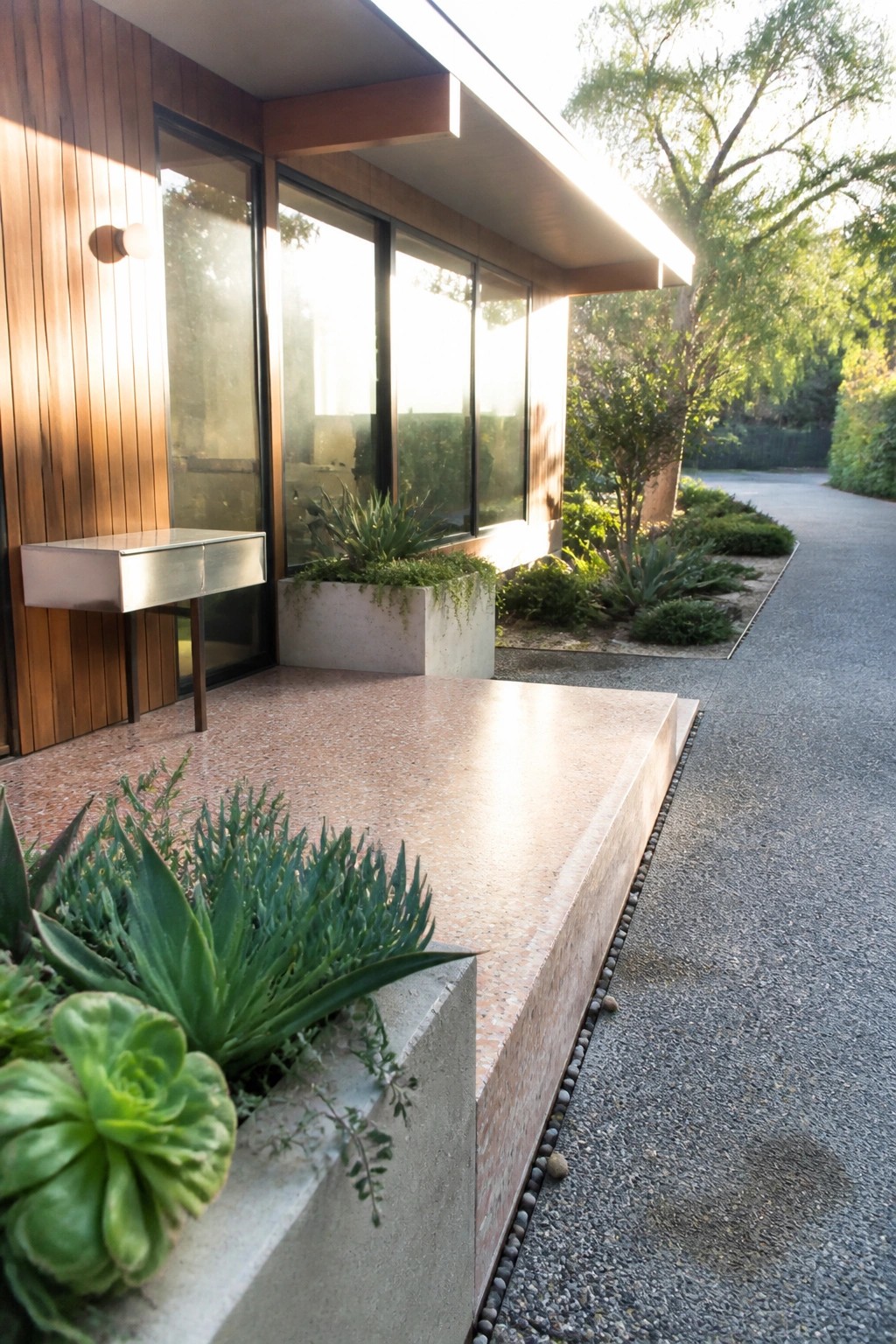
Many modern bungalows gain a lot from running glass all the way from floor to ceiling across the front. It pulls daylight deep into the rooms right at the entry and makes the house feel more open without adding extra width or height.
This approach works best on homes with clean rooflines and simple siding. Keep the glazing in large panes rather than small divisions, and let a low concrete step or narrow planter edge the glass so the view stays clear from the street.
Frequently Asked Questions
Q: How do I keep the front of my bungalow private with all that glass facing the street? A: Place furniture and key living spots deeper inside so they sit out of direct view. Layer in light filtering shades or tall plants along the facade to soften the sight lines from outside. This setup still pulls in plenty of daylight without turning the whole space into a fishbowl.
Q: Will floor to ceiling glazing push up my heating and cooling costs on a bungalow? A: Go for insulated glass units that trap warmth better during colder months. Angle the front to catch winter sun while adding overhangs or trees to block summer glare. Many people notice steady energy use once the glazing matches the rest of the home’s insulation.
Q: What kind of upkeep do those big windows need over time? A: Wipe them down a couple times a year using a basic squeegee and water. Inspect the edges now and then for any gaps that might let in moisture. Frames made from durable materials usually need little beyond that occasional check.
